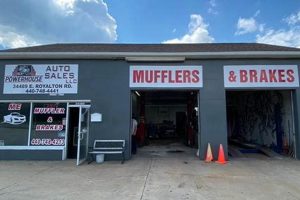
A business providing vehicular exhaust system maintenance and repair, as well as services related to stopping mechanisms, forms an integral part of the automotive service industry. These establishments address issues related to noise reduction, emission control, and safety. For example, a vehicle experiencing excessive noise or diminished braking performance might require the attention of such a service provider.
The significance of these businesses lies in their contribution to vehicle safety, environmental responsibility, and regulatory compliance. Functioning exhaust systems are crucial for minimizing pollutants released into the atmosphere, while properly maintained brakes are essential for preventing accidents and ensuring driver and passenger well-being. Furthermore, adherence to local and national vehicle inspection standards often necessitates the services provided. The historical context of these services evolved alongside the development of the automotive industry, with increasing demands for safety and environmental protection driving innovation and specialization.
The following article explores the various aspects of automotive exhaust and braking system maintenance, repair procedures, and the impact of these services on vehicle performance and regulatory adherence. It also touches on the evolution of the industry and its future direction regarding environmental sustainability.
Essential Automotive Maintenance Tips
Maintaining vehicle exhaust and braking systems is crucial for safety, performance, and regulatory compliance. Adhering to the following guidelines can help prolong the lifespan of these systems and ensure optimal functionality.
Tip 1: Regularly Inspect Brake Pads: Brake pad thickness should be checked periodically. Worn brake pads can compromise stopping power and damage rotors.
Tip 2: Monitor Exhaust System for Leaks: Listen for unusual noises emanating from under the vehicle. Exhaust leaks can lead to reduced fuel efficiency and potentially hazardous fume inhalation.
Tip 3: Flush Brake Fluid Periodically: Brake fluid absorbs moisture over time, reducing its effectiveness. Following manufacturer-recommended intervals for brake fluid flushes is essential for maintaining braking performance.
Tip 4: Address Rust Promptly: Rust on exhaust components can weaken the system and lead to leaks. Treating rust early can prevent further deterioration.
Tip 5: Be Attentive to Warning Signs: Pay attention to dashboard warning lights related to the braking or exhaust systems. These lights indicate potential problems that require immediate attention.
Tip 6: Schedule Routine Inspections: Regular professional inspections can identify potential issues before they escalate into costly repairs.
Tip 7: Use Quality Replacement Parts: When replacing exhaust or brake components, opting for high-quality parts ensures longevity and reliability.
These tips, when consistently followed, contribute to enhanced vehicle safety, reduced maintenance costs, and improved environmental impact. Prioritizing these measures ensures optimal vehicle performance and minimizes potential risks.
The subsequent sections will delve deeper into the intricacies of specific maintenance procedures and diagnostic techniques related to automotive exhaust and braking systems.
1. Exhaust System Integrity

Exhaust system integrity is fundamental to proper vehicle operation, environmental compliance, and occupant safety. Its significance necessitates consistent monitoring and maintenance, core competencies of automotive service providers.
- Emission Control Effectiveness
A structurally sound exhaust system ensures the efficient removal of combustion byproducts, preventing harmful pollutants from entering the atmosphere. Breaches in the system, such as leaks, compromise catalytic converter function, leading to increased emissions and potential regulatory non-compliance. Automotive service facilities address this by inspecting, repairing, or replacing damaged components, thereby restoring emission control to optimal levels.
- Noise Reduction Efficiency
Mufflers and resonators within the exhaust system are engineered to mitigate engine noise. Corrosion or physical damage can compromise their effectiveness, resulting in elevated sound levels. Service centers assess the condition of these components, providing replacement services to maintain noise levels within acceptable parameters and ensure compliance with noise pollution regulations.
- Fuel Efficiency Implications
Exhaust leaks can negatively impact engine performance, resulting in reduced fuel efficiency. Pressure imbalances caused by compromised exhaust systems can disrupt the combustion process, leading to incomplete burning of fuel. Automotive technicians identify and rectify these issues, contributing to improved fuel economy and reduced operating costs for vehicle owners.
- Carbon Monoxide Safety
A compromised exhaust system can allow carbon monoxide, a colorless and odorless gas, to enter the vehicle cabin. This poses a significant health hazard to occupants. Routine inspections identify potential leak points, and necessary repairs are performed to prevent carbon monoxide intrusion, safeguarding the health and well-being of drivers and passengers.
The maintenance of exhaust system integrity encompasses a range of diagnostic and repair procedures. These efforts not only contribute to regulatory compliance and environmental stewardship but also directly impact vehicle performance, fuel efficiency, and occupant safety. The comprehensive approach ensures the reliable and safe operation of the vehicle.
2. Braking Efficiency

Braking efficiency, the ability of a vehicle to decelerate effectively and safely, is intrinsically linked to the services offered by automotive repair establishments. Specifically, establishments offering brake services are fundamentally responsible for ensuring optimal braking efficiency in the vehicles they service. Diminished braking efficiency can manifest in various ways, including increased stopping distances, uneven braking force, and complete brake failure. These deficiencies significantly elevate the risk of accidents and endanger both vehicle occupants and other road users. The operational capability of such a business directly impacts public safety by maintaining or restoring adequate braking performance.
Consider, for instance, a vehicle experiencing brake fade due to worn brake pads or overheated brake fluid. This condition directly compromises braking efficiency, requiring increased pedal pressure and longer stopping distances. A repair establishment would diagnose the cause, replace the worn components, and flush the brake system to restore optimal performance. Alternatively, a vehicle with a malfunctioning anti-lock braking system (ABS) may exhibit erratic braking behavior. Corrective measures undertaken by skilled technicians ensure that the ABS functions as intended, preventing wheel lockup during emergency stops and maintaining vehicle stability. In essence, their expertise and services mitigate the risks associated with compromised braking systems.
In summary, the relationship between braking efficiency and automotive repair businesses revolves around the critical role these establishments play in safeguarding vehicle safety and preventing accidents. Their proficiency in diagnosing and rectifying brake-related issues directly translates into improved braking efficiency and a reduced risk of collisions. Upholding braking efficiency is not merely a technical consideration but a crucial aspect of responsible vehicle ownership and public safety.
3. Safety Standards
Adherence to stringent safety standards forms a cornerstone of responsible automotive service. For an establishment specializing in exhaust and brake systems, such standards are not merely guidelines but rather critical imperatives for ensuring customer safety and maintaining operational integrity.
- Brake System Inspection Protocols
Safety standards dictate specific protocols for inspecting braking systems. These protocols mandate a comprehensive evaluation of brake pad thickness, rotor condition, hydraulic lines, and brake fluid integrity. For instance, mandated inspections may require the use of calibrated measuring tools to verify brake pad thickness against minimum allowable thresholds. Failure to adhere to these protocols could result in undetected brake system deficiencies, leading to compromised stopping performance and elevated accident risk. Strict adherence to these inspection standards is therefore essential for accurate assessment and appropriate repair interventions.
- Exhaust System Leak Testing Procedures
Exhaust systems are subject to safety standards regarding leak detection and repair. These standards often prescribe specific procedures for pressure testing exhaust systems to identify breaches that could lead to carbon monoxide leaks. Regulations may stipulate the use of specialized equipment to detect even minute leaks that could pose a health hazard to vehicle occupants. Non-compliance with these testing procedures could result in undetected leaks, exposing individuals to the dangers of carbon monoxide poisoning. Thus, diligent application of exhaust system leak testing protocols is paramount for ensuring vehicle safety.
- Component Certification and Quality Assurance
Safety standards often mandate the use of certified replacement parts that meet or exceed original equipment manufacturer (OEM) specifications. This ensures that replacement components possess the necessary structural integrity and performance characteristics to maintain vehicle safety. For example, brake pads used in replacement services must conform to established friction coefficient standards to guarantee consistent stopping power. The use of substandard or non-certified parts could compromise braking performance, increasing the risk of accidents. Therefore, adherence to component certification standards is a critical aspect of automotive safety.
- Technician Training and Certification Requirements
Safety standards often stipulate that technicians performing brake and exhaust system repairs possess the requisite training and certifications to ensure competence and proficiency. This ensures that technicians are knowledgeable about proper repair procedures, diagnostic techniques, and safety protocols. For example, certifications may require technicians to demonstrate proficiency in brake system diagnostics and repair through practical assessments. Lack of adequate training and certification could lead to improper repairs, compromising vehicle safety. Thus, adherence to technician training and certification requirements is essential for maintaining a safe and reliable automotive service environment.
In conclusion, these facets underscore the critical importance of strict adherence to safety standards in exhaust and brake system maintenance. By implementing these measures, automotive service establishments contribute to enhanced vehicle safety, reduced accident risk, and the overall well-being of drivers, passengers, and other road users.
4. Regulatory Compliance

Regulatory compliance constitutes a fundamental operational aspect for any automotive service business, including entities specializing in exhaust and braking systems. These regulations, enacted at federal, state, and local levels, are designed to ensure vehicle safety, minimize environmental impact, and protect consumer interests. Strict adherence to these mandates is not merely a legal obligation but a critical component of responsible business practice.
- Emissions Testing Standards
Many jurisdictions mandate periodic vehicle emissions testing to ensure compliance with air quality standards. Establishments that service exhaust systems are directly involved in ensuring vehicles meet these standards. For example, if a vehicle fails an emissions test due to a faulty catalytic converter, the service center must replace the component with one that meets regulatory requirements. Failure to comply with emissions testing standards can result in fines, penalties, and even the suspension of business operations.
- Brake System Inspection Requirements
Regulations often prescribe specific requirements for brake system inspections. These requirements may include minimum brake pad thickness, maximum rotor runout, and proper functionality of anti-lock braking systems (ABS). An automotive service business must adhere to these inspection protocols and document findings accurately. Non-compliance can lead to legal liabilities in the event of accidents caused by brake system failure.
- Environmental Protection Agency (EPA) Guidelines
The EPA establishes guidelines for the handling and disposal of automotive waste, including used oil, brake fluid, and refrigerants. Automotive service centers must comply with these guidelines to prevent environmental contamination. For example, used oil must be collected and recycled through approved channels. Improper disposal of hazardous waste can result in significant fines and legal repercussions.
- Occupational Safety and Health Administration (OSHA) Regulations
OSHA regulations mandate workplace safety standards to protect employees from hazards associated with automotive repair. These regulations cover areas such as ventilation, personal protective equipment (PPE), and hazard communication. An automotive service center must provide a safe working environment for its employees and comply with OSHA’s requirements. Failure to do so can result in OSHA inspections, fines, and potential legal liabilities.
These diverse regulatory requirements underscore the importance of compliance for businesses offering exhaust and brake services. Upholding these standards ensures not only legal adherence but also contributes to vehicle safety, environmental protection, and responsible business practices. Automotive service centers must remain informed about evolving regulations and implement robust compliance programs to mitigate risks and maintain operational integrity.
5. Component Durability

Component durability represents a critical factor in the selection and installation of exhaust and brake system parts. The lifespan of these components directly impacts vehicle performance, maintenance costs, and safety. A business providing exhaust and brake services should prioritize the use of durable components to ensure customer satisfaction and long-term reliability.
- Material Selection and Corrosion Resistance
The choice of materials significantly influences component durability. Exhaust systems are subjected to high temperatures, corrosive gases, and road salts. Stainless steel and aluminized steel offer superior corrosion resistance compared to mild steel, extending the lifespan of mufflers and exhaust pipes. Similarly, brake rotors made from high-carbon alloys exhibit improved wear resistance and thermal stability. Using materials designed to withstand harsh conditions minimizes premature failure and reduces the frequency of replacements.
- Manufacturing Quality and Precision
Manufacturing processes and tolerances play a vital role in component durability. Brake pads manufactured with consistent friction coefficients and precise dimensions ensure uniform wear and optimal braking performance. Exhaust systems with precise welds and robust construction resist cracking and leaks. Components manufactured to high-quality standards exhibit enhanced durability and reliability compared to those produced with inferior methods.
- Environmental Factors and Operating Conditions
Operating conditions and environmental factors influence component durability. Vehicles driven in regions with heavy salt usage during winter months experience accelerated corrosion of exhaust systems. Frequent stop-and-go driving leads to increased brake pad wear and rotor stress. Understanding these factors allows for the selection of components specifically designed to withstand the prevailing conditions, maximizing their lifespan and performance.
- Installation Procedures and Best Practices
Proper installation techniques are essential for maximizing component durability. Overtightening bolts can damage exhaust system flanges, leading to leaks. Incorrect brake pad installation can cause uneven wear and premature failure. Following manufacturer-recommended installation procedures and adhering to best practices ensures that components are installed correctly and function as intended, contributing to their long-term durability.
The selection of durable components, coupled with proper installation practices, represents a key aspect of providing quality automotive services. Prioritizing component durability translates to reduced maintenance costs, improved vehicle safety, and enhanced customer satisfaction. A business committed to these principles demonstrates a commitment to long-term value and reliability.
6. Performance Enhancement
The relationship between performance enhancement and establishments specializing in exhaust and brake services stems from the critical role these systems play in a vehicle’s overall operational capabilities. Optimizing these systems directly influences factors such as horsepower, fuel efficiency, and stopping power, thereby enhancing the vehicle’s performance profile.
- Exhaust System Modifications for Increased Horsepower
Upgrading to a performance exhaust system can reduce backpressure, allowing the engine to breathe more efficiently and generate more power. This often involves replacing the factory muffler and exhaust pipes with larger diameter components designed for improved flow. For example, installing a cat-back exhaust system on a sports car can result in a noticeable increase in horsepower and torque. The implications of such modifications extend to improved acceleration and overall engine responsiveness.
- Brake System Upgrades for Enhanced Stopping Power
Enhancing braking performance can involve upgrading to larger rotors, multi-piston calipers, and performance brake pads. These modifications increase the contact area between the brake pads and rotors, resulting in greater friction and improved stopping power. Consider a high-performance vehicle requiring enhanced braking capabilities for track days or spirited driving. Upgrading the brake system ensures shorter stopping distances and improved control, enhancing both safety and performance.
- Optimizing Exhaust Flow for Improved Fuel Efficiency
A well-designed exhaust system can improve fuel efficiency by reducing backpressure and allowing the engine to operate more efficiently. This can involve optimizing the exhaust manifold design, using high-flow catalytic converters, and ensuring smooth flow through the entire system. For instance, a truck owner seeking to improve fuel economy might benefit from an exhaust system upgrade designed to reduce backpressure and improve engine efficiency. This leads to reduced fuel consumption and lower operating costs.
- Balancing Brake Performance for Optimal Vehicle Dynamics
Achieving optimal vehicle dynamics requires a balanced approach to brake system modifications. Upgrading the front brakes without addressing the rear brakes can lead to an imbalance in braking force, potentially compromising stability. Ensuring that the front and rear brakes are properly matched and that the brake bias is correctly adjusted is crucial for maintaining optimal handling and control. This ensures that the vehicle remains stable and predictable under braking, enhancing overall performance and safety.
These facets highlight the integral link between exhaust and brake services and the pursuit of performance enhancement. By optimizing these critical systems, establishments offering such services can significantly improve a vehicle’s horsepower, fuel efficiency, and stopping power, ultimately enhancing its overall performance capabilities.
7. Cost Optimization
Cost optimization, within the context of vehicular exhaust and braking system services, directly affects both the service provider’s profitability and the vehicle owner’s long-term expenses. The effectiveness with which a provider manages its operational costs influences the pricing of services and the overall value proposition presented to the customer. A provider that implements strategies to minimize expenses, such as efficient inventory management and streamlined labor processes, can offer competitive pricing while maintaining service quality. Conversely, inefficiencies within the business operations translate to higher service costs, potentially deterring customers and reducing market competitiveness. The strategic application of cost optimization principles is therefore a crucial component of a sustainable and successful automotive service enterprise.
Consider, for instance, the selection of replacement parts. An establishment might choose to prioritize less expensive, aftermarket components to reduce upfront costs. However, these components often possess shorter lifespans compared to Original Equipment Manufacturer (OEM) parts, leading to more frequent replacements and increased long-term expenses for the vehicle owner. A cost-optimized approach, in this scenario, involves a careful analysis of the total cost of ownership, balancing the initial expense with the component’s expected lifespan and performance characteristics. Furthermore, the provider’s investment in advanced diagnostic equipment can reduce diagnostic time and minimize unnecessary repairs, leading to lower labor costs and improved customer satisfaction. Preventive maintenance programs, offered at competitive prices, also contribute to cost optimization by addressing potential issues before they escalate into more extensive and expensive repairs.
In summary, cost optimization within automotive service businesses is a multifaceted undertaking that requires a balanced approach. It is not merely about minimizing expenses but rather about strategically managing resources to deliver optimal value to the customer while maintaining profitability. Challenges lie in accurately assessing the long-term implications of component choices and service strategies. However, by prioritizing efficiency, employing skilled technicians, and transparently communicating cost-benefit analyses to customers, a service provider can effectively optimize costs and establish a reputation for providing reliable and affordable vehicle maintenance solutions.
Frequently Asked Questions About Vehicle Exhaust and Brake Systems
The following section addresses common inquiries regarding the maintenance, repair, and functionality of automotive exhaust and brake systems, providing factual and objective answers.
Question 1: What constitutes a typical lifespan for an automotive muffler?
Muffler lifespan is contingent upon several factors, including material composition, environmental exposure, and driving conditions. On average, a muffler constructed of aluminized steel may last between two to three years, while a stainless-steel muffler can potentially exceed five years. Exposure to road salt and frequent short trips can accelerate corrosion and reduce longevity.
Question 2: What are the primary indicators of brake pad wear requiring replacement?
Audible indicators such as squealing or grinding noises during braking often signify brake pad wear. Visual inspection revealing brake pad thickness below manufacturer-recommended minimums also necessitates replacement. Furthermore, diminished braking performance, characterized by increased stopping distances or a soft brake pedal feel, may indicate worn brake pads.
Question 3: What potential consequences arise from neglecting exhaust system leaks?
Unaddressed exhaust system leaks can lead to reduced fuel efficiency, compromised engine performance, and the potential intrusion of carbon monoxide into the vehicle cabin. Additionally, leaks can contribute to increased noise pollution and violation of local emissions regulations.
Question 4: How frequently should brake fluid be flushed and replaced?
Brake fluid replacement intervals are typically recommended every two to three years or as specified by the vehicle manufacturer. Brake fluid absorbs moisture over time, reducing its boiling point and compromising braking performance. Regular flushing removes contaminated fluid and ensures optimal braking efficiency.
Question 5: What is the significance of the catalytic converter within the exhaust system?
The catalytic converter plays a critical role in reducing harmful emissions from the vehicle’s exhaust. It facilitates chemical reactions that convert pollutants such as hydrocarbons, carbon monoxide, and nitrogen oxides into less harmful substances, such as carbon dioxide, water, and nitrogen. A malfunctioning catalytic converter can result in increased emissions and failure to meet regulatory standards.
Question 6: What are the common symptoms of a malfunctioning anti-lock braking system (ABS)?
Symptoms of ABS malfunction may include illumination of the ABS warning light on the dashboard, extended stopping distances during emergency braking, and a pulsating brake pedal feel. In some cases, the ABS system may become completely disabled, reverting to conventional braking functionality.
These answers offer a concise overview of essential aspects related to vehicle exhaust and brake system maintenance and operation. Seeking professional inspection and service from qualified technicians is recommended for comprehensive diagnostics and repairs.
The next section will address the benefits of preventative maintenance schedules for exhaust and braking systems.
Concluding Remarks on Valley Muffler & Brake
This exploration has illuminated the multifaceted nature of automotive exhaust and braking system maintenance, core functions performed by entities such as Valley Muffler & Brake. The analysis encompassed aspects ranging from regulatory compliance and safety standards to component durability and performance enhancement. The importance of adhering to recommended maintenance schedules, employing qualified technicians, and utilizing quality replacement parts has been underscored throughout.
The long-term reliability and safety of a vehicle depend significantly on the proper functioning of its exhaust and braking systems. Neglecting these critical components can lead to diminished performance, increased operating costs, and potential safety hazards. Vehicle owners are therefore encouraged to prioritize routine inspections and address any identified issues promptly to ensure the continued integrity and safe operation of their vehicles. Maintaining these systems contributes directly to responsible vehicle ownership and the safety of all road users.