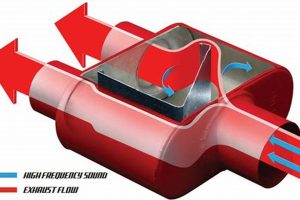
This automotive component plays a crucial role in reducing noise pollution produced by internal combustion engines. Positioned within the exhaust system, typically towards the rear of the vehicle, it functions by attenuating sound waves generated during the combustion process. A common example involves its replacement as part of routine vehicle maintenance to comply with local noise ordinances and ensure a quieter driving experience.
The implementation of such a device offers several benefits, including a reduction in environmental noise levels, enhanced passenger comfort within the vehicle, and improved community relations by minimizing disturbance. Historically, its development has evolved alongside advancements in engine technology, with ongoing research focused on optimizing its design for both noise reduction and minimal impact on engine performance. Early models were relatively simple in construction, while modern versions incorporate sophisticated internal baffling and sound-absorbing materials for greater efficiency.
The subsequent sections will delve into various aspects related to exhaust systems, including diagnostic procedures for identifying potential problems, factors influencing the selection of replacement parts, and considerations for ensuring proper installation and maintenance to maximize longevity and performance.
Essential Considerations for Exhaust System Maintenance
Maintaining the exhaust system contributes significantly to vehicle performance, fuel efficiency, and regulatory compliance. The following guidelines offer practical advice for ensuring optimal system functionality.
Tip 1: Regular Visual Inspection: Conduct routine visual assessments of the exhaust system components, including pipes, connections, and the muffler itself. Look for signs of corrosion, rust, or physical damage that may indicate potential leaks or structural weakness.
Tip 2: Prompt Leak Detection: Address any suspected exhaust leaks immediately. Leaks can compromise engine performance, reduce fuel economy, and pose safety risks due to the potential for carbon monoxide exposure.
Tip 3: Mindful Driving Practices: Avoid aggressive driving habits that place undue stress on the exhaust system. Rapid acceleration and deceleration, coupled with frequent high-RPM operation, can accelerate wear and tear.
Tip 4: Proper Mounting and Support: Ensure that the exhaust system is securely mounted and adequately supported by its hangers and brackets. Loose or damaged supports can cause vibrations and premature failure of system components.
Tip 5: Timely Component Replacement: Adhere to the manufacturer’s recommended maintenance schedule for replacing worn or damaged exhaust system parts. Neglecting necessary replacements can lead to cascading failures and more costly repairs.
Tip 6: Consider Material Quality: When replacing parts, opt for components constructed from durable materials, such as stainless steel or aluminized steel. These materials offer enhanced resistance to corrosion and prolong the lifespan of the exhaust system.
Optimizing exhaust system maintenance ensures quieter operation, minimizes emissions, and extends the vehicle’s service life. By adhering to these guidelines, one can proactively address potential issues and maintain optimal performance.
The subsequent section will cover the environmental impact of properly maintained exhaust systems.
1. Geographic Proximity

Geographic proximity profoundly influences the operational dynamics and customer base of a business identified by a location-specific term like “hilltop muffler.” The elevated setting presents both advantages and disadvantages. Accessibility becomes a key consideration; customers residing in lower areas may perceive the location as less convenient, potentially affecting foot traffic. Conversely, residents in the immediate vicinity of the “hilltop” location benefit from the business’s close availability, fostering a loyal, localized customer base. Consider a scenario where inclement weather, such as snow or ice, makes accessing the hilltop location challenging. This temporarily reduces accessibility, highlighting the sensitivity of the business to environmental factors directly linked to its geographic positioning. This dependence can necessitate proactive measures, such as offering mobile services or implementing robust winter weather protocols.
The concentration of customers near the business can drive marketing strategies focused on community engagement and local advertising. Positive word-of-mouth referrals become exceptionally valuable in such a geographically confined market. Conversely, negative feedback can spread rapidly, underscoring the importance of maintaining consistently high-quality service. For example, a muffler shop located on a less accessible part of “hilltop” may need to invest more in visibility, sign placement and road side ads than a shop in the centre of town.
In summary, geographic proximity serves as a defining characteristic, influencing accessibility, customer demographics, and marketing approaches for businesses like this. Understanding this relationship allows the business to adapt strategies to maximize local market penetration and mitigate potential limitations imposed by its elevated location. It may be necessary to offer services or goods beyond the initial mission in order to stay competitive within its environment.
2. Local Market
The viability of a service provider designated as a “hilltop muffler” is intrinsically linked to the characteristics and dynamics of its local market. The success or failure of such a business hinges on its ability to effectively cater to the specific needs and preferences of the immediate community it serves. This dependence stems from the reliance on proximity-based customer acquisition, where ease of access and local reputation become paramount. For instance, a “hilltop muffler” shop located in a rural, sparsely populated area will necessarily face a smaller potential customer base compared to one situated within a densely populated suburban environment. This discrepancy directly impacts revenue potential and necessitates tailored marketing and service strategies.
The demographic composition of the local market plays a crucial role in shaping the demand for specific services. A community with a high proportion of older vehicles, for example, may require more frequent muffler repairs and replacements. Conversely, a market dominated by newer, more reliable vehicles may exhibit a lower demand for such services. Understanding these demographic trends enables the business to adapt its inventory, service offerings, and pricing strategies to better align with local needs. Furthermore, the prevailing economic conditions within the local market can significantly influence consumer spending habits. During periods of economic downturn, customers may prioritize essential repairs over preventative maintenance, impacting the type and frequency of services sought. Therefore, a “hilltop muffler” shop must remain attuned to local economic indicators to anticipate changes in demand and adjust its operational strategies accordingly. One might also assume that the average price per service would need to be adjusted based on the average income of the local area, further affecting revenue.
In conclusion, the local market serves as the primary determinant of a “hilltop muffler” shop’s success. Factors such as population density, demographics, economic conditions, and competitive landscape collectively shape demand and influence the business’s operational strategies. A thorough understanding of these dynamics is essential for developing targeted marketing campaigns, optimizing service offerings, and maintaining a competitive edge within the local market. Failure to adequately assess and adapt to the nuances of the local market can result in diminished customer acquisition, reduced profitability, and ultimately, business failure.
3. Community reputation

A business’s standing within the local community directly correlates with its sustained success, particularly for service providers like “hilltop muffler” shops. Community reputation acts as a potent marketing tool, often exceeding the impact of traditional advertising. Positive word-of-mouth referrals, stemming from satisfied customers, contribute significantly to attracting new clients and fostering long-term loyalty. A strong reputation signifies reliability, trustworthiness, and a commitment to quality service, factors that heavily influence consumer choices, especially when selecting automotive repair services. The reputation establishes confidence that can cause more business.
Conversely, a negative community reputation can severely impede a business’s prospects. Instances of poor service, unethical practices, or unresolved customer complaints can rapidly erode trust, leading to a decline in customer patronage. Online reviews and social media platforms amplify the impact of both positive and negative feedback, making reputation management a critical aspect of business operations. For example, a single widely shared negative review detailing substandard workmanship or unfair pricing practices can dissuade potential customers from engaging with a “hilltop muffler” shop, regardless of its actual capabilities. If the community has already spread a negative tone, it can cause many difficulties for the business.
Therefore, cultivating and maintaining a positive community reputation is paramount for the long-term viability of a “hilltop muffler” business. This requires prioritizing customer satisfaction, providing transparent and honest service, actively addressing customer concerns, and engaging with the community through local events and initiatives. Investing in building a strong reputation is not merely a matter of public relations; it is a fundamental element of ensuring sustainable business growth and success. Even by providing superior customer service in small or routine jobs, one can change the tone of a hilltop muffler and attract business.
4. Service accessibility

Service accessibility, in the context of a “hilltop muffler” business, directly influences its customer reach and operational success. The physical location of the establishment, combined with various logistical and infrastructural factors, determines the ease with which potential customers can access its services. This accessibility is not merely a matter of geographical proximity but encompasses a range of considerations impacting customer convenience and overall service utilization.
- Road Infrastructure and Topography
The quality and characteristics of the road network leading to the “hilltop muffler” location significantly affect accessibility. Steep inclines, winding roads, or poorly maintained surfaces can deter customers, particularly those with older vehicles or mobility limitations. Seasonal weather conditions, such as snow or ice, can exacerbate these challenges, temporarily restricting access and impacting business operations. Addressing road infrastructure limitations, perhaps through advocating for road improvements or implementing snow removal services, can enhance customer accessibility.
- Public Transportation Availability
The presence or absence of public transportation options directly influences accessibility for individuals without personal vehicles. If the “hilltop muffler” is not served by bus routes or other forms of public transport, it may exclude a segment of the population from utilizing its services. Establishing partnerships with local transportation providers or offering shuttle services can mitigate this limitation and expand the business’s customer base. If public transportation is present, the business may benefit from marketing it.
- Parking Facilities and Convenience
Adequate and convenient parking is crucial for attracting customers to a “hilltop muffler” shop. Limited parking spaces, difficult maneuvering areas, or long walking distances from parking to the service area can deter potential clients. Providing ample, well-maintained parking facilities, clearly marked spaces, and easy access to the service area enhances the overall customer experience and encourages repeat business. If a shop has a very challenging parking situation, it may even be necessary to assist clients with the parking of their vehicles.
- Operational Hours and Appointment Scheduling
The operational hours of the “hilltop muffler” shop and the flexibility of its appointment scheduling system directly impact service accessibility. Limited operating hours or inflexible appointment policies can restrict access for customers with demanding work schedules or urgent repair needs. Extending operational hours, offering weekend appointments, and implementing online booking systems can improve service accessibility and cater to a wider range of customer preferences. A shop may even consider extended hours during times of need, such as summer or winter, when cars require specific repair.
These interconnected facets collectively determine the service accessibility of a “hilltop muffler” business. Recognizing and addressing the challenges posed by geographical location, infrastructure limitations, and operational factors is crucial for maximizing customer reach, enhancing service utilization, and ensuring the long-term success of the business. The level of effort in overcoming these potential barriers will be a direct indicator of the success or failure of a business with this unique location.
5. Competitive landscape
The presence and nature of competition significantly influence the operational strategy and potential success of a “hilltop muffler” business. The local market’s competitive landscape determines pricing strategies, service differentiation efforts, and marketing initiatives. A dense concentration of automotive repair shops necessitates a more aggressive and innovative approach to attract and retain customers. For instance, if several muffler shops exist within a limited radius, price wars may ensue, impacting profit margins. Conversely, a lack of direct competitors provides greater pricing flexibility but also necessitates proactive marketing to cultivate customer awareness and demand. The competitive pressure exerted by national chains and franchise operations further complicates the landscape, particularly given their established brand recognition and economies of scale. Local, independent businesses often require a heightened emphasis on personalized service and community engagement to effectively compete with these larger entities. A local “hilltop muffler” shop might also need to overcome challenges like online presence or brand recognition.
The “hilltop” location itself introduces unique competitive dynamics. Limited accessibility can create a niche market, insulating the business from some competition. However, it also restricts the potential customer base, intensifying the need for effective marketing to capture a larger share of the local market. Customer perception also plays a critical role. If potential clients view the “hilltop” location as inconvenient or difficult to reach, the business must address these perceptions through promotional campaigns emphasizing convenience and value. A real-world example might involve implementing a free shuttle service from a nearby transportation hub or offering discounted rates to customers residing in lower-lying areas. The business might also consider implementing some home service, if the necessary resources are available. Moreover, a transparent approach with pricing might allow the business to build more customer trust, giving it a leg up on the competitive landscape.
In summary, the competitive landscape acts as a primary determinant of a “hilltop muffler” business’s strategic choices and operational success. Understanding the local market dynamics, including the number and type of competitors, customer perceptions, and accessibility limitations, is crucial for developing effective strategies to attract customers, differentiate services, and maintain a competitive edge. The lack of understanding can lead to a business that is unable to thrive due to competition within its landscape.
Frequently Asked Questions
The following questions address common inquiries regarding services, operations, and considerations pertaining to automotive exhaust systems and service providers that may be recognized by the “hilltop muffler” designation.
Question 1: How often should a vehicle’s exhaust system be inspected?
A thorough inspection is recommended at least annually or whenever unusual noises, vibrations, or reduced fuel efficiency are observed. Early detection of issues prevents extensive damage and ensures regulatory compliance.
Question 2: What are the key indicators of a failing muffler?
Common signs include excessive noise emanating from the exhaust system, visible rust or corrosion, physical damage to the muffler body, and a noticeable decrease in engine performance.
Question 3: Does muffler replacement affect vehicle emissions testing?
A properly functioning muffler contributes to efficient exhaust gas flow and optimal catalytic converter performance, both critical for passing emissions tests. A damaged or improperly installed muffler can lead to test failures.
Question 4: What factors influence the cost of muffler replacement?
Cost is determined by the type of muffler, the vehicle’s make and model, the complexity of the installation process, and labor rates. Stainless steel mufflers generally cost more but offer enhanced durability.
Question 5: Are there performance mufflers that enhance engine horsepower?
Some aftermarket mufflers are designed to reduce backpressure and improve exhaust flow, potentially leading to a slight increase in engine horsepower. However, results vary depending on the vehicle and the specific muffler design.
Question 6: Is it possible to repair a muffler instead of replacing it?
Minor damage, such as small holes or cracks, may be repairable through welding or patching. However, extensive corrosion or structural damage generally necessitates complete replacement for optimal performance and safety.
These answers provide a basic understanding of common concerns. Seeking professional advice from a qualified automotive technician remains the best course of action for addressing specific exhaust system issues.
The next section explores factors to consider when choosing an automotive repair facility.
Conclusion
This exploration of “hilltop muffler” has illuminated the multifaceted aspects influencing such a business. Key considerations range from the practicalities of geographic location and service accessibility to the vital importance of community reputation and the ever-present dynamics of the competitive landscape. The viability hinges on a keen understanding and strategic adaptation to these intertwined elements. Effective navigation of these factors will determine its long-term operational performance.
The success of a “hilltop muffler” depends on recognizing and actively responding to the challenges and opportunities presented by its unique environment. This demands a commitment to quality service, community engagement, and a proactive approach to adapting to evolving market conditions. Understanding the importance of this niche aspect of the muffler business will impact how business is conducted and the ultimate success or failure of it.
![Avondale Muffler Masters: Exhaust Repair Pros, [Year] | Best Mufflers for Cars & Trucks | Performance, Sound & Durability Upgrades](https://dnamufflers.com/wp-content/uploads/2026/09/th-5-300x200.jpg "Avondale Muffler Masters: Exhaust Repair Pros, [Year] Best Mufflers for Cars & Trucks | Performance, Sound & Durability Upgrades")