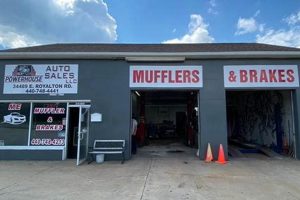
An automotive service center specializing in exhaust systems and braking components offers maintenance, repair, and replacement services. This type of business ensures vehicles operate safely and efficiently by addressing issues related to noise reduction and stopping power. For example, technicians inspect and repair mufflers to reduce engine noise and ensure compliance with environmental regulations, and they service brakes to guarantee reliable stopping performance.
The significance of such a business lies in its contribution to vehicle safety and environmental responsibility. Properly functioning exhaust systems minimize pollution and noise, while well-maintained brakes are crucial for preventing accidents. The historical context of these services is rooted in the evolution of the automotive industry, with ongoing advancements in technology and regulations driving the need for specialized expertise in these areas.
The following sections will delve into the specific services offered, the diagnostic procedures employed, and the importance of regular maintenance for exhaust and braking systems to ensure optimal vehicle performance and safety.
Maintenance Guidance
Adhering to a proactive maintenance schedule regarding exhaust and braking systems is paramount for vehicle longevity and operational safety. The following guidelines provide essential insights.
Tip 1: Regular Inspection of Exhaust System Components: Routine visual examinations of the muffler, pipes, and catalytic converter are recommended to identify rust, leaks, or physical damage. Addressing these issues early prevents costly repairs and ensures compliance with emission standards.
Tip 2: Timely Brake Pad Replacement: Brake pads should be inspected regularly and replaced when worn to a critical thickness. Neglecting this can lead to diminished braking performance and potential damage to rotors.
Tip 3: Brake Fluid Flush: Brake fluid absorbs moisture over time, compromising its effectiveness. A complete fluid flush, as specified in the vehicle’s maintenance schedule, is essential for maintaining optimal braking performance.
Tip 4: Monitoring for Unusual Noises: Squealing, grinding, or rattling sounds emanating from the brakes or exhaust system warrant immediate attention. These noises often indicate underlying problems that require professional diagnosis.
Tip 5: Periodic Muffler Integrity Check: The muffler’s integrity is vital for noise reduction and exhaust system efficiency. Corrosion or physical damage can compromise its functionality and require replacement.
Tip 6: Rotor Inspection and Resurfacing/Replacement: During brake service, rotors should be inspected for wear, warping, or scoring. Resurfacing or replacement may be necessary to ensure smooth and effective braking.
Tip 7: Caliper Maintenance: Brake calipers should be inspected for leaks and proper function. Sticking or seized calipers can lead to uneven brake wear and reduced stopping power.
Implementing these maintenance practices ensures reliable vehicle performance, enhances safety, and extends the lifespan of critical components.
The subsequent sections will further elaborate on the diagnostic processes and repair procedures associated with exhaust and braking systems.
1. Exhaust System Integrity
Exhaust system integrity is fundamental to vehicle performance, environmental responsibility, and regulatory compliance. Service centers specializing in exhaust systems address this integrity through inspection, repair, and replacement services. Compromised exhaust systems, evidenced by leaks or damaged components, directly impact engine efficiency, potentially increasing fuel consumption and emissions. These centers diagnose issues through visual inspections and specialized equipment such as gas analyzers to detect inefficiencies within catalytic converters. A real-life example involves a vehicle failing an emissions test due to a deteriorated muffler, which was subsequently replaced to restore compliance.
The practical significance of maintaining exhaust system integrity extends beyond environmental concerns. A properly functioning exhaust system optimizes engine performance, reduces noise pollution, and ensures safe operation. Leaks can introduce harmful fumes into the passenger cabin, while restrictions can negatively impact engine power. Furthermore, specialized service centers offer tailored solutions, such as performance exhaust systems for enhanced horsepower and sound, further emphasizing the link between system integrity and customer satisfaction. These can be made from stainless steel or other premium material.
In summary, exhaust system integrity, maintained through specialized services, is crucial for vehicle performance, environmental protection, and regulatory adherence. Regular inspections and prompt repairs are essential for preventing costly issues and ensuring vehicle longevity. A service provider specializing in exhaust systems is central to achieving and sustaining this integrity, thereby supporting responsible vehicle ownership.
2. Brake Component Longevity
Brake component longevity is intrinsically linked to the services offered by establishments like “white marsh muffler & brakes.” The lifespan of brake pads, rotors, calipers, and hydraulic lines directly impacts vehicle safety and the frequency of maintenance required. A focus on component longevity translates to fewer repairs, reduced downtime, and lower overall ownership costs. For instance, the selection of high-quality brake pads designed for extended wear can significantly increase the interval between replacements. Similarly, proper caliper maintenance, including lubrication and inspection for leaks, prevents premature failure and ensures consistent braking performance.
Service centers contribute to brake component longevity through several key practices. Regular inspections identify potential problems early, allowing for timely intervention before catastrophic failure occurs. The use of premium replacement parts, designed to meet or exceed original equipment manufacturer (OEM) specifications, further extends component lifespan. Furthermore, adherence to proper installation procedures and torque specifications is crucial for preventing premature wear and ensuring optimal performance. A practical example involves the application of synthetic lubricants to caliper slide pins, which prevents corrosion and maintains smooth operation, thereby prolonging the caliper’s service life.
In conclusion, prioritizing brake component longevity is essential for vehicle safety and economic efficiency. Service providers who emphasize proactive maintenance, quality parts, and meticulous installation practices contribute directly to extending the lifespan of critical braking components. This approach not only reduces the burden of frequent repairs but also enhances the overall reliability and safety of the vehicle. Understanding the connection between these practices and component longevity is paramount for both service providers and vehicle owners seeking to maximize the value and performance of their vehicles.
3. Noise Reduction Efficiency
Noise reduction efficiency, a critical aspect of vehicle operation, directly relates to the services offered by establishments specializing in exhaust systems. The effectiveness of an exhaust system in mitigating noise pollution has implications for driver comfort, community well-being, and compliance with noise regulations. The following explores key facets of this relationship.
- Muffler Design and Function
The muffler, a primary component of the exhaust system, is engineered to attenuate engine noise through a combination of sound wave cancellation and absorption. Its internal design, incorporating baffles and resonators, determines the degree of noise reduction achieved. Service centers specializing in exhaust systems often offer a range of muffler options, varying in design and noise reduction capabilities, to meet specific customer needs and preferences. Example: A chambered muffler is designed to reflect sound waves and cause them to cancel each other out. In the context of “white marsh muffler & brakes,” the choice and correct installation of mufflers directly impact noise reduction efficiency.
- Exhaust System Leaks and Their Impact
Exhaust system leaks, resulting from corrosion or physical damage, compromise noise reduction efficiency. Leaks allow exhaust gases to escape prematurely, bypassing the muffler and generating excessive noise. Diagnosing and repairing exhaust leaks is a crucial service, as even small leaks can significantly increase noise levels. Example: A rusted-through exhaust pipe creates an audible hissing sound, indicating a compromise in the intended noise-dampening function. “white marsh muffler & brakes” could inspect and repair such leaks and ensure compliance with local noise ordinances.
- Catalytic Converter and Noise Contribution
While primarily responsible for emissions control, the catalytic converter can also influence noise levels. A malfunctioning or damaged catalytic converter can generate rattling or hissing sounds, contributing to overall vehicle noise. Its structural integrity is necessary for noise dampening. Replacing faulty catalytic converters, a service offered by automotive centers, can address both emissions and noise concerns. Example: A damaged catalytic converter with loose internal components creates a metallic rattling sound during engine operation, indicating its integrity has been compromised. white marsh muffler & brakes” can ensure replacements also serve to reduce noise levels.
- Resonator Function and Placement
Resonators are additional components within the exhaust system designed to target and eliminate specific frequencies of sound. Their placement and design are critical for achieving optimal noise reduction efficiency. Service centers may recommend or install resonators to fine-tune exhaust sound and further reduce noise levels. Example: A resonator placed strategically in the exhaust system cancels out a specific droning frequency, enhancing driving comfort. white marsh muffler & brakes might optimize resonator placement and functionality to improve noise reduction.
These facets illustrate the interplay between exhaust system components, noise reduction efficiency, and the role of service centers specializing in exhaust systems. The selection, maintenance, and repair of exhaust components directly impact the level of noise generated by a vehicle, influencing both the driving experience and the surrounding environment. Establishments must ensure services offered are in compliance with local and federal laws.
4. Stopping Distance Optimization
Stopping distance optimization is a critical safety parameter directly influenced by the condition and performance of a vehicle’s braking system. Automotive service centers play a key role in ensuring vehicles achieve optimal stopping distances through maintenance, repair, and component upgrades. The following facets detail the connections between braking system elements and stopping distance effectiveness.
- Brake Pad Friction Coefficient
The friction coefficient of brake pads is a primary determinant of braking force. Pads with higher friction coefficients generate greater stopping power for a given level of pedal pressure. The selection of appropriate brake pad materials, ranging from organic to ceramic compounds, directly impacts stopping distance. For example, installing performance brake pads with a higher friction coefficient can demonstrably reduce stopping distance compared to standard OEM pads. In the context of an automotive service center, providing a range of brake pad options with varying friction characteristics allows customers to optimize stopping performance based on their driving needs and vehicle usage.
- Rotor Condition and Surface Finish
The condition and surface finish of brake rotors significantly influence braking effectiveness. Rotors that are warped, scored, or excessively worn can compromise braking performance and increase stopping distance. Resurfacing or replacing rotors to maintain a smooth, flat surface ensures optimal contact with brake pads and maximizes braking force. As an example, a vehicle with severely warped rotors may exhibit pulsating braking and increased stopping distance, which can be mitigated by rotor replacement or resurfacing. Service centers routinely inspect rotor condition and offer resurfacing or replacement services to maintain optimal stopping performance.
- Brake Fluid Condition and Hydraulic Efficiency
The condition of brake fluid directly affects the hydraulic efficiency of the braking system. Brake fluid absorbs moisture over time, reducing its boiling point and potentially leading to vapor lock, which compromises braking performance. Regular brake fluid flushes, replacing the old fluid with fresh fluid, maintain hydraulic efficiency and ensure consistent braking force. For example, a vehicle with contaminated brake fluid may experience a spongy brake pedal and increased stopping distance, which is addressed by a complete fluid flush. Automotive centers typically recommend brake fluid flushes at specified intervals to maintain optimal braking performance.
- Anti-lock Braking System (ABS) Functionality
The anti-lock braking system (ABS) is a critical safety feature designed to prevent wheel lockup during hard braking, allowing the driver to maintain steering control and minimize stopping distance. Properly functioning ABS relies on sensors, hydraulic modulators, and electronic control units to modulate braking force at each wheel individually. Malfunctions within the ABS system can compromise its effectiveness and increase stopping distance. For instance, a faulty wheel speed sensor can disable the ABS system, increasing stopping distance in emergency braking situations. Service centers provide diagnostic and repair services for ABS systems, ensuring they function correctly and contribute to optimal stopping performance.
These facets demonstrate the interconnectedness of braking system components and their collective impact on stopping distance optimization. Through routine inspections, quality parts, and adherence to proper service procedures, automotive service providers contribute directly to ensuring vehicles achieve optimal stopping performance, enhancing safety for drivers and passengers.
5. Regulatory Compliance Assurance
Regulatory compliance assurance is a fundamental aspect of automotive service center operations, dictating standards for exhaust emissions, noise levels, and brake system safety. Adherence to these regulations is not merely a legal obligation, but a commitment to environmental responsibility and public safety. Centers specializing in muffler and brake services must prioritize compliance to ensure vehicle operation aligns with established standards.
- Exhaust Emission Standards and Testing
Exhaust emission standards, mandated by governmental agencies, dictate permissible levels of pollutants released into the atmosphere. Testing procedures, such as emissions tests, are employed to verify compliance. Service centers must ensure vehicles meet these standards through proper maintenance and repair of exhaust systems, including catalytic converters and oxygen sensors. Failure to comply can result in fines and penalties for both the vehicle owner and the service provider. Example: A vehicle failing an emissions test due to a malfunctioning catalytic converter necessitates its replacement with a compliant component by a certified technician.
- Noise Level Regulations
Noise level regulations impose limits on the amount of noise a vehicle can generate. Mufflers play a critical role in attenuating engine noise to comply with these regulations. Service centers must ensure mufflers are properly functioning and meet noise reduction standards. Excessive noise can result in citations and require corrective action. Example: Installation of an aftermarket exhaust system that exceeds permissible noise levels would violate noise regulations and necessitate its replacement with a compliant system.
- Brake System Safety Standards
Brake system safety standards govern the performance and condition of braking components, including brake pads, rotors, and hydraulic systems. Service centers must adhere to these standards when performing brake repairs and replacements. Non-compliance can compromise vehicle safety and expose the service provider to legal liability. Example: Using substandard brake pads that fail to meet minimum friction requirements would violate safety standards and endanger vehicle occupants.
- Environmental Protection Agency (EPA) Regulations
The Environmental Protection Agency (EPA) sets forth regulations concerning the handling and disposal of automotive fluids and components, including used oil, brake fluid, and catalytic converters. Service centers must comply with these regulations to prevent environmental contamination. Improper disposal practices can result in substantial fines and penalties. Example: Discarding used brake fluid into a storm drain would violate EPA regulations and subject the service provider to enforcement actions. Centers must adhere to waste management rules to comply with EPA rules.
In conclusion, regulatory compliance assurance is integral to the operation of automotive service centers specializing in muffler and brake services. Compliance with exhaust emission standards, noise level regulations, brake system safety standards, and EPA regulations is essential for protecting the environment, ensuring public safety, and avoiding legal repercussions. Centers that prioritize regulatory compliance demonstrate a commitment to responsible business practices and ethical conduct.
Frequently Asked Questions
The following section addresses common inquiries concerning exhaust and brake systems to provide clarity and informed decision-making.
Question 1: What constitutes a typical lifespan for brake pads, and what factors influence it?
The lifespan of brake pads varies based on driving habits, vehicle type, and pad material. Typically, brake pads last between 25,000 and 70,000 miles. Aggressive driving, frequent heavy braking, and the use of lower-quality pads can shorten this lifespan considerably.
Question 2: What are the primary indicators that suggest an exhaust system requires immediate attention?
Key indicators include a noticeable increase in exhaust noise, a decrease in fuel efficiency, a rattling sound emanating from under the vehicle, and the presence of visible rust or damage to exhaust components. Any of these symptoms warrant prompt inspection.
Question 3: How frequently should brake fluid be flushed, and why is this maintenance procedure essential?
Brake fluid should be flushed every two to three years, or as specified in the vehicle’s maintenance schedule. Brake fluid is hygroscopic, meaning it absorbs moisture from the atmosphere. Excessive moisture contamination reduces the fluid’s boiling point and can lead to brake failure under high-temperature conditions.
Question 4: What potential consequences arise from neglecting exhaust system repairs?
Neglecting exhaust system repairs can result in reduced fuel efficiency, increased emissions, diminished engine performance, and potential safety hazards due to carbon monoxide leaks. Furthermore, unresolved issues can lead to more extensive and costly repairs down the line.
Question 5: What differentiates various types of brake pads, and which is most suitable for specific driving conditions?
Brake pads are typically categorized as organic, semi-metallic, or ceramic. Organic pads offer quiet operation but may wear more quickly. Semi-metallic pads provide good stopping power but can generate more noise and dust. Ceramic pads offer a balance of performance, longevity, and low noise. The optimal choice depends on driving style, vehicle type, and performance requirements.
Question 6: What are the implications of bypassing or removing a catalytic converter?
Bypassing or removing a catalytic converter is illegal in most jurisdictions due to its crucial role in reducing harmful emissions. Furthermore, it can negatively impact engine performance and fuel efficiency. Such modifications can result in fines and the vehicle failing emissions tests.
Regular maintenance and prompt attention to exhaust and brake systems are paramount for ensuring vehicle safety, performance, and regulatory compliance.
The subsequent section will provide a concise conclusion summarizing the key aspects of maintaining and servicing these critical vehicle systems.
Conclusion
This exploration of “white marsh muffler & brakes” has underscored the critical role specialized service centers play in maintaining vehicle safety, performance, and regulatory compliance. The integrity of exhaust systems, brake component longevity, noise reduction efficiency, stopping distance optimization, and adherence to environmental regulations are all areas where specialized expertise is paramount. Routine inspections, timely repairs, and the use of quality parts are essential for preserving these crucial aspects of vehicle operation.
The operational readiness and longevity of vehicles depend on diligent maintenance and informed decision-making regarding exhaust and brake systems. Neglecting these systems not only compromises safety and performance but also carries potential legal and environmental consequences. Therefore, prioritizing regular inspections and addressing issues promptly are vital investments in vehicle reliability and responsible ownership.