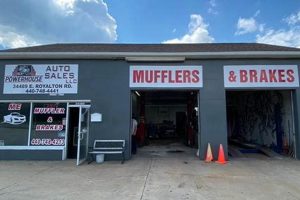
This establishment specializes in the maintenance and repair of exhaust systems and braking mechanisms in vehicles. Services typically encompass the replacement of worn or damaged components within these systems to ensure proper functionality and safety. For instance, a technician might replace a corroded exhaust pipe or install new brake pads on a vehicle.
Maintaining these systems is crucial for vehicle safety, performance, and environmental compliance. Well-functioning brakes are paramount for preventing accidents, while a properly maintained exhaust system ensures optimal fuel efficiency and reduces harmful emissions. The longevity of these systems can be affected by driving conditions, environmental factors, and regular maintenance practices.
The following sections will delve into specific aspects of exhaust and brake system maintenance, including common problems, diagnostic procedures, and recommended service intervals. This information aims to provide a clearer understanding of how to keep these critical vehicle systems operating effectively.
Maintenance Tips for Exhaust and Brake Systems
The following guidelines offer practical advice for maintaining vehicle exhaust and brake systems, ensuring optimal performance and longevity. Adhering to these recommendations can contribute to enhanced safety and reduced repair costs.
Tip 1: Schedule Regular Inspections: Periodic inspections of brake pads, rotors, and exhaust components can identify potential problems early, preventing more extensive and costly repairs. For example, brake pad thickness should be checked at every oil change.
Tip 2: Monitor Brake Fluid Levels: Maintaining proper brake fluid levels is essential for consistent braking performance. Low fluid levels can indicate leaks in the system, requiring immediate attention. Fluid should be replaced according to the manufacturer’s recommendations.
Tip 3: Listen for Unusual Noises: Any squealing, grinding, or rattling noises emanating from the brakes or exhaust system should be investigated promptly. These sounds often indicate worn components or potential system failures.
Tip 4: Avoid Harsh Braking: Aggressive braking puts undue stress on brake components, leading to premature wear. Smooth, controlled braking techniques can extend the lifespan of brake pads and rotors.
Tip 5: Address Rust and Corrosion: Rust and corrosion can significantly weaken exhaust system components. Applying rust-inhibiting coatings can help protect against these elements, particularly in areas prone to road salt exposure.
Tip 6: Check for Exhaust Leaks: Exhaust leaks can lead to reduced fuel efficiency and potentially dangerous carbon monoxide exposure. Regular inspections should include a thorough examination of exhaust pipes, mufflers, and catalytic converters for signs of leakage.
Adhering to these maintenance tips can significantly extend the lifespan of vehicle exhaust and brake systems, contributing to enhanced safety, improved performance, and reduced long-term repair costs. Prioritizing proactive maintenance is a sound investment in vehicle reliability.
The subsequent sections will address more in-depth diagnostic procedures and common repair scenarios related to exhaust and brake system maintenance.
1. Replacement

The process of component replacement is fundamental to automotive exhaust and braking system maintenance. Its proper execution ensures continued vehicle operation within safety and performance parameters. Replacing worn or damaged parts is a critical element of maintaining system integrity.
- Brake Pad Replacement
Worn brake pads diminish braking effectiveness and can damage rotors. Replacement involves removing the old pads, inspecting the rotors for damage (which may also require replacement), and installing new pads with appropriate lubrication. Failure to replace worn pads results in increased stopping distances and potential accidents.
- Muffler Replacement
A damaged or corroded muffler compromises exhaust system efficiency and can increase noise pollution. Replacement necessitates disconnecting the old muffler, ensuring proper alignment with the exhaust pipes, and securely attaching the new muffler using appropriate hardware. Ignoring a damaged muffler can lead to exhaust leaks and increased vehicle emissions.
- Brake Rotor Replacement
Warped or excessively worn brake rotors reduce braking performance and can cause vibrations. Replacement involves removing the old rotor, cleaning the hub surface, and installing a new rotor according to manufacturer specifications. Improper rotor replacement can result in brake pulsation and reduced stopping power.
- Exhaust Pipe Replacement
Corroded or damaged exhaust pipes allow exhaust leaks, impacting fuel efficiency and potentially exposing occupants to harmful gases. Replacement requires precise cutting and fitting of the new pipe, ensuring a secure and leak-free connection. Neglecting exhaust pipe damage can lead to increased emissions and potential health hazards.
These replacement examples underscore the significance of addressing component wear and damage within exhaust and braking systems. Timely and correct replacements are essential for maintaining vehicle safety, performance, and compliance with environmental regulations. These actions preserve system functionality and prevent further damage to related components.
2. Inspection

Thorough inspection protocols are paramount to the effective maintenance and repair of automotive exhaust and braking systems. Comprehensive assessment identifies potential issues before they escalate into major safety or performance concerns, streamlining service and preventing costly repairs.
- Brake Pad Thickness Assessment
Visual inspection of brake pad thickness provides an immediate indicator of wear. Measurements should be taken to compare against manufacturer specifications for minimum acceptable thickness. Insufficient pad thickness compromises braking efficiency, increasing stopping distances. Ignoring this can lead to rotor damage requiring more extensive repairs.
- Exhaust System Leak Detection
A physical inspection of the entire exhaust system, including pipes, muffler, and catalytic converter, allows detection of corrosion, cracks, and loose connections. Specialized equipment, such as smoke testers, can pinpoint leaks that are not visually apparent. Exhaust leaks diminish fuel efficiency and may introduce harmful gases into the vehicle cabin.
- Brake Rotor Condition Evaluation
Inspection of brake rotors involves assessing surface condition for scoring, warping, and excessive wear. Measurements of rotor thickness ensure compliance with minimum specifications. Damaged rotors reduce braking effectiveness and can cause vibrations or pulsations during braking. Ignoring rotor issues can affect steering control.
- Hydraulic System Examination
A detailed examination of the hydraulic brake system includes checking brake lines for leaks, inspecting the master cylinder for proper function, and evaluating brake fluid condition. Contaminated or low brake fluid can compromise braking performance. Leaks within the hydraulic system lead to reduced brake pressure and potential brake failure.
These inspection facets collectively inform decisions regarding necessary repairs or component replacements within exhaust and braking systems. Adherence to diligent inspection procedures fosters vehicle safety, optimizes performance, and minimizes the likelihood of unexpected system failures. These inspections should be conducted regularly to maintain optimum vehicle condition.
3. Performance

Vehicle performance is intrinsically linked to the condition and functionality of its exhaust and braking systems. The efficiency of these systems directly affects acceleration, fuel economy, and overall driving experience. Proper maintenance and repair contribute significantly to optimized vehicle performance characteristics.
- Braking Efficiency and Response
The responsiveness and efficiency of the braking system are critical determinants of vehicle performance. Properly functioning brakes ensure swift and controlled deceleration, enhancing safety and driver confidence. Worn brake pads, damaged rotors, or hydraulic system malfunctions compromise braking performance, increasing stopping distances and potentially leading to accidents. Addressing these issues directly improves vehicle handling and safety in emergency situations.
- Exhaust System Flow and Engine Power
The exhaust system’s design and condition influence engine power output. A properly functioning exhaust system facilitates efficient removal of exhaust gases, reducing backpressure and allowing the engine to operate at its optimal potential. Restrictions in the exhaust system, such as a clogged catalytic converter or damaged muffler, impede exhaust flow, diminishing engine power and fuel economy. Maintaining an unobstructed exhaust system enhances engine performance and fuel efficiency.
- Noise Reduction and Driving Comfort
The exhaust system plays a crucial role in noise reduction, contributing to a more comfortable driving experience. A functioning muffler effectively dampens engine noise, reducing sound levels both inside and outside the vehicle. Damaged or deteriorated mufflers increase noise pollution, diminishing driving comfort and potentially violating noise regulations. Addressing exhaust system issues improves the acoustic environment within and around the vehicle.
- Emissions Control and Environmental Impact
The catalytic converter, a key component of the exhaust system, reduces harmful emissions, mitigating the vehicle’s environmental impact. A properly functioning catalytic converter converts pollutants into less harmful substances. A damaged or ineffective catalytic converter increases emissions, contributing to air pollution and potentially failing emissions tests. Maintaining the exhaust system ensures compliance with environmental regulations and reduces the vehicle’s carbon footprint.
Collectively, these performance aspects highlight the importance of proper maintenance of exhaust and braking systems. Neglecting these systems impacts not only the vehicle’s drivability but also safety, environmental responsibility, and compliance with legal standards. Focusing on the condition of these elements secures efficient and safe vehicle operation.
4. Safety

Automotive safety is intrinsically linked to the condition and proper functioning of both braking and exhaust systems. Compromised brakes directly increase the risk of collisions due to reduced stopping power and increased stopping distances. Similarly, a malfunctioning exhaust system can lead to carbon monoxide leaks, posing a significant health hazard to vehicle occupants, potentially resulting in loss of consciousness or even death. The synergistic effect of both systems functioning optimally is a foundational element of vehicular safety.
Brake system maintenance, including timely pad and rotor replacements, is essential for preventing accidents. For example, neglecting worn brake pads can lead to rotor damage and eventual brake failure, especially in emergency braking situations. Exhaust system integrity is equally critical. Exhaust leaks not only reduce fuel efficiency and increase emissions, but they can also allow harmful gases to enter the cabin, endangering occupants. Regular inspection and repair, therefore, are not merely preventative maintenance but crucial safety measures. Ignoring these issues can result in real-world consequences, such as collisions, injuries, and fatalities.
Prioritizing the maintenance of exhaust and brake systems directly enhances vehicle safety and reduces the potential for accidents and health hazards. Understanding the critical role these systems play in overall vehicle safety underscores the importance of regular inspections, timely repairs, and adherence to manufacturer-recommended service intervals. Consistent attention to these details ensures that vehicles operate within established safety parameters, protecting both occupants and other road users. Overlooking this imperative places everyone at risk.
5. Maintenance

Consistent maintenance is paramount for the reliable operation and longevity of vehicle exhaust and brake systems. Neglecting scheduled maintenance intervals can lead to diminished performance, increased safety risks, and costly repairs. Properly executed maintenance procedures preserve system integrity, optimize functionality, and ensure regulatory compliance.
- Scheduled Inspections and Component Checks
Regular inspections identify potential problems before they escalate. These assessments involve examining brake pad thickness, rotor condition, exhaust pipe integrity, and muffler functionality. For instance, brake pad wear below a specified threshold necessitates immediate replacement to prevent rotor damage and maintain braking efficiency. Similarly, detecting exhaust leaks early allows for timely repairs, preventing harmful emissions and fuel efficiency losses.
- Fluid Maintenance and Hydraulic System Servicing
Maintaining proper fluid levels and replacing fluids at recommended intervals are crucial for optimal brake system performance. Brake fluid absorbs moisture over time, reducing its boiling point and compromising braking effectiveness. Regular fluid flushes remove contaminants and ensure consistent hydraulic pressure. Proper servicing of the hydraulic system, including master cylinder and brake line inspections, prevents leaks and maintains responsiveness.
- Component Lubrication and Adjustment
Proper lubrication of brake system components, such as caliper slides and parking brake cables, ensures smooth operation and prevents premature wear. Adjustment of parking brake mechanisms maintains holding power and prevents slippage. Neglecting these maintenance steps can lead to binding brakes, uneven wear, and reduced braking efficiency.
- Rust Prevention and Corrosion Control
Application of rust inhibitors to exhaust system components, particularly in regions with high salt exposure, mitigates corrosion and extends component lifespan. Regular washing of undercarriage areas removes corrosive road salts, preventing accelerated degradation of exhaust and brake lines. Addressing rust and corrosion early prevents structural weakening and potential system failures.
These maintenance facets are integral to the continued functionality and safety of exhaust and brake systems. Adhering to scheduled maintenance intervals, performing thorough inspections, and promptly addressing identified issues are crucial for maintaining vehicle reliability, optimizing performance, and ensuring compliance with safety and environmental regulations. This proactive approach minimizes the risk of system failures and reduces long-term ownership costs.
6. Diagnosis

Accurate diagnosis is the cornerstone of effective maintenance and repair for automotive exhaust and braking systems. Precise identification of issues, utilizing appropriate diagnostic tools and techniques, minimizes unnecessary repairs and ensures that only the affected components are addressed, thereby optimizing repair efficiency and cost-effectiveness.
- Symptom Analysis and Customer Interview
The initial stage of diagnosis involves gathering information regarding the symptoms experienced by the vehicle operator. This includes understanding noises, vibrations, and performance changes observed during driving. For example, a customer reporting squealing brakes may indicate worn brake pads, while a rattling exhaust could suggest a loose or damaged component. Careful symptom analysis narrows the scope of the subsequent technical examination.
- Visual Inspection and Component Examination
A thorough visual inspection of exhaust and braking system components identifies readily apparent issues. This includes checking brake pad thickness, rotor condition, exhaust pipe integrity, and muffler functionality. Corrosion, leaks, cracks, and excessive wear are all indicators of potential problems requiring further investigation. For instance, a bulging brake hose suggests impending failure and necessitates immediate replacement.
- Diagnostic Tool Utilization and Data Interpretation
Modern diagnostic tools provide valuable data for assessing system performance. For braking systems, this includes measuring brake pressure, monitoring anti-lock braking system (ABS) functionality, and evaluating electronic stability control (ESC) performance. For exhaust systems, diagnostic tools can analyze emissions levels, monitor oxygen sensor readings, and detect catalytic converter malfunctions. Interpretation of this data guides repair decisions and confirms the accuracy of the initial diagnosis.
- Functional Testing and Performance Evaluation
Functional testing involves assessing system performance under simulated operating conditions. This includes brake testing to measure stopping distances and evaluate brake balance, as well as exhaust system testing to detect leaks and measure backpressure. Performance evaluation confirms the effectiveness of repairs and ensures that the system operates within specified parameters. For instance, a post-repair brake test should demonstrate improved stopping distances compared to pre-repair measurements.
These diagnostic steps, when applied methodically, result in accurate identification of issues within exhaust and braking systems. Effective diagnostic procedures ensure that repairs are targeted, efficient, and cost-effective, ultimately contributing to improved vehicle safety, performance, and reliability. The precision of the diagnosis directly impacts the effectiveness and longevity of the subsequent repairs.
7. Repair
Repair activities form a core function within any establishment specializing in exhaust and braking system maintenance, directly addressing identified faults and restoring system functionality to optimal levels. The effectiveness of repair procedures is directly proportional to the accuracy of the initial diagnosis and the skill of the technicians involved. Addressing issues like brake line leaks, catalytic converter failure, or muffler damage demonstrates the practical application of repair services. Each service directly restores the affected system to its intended operational state.
The connection between repair and the broader scope of exhaust and braking system services is causal and consequential. Identified problems prompt specific repair actions. Improperly executed repairs can lead to recurrence of the original issue or introduce new problems. Using high-quality replacement parts and adhering to manufacturer specifications for reassembly are essential components of effective repair procedures. Regular brake pad replacements with quality components is a typical example of how a basic repair maintains vehicle safety.
Ultimately, effective repair procedures are crucial for ensuring vehicle safety, performance, and compliance with emissions regulations. Properly addressed faults prevent further system degradation and minimize the risk of accidents or environmental damage. The ability to competently diagnose and repair exhaust and braking systems is a hallmark of reputable establishments offering such services. This expertise forms the bedrock of vehicle maintenance, ensuring safe and efficient transportation.
Frequently Asked Questions About Exhaust and Brake Systems
The following questions and answers address common inquiries regarding the maintenance, repair, and performance of automotive exhaust and brake systems. The information provided aims to clarify industry practices and offer insights into system operation.
Question 1: What constitutes a “brake service”?
A brake service typically involves inspecting brake pads, rotors, calipers, and hydraulic lines for wear or damage. The service includes cleaning and lubricating components, replacing worn pads or rotors, and flushing the brake fluid to ensure optimal system performance.
Question 2: How frequently should exhaust systems be inspected?
Exhaust systems should be inspected at least annually or whenever unusual noises, such as rattling or hissing, are detected. Regular inspections can identify corrosion, leaks, or damaged components before they lead to significant performance issues or safety hazards.
Question 3: Is it necessary to replace brake rotors when replacing brake pads?
Replacement of brake rotors depends on their condition. If rotors are scored, warped, or below minimum thickness specifications, replacement is recommended. If rotors are within specifications and free from damage, they may be resurfaced or reused with new brake pads.
Question 4: What are the signs of a failing catalytic converter?
Symptoms of a failing catalytic converter include reduced engine performance, decreased fuel efficiency, a sulfur-like smell, and illumination of the check engine light. Diagnostic testing can confirm catalytic converter malfunction and determine the need for replacement.
Question 5: How does brake fluid affect braking performance?
Brake fluid transmits hydraulic pressure from the master cylinder to the brake calipers, enabling braking action. Contaminated or aged brake fluid can compromise braking performance due to reduced boiling point and increased compressibility. Regular brake fluid flushes maintain optimal braking efficiency.
Question 6: What is the purpose of a muffler in the exhaust system?
The muffler reduces engine noise generated by the exhaust system. It employs internal baffles and chambers to dampen sound waves and minimize noise pollution. A damaged or deteriorated muffler can increase noise levels and potentially violate noise regulations.
These questions and answers provide foundational knowledge concerning exhaust and brake systems. Understanding these aspects can empower vehicle owners to make informed decisions regarding maintenance and repair.
The following sections will explore specific diagnostic procedures used in the evaluation of exhaust and brake system performance.
r & r muffler & brake
This exposition has illuminated the multifaceted nature of services pertaining to vehicle exhaust and braking systems. Key aspects examined include the critical role of regular inspections, the precision required in diagnosing system faults, and the importance of using quality components during repair or replacement procedures. The intricate relationship between these systems and overall vehicle safety, performance, and environmental impact has been thoroughly detailed.
Given the profound implications of properly functioning exhaust and braking systems, adherence to recommended maintenance schedules and prompt attention to emerging issues are paramount. Neglecting these critical vehicle components carries substantial risks, impacting not only personal safety but also the well-being of other road users and the environment. Prioritizing expert care for these systems constitutes a responsible and essential aspect of vehicle ownership.