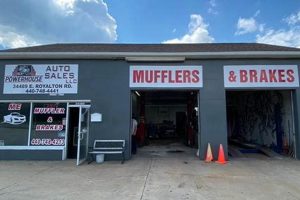
This automotive service sector focuses on the repair, maintenance, and replacement of braking systems and exhaust components in vehicles. These specialized shops address issues ranging from worn brake pads and rotors to damaged mufflers and exhaust pipes. Their expertise ensures vehicles operate safely and within legally mandated emission standards.
Properly functioning brakes are paramount for vehicle safety, preventing accidents and minimizing stopping distances. Effective exhaust systems contribute to cleaner air by reducing harmful emissions, improving fuel efficiency, and mitigating noise pollution. These systems also play a role in engine performance and longevity. The services provided are crucial for maintaining both vehicle safety and environmental compliance, contributing to a more sustainable transportation ecosystem.
With a clear understanding of these services, the following article will delve into specific challenges faced by independent shops, explore innovative solutions within the automotive repair industry, and provide valuable insights for vehicle owners seeking reliable maintenance and repair options.
Vehicle Maintenance Guidance
The following guidance focuses on maintaining essential vehicle systems to ensure safety, optimal performance, and regulatory compliance. These tips pertain to braking and exhaust systems, areas of expertise for dedicated automotive service providers.
Tip 1: Regular Brake Inspections: Schedule brake inspections at least twice annually, or more frequently if experiencing unusual noises, vibrations, or extended stopping distances. These inspections should include assessment of brake pad thickness, rotor condition, and hydraulic system integrity.
Tip 2: Prompt Brake Pad Replacement: Replace brake pads immediately upon reaching the minimum recommended thickness. Delaying replacement can cause rotor damage, increasing repair costs and compromising braking performance.
Tip 3: Monitor Brake Fluid Levels: Regularly check brake fluid levels and top off as needed. Low brake fluid can indicate a leak in the hydraulic system, requiring immediate attention to prevent brake failure.
Tip 4: Address Exhaust Leaks Immediately: Exhaust leaks can release harmful emissions into the vehicle cabin and reduce fuel efficiency. Address exhaust leaks promptly to protect occupants and maintain optimal engine performance.
Tip 5: Muffler Integrity: Inspect the muffler for signs of rust, corrosion, or physical damage. A compromised muffler can lead to excessive noise and potential exhaust system failure.
Tip 6: Catalytic Converter Function: Ensure the catalytic converter is functioning properly. A malfunctioning catalytic converter can result in increased emissions and reduced engine performance, potentially leading to regulatory violations.
Tip 7: Professional Exhaust System Evaluation: Seek professional evaluation of the exhaust system if experiencing reduced fuel economy, unusual engine noises, or illuminated check engine lights. A comprehensive inspection can identify underlying issues and prevent costly repairs.
Adhering to this guidance will contribute to vehicle safety, environmental responsibility, and reduced long-term repair expenses. Proactive maintenance of these critical systems is essential for responsible vehicle ownership.
With these maintenance considerations in mind, the following sections will examine related aspects of automotive repair and maintenance in greater detail.
1. Brake Pad Friction

Brake pad friction is a critical factor influencing the performance and safety of a vehicle’s braking system. Specialized automotive service providers focusing on brake repair and maintenance directly address issues related to brake pad friction, ensuring optimal stopping power and safety.
- Coefficient of Friction and Stopping Distance
The coefficient of friction between the brake pad and rotor directly affects stopping distance. A higher coefficient translates to greater stopping power and shorter distances. Automotive service technicians assess brake pad materials to ensure they provide an adequate coefficient of friction for the vehicle’s weight and intended use. Inadequate friction increases the risk of accidents, particularly in emergency braking situations.
- Brake Pad Material Composition
The material composition of brake pads, including organic, semi-metallic, and ceramic formulations, influences friction characteristics. Each material exhibits varying levels of friction, heat resistance, and wear rates. Service providers select and install brake pads based on the vehicle manufacturer’s recommendations and the driver’s specific needs and driving conditions. The correct material is vital for consistent and reliable braking performance.
- Impact of Temperature on Friction
Friction is affected by temperature. High brake temperatures, often resulting from frequent or aggressive braking, can lead to brake fade, a reduction in friction and stopping power. Brake service specialists evaluate braking systems to ensure adequate ventilation and heat dissipation to mitigate brake fade. Selecting brake pads with high heat resistance is crucial for vehicles subjected to demanding driving conditions.
- Wear and Maintenance Considerations
Brake pad friction degrades over time due to wear. Regular inspections are essential to assess pad thickness and friction performance. Specialized service providers offer inspections and replacements to maintain optimal braking efficiency. Neglecting brake pad wear can lead to rotor damage, significantly increasing repair costs and compromising safety.
These facets of brake pad friction highlight the significance of quality brake services. Routine maintenance and proper material selection by specialized automotive service providers ensure the vehicle’s braking system operates safely and effectively, mitigating risks associated with reduced friction and compromised stopping distances.
2. Rotor Surface Integrity

Rotor surface integrity is a critical factor influencing braking system performance and safety. Automotive service providers specializing in brake repair and maintenance, including those identified as “American Brake and Muffler,” directly address issues related to rotor surface condition to ensure optimal braking functionality.
- Impact of Surface Roughness on Brake Pad Wear
The surface roughness of a brake rotor significantly affects brake pad wear rates. An excessively rough surface can accelerate pad wear, reducing their lifespan and requiring more frequent replacements. Service technicians assess rotor surface finish and employ resurfacing techniques to restore a smooth, consistent surface that minimizes abrasive wear on brake pads. Inadequate rotor surface finish compromises braking efficiency and increases maintenance costs.
- Rotor Thickness Variation and Brake Pulsation
Variations in rotor thickness, often caused by uneven wear or heat stress, can lead to brake pulsation and vibrations during braking. These irregularities reduce braking efficiency and driver comfort. Specialized automotive service providers measure rotor thickness and assess runout to identify and correct thickness variations. Addressing thickness variations improves braking stability and enhances overall vehicle safety.
- Heat Cracking and Structural Integrity
Repeated exposure to high temperatures during braking can cause heat cracking on the rotor surface. These cracks compromise structural integrity and reduce the rotor’s ability to dissipate heat, leading to brake fade. Service providers inspect rotors for signs of heat cracking and recommend replacement when cracks exceed acceptable limits. Failure to address heat cracking increases the risk of catastrophic brake failure.
- Corrosion and Braking Performance
Surface corrosion on brake rotors, particularly in regions with high humidity or road salt usage, can reduce braking performance. Corrosion inhibits proper contact between the brake pad and rotor surface, diminishing friction and stopping power. Automotive service technicians remove corrosion using specialized tools and coatings to restore optimal surface conditions. Neglecting rotor corrosion can significantly compromise braking effectiveness.
These aspects of rotor surface integrity underscore the importance of specialized brake services. Regular inspections and proper maintenance by automotive service providers such as those focusing on brake and exhaust systems ensure braking systems operate safely and effectively, minimizing the risks associated with compromised rotor surfaces and diminished braking capabilities.
3. Hydraulic System Pressure

Hydraulic system pressure is fundamentally linked to the operational effectiveness of braking systems serviced by establishments like “American Brake and Muffler.” The braking system relies on pressurized hydraulic fluid to transmit force from the brake pedal to the calipers, actuating the brake pads against the rotors. Insufficient hydraulic pressure directly reduces braking force, increasing stopping distances and potentially leading to accidents. The ability to maintain and diagnose problems related to this pressure is a core competency.
A common example of this connection is the presence of a brake fluid leak. A compromised hydraulic line, master cylinder, or caliper seal can result in a pressure drop within the system. This manifests as a spongy brake pedal feel or reduced braking response. Automotive service professionals specializing in brakes utilize pressure testing equipment to identify leaks and evaluate the performance of hydraulic components. They ensure the system operates within the manufacturer’s specified pressure range, typically achieved through component replacement, line repairs, and fluid bleeding to remove air pockets. Proper hydraulic pressure also has implications for ABS (Anti-lock Braking System) function and the stability control system.
The practical significance of understanding and maintaining proper hydraulic system pressure lies in ensuring vehicle safety and compliance with regulatory standards. Shops offering comprehensive brake services, such as “American Brake and Muffler,” are responsible for diagnosing and rectifying pressure-related issues to guarantee that vehicles can stop effectively under varying conditions. This competency forms a cornerstone of their service offering, impacting both vehicle safety and customer confidence. Failure to address these issues can have severe safety ramifications.
4. Exhaust Gas Flow
Exhaust gas flow is intrinsically linked to the operational integrity of a vehicle’s exhaust system, an area of specialization for businesses such as “American Brake and Muffler.” Restrictions in exhaust gas flow, resulting from factors like a clogged catalytic converter or a damaged muffler, negatively impact engine performance and fuel efficiency. An obstructed exhaust system creates backpressure, hindering the engine’s ability to expel exhaust gases efficiently. The direct consequence is a reduction in engine power output and increased fuel consumption. Specialized automotive service providers assess exhaust gas flow to diagnose and rectify these issues.
The importance of maintaining optimal exhaust gas flow is further exemplified in emissions testing. Vehicles with restricted exhaust systems often fail emissions tests due to incomplete combustion and elevated levels of pollutants. For example, a damaged muffler can not only increase noise pollution but also contribute to inefficient catalytic converter function, increasing harmful emissions. Therefore, “American Brake and Muffler,” and similar establishments, conduct exhaust system inspections and repairs to ensure vehicles comply with environmental regulations. These services encompass exhaust pipe replacement, muffler repair, and catalytic converter maintenance, all aimed at restoring proper exhaust gas flow.
In summation, maintaining optimal exhaust gas flow is essential for both vehicle performance and environmental compliance. Obstructions within the exhaust system directly affect engine power, fuel efficiency, and emissions levels. Automotive service providers specializing in exhaust systems, such as “American Brake and Muffler,” play a critical role in diagnosing and rectifying flow-related issues. The understanding of exhaust gas dynamics and its impact on vehicle operation forms a cornerstone of their service offering, ensuring vehicles operate efficiently and within regulatory limits.
5. Muffler Noise Reduction

Muffler noise reduction is a primary function of a vehicle’s muffler and a significant service offering for automotive businesses, including those operating under names like “American Brake and Muffler.” The muffler’s design incorporates a series of chambers and baffles that attenuate sound waves generated by the engine’s combustion process. Defective or damaged mufflers fail to adequately reduce exhaust noise, resulting in excessive vehicle noise levels. These levels can violate local ordinances and negatively impact the driving experience. The connection to establishments specializing in exhaust systems stems from their expertise in diagnosing and rectifying muffler-related noise issues.
The cause-and-effect relationship is straightforward: a properly functioning muffler reduces noise; a damaged muffler increases noise. “American Brake and Muffler,” as a hypothetical example, would offer services to address this, including muffler repair or replacement. For instance, a rusted-through muffler, common in regions with road salt use, requires replacement to restore noise reduction. The significance is both environmental, reducing noise pollution, and legal, ensuring vehicle compliance with noise regulations. Beyond regulatory compliance, effective muffler noise reduction contributes to driver and passenger comfort. Excessive exhaust noise can be distracting and fatiguing, particularly on long journeys. Replacing a failing muffler restores a quieter, more pleasant driving experience.
In summary, muffler noise reduction is an essential vehicle function and a core service for establishments providing exhaust system maintenance. Damaged or ineffective mufflers lead to increased noise pollution and potential regulatory violations. Properly functioning mufflers enhance both environmental quality and the driving experience. The ability to diagnose and rectify muffler-related noise issues is a key competency for automotive service providers, ensuring vehicles operate within acceptable noise limits and provide a comfortable driving environment.
6. Emissions Control Efficiency

Emissions control efficiency is a critical aspect of vehicle operation, directly impacting air quality and regulatory compliance. Automotive service providers, including businesses such as “American Brake and Muffler,” play a vital role in maintaining and improving this efficiency through diagnostics, repairs, and component replacements.
- Catalytic Converter Functionality
The catalytic converter is a primary component in reducing harmful emissions. It facilitates chemical reactions that convert pollutants like hydrocarbons, carbon monoxide, and nitrogen oxides into less harmful substances. “American Brake and Muffler” may assess catalytic converter performance through emissions testing and recommend replacement if the converter fails to meet required efficiency standards. A malfunctioning converter leads to increased emissions and potential regulatory violations.
- Oxygen Sensor Accuracy
Oxygen sensors measure the oxygen content in the exhaust stream, providing feedback to the engine control unit (ECU) to optimize the air-fuel mixture. Inaccurate oxygen sensor readings can lead to inefficient combustion and increased emissions. Diagnostic services provided by “American Brake and Muffler” include testing oxygen sensor performance and replacing faulty sensors to ensure accurate air-fuel ratio control. Proper sensor function is essential for maintaining optimal emissions control.
- Exhaust System Integrity
Leaks within the exhaust system can compromise emissions control efficiency. Exhaust leaks allow unburned hydrocarbons to escape into the atmosphere, increasing pollution levels. “American Brake and Muffler” conduct exhaust system inspections to identify and repair leaks, ensuring that all exhaust gases pass through the catalytic converter for proper treatment. Maintaining exhaust system integrity is crucial for minimizing emissions.
- EGR (Exhaust Gas Recirculation) System Operation
The EGR system recirculates a portion of the exhaust gas back into the engine’s intake manifold, reducing combustion temperatures and lowering nitrogen oxide (NOx) emissions. Malfunctions within the EGR system can lead to increased NOx levels. “American Brake and Muffler” may diagnose and repair EGR system components, such as valves and sensors, to ensure proper NOx reduction. A properly functioning EGR system contributes significantly to emissions control efficiency.
These facets highlight the interconnectedness of various components in achieving optimal emissions control efficiency. Automotive service providers specializing in exhaust systems, like “American Brake and Muffler,” are instrumental in ensuring that these components function correctly, thereby reducing harmful emissions and contributing to cleaner air. Their expertise extends from diagnostics and repairs to component replacements, all aimed at maintaining regulatory compliance and promoting environmental responsibility.
Frequently Asked Questions About Brake and Exhaust Systems
This section addresses common inquiries regarding vehicle brake and exhaust systems, providing factual information to assist in informed decision-making regarding vehicle maintenance and repair.
Question 1: What are the primary indicators of brake system malfunction?
Common indicators include squealing or grinding noises during braking, a soft or spongy brake pedal feel, increased stopping distances, and illumination of the brake warning light. These symptoms suggest potential issues requiring professional inspection.
Question 2: How frequently should brake pads be replaced?
Brake pad replacement frequency varies based on driving habits and environmental conditions. However, inspections are generally recommended every six months or 6,000 miles to assess pad thickness and overall brake system condition.
Question 3: What are the potential consequences of neglecting exhaust system repairs?
Neglecting exhaust system repairs can lead to reduced fuel efficiency, increased emissions, potential carbon monoxide poisoning, and non-compliance with environmental regulations. Prompt attention to exhaust system issues is critical for safety and legality.
Question 4: What is the role of the catalytic converter in emissions control?
The catalytic converter reduces harmful pollutants in exhaust gases by converting them into less harmful substances. A malfunctioning catalytic converter can result in increased emissions and failure to meet emissions standards.
Question 5: Can a damaged muffler affect vehicle performance?
A damaged muffler can increase vehicle noise levels and, in some cases, negatively impact engine performance due to increased backpressure. Repair or replacement is recommended to maintain optimal performance and noise levels.
Question 6: Are there different types of brake pads available, and how do I choose the right one?
Various brake pad materials exist, including organic, semi-metallic, and ceramic. The appropriate choice depends on vehicle type, driving conditions, and braking requirements. Consulting with a qualified technician is recommended to select the optimal brake pad type.
Regular inspection and maintenance of both brake and exhaust systems are essential for vehicle safety, performance, and environmental responsibility. Addressing issues promptly can prevent more costly repairs and ensure compliance with regulations.
The following sections will delve into specific diagnostic procedures and repair techniques for these critical vehicle systems.
Concluding Remarks
This exploration has illuminated the critical role automotive service providers, exemplified by establishments such as “American Brake and Muffler,” play in ensuring vehicle safety, performance, and environmental responsibility. The discussions spanned the significance of brake pad friction, rotor surface integrity, hydraulic system pressure, exhaust gas flow, muffler noise reduction, and emissions control efficiency. Maintaining these systems in optimal condition is paramount for safe operation and regulatory compliance.
The understanding of these facets of vehicle maintenance allows for responsible vehicle ownership. Diligent attention to the braking and exhaust systems, through regular inspections and timely repairs, contributes to safer roads and a cleaner environment. A commitment to proactive vehicle care ensures both personal well-being and the preservation of shared resources.