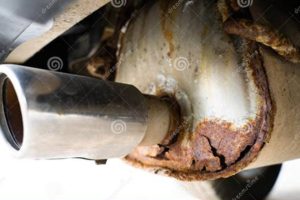
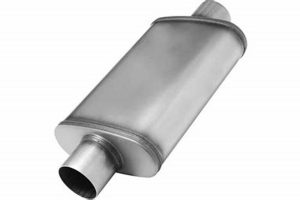
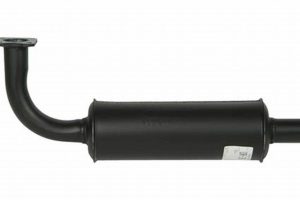
The act of detaching a vehicle’s exhaust silencing component is a modification that alters the sound profile emitted by the engine. This process entails separating the component from the exhaust system, typically through mechanical means. An example would be the removal of said component from a passenger car to increase exhaust volume.
Performing this action is sometimes undertaken to achieve a perceived improvement in engine performance or to create a louder, more aggressive exhaust note. Historically, modifications to exhaust systems have been employed in motorsports and by automotive enthusiasts seeking to personalize their vehicles. However, it is important to recognize that altering exhaust systems can have implications for compliance with noise regulations and emissions standards.
The following sections will detail the potential considerations, methods, and ramifications associated with physically disconnecting this component. Subsequent discussion will focus on safety precautions, necessary tools, and potential legal ramifications, providing a complete understanding of the topic.
Essential Considerations Before Separating the Exhaust Silencer
Prior to undertaking exhaust system modifications, careful evaluation of legal, safety, and performance implications is essential. This section provides key considerations for those contemplating such alterations.
Tip 1: Verify Local Regulations: Consult local and regional vehicle codes regarding permissible noise levels and exhaust modifications. Failure to comply may result in fines or mandated vehicle inspections.
Tip 2: Assess Potential Performance Impact: While increased exhaust flow may be perceived as a performance enhancement, improper modifications can negatively impact engine efficiency and power output. Consider the vehicle’s intended use and the potential for adverse effects.
Tip 3: Prioritize Safety Equipment: Always use appropriate personal protective equipment (PPE), including eye protection, gloves, and hearing protection. Exhaust systems can be hot and potentially expel hazardous materials.
Tip 4: Secure the Vehicle: Ensure the vehicle is securely supported on jack stands before commencing any work underneath. Never rely solely on a jack for support.
Tip 5: Consider Professional Assistance: If lacking experience or expertise in automotive repair, seek assistance from a qualified mechanic or exhaust specialist. Improper modifications can be costly and potentially dangerous.
Tip 6: Plan the Removal Strategy: Determine the method of separation – cutting, unbolting, or other. Carefully assess the accessibility and condition of the fasteners and exhaust piping. Select appropriate tools for the task.
Tip 7: Inspect the Remaining System: After completing the action, carefully inspect the remaining exhaust system for leaks, damage, or potential hazards. Address any issues promptly to ensure safe and reliable operation.
Careful planning and adherence to safety guidelines are paramount when altering a vehicle’s exhaust system. Thoroughly consider the potential ramifications and seek professional assistance when necessary.
The following sections will delve into the technical aspects of this process, providing detailed instructions and addressing potential challenges.
1. Safety Precautions

The process of detaching an exhaust silencing component presents numerous safety hazards requiring strict adherence to precautionary measures. Neglecting these precautions can result in physical injury, equipment damage, or environmental harm. The extreme temperatures of exhaust systems necessitate the use of heat-resistant gloves and protective eyewear to prevent burns and eye damage from flying debris. Similarly, the potential for exposure to particulate matter and noxious fumes mandates the use of respiratory protection to avoid inhalation hazards. Failure to properly secure the vehicle on jack stands can lead to catastrophic accidents and severe injury if the vehicle collapses during work. Therefore, the integrity of the supports must be verified before commencing any cutting operations.
Improper handling of cutting tools, such as torches or saws, presents a significant risk of lacerations, burns, and projectile injuries. A real-world example involves technicians sustaining severe burns from sparks produced when using cutting torches without proper shielding. Furthermore, attempting to detach an exhaust component while the system is still hot dramatically increases the risk of severe burns. In addition, the accidental ignition of flammable materials in the vicinity of the work area is a potential consequence of neglecting fire safety protocols. The presence of catalytic converters introduces another safety consideration, as these components can contain hazardous materials requiring specialized handling and disposal procedures.
In summary, the integration of comprehensive safety precautions is not merely an ancillary consideration, but an indispensable component of any operation involving the removal of an exhaust silencing component. Prioritizing safety through the consistent application of appropriate protective equipment and adherence to established protocols minimizes the risk of adverse incidents and ensures a safer working environment. The omission of these precautions represents a severe oversight that can have significant, and potentially irreversible, consequences.
2. Legal Compliance

Legal compliance surrounding vehicle modifications, specifically concerning exhaust systems, represents a critical factor in determining the permissibility of detaching an exhaust silencing component. The legality of such actions is governed by a complex interplay of federal, state, and local regulations designed to mitigate noise pollution and ensure adherence to emissions standards. Understanding these regulations is paramount to avoiding legal repercussions.
- Noise Ordinances
Local noise ordinances often establish maximum permissible decibel levels for vehicle exhaust systems. The removal of an exhaust silencing component invariably increases noise output, potentially exceeding legal limits. For example, many municipalities employ sound level meters to enforce these ordinances, issuing citations to vehicles exceeding the specified thresholds. The severity of penalties can range from monetary fines to mandated vehicle modifications.
- Emissions Regulations
Federal and state emissions regulations mandate the presence and functionality of specific components within a vehicle’s exhaust system, including catalytic converters and, in some cases, mufflers. Removing or disabling these components can violate emissions laws, resulting in fines and the inability to pass vehicle inspections. The Clean Air Act, for instance, establishes federal emissions standards and prohibits tampering with pollution control devices.
- Vehicle Inspection Laws
Many jurisdictions require periodic vehicle inspections to ensure compliance with safety and emissions standards. Removing an exhaust silencing component can cause a vehicle to fail inspection, prohibiting its legal operation on public roads. Inspection procedures typically include visual examination of the exhaust system and emissions testing.
- Tampering Laws
Federal and state laws often explicitly prohibit tampering with a vehicle’s emissions control system. This includes the removal or modification of exhaust system components that are designed to reduce pollutants. Violation of tampering laws can result in substantial fines for both the vehicle owner and the individual or business performing the modification.
The implications of non-compliance with these regulations can extend beyond monetary penalties. In some instances, repeated violations or egregious cases of tampering can result in vehicle impoundment or even criminal charges. Therefore, thorough research of applicable regulations and adherence to legal standards are essential when considering exhaust system modifications, including the disconnection of an exhaust silencing component.
3. Tools Required
The successful and safe detachment of an exhaust silencing component necessitates a specific set of tools, each serving a distinct purpose. The selection and proper utilization of these tools are critical for ensuring a clean, efficient, and hazard-free operation. Improper tools or techniques can lead to damage to the vehicle, personal injury, or both.
- Cutting Implement
A cutting implement is essential for severing the exhaust pipe. Options include a reciprocating saw (Sawzall), a rotary cutting tool (angle grinder or exhaust cutter), or a pipe cutter. The reciprocating saw offers versatility but can create rough cuts. Rotary cutting tools provide cleaner cuts but require more precision and safety precautions. Pipe cutters are specifically designed for exhaust pipes, delivering the cleanest cuts with minimal effort, but are limited to pipes of a certain diameter. Selection depends on pipe material and accessibility; for example, a rusted exhaust pipe may require a more robust cutting implement like a rotary tool.
- Personal Protective Equipment (PPE)
PPE protects against hazards. Safety glasses shield eyes from debris, gloves protect hands from sharp edges and heat, and hearing protection mitigates noise from cutting tools. For instance, prolonged exposure to the noise of an angle grinder can cause permanent hearing damage, highlighting the importance of earplugs or earmuffs. Heat-resistant gloves are crucial when working on a hot exhaust system to prevent severe burns.
- Vehicle Support
Adequate vehicle support is paramount for safety. A hydraulic jack lifts the vehicle, while jack stands provide secure support. Never rely solely on a jack. The jack stands must be rated for the vehicle’s weight and placed on designated support points to prevent slippage or collapse. Using cinder blocks or other improvised supports is unsafe and can lead to serious accidents.
- Fastening Tools
Fastening tools facilitate the removal of any clamps or bolts securing the exhaust component. These include wrenches (socket, open-end, or adjustable), screwdrivers, and potentially a penetrating oil to loosen corroded fasteners. Attempting to force rusted bolts without penetrating oil can result in snapped bolts and increased labor. A socket wrench set provides the versatility needed to address various fastener sizes encountered in exhaust systems.
The proper selection and employment of these tools, ranging from cutting implements to safety gear, are integral to the process of detaching an exhaust silencing component. Each tool contributes to efficiency, safety, and precision. A careful assessment of the specific task and the condition of the exhaust system will determine the optimal tool selection, thereby facilitating a successful modification.
4. Cutting Method
The method employed to sever the exhaust pipe is intrinsically linked to the overall effectiveness and safety of detaching an exhaust silencing component. The choice of cutting method dictates the precision of the separation, the potential for damage to surrounding components, and the risk of personal injury. For instance, utilizing an abrasive cutting wheel generates significant heat and sparks, posing a fire hazard and demanding rigorous adherence to safety protocols. Alternatively, employing a reciprocating saw introduces the risk of vibration-induced fatigue and potential damage to the exhaust systems hangers or mounting points. The selection process must, therefore, consider the material composition of the exhaust pipe, the accessibility of the cutting location, and the available skillset of the individual performing the task.
A practical example illustrating this interconnectedness involves the removal of a severely corroded exhaust silencing component. In such a scenario, attempting to use a pipe cutter may prove ineffective due to the weakened metal. The application of a cutting torch, while potentially more efficient, introduces the added complexity of managing open flames and ensuring adequate ventilation to dissipate fumes. In contrast, a reciprocating saw, equipped with a metal-cutting blade, offers a more controlled approach, albeit with the potential for a less precise cut. Abrasive cutting wheels offer another robust solution, especially when working with hardened steel or stainless steel exhausts. A clean, straight cut simplifies subsequent sealing or joining operations if a replacement component is to be installed.
In conclusion, the selection of the cutting method forms a critical element within the broader process of detaching an exhaust silencing component. The chosen method directly influences the safety of the operation, the integrity of the remaining exhaust system, and the ease of subsequent modifications or repairs. An informed decision, grounded in a thorough understanding of the available tools and their respective limitations, is essential for a successful and safe outcome. This choice is not merely a procedural step but a critical determinant of the project’s overall viability and adherence to safety standards.
5. Performance Impact
The disconnection of a vehicle’s exhaust silencing component, while seemingly a straightforward procedure, invariably affects engine performance. This action, designed to alter the vehicle’s auditory profile, directly influences exhaust gas flow dynamics, which, in turn, can affect engine efficiency and power output. The elimination of backpressure, often incorrectly perceived as universally beneficial, can disrupt the finely tuned balance of an engine’s exhaust system. For example, in naturally aspirated engines, excessive reduction in backpressure can lead to scavenging inefficiency, where the exhaust gases do not properly evacuate the cylinder, resulting in reduced torque and power, particularly at lower engine speeds. The alteration’s effect is not universally beneficial.
Conversely, in turbocharged applications, the removal of an exhaust silencing component may, under certain conditions, yield a performance increase by reducing exhaust restriction. However, this is contingent upon the turbocharger’s specifications, engine management system calibration, and the overall exhaust system design. A poorly planned removal of the exhaust silencing component can disrupt the scavenging effect and lower the gas velocity. This can result in the engine becoming unresponsive. For instance, a vehicle with a poorly implemented exhaust modification may experience turbo lag. Performance modifications have a wide impact on the performance of any given car or engine.
In summary, the performance impact of disconnecting the exhaust silencing component is highly variable and dependent on the specific vehicle and its engine characteristics. While some vehicles may experience a marginal increase in power output, others may suffer a decrease in performance. The interaction between the change and the other components is what ultimately drives performance. The integration of the removal without understanding all the factors can have a negative impact. Therefore, a thorough understanding of engine dynamics and exhaust system design is crucial before undertaking such modifications to avoid unintended consequences and ensure optimal performance.
6. Sealing Methods

Following the detachment of an exhaust silencing component, proper sealing of the remaining exhaust system becomes a critical necessity. This is because the act of severing the exhaust pipe creates an open end, allowing exhaust gases to escape uncontrollably. This uncontrolled release not only compromises the vehicle’s performance but also poses potential safety hazards due to the introduction of exhaust fumes into the vehicle cabin and the risk of burns from hot exhaust gases. The efficacy of the chosen sealing method directly influences the prevention of leaks, the maintenance of exhaust pressure, and the overall operational integrity of the vehicle.
Several sealing methods are commonly employed, each with varying degrees of effectiveness and complexity. Clamping, for example, involves the use of specialized exhaust clamps to mechanically seal the cut end of the pipe. Welding, on the other hand, offers a more permanent and robust solution, fusing the cut end with a cap or connecting it to another exhaust component. The selection of the sealing method depends on factors such as the availability of welding equipment, the desired level of permanence, and the condition of the exhaust pipe. A real-world example would be a situation where a muffler is removed to reduce weight. The subsequent sealing involves welding a plate to the exhaust pipe and testing the seal with a pressure check. An improper weld leads to dangerous exhaust fumes in the cabin.
In summation, the selection of a suitable sealing method is not merely a procedural step but an integral component of the modification process. Effective sealing directly mitigates the potential risks and performance degradation associated with an unsealed exhaust system, ensuring both the safety and functionality of the modified vehicle. A robust seal prevents leaks, maintains proper backpressure where needed, and contributes to a more complete, safe, and efficient system following the modification. The omission of this critical step introduces significant risks and undermines the overall objective of the alteration.
Frequently Asked Questions
This section addresses common inquiries and misconceptions surrounding the process of detaching a vehicle’s exhaust silencing component.
Question 1: Is the act of detaching an exhaust silencing component inherently illegal?
The legality is contingent upon jurisdictional regulations. Many localities have noise ordinances and emission standards. Modification must not contravene those.
Question 2: Does removing an exhaust silencing component guarantee an increase in engine horsepower?
No. The effect is highly variable. Some vehicles benefit, particularly those with turbochargers, while others may experience a decrease in performance due to altered backpressure dynamics.
Question 3: What specific safety precautions must be observed during the removal process?
Appropriate personal protective equipment, including safety glasses, gloves, and hearing protection, is mandatory. The vehicle must be securely supported on jack stands, and fire safety protocols must be implemented when using cutting torches.
Question 4: What tools are absolutely essential for performing this task?
A cutting implement (reciprocating saw, rotary tool, or pipe cutter), personal protective equipment, vehicle support (jack and jack stands), and fastening tools (wrenches, screwdrivers) are required.
Question 5: What are the potential consequences of improper sealing after removing the exhaust silencing component?
Improper sealing can result in exhaust leaks, reduced engine performance, and the introduction of harmful exhaust fumes into the vehicle cabin, posing a health risk.
Question 6: Are there alternatives to completely removing the exhaust silencing component to achieve a desired sound profile?
Yes. Options include installing performance mufflers or modifying existing exhaust components. This allows some control over sound without complete removal.
In summary, detaching an exhaust silencing component requires careful consideration of legal, safety, and performance implications. A thorough understanding of these factors is essential for a successful and responsible modification.
The following section will provide concluding thoughts.
Concluding Remarks
This examination of the processes and considerations surrounding exhaust silencing component removal emphasizes the multifaceted nature of this undertaking. The outlined procedures, legal ramifications, safety protocols, and performance implications collectively underscore the need for a comprehensive understanding before initiating any modifications. Detaching this component is not merely a mechanical act but rather a decision with potential legal, environmental, and functional consequences. Diligence in research, adherence to safety guidelines, and responsible execution are paramount.
Ultimately, the decision to alter a vehicle’s exhaust system rests with the individual. However, sound judgment and a commitment to both legal compliance and personal safety must be the guiding principles. The long-term impact of modifications extends beyond individual preferences, influencing the environment and community. Future advancements in automotive technology may offer alternative solutions for achieving desired performance characteristics without compromising regulatory standards or safety. A responsible approach to vehicle modification is the duty of every owner, and is one that safeguards both the vehicle itself and wider society.