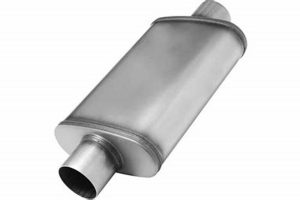
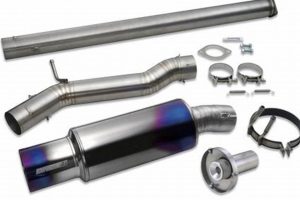
Performance exhaust systems designed for BMW vehicles, specifically those manufactured by Remus, offer enhanced sound and potential performance gains. These aftermarket components replace the original equipment manufacturer (OEM) exhaust, altering the flow of exhaust gases. An example would be a system installed on a BMW 3 Series to achieve a more aggressive exhaust note.
The installation of such a system can provide benefits such as improved horsepower and torque, reduced weight compared to the factory exhaust, and a sportier sound profile. Historically, performance exhaust systems have been popular among automotive enthusiasts seeking to personalize their vehicles and optimize their driving experience, focusing on both aesthetics and functionality.
The following sections will delve into the specific aspects of these exhaust upgrades, including material options, installation considerations, performance impact, and legal compliance matters. Subsequent discussion will cover the long-term maintenance and care required to ensure the longevity of the installed system.
Optimizing Performance and Longevity
The following guidance aims to maximize the benefits and lifespan of a Remus exhaust system installed on a BMW vehicle. Proper maintenance and informed decisions are crucial for optimal performance and regulatory compliance.
Tip 1: Ensure Professional Installation: The complex nature of exhaust systems necessitates professional installation. Incorrect fitment can lead to performance degradation, leaks, and potential damage to the vehicle or the exhaust component itself. Example: Torque specifications for mounting hardware must be strictly adhered to.
Tip 2: Regularly Inspect for Leaks: Exhaust leaks can reduce performance and increase emissions. Periodic visual inspection for signs of leaks, such as soot buildup around joints, is essential. Example: Check the connections at the manifold and catalytic converter every 6 months.
Tip 3: Monitor for Corrosion: Exposure to road salt and moisture can accelerate corrosion. Regular cleaning and application of corrosion inhibitors are recommended, particularly in regions with harsh winter conditions. Example: Stainless steel systems benefit from occasional polishing to remove surface contaminants.
Tip 4: Comply with Noise Regulations: Aftermarket exhaust systems may alter the vehicle’s sound output. It is imperative to ensure compliance with local noise regulations to avoid fines or legal issues. Example: Verify the dB level of the exhaust at various engine speeds to remain within legal limits.
Tip 5: Confirm Compatibility with Vehicle Modifications: Other modifications, such as aftermarket headers or catalytic converters, can impact the performance and longevity of the exhaust system. Ensure compatibility between all aftermarket components. Example: A high-flow catalytic converter may alter backpressure and require ECU tuning adjustments.
Tip 6: Perform Routine Cleaning: Regular cleaning removes dirt, debris, and potential contaminants that can damage the exhaust. Use appropriate cleaning agents designed for the material of the exhaust. Example: Avoid abrasive cleaners on polished surfaces; use a dedicated stainless steel cleaner instead.
These measures will contribute to maintaining peak performance, ensuring regulatory compliance, and extending the service life of the component. Adherence to these recommendations is essential for a positive ownership experience.
The next section will cover potential issues and troubleshooting steps to address common concerns that may arise during the lifespan of the system.
1. Sound enhancement
Sound enhancement is a primary driver for BMW owners considering a Remus exhaust system. It involves altering the factory-produced exhaust note to achieve a more desirable auditory experience, which can range from a subtle increase in volume to a deeper, more aggressive tone.
- Acoustic Engineering and Design
Remus incorporates specific acoustic engineering principles in its muffler design to manipulate sound waves. This includes internal chamber design, baffling, and resonator placement. These elements interact to shape the sound produced by the engine, influencing its pitch, tone, and volume. For example, a larger internal volume with less restrictive baffling generally yields a louder and deeper exhaust note.
- Material Composition
The materials used in the construction of the muffler system significantly impact the sound characteristics. Stainless steel, a common material in Remus systems, offers a bright and resonant tone. The thickness of the metal also plays a role; thinner materials tend to vibrate more readily, potentially amplifying the sound. Consider, for instance, the difference between a thin-walled stainless steel system and a thicker titanium system, which would produce different tonal qualities.
- Frequency Tuning
Specific frequency ranges are targeted during the design process to create a desired sound profile. Lower frequencies contribute to a deep, rumbling sound, while higher frequencies add sharpness and aggressiveness. Remus systems often focus on enhancing certain frequencies to create a distinctive sound signature. A system tuned to emphasize lower frequencies would produce a noticeable “burble” during deceleration, a sound characteristic often sought by enthusiasts.
- Vehicle-Specific Application
The engine characteristics of a specific BMW model heavily influence the final sound output of the Remus system. Factors such as engine displacement, cylinder configuration, and firing order all contribute to the base sound profile. Remus designs its systems to complement these inherent characteristics, optimizing the sound for each vehicle. A system designed for an inline-six engine will sound different than one designed for a V8, even with similar muffler designs.
These facets of sound enhancement combine to create a Remus-specific auditory signature. This can range from subtle modifications that enhance the driving experience to more aggressive changes that increase the aural presence. The degree of sound alteration allows a car enthusiast to find a perfect match.
2. Performance boost
The incorporation of a Remus muffler on a BMW vehicle is often associated with the objective of achieving a performance boost. This stems from the principle that a less restrictive exhaust system facilitates more efficient expulsion of exhaust gases from the engine, potentially leading to increased horsepower and torque output. The Remus muffler design typically aims to reduce backpressure within the exhaust system, allowing the engine to breathe more freely. Real-world examples include dyno tests conducted on BMW models before and after installation, frequently revealing modest gains in peak power figures. The practical significance lies in an enhanced throttle response and improved acceleration, contributing to a more engaging driving experience.
Further analysis reveals that the magnitude of the performance boost is heavily dependent on other engine modifications and the overall state of tune. A Remus muffler installed on a completely stock BMW engine may yield only marginal improvements, whereas a vehicle equipped with upgraded intake components, modified ECU mapping, and a less restrictive catalytic converter will likely experience a more significant performance gain from the freer-flowing exhaust. Practical applications of this understanding involve tuners and enthusiasts selecting specific exhaust systems to complement existing modifications and achieve a targeted performance goal, measured by quantifiable metrics like quarter-mile times or lap times on a race track.
In summary, the connection between performance gains and the installation of such a muffler is contingent upon several factors, including the design of the muffler itself and the presence of other performance-enhancing modifications. While the expected increase in power is often relatively modest for unmodified vehicles, the selection of a Remus system can form an integral part of a broader performance upgrade strategy. Challenges include quantifying the isolated impact of the muffler and ensuring the chosen system aligns with specific performance objectives. The core premise remains that an improved exhaust flow is a crucial element in optimizing the overall engine output.
3. Material quality
Material quality is a critical determinant of performance, longevity, and overall value in Remus exhaust systems designed for BMW vehicles. The composition and construction of these systems directly influence their ability to withstand extreme temperatures, resist corrosion, and maintain structural integrity over time.
- Stainless Steel Grade Selection
Remus typically employs austenitic stainless steel alloys, such as 304 or 316, in the construction of its exhaust components. These grades are selected for their high chromium and nickel content, which provide exceptional resistance to oxidation and corrosion, even under the high-temperature conditions encountered in exhaust systems. The specific grade chosen affects the system’s lifespan, particularly in regions with high road salt usage. A system constructed from 316 stainless steel will exhibit superior corrosion resistance compared to one made from 304 in such environments.
- Welding Technique and Precision
The quality of welds significantly impacts the structural integrity and durability of the exhaust system. Remus employs techniques like Tungsten Inert Gas (TIG) welding to create strong, clean welds with minimal heat-affected zones. Precise welding ensures that joints are leak-proof and resistant to cracking under stress. Inadequate welding can lead to premature failure, often manifesting as exhaust leaks or structural damage at weld points.
- Surface Treatment and Coating
Certain Remus systems incorporate surface treatments or coatings to further enhance corrosion resistance and aesthetic appeal. Polishing, for example, creates a smooth surface that is less susceptible to the accumulation of dirt and contaminants. Ceramic coatings can provide an additional layer of protection against extreme heat and corrosion. The absence of proper surface treatment can accelerate degradation, particularly in areas exposed to direct environmental elements.
- Thickness and Gauge of Materials
The gauge, or thickness, of the stainless steel used in the exhaust system construction affects its resistance to physical damage and vibration. Thicker gauge materials offer greater durability and are less prone to cracking or deformation under stress. Systems manufactured from thinner materials may be more susceptible to damage from road debris or impacts. This difference is particularly relevant in vehicles subjected to aggressive driving conditions or those frequently used on rough road surfaces.
These facets collectively underscore the importance of material quality in determining the overall performance and durability of Remus exhaust systems for BMW vehicles. The selection of appropriate materials, the application of precise manufacturing techniques, and the implementation of protective surface treatments are all critical factors that contribute to a high-quality product capable of withstanding the demanding conditions of automotive exhaust systems.
4. Fitment accuracy

Fitment accuracy is a paramount consideration when installing an aftermarket exhaust system on a BMW vehicle, particularly those manufactured by Remus. The precision with which the exhaust components align with the vehicle’s existing mounting points and exhaust routing directly impacts the ease of installation, the integrity of the exhaust seal, and the overall performance of the system. A Remus muffler engineered with precise fitment will seamlessly integrate with the BMW’s exhaust hangers, catalytic converter, and other related components, minimizing the need for modifications or adjustments. Conversely, an exhaust system with poor fitment can lead to exhaust leaks, rattles, and potential damage to surrounding vehicle components. A real-life instance involves a Remus exhaust system designed for a specific BMW 3 Series model exhibiting misalignment due to manufacturing tolerances, requiring the installer to modify exhaust hangers, thus adding labor costs and compromising the intended design. The practical consequence highlights the necessity of verifying compatibility before proceeding with installation.
Furthermore, fitment accuracy influences exhaust flow dynamics and system performance. Misalignment or improper connections can create turbulence and restrict exhaust flow, negating the intended performance gains. Precise fitment ensures optimal flow, allowing the engine to breathe more efficiently. Consider the situation where an exhaust clamp is not properly seated due to poor fitment. This creates an exhaust leak, reducing backpressure, thereby diminishing torque output. Moreover, any forced adjustments due to incorrect alignment may stress the exhaust components, decreasing their longevity and potentially leading to premature failure. In contrast, systems designed with dimensional accuracy tend to offer more straightforward installations, reducing the risk of installer error and ensuring optimal performance.
In summary, fitment accuracy is inextricably linked to the successful integration and performance of a Remus exhaust system on a BMW. Its implications extend from the ease of installation to the long-term reliability and performance of the vehicle. Challenges arise from varying manufacturing tolerances, potential model year discrepancies, and improper installation techniques. The core understanding emphasizes the critical role of fitment accuracy in achieving the desired performance enhancements and ensuring the seamless integration of aftermarket exhaust components with a BMW vehicle.
5. Aesthetic appeal

Aesthetic appeal forms a significant dimension of the appeal of Remus mufflers for BMW vehicles. The visible components of the exhaust system, specifically the muffler and exhaust tips, contribute to the vehicle’s overall appearance. A Remus system often features polished stainless steel or carbon fiber tips, designed to enhance the car’s rear profile. The strategic integration of these visually appealing elements reflects a focus on both performance and cosmetic upgrades. For instance, a BMW M3 fitted with a Remus exhaust, showcasing quad carbon fiber tips, presents a more aggressive and performance-oriented aesthetic than the factory exhaust. This demonstrates the practical effect of a visual enhancement that aligns with the vehicle’s sporty character.
Beyond the visual aspect of exhaust tips, the overall design and finish of the muffler itself can contribute to aesthetic enhancement, particularly when the exhaust system is partially visible. The quality of welds, the smoothness of the metal, and the presence of subtle branding elements all play a role. The selection of a Remus system allows a BMW owner to personalize the car’s appearance, selecting tip styles and finishes that complement the vehicle’s paint color, wheels, and other visual modifications. This aesthetic consideration further enhances the perceived value of the aftermarket exhaust.
In summary, the visual elements inherent in these exhaust systems contribute substantively to the BMW’s overall appeal. From the design and finish of the muffler itself to the choice of stylish exhaust tips, this offers a tangible method to enhance the aesthetic characteristics of the car. While the primary function remains exhaust management, the aesthetic enhancements provided by such an aftermarket exhaust are a demonstrable factor in the purchasing process for the BMW enthusiast.
6. Regulatory compliance

Regulatory compliance is a critical factor directly influencing the legality and usability of aftermarket exhaust systems, specifically those manufactured by Remus for BMW vehicles. Exhaust systems are subject to noise emission standards and, in some jurisdictions, exhaust gas emission regulations. The installation of a Remus muffler, therefore, necessitates verifying its adherence to these local and national laws. Failure to comply can result in fines, vehicle inspection failures, or legal restrictions on vehicle operation. For instance, a Remus exhaust system marketed within the European Union must typically possess ECE (Economic Commission for Europe) certification, indicating its compliance with prescribed noise levels. This certification often necessitates the inclusion of a sound insert or valve system to control exhaust volume.
The specific regulations vary considerably by region. In some areas, a simple noise test suffices to demonstrate compliance, while others may require detailed emissions testing. A Remus exhaust system designed for a BMW vehicle, but exceeding the permitted decibel levels in a given jurisdiction, is non-compliant, regardless of its performance enhancements. Practical applications of this understanding involve prospective purchasers verifying the availability of the necessary certifications before purchase and installation. Installers bear a responsibility to ensure the system adheres to legal noise limits post-installation. This may involve using sound measurement tools to assess exhaust volume at various engine speeds and making adjustments as needed.
In summary, regulatory compliance represents a fundamental component of the ownership and operation of these systems. Ensuring compatibility with local regulations mitigates legal risks and maintains the vehicle’s usability. This requires both careful product selection and adherence to prescribed installation and maintenance practices. The challenges center around navigating complex and often localized regulations and the potential need for modifications to achieve compliance. The implications extend beyond legal considerations, influencing responsible vehicle operation and environmental stewardship.
Frequently Asked Questions Regarding Remus Mufflers for BMW Vehicles
The following section addresses common inquiries and misconceptions regarding Remus aftermarket exhaust systems designed for BMW vehicles. The information presented aims to provide clarity and facilitate informed decision-making.
Question 1: Does installation of a Remus exhaust void the BMW factory warranty?
The installation of an aftermarket exhaust may affect the warranty, specifically on components directly related to the exhaust system. The extent of warranty impact can vary and depends on the nature of the issue and the specific terms outlined in the BMW warranty documentation. Consult with a BMW dealership for specific clarification.
Question 2: What is the expected horsepower gain from a Remus system on a stock BMW engine?
Performance gains on a completely stock engine are often modest, typically ranging from 5 to 10 horsepower. The primary benefits often relate to improved throttle response and sound enhancement rather than significant power increases. Results vary based on engine and model.
Question 3: Are Remus exhaust systems legal for street use in all states?
Legality depends on local regulations regarding noise emissions. Some states have stricter noise limits than others. It is the responsibility of the vehicle owner to ensure the system complies with applicable laws within their jurisdiction. Verification of ECE or other relevant certifications is recommended.
Question 4: What is the average lifespan of a Remus stainless steel exhaust system?
A properly maintained stainless steel system can last for a significant duration, often exceeding 8 to 10 years. Factors such as climate, road conditions, and maintenance practices directly influence the lifespan. Regular cleaning and inspection are crucial for maximizing longevity.
Question 5: Can a Remus muffler be installed as a direct bolt-on replacement?
Most Remus systems are designed as direct bolt-on replacements, intended to utilize existing mounting points and hangers. However, some models may require minor adjustments or modifications for optimal fitment. Professional installation is recommended to ensure correct alignment and sealing.
Question 6: Does the material of the exhaust tips affect the sound?
The primary influence on exhaust sound stems from the muffler design and internal baffling. While tip material can subtly alter the tone, the impact is typically minor compared to the muffler itself. Material selection primarily affects aesthetics and heat dissipation.
In summary, Remus exhaust systems offer potential benefits in terms of sound, aesthetics, and performance. However, informed purchasing decisions require careful consideration of warranty implications, local regulations, and proper installation practices.
The following section will delve into potential issues and troubleshooting steps to address common concerns that may arise during the lifespan of the system.
Conclusion
The preceding discussion has explored various facets of the remus muffler bmw, encompassing its performance attributes, material considerations, fitment requirements, aesthetic value, and regulatory compliance implications. Each of these elements contributes to the overall value proposition of these aftermarket exhaust systems for BMW vehicles. Installation considerations and performance enhancement are integral in the analysis.
The selection and installation of a remus muffler bmw necessitate careful evaluation of individual needs and regulatory obligations. Future advancements in exhaust technology and evolving emissions standards will undoubtedly shape the trajectory of aftermarket exhaust systems, and it remains incumbent upon vehicle owners to remain informed and compliant. The pursuit of both enhanced performance and responsible vehicle modification must remain aligned.