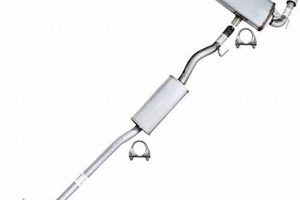
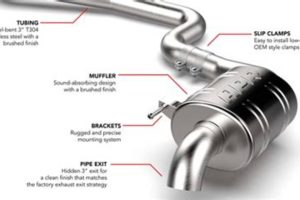
A performance exhaust component redirects exhaust gases downwards, typically exiting beneath the vehicle rather than at the rear. This type of system often consists of a specialized sound-dampening device designed to reduce noise emissions while directing the exhaust flow. The configuration can alter the vehicle’s sound profile and aesthetic appearance. For example, an aftermarket system might be installed on a truck to enhance its aggressive sound and visual style.
The importance of this design lies in its potential to improve ground clearance, offer a distinct auditory experience, and provide a customized visual element. Historically, such designs have been popular in off-road and racing applications where maximizing clearance and minimizing rear overhang are critical. Moreover, altering the exhaust path can sometimes affect performance characteristics, depending on the overall system design and engine tuning.
The following sections will detail the construction materials, installation procedures, performance considerations, and regulatory compliance aspects related to this type of exhaust modification. It will further explore the potential impact on vehicle emissions and overall system longevity, offering a comprehensive overview of factors to consider before undertaking such a modification.
Installation and Maintenance Tips
The following guidelines offer practical advice for the effective installation, maintenance, and longevity of a specialized exhaust system component designed to direct exhaust gases downwards.
Tip 1: Pre-Installation Inspection: Prior to installation, thoroughly inspect all components for damage incurred during shipping or manufacturing. Verify compatibility with the vehicle’s make, model, and year, consulting manufacturer specifications where necessary.
Tip 2: Proper Mounting: Ensure secure mounting of the system using appropriate hardware and techniques. Utilize existing mounting points whenever possible, and exercise caution to avoid over-tightening bolts, which could damage the system or vehicle.
Tip 3: Sealing Joints: Employ high-temperature sealant at all joints to prevent exhaust leaks. Leaks can compromise performance, increase noise levels, and potentially introduce harmful gases into the vehicle cabin.
Tip 4: Clearance Verification: After installation, meticulously check for adequate clearance between the exhaust system and all vehicle components, including fuel lines, brake lines, and suspension components. Insufficient clearance can lead to overheating, damage, or safety hazards.
Tip 5: Regular Inspections: Conduct regular inspections of the system, paying particular attention to welds, joints, and mounting points. Address any signs of corrosion, damage, or loosening promptly to prevent further degradation.
Tip 6: Sound Level Monitoring: Be aware that altering the exhaust system may affect sound levels. Regular monitoring and adherence to local noise regulations are recommended to avoid potential violations.
These tips are crucial for ensuring the proper installation, safe operation, and extended lifespan of this type of exhaust system. Failure to adhere to these guidelines can result in performance degradation, safety hazards, or legal complications.
The subsequent sections will delve into performance modifications and other related considerations.
1. Sound Attenuation

Sound attenuation, in the context of a performance exhaust component, refers to the degree to which the device reduces the amplitude of sound waves produced by the engine’s combustion process. The effectiveness of sound attenuation directly impacts the perceived noise level emitted by the vehicle. The design of the internal baffles, sound-absorbing materials, and overall construction characteristics dictates how well a particular performance exhaust silencer mitigates noise. A well-designed unit effectively reduces exhaust noise while minimizing backpressure, contributing to a more refined driving experience without sacrificing performance. In contrast, a poorly designed system can result in excessive noise, potentially violating local regulations and detracting from the overall vehicle enjoyment.
The level of sound attenuation achieved has practical implications for both the vehicle operator and the surrounding environment. A noticeable reduction in noise can enhance driver comfort during long journeys and reduce the risk of noise pollution in residential areas. This is particularly crucial for vehicles used in urban environments or for long-distance touring. Furthermore, achieving an optimal balance between sound reduction and exhaust flow is a key consideration in performance tuning. Reduced backpressure typically improves engine efficiency and power output, but this must be carefully balanced against the need for acceptable noise levels. Aftermarket manufacturers often provide decibel ratings or sound clips to demonstrate the attenuation characteristics of their products, enabling consumers to make informed decisions based on their individual needs and preferences.
Ultimately, sound attenuation is a fundamental aspect of performance exhaust system design. It involves a trade-off between achieving desired performance gains and maintaining acceptable noise levels. Understanding the attenuation properties of a specific component allows vehicle owners to make informed choices that align with their performance goals, legal requirements, and personal preferences. The challenge lies in developing systems that effectively minimize noise without compromising exhaust flow or engine efficiency, a goal that requires careful engineering and rigorous testing.
2. Exhaust Direction

The fundamental characteristic of a “plm turndown muffler” lies in its exhaust direction. Unlike standard mufflers that typically expel exhaust gases horizontally towards the rear of the vehicle, this type directs the flow downwards. This redirection is a primary design feature and dictates the component’s specific application and performance characteristics. The modified exhaust path can influence factors such as ground clearance, noise projection, and aesthetic appeal. The downward-facing outlet redirects sound waves towards the ground, potentially altering the perceived loudness and tone compared to a traditional rear-exit system. Additionally, the reduced rear overhang can be advantageous in off-road scenarios where rear-end clearance is critical. For example, a truck modified for off-road use might employ this feature to prevent damage to the exhaust system when navigating uneven terrain.
The practical significance of understanding exhaust direction is crucial when considering the installation and usage of a “plm turndown muffler.” Altering the exhaust path can have implications for vehicle emissions and potential contact with road surfaces or nearby components. Proper installation is essential to ensure that the redirected exhaust gases are safely vented away from the vehicle’s undercarriage and do not pose a risk of overheating or damaging other parts. Furthermore, depending on local regulations, directing exhaust downwards might require specific certifications or compliance measures to ensure adherence to noise and emissions standards. Off-road vehicles are more relevant to this exhaust direction.
In summary, the exhaust direction is an intrinsic element of this muffler, influencing its performance, application, and compliance requirements. This redirection, in effect, alters noise projection, ground clearance, and overall vehicle aesthetics. Careful consideration of these factors is vital when selecting, installing, and operating this type of exhaust modification to ensure optimal performance, safety, and adherence to relevant regulations. The challenge of balancing these aspects remains an ongoing area of focus for performance exhaust manufacturers and vehicle modification enthusiasts. This is not a product recommendation article.
3. Ground Clearance

Ground clearance, the distance between the lowest point of a vehicle and the ground, is a critical factor in off-road performance and overall vehicle utility. In the context of exhaust systems, especially those employing a downturned design, ground clearance is a primary consideration that influences both functionality and durability.
- Minimized Rear Overhang
A downturned muffler typically reduces rear overhang, the distance the exhaust system extends beyond the rear axle. This reduction directly contributes to improved departure angles, crucial for navigating steep inclines and obstacles without damaging the exhaust system. For example, a truck equipped with a downturned exhaust system is less likely to scrape the tailpipe when descending a steep embankment.
- Reduced Vulnerability to Damage
By positioning the exhaust outlet underneath the vehicle, rather than extending it horizontally to the rear, the system is less exposed to potential impacts from rocks, debris, or other obstacles. This placement reduces the risk of physical damage to the muffler and associated piping, enhancing the system’s longevity in challenging environments. An off-road vehicle traversing rocky terrain benefits significantly from this protection.
- Optimized Vehicle Maneuverability
Improved ground clearance directly contributes to enhanced maneuverability in off-road conditions. A vehicle with greater clearance can navigate more challenging terrain without risk of grounding or damaging undercarriage components. A SUV with the correct system can avoid obstacles on uneven terrains.
- Design Integration Challenges
Integrating a downturned system while maintaining adequate ground clearance requires careful design considerations. The positioning of the muffler and exhaust piping must avoid creating new low points that could compromise overall clearance. Manufacturers must balance the need for efficient exhaust flow with the practical limitations imposed by the vehicle’s undercarriage geometry.
In summary, ground clearance is a primary factor when evaluating the suitability of a downturned performance muffler, particularly for vehicles intended for off-road or demanding applications. The reduced rear overhang and minimized exposure to damage offer significant advantages in terms of durability and maneuverability. The ability to reduce rear overhang enables them to be more functional. A proper design and integration are essential to ensure that the benefits of a downturned configuration are realized without compromising overall vehicle utility or creating new points of vulnerability.
4. Material Durability

The longevity and reliable performance of a downturned exhaust system hinge significantly on the material used in its construction. The exhaust system endures high temperatures, exposure to corrosive elements, and physical stresses from road debris and vibrations. Therefore, material durability is not merely a desirable attribute but a fundamental requirement for ensuring the system’s operational lifespan and preventing premature failure. The selection of materials directly affects the system’s resistance to rust, cracking, and deformation under thermal and mechanical loads. For example, stainless steel, with its inherent corrosion resistance, is a common choice for high-quality systems, extending the muffler’s operational life compared to aluminized steel, which is more susceptible to rust.
The impact of material choices is evident in the performance of exhaust systems in different environments. Systems constructed from lower-grade materials, such as mild steel, tend to corrode rapidly in regions with harsh winters where road salt is used extensively. This corrosion can lead to exhaust leaks, reduced performance, and ultimately, the need for costly repairs or replacements. In contrast, systems fabricated from high-grade stainless steel or titanium exhibit superior resistance to corrosion and mechanical damage, offering greater reliability and a longer service life. The practical significance lies in the long-term cost savings associated with more durable materials, offsetting the initial investment with reduced maintenance and replacement expenses. This extends system operational life.
In conclusion, material durability is an inseparable aspect of the overall performance and reliability. The choice of materials directly influences the system’s resistance to corrosion, thermal stress, and mechanical damage, impacting its lifespan and operational effectiveness. While cost considerations may tempt the selection of less durable materials, the long-term benefits of investing in high-quality, corrosion-resistant materials far outweigh the initial savings, ensuring a longer-lasting, more reliable exhaust system and reduced maintenance requirements. Balancing performance and durability characteristics is the major consideration when upgrading or purchasing a new exhaust system.
5. Performance Impact
The “Performance Impact” stemming from a “plm turndown muffler” is a multifaceted consideration, encompassing changes in exhaust flow, engine efficiency, and overall vehicle dynamics. The effects are subtle and contingent on various factors, including engine characteristics, existing exhaust system design, and the quality of the installed component. Alterations in exhaust dynamics can, in turn, influence horsepower, torque, and fuel economy.
- Exhaust Flow Optimization
The primary objective of many aftermarket exhaust components is to optimize exhaust flow, reducing backpressure and allowing the engine to expel exhaust gases more efficiently. A “plm turndown muffler” can contribute to this optimization if it is designed to minimize flow restrictions compared to the original equipment. However, the design must be carefully engineered; a poorly designed unit could actually increase backpressure, negating any potential performance gains. The impact is often most noticeable at higher engine speeds, where exhaust flow is greatest.
- Torque Curve Alterations
Changing the exhaust system can alter the engine’s torque curve, shifting the peak torque to a different RPM range. While some modifications may increase peak horsepower, they might simultaneously reduce low-end torque, affecting the vehicle’s responsiveness at lower speeds. For example, a “plm turndown muffler” that promotes high-RPM flow could potentially sacrifice some low-end torque. Dyno testing provides verifiable quantification of these changes.
- Audible Sound Profile
The sound of the exhaust is often a significant factor for vehicle enthusiasts. While not directly related to engine performance, the audible sound profile can influence the perceived performance and driving experience. A “plm turndown muffler” might produce a deeper, more aggressive tone compared to the stock system, enhancing the driver’s sense of engagement. Sound changes should be within legal parameters.
- Potential for Power Gains
In some instances, installing an aftermarket “plm turndown muffler,” particularly in conjunction with other performance modifications (such as intake enhancements or ECU tuning), can result in measurable power gains. These gains are typically modest, but they can contribute to a noticeable improvement in overall performance. However, it’s essential to note that the magnitude of these gains varies significantly depending on the vehicle and the specific components used.
In summary, the “Performance Impact” associated with a “plm turndown muffler” encompasses both tangible and subjective elements. While potential power gains are a primary consideration, factors such as exhaust flow optimization, torque curve alterations, and the audible sound profile also contribute to the overall effect. Any performance claims should be carefully evaluated and supported by verifiable data, recognizing that the actual impact will vary depending on the specifics of the vehicle and the installed components. Independent testing is imperative.
Frequently Asked Questions
The following section addresses common inquiries regarding a specific type of performance exhaust modification, aiming to provide clear and concise answers to frequently raised concerns.
Question 1: What is the primary benefit of directing exhaust gases downward?
The primary benefit lies in the potential for increased ground clearance, particularly in off-road applications, and a possible alteration to the vehicle’s sound profile.
Question 2: Does this exhaust modification invariably increase engine horsepower?
No, horsepower gains are not guaranteed. The performance impact is contingent on multiple factors, including engine design, existing exhaust system configuration, and the quality of the aftermarket component.
Question 3: Are there potential drawbacks associated with directing exhaust downwards?
Potential drawbacks include altered sound characteristics, potential for increased noise levels, and the need to ensure adequate clearance between the exhaust system and other vehicle components to prevent overheating.
Question 4: Does this type of exhaust system require specialized installation procedures?
Yes, proper installation is critical. Ensuring secure mounting, sealing all joints, and verifying adequate clearance are essential steps to prevent leaks, damage, and potential safety hazards.
Question 5: How does this modification affect compliance with local noise regulations?
Altering the exhaust system can significantly affect noise levels. Compliance with local noise regulations must be carefully considered, and adherence to established noise limits is the vehicle operator’s responsibility.
Question 6: What materials are commonly used in the construction, and what are the implications?
Common materials include aluminized steel and stainless steel. Stainless steel offers superior corrosion resistance and a longer lifespan but typically carries a higher cost. The selection of materials directly affects the system’s durability and resistance to environmental factors.
In summary, modifications may offer certain advantages, such as increased ground clearance and a different sound experience, while acknowledging the variability in performance gains and the importance of proper installation and regulatory compliance.
The next section will explore the potential regulatory considerations.
Conclusion
This exploration has detailed the attributes, advantages, and potential challenges associated with the use of a performance exhaust component. Key considerations encompass sound attenuation, exhaust direction, ground clearance, material durability, and the resulting impact on overall vehicle performance. A careful assessment of these factors is crucial when considering the installation of such a system.
Given the complexity and potential ramifications of exhaust system modifications, a responsible approach is paramount. This includes thorough research, adherence to regulatory guidelines, and professional installation to ensure optimal performance, safety, and longevity. Future advancements in exhaust technology may further refine these considerations, demanding ongoing evaluation and adaptation in the pursuit of performance enhancement and environmental responsibility.