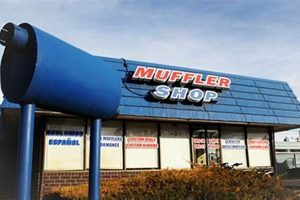
A business specializing in the repair and replacement of exhaust systems, particularly mufflers, aims to provide straightforward and convenient service. This type of establishment often focuses on efficiency and affordability, simplifying the typically complex process of automotive repair for the customer. For example, such a service provider may offer quick diagnostics, transparent pricing, and readily available parts to expedite the repair.
The value of an accessible exhaust system repair center lies in its ability to minimize vehicle downtime and reduce the financial burden associated with exhaust system maintenance. Historically, muffler shops were standalone businesses catering specifically to exhaust needs. The evolution of the automotive industry has seen some consolidation, with general repair shops also offering these services. However, specialist centers can provide a level of expertise and efficiency not always found in broader automotive repair settings.
The following sections will delve into specific aspects of exhaust system maintenance, including common issues, diagnostic procedures, repair techniques, and cost considerations. Understanding these factors can empower vehicle owners to make informed decisions regarding exhaust system care.
Maintenance Guidelines
The following guidelines provide insights into maintaining vehicle exhaust systems, potentially extending their lifespan and ensuring optimal performance. Adherence to these practices can mitigate common issues and reduce the likelihood of costly repairs.
Tip 1: Routine Inspections: Regular visual checks of the exhaust system for signs of rust, leaks, or physical damage are crucial. Early detection of issues prevents escalation and minimizes repair expenses.
Tip 2: Prompt Leak Repair: Exhaust leaks should be addressed immediately. Leaks not only compromise fuel efficiency and engine performance but also pose a health hazard due to the potential for carbon monoxide exposure.
Tip 3: Avoid Short Trips: Frequent short trips can accelerate exhaust system corrosion. Condensation builds up within the system without sufficient heat to evaporate it, leading to internal rusting.
Tip 4: Catalytic Converter Protection: Prevent damage to the catalytic converter by ensuring proper engine tuning. Rich fuel mixtures or oil consumption can overload and damage the converter, requiring expensive replacement.
Tip 5: Secure Mounting: Verify the integrity of exhaust system hangers and mounts. Damaged or missing mounts can cause excessive vibration, leading to premature wear and potential damage to the system.
Tip 6: Address Unusual Noises: Investigate any unusual noises emanating from the exhaust system promptly. Rattling, hissing, or roaring sounds often indicate underlying problems that require attention.
Tip 7: Use Quality Replacement Parts: When replacement is necessary, opt for components that meet or exceed original equipment manufacturer (OEM) specifications. Inferior parts may have a shorter lifespan and compromise performance.
Implementing these measures enhances the longevity and efficiency of the exhaust system, contributing to overall vehicle reliability and safety.
The subsequent sections will elaborate on specific repair procedures and cost-saving strategies related to exhaust system maintenance.
1. Rapid Diagnostics

Rapid diagnostics represents a cornerstone of the “easy muffler shop” concept. Efficient and accurate identification of exhaust system problems directly impacts customer satisfaction, service turnaround time, and overall operational effectiveness. A streamlined diagnostic process minimizes inconvenience and allows for quicker resolution of issues.
- Diagnostic Equipment and Technology
Advanced diagnostic tools, such as exhaust gas analyzers, pressure testers, and digital inspection cameras, are essential for rapid problem identification. These tools enable technicians to pinpoint the source of exhaust leaks, catalytic converter malfunctions, or muffler damage with greater precision and speed compared to traditional methods. The investment in and proper utilization of these technologies is a differentiator for shops striving for efficiency.
- Technician Skill and Expertise
While technology plays a crucial role, the expertise of the technician performing the diagnosis is equally important. Experienced technicians can often identify common issues based on visual inspection, sound, and vehicle performance. Their ability to interpret diagnostic data and accurately assess the condition of the exhaust system is paramount for avoiding misdiagnosis and unnecessary repairs. Continuous training and certification programs are vital for maintaining a high level of competency.
- Standardized Diagnostic Procedures
Implementing standardized diagnostic procedures ensures consistency and accuracy in the assessment process. A well-defined checklist helps technicians systematically evaluate all components of the exhaust system, minimizing the risk of overlooking potential problems. Standardized procedures also facilitate efficient communication between technicians and customers, as the findings can be presented in a clear and structured manner.
- Efficient Workflow Management
Optimizing workflow management is critical for maximizing the benefits of rapid diagnostics. This includes efficient scheduling, streamlined vehicle intake procedures, and organized access to diagnostic equipment. Minimizing delays and bottlenecks in the diagnostic process reduces overall service time and improves customer satisfaction. Digital workflow management systems can further enhance efficiency by automating tasks and providing real-time visibility into the status of each vehicle.
The effective implementation of rapid diagnostics in an “easy muffler shop” setting translates to reduced customer wait times, improved repair accuracy, and increased operational efficiency. By leveraging technology, skilled technicians, standardized procedures, and efficient workflow management, these establishments can deliver a superior service experience and establish a competitive advantage within the automotive repair market.
2. Transparent Pricing

Transparent pricing is a critical component of an “easy muffler shop.” Its implementation directly affects customer trust and the perceived value of the services offered. The absence of hidden fees or unexpected charges cultivates a sense of fairness, leading to increased customer satisfaction and repeat business. For instance, an “easy muffler shop” may provide a detailed breakdown of costs associated with a muffler replacement, itemizing labor, parts, and any potential ancillary charges before commencing work. This contrasts with shops that provide vague estimates, which can lead to disputes and distrust when the final bill deviates significantly from the initial quote.
The establishment of transparent pricing structures often involves several practical considerations. Shops must accurately assess the time and materials required for common services, regularly update pricing to reflect market conditions, and train staff to clearly communicate cost information to customers. Moreover, a commitment to transparency may require adopting standardized pricing models for common repairs, which reduces ambiguity and allows customers to easily compare prices between different service providers. Real-world examples show that those which have implemented upfront quote systems experience more bookings.
In conclusion, transparent pricing is not merely a pricing strategy, but a fundamental principle that defines the ethos of an “easy muffler shop”. It addresses challenges related to customer distrust and information asymmetry in the automotive repair industry. By prioritizing openness and honesty in pricing practices, these establishments can foster stronger customer relationships and build a sustainable business model.
3. Convenient Scheduling

Convenient scheduling is intrinsically linked to the concept of an “easy muffler shop.” The ability for customers to arrange service appointments with minimal difficulty directly contributes to the perception of ease and accessibility that defines such establishments. The cause-and-effect relationship is clear: simplified scheduling leads to enhanced customer satisfaction and increased service utilization. A muffler shop aiming for ease must, therefore, prioritize accessible and flexible appointment options. Consider the alternative: a rigid scheduling system necessitates customers adjusting their schedules to the shop’s availability, thereby negating the “easy” promise.
The importance of convenient scheduling extends beyond mere customer preference; it impacts operational efficiency and revenue generation. A streamlined scheduling system reduces administrative overhead, minimizes no-shows, and optimizes resource allocation. For example, online booking platforms that allow customers to select appointment times, specify services needed, and receive automated reminders significantly reduce the burden on phone-based scheduling. Real-life examples show that businesses that offer a range of scheduling options, including online, mobile app, and phone-based booking, generally experience higher customer satisfaction scores and improved appointment adherence. Further, integrated calendar systems allow staff to proactively manage workload, optimize technician assignments, and ensure the availability of necessary parts, ultimately contributing to a more efficient service process.
In summary, convenient scheduling is not simply a desirable add-on but a core element of the “easy muffler shop” business model. It addresses the challenge of minimizing customer inconvenience and maximizing service accessibility. By investing in accessible scheduling technologies and processes, businesses can enhance customer loyalty, improve operational efficiency, and solidify their position in a competitive market. The success of such an operation depends as much on the ease of scheduling as it does on the quality of the muffler repair itself.
4. Quality Parts
The implementation of quality parts in an “easy muffler shop” environment is a critical factor influencing both the perceived value of the service and the long-term reliability of repairs. There is a direct correlation between the durability of installed components and the shop’s reputation for providing trustworthy service. For example, using mufflers manufactured from heavier-gauge steel or catalytic converters meeting stringent emissions standards, although potentially more expensive initially, reduces the likelihood of premature failure and the associated need for repeat repairs. This directly translates into customer confidence and positive word-of-mouth referrals. A contrasting scenario involves a shop prioritizing low-cost parts. The resulting higher incidence of failures leads to customer dissatisfaction and diminishes the shop’s credibility. The strategic deployment of quality parts, therefore, becomes a foundational element in defining an “easy” and dependable service experience.
Further analysis reveals that the investment in quality parts extends beyond mere customer satisfaction; it also impacts the operational efficiency of the muffler shop itself. Reliable components minimize warranty claims, reduce the frequency of rework, and streamline the repair process. For instance, using pre-bent exhaust pipes fabricated from corrosion-resistant materials, even if incurring a slightly higher initial cost, reduces the need for extensive modifications during installation. This efficiency translates into faster service times, increased technician productivity, and improved overall profitability. It underscores the practical significance of integrating quality considerations into all aspects of parts procurement, inventory management, and installation procedures. Furthermore, providing customers with clear documentation regarding the parts used, including manufacturer specifications and warranty information, further solidifies trust and reinforces the shop’s commitment to transparency.
In conclusion, quality parts are not merely an ancillary element but an integral component of the “easy muffler shop” concept. It highlights the importance of making informed purchasing decisions that prioritize long-term value over short-term cost savings. By embracing quality, muffler shops can address the challenge of providing reliable and trustworthy services while simultaneously enhancing their operational efficiency and fostering stronger customer relationships. The conscious selection and implementation of quality parts become a defining characteristic of an exhaust repair service that truly exemplifies ease and dependability.
5. Skilled Technicians
The presence of skilled technicians is foundational to the concept of an “easy muffler shop.” Competent personnel directly influence the speed, accuracy, and overall quality of exhaust system repairs, thereby shaping the customer experience and solidifying the shop’s reputation for ease and reliability.
- Diagnostic Proficiency
Skilled technicians possess the ability to rapidly and accurately diagnose exhaust system issues. This involves utilizing advanced diagnostic tools, interpreting complex data, and leveraging experience to identify root causes. For instance, a skilled technician can differentiate between a simple exhaust leak and a catalytic converter malfunction based on a combination of visual inspection, sound analysis, and sensor data. In an “easy muffler shop,” this proficiency minimizes diagnostic time and prevents unnecessary repairs, saving customers time and money.
- Efficient Repair Techniques
Proficient technicians are adept at employing efficient and effective repair techniques. They possess the knowledge to select the appropriate repair method for a given situation and execute it with precision. For example, a skilled technician can properly weld exhaust components to ensure a secure and leak-free seal, or accurately install replacement mufflers and catalytic converters while adhering to manufacturer specifications. Within the context of an “easy muffler shop,” these techniques translate to faster turnaround times and reduced labor costs, enhancing customer convenience.
- Parts Knowledge and Selection
Skilled technicians demonstrate comprehensive knowledge of exhaust system components and their respective performance characteristics. They can accurately identify the correct replacement parts based on vehicle make, model, and year, ensuring proper fit and functionality. Furthermore, they can differentiate between various grades of components and advise customers on the best options based on their needs and budget. This expertise enables “easy muffler shops” to provide reliable repairs using appropriate parts, minimizing the risk of future issues.
- Commitment to Continuous Learning
Skilled technicians understand the importance of ongoing professional development and actively seek opportunities to expand their knowledge and skills. They stay abreast of the latest industry advancements, repair techniques, and diagnostic tools through training programs, certifications, and technical publications. This dedication to continuous learning ensures that technicians in “easy muffler shops” are equipped to handle even the most complex exhaust system problems, maintaining the shop’s reputation for expertise and efficiency.
These facets highlight the critical role of skilled technicians in delivering the promised “easy” experience. Their expertise directly influences diagnostic accuracy, repair efficiency, parts selection, and overall customer satisfaction, solidifying the reputation of muffler shops as reliable and convenient service providers.
Frequently Asked Questions Regarding Exhaust System Services
The following section addresses common inquiries regarding exhaust system maintenance, repair, and associated services, providing clear and concise information to assist vehicle owners in making informed decisions.
Question 1: What constitutes a typical lifespan for a vehicle’s muffler?
Muffler lifespan is contingent on several factors, including driving conditions, environmental exposure, and the quality of the original component. In general, a muffler can last anywhere from two to five years or longer. Frequent short trips, exposure to road salt, and aggressive driving habits can accelerate corrosion and shorten the muffler’s lifespan. Routine inspections can help identify potential issues early on.
Question 2: How does one identify an exhaust leak?
An exhaust leak can manifest in several ways, including a noticeable increase in exhaust noise, a decrease in fuel efficiency, or the smell of exhaust fumes inside the vehicle cabin. A visual inspection of the exhaust system may reveal cracks, holes, or rust. A professional inspection utilizing specialized equipment can pinpoint the exact location and severity of the leak.
Question 3: What are the potential consequences of neglecting exhaust system repairs?
Neglecting exhaust system repairs can lead to several adverse outcomes, including reduced fuel efficiency, decreased engine performance, increased emissions, and potential health hazards due to carbon monoxide exposure. Furthermore, unaddressed exhaust leaks can cause damage to other vehicle components and increase the risk of fines during emissions testing.
Question 4: What is the function of a catalytic converter, and why is it important?
A catalytic converter is an emissions control device that reduces harmful pollutants in the vehicle’s exhaust gases. It converts carbon monoxide, hydrocarbons, and nitrogen oxides into less harmful substances, such as carbon dioxide, water, and nitrogen. Its proper function is essential for meeting emissions standards and protecting air quality.
Question 5: What factors influence the cost of muffler replacement?
The cost of muffler replacement is influenced by factors such as the vehicle make and model, the type of muffler required (OEM vs. aftermarket), and labor rates. More complex exhaust systems or vehicles with limited access to the muffler may incur higher labor charges. Obtaining quotes from multiple service providers is advisable.
Question 6: What measures can be taken to extend the lifespan of a vehicle’s exhaust system?
Several measures can extend the life of the exhaust system. Routine inspections can identify potential problems early. Avoiding frequent short trips reduces condensation buildup within the system. Protecting the catalytic converter through proper engine maintenance is crucial. Ensuring secure mounting prevents excessive vibration. Finally, prompt leak repair is essential.
In summary, proactive maintenance, prompt repairs, and a clear understanding of exhaust system components are essential for ensuring optimal vehicle performance, minimizing repair costs, and maintaining environmental responsibility. Regular inspections are highly recommended.
The following section will explore specific repair procedures and considerations related to various exhaust system components.
Conclusion
This exploration of the “easy muffler shop” concept reveals its emphasis on efficiency, transparency, and customer convenience in the automotive repair sector. The analysis highlighted the importance of rapid diagnostics, transparent pricing, convenient scheduling, quality parts, and skilled technicians as key components of a successful and customer-centric exhaust system service provider. The discussion addressed common concerns about exhaust systems and emphasized proactive maintenance.
The information presented aims to empower vehicle owners to make informed decisions regarding exhaust system care and to identify service providers that prioritize both quality and ease of access. The continued success of businesses operating under the “easy muffler shop” model hinges on maintaining a commitment to these core principles, adapting to evolving customer expectations, and embracing technological advancements that further streamline the repair process. Further observation is recommended for trends in the automotive maintenance domain.



![Piqua Ohio Muffler Shop: [Car Model] Exhaust Pros | Best Mufflers for Cars & Trucks | Performance, Sound & Durability Upgrades](https://dnamufflers.com/wp-content/uploads/2026/06/th-68-300x200.jpg "Piqua Ohio Muffler Shop: [Car Model] Exhaust Pros Best Mufflers for Cars & Trucks | Performance, Sound & Durability Upgrades")