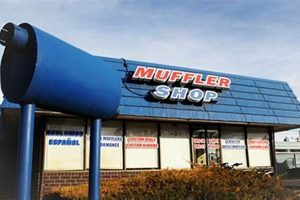
Businesses specializing in exhaust system maintenance and repair are vital components of the automotive service industry. These establishments address a range of issues, from simple exhaust leaks to complete system replacements, ensuring vehicles meet emissions standards and operate efficiently. A typical example can be found in a local service center within a specific geographic area.
The role of these specialized businesses extends beyond mere repair. Functioning exhaust systems are crucial for vehicle performance, fuel efficiency, and noise reduction. Historically, their development has mirrored advancements in automotive technology, with modern systems incorporating sophisticated components designed to minimize environmental impact. Properly maintained systems contribute significantly to air quality and overall vehicle longevity.
This article will explore the key factors to consider when selecting such a service provider, the types of services offered, the diagnostic procedures employed, and the importance of preventative maintenance for exhaust systems. Furthermore, it will discuss the implications of environmental regulations on exhaust system maintenance and repair practices.
Essential Exhaust System Maintenance Advice
Maintaining an effective and compliant exhaust system requires adherence to recommended service schedules and prompt attention to emerging issues. Ignoring these guidelines can lead to increased fuel consumption, reduced performance, and potential regulatory violations.
Tip 1: Regular Visual Inspections: Conduct periodic visual inspections of the exhaust system for signs of rust, damage, or leaks. Pay close attention to joints, welds, and mounting points. Addressing minor issues early can prevent more extensive and costly repairs.
Tip 2: Monitor Vehicle Sounds: Be attentive to unusual noises emanating from the exhaust system. Rattling, hissing, or excessively loud exhaust can indicate a problem requiring immediate attention.
Tip 3: Adhere to Scheduled Maintenance: Follow the vehicle manufacturer’s recommended maintenance schedule for exhaust system components. This often includes replacing worn components like mufflers and catalytic converters at specified intervals.
Tip 4: Address Fuel Efficiency Changes: A noticeable decrease in fuel efficiency can be a sign of an exhaust system issue. A restricted or leaking exhaust can impact engine performance and fuel consumption.
Tip 5: Inspect Catalytic Converter Function: Ensure the catalytic converter is functioning correctly. A malfunctioning converter can result in increased emissions and potential engine damage.
Tip 6: Verify Proper Sealing of Joints: Ensure all exhaust system joints are properly sealed. Leaks at these points can compromise the system’s efficiency and increase noise levels.
Tip 7: Seek Professional Diagnosis: When in doubt, consult a qualified technician for a thorough exhaust system inspection and diagnosis. Specialized equipment and expertise are often necessary for accurate assessment.
By following these guidelines, vehicle owners can ensure the longevity and optimal performance of their exhaust systems, contributing to both vehicle efficiency and environmental responsibility.
The subsequent sections of this article will delve into the specific services offered by exhaust system specialists, the diagnostic techniques employed, and the long-term benefits of proactive maintenance.
1. Local Automotive Service

The concept of “Local Automotive Service” is intrinsically linked to the success and function of businesses such as the aforementioned establishment. These services form the bedrock of automotive maintenance and repair within a defined geographical area. The connection arises from the direct provision of specialized services to vehicle owners residing in the locality. The availability of reliable “Local Automotive Service” is a crucial component for enabling routine maintenance, addressing unexpected malfunctions, and ensuring vehicle compliance with local regulations. For instance, a resident experiencing exhaust system issues can readily seek assistance from a nearby provider, facilitating prompt diagnosis and repair.
The existence of specialized services, offered locally, creates a network of accessible support for vehicle owners. This network impacts the overall driving experience and the longevity of vehicles within the community. Proximity translates into convenience, reduced downtime, and potentially lower repair costs due to decreased travel expenses. A tangible example includes situations where vehicles fail emissions tests; a readily available local repair shop is instrumental in swiftly rectifying the problem and enabling compliance with environmental standards.
In conclusion, “Local Automotive Service” is not merely a geographical descriptor; it is a fundamental operational element. The existence and quality of these specialized services directly impact vehicle owners’ ability to maintain their vehicles, comply with regulations, and contribute to the overall environmental health of the community. Understanding this critical link highlights the importance of supporting and promoting reputable local businesses specializing in automotive repair.
2. Exhaust System Repair

Exhaust System Repair is a core function of specialized automotive service centers, including those mirroring the operations of the subject business in Buford. The proficiency and efficacy of these services are directly linked to vehicle performance, emissions compliance, and overall operational costs. The following details explore key facets of this essential repair category.
- Diagnosis and Assessment
Accurate diagnosis is the first step in effective Exhaust System Repair. Technicians employ visual inspections, pressure testing, and diagnostic equipment to identify leaks, damage, or malfunctioning components. For instance, a cracked manifold can be identified through visual inspection and confirmed with a pressure test. Misdiagnosis leads to unnecessary repairs and continued performance issues, emphasizing the importance of experienced technicians and proper equipment.
- Component Replacement
Exhaust System Repair often involves the replacement of worn or damaged components such as mufflers, catalytic converters, pipes, and resonators. The selection of high-quality replacement parts is crucial for ensuring durability and optimal performance. Installing an incorrect or substandard catalytic converter, for example, can lead to emissions failure and potential engine damage. A reputable service provider utilizes parts that meet or exceed original equipment manufacturer (OEM) specifications.
- Welding and Fabrication
In some cases, Exhaust System Repair requires welding or fabrication to address damaged or corroded sections. Skilled technicians can repair exhaust leaks by welding cracks or fabricating custom exhaust components when necessary. For example, a rusted exhaust pipe section can be repaired by welding in a new section, extending the life of the system and preventing costly replacements. Proper welding techniques are essential for ensuring the structural integrity and longevity of the repair.
- Emissions Compliance
Exhaust System Repair must adhere to stringent emissions regulations. Replacing a catalytic converter requires the use of a certified aftermarket converter that meets federal or state standards. Ignoring these regulations can result in fines and failed emissions inspections. A responsible service provider ensures that all repairs comply with applicable emissions laws, contributing to environmental protection and vehicle compliance.
These facets of Exhaust System Repair are integral to the service provided by an automotive business. Effective diagnosis, quality component replacement, proficient welding, and adherence to emissions compliance are essential for ensuring vehicle performance, longevity, and regulatory adherence. The success of an automotive establishment is predicated on its ability to deliver reliable and comprehensive exhaust system services.
3. Emission Compliance Focus

Adherence to emission standards is a critical aspect of automotive repair and maintenance businesses. For establishments such as the muffler shop in Buford, maintaining a stringent focus on emission compliance is essential for legal operation, customer satisfaction, and environmental responsibility. This section explores the key components of this focus.
- Regulatory Knowledge and Training
A core facet of emission compliance is a comprehensive understanding of applicable federal, state, and local regulations. Technicians must be trained and continuously updated on changing emission standards, testing procedures, and acceptable repair practices. The absence of adequate training can result in improper repairs, failed emissions tests, and potential legal repercussions for the business.
- Diagnostic Equipment and Procedures
Accurate emission diagnostics require specialized equipment and standardized procedures. Service centers must invest in diagnostic tools capable of identifying emission-related malfunctions, such as faulty oxygen sensors, malfunctioning catalytic converters, or leaks in the exhaust system. A commitment to proper diagnostic procedures ensures accurate identification of the root cause of emission failures and avoids unnecessary repairs.
- Certified Parts and Components
Repairing emission-related issues necessitates the use of certified replacement parts that meet or exceed OEM specifications. Catalytic converters, oxygen sensors, and other emission control components must be certified to comply with emission standards. Using non-certified parts can compromise vehicle performance, increase emissions, and result in failed inspections. The sourcing and installation of certified parts is a critical component of emission compliance.
- Documentation and Record-Keeping
Maintaining accurate records of emission-related repairs is essential for demonstrating compliance and providing transparency to customers. Service centers should document diagnostic findings, repair procedures, and parts installed, creating a verifiable record of compliance. Proper documentation protects the business from potential liability and reinforces its commitment to environmental responsibility.
These facets of emission compliance are interconnected and crucial for the successful operation of any automotive repair business. For the muffler shop in Buford, a commitment to regulatory knowledge, advanced diagnostic equipment, certified parts, and thorough documentation ensures that it can provide reliable services, meet customer expectations, and contribute to a cleaner environment. Failure to prioritize emission compliance can have significant negative consequences, including legal penalties, damage to reputation, and environmental harm.
4. Customer Service Reputation

The correlation between customer service reputation and the operational success of an automotive business is undeniable. For an establishment such as that in Buford, a positive reputation functions as a crucial differentiator in a competitive market. This reputation is built upon consistent delivery of quality service, transparent communication, and a commitment to customer satisfaction. Instances of prompt issue resolution, clear explanations of repair processes, and courteous interactions contribute directly to a favorable customer perception. A negative reputation, conversely, can significantly hinder business growth, as potential customers may be deterred by unfavorable reviews or word-of-mouth experiences. Consider a scenario where two similar establishments offer comparable services; the one with a demonstrably superior customer service record will likely attract a larger customer base.
The establishment’s operational model should actively cultivate a positive customer service experience. This includes implementing mechanisms for gathering customer feedback, addressing complaints efficiently, and empowering employees to resolve issues independently. Proactive communication regarding potential delays, cost overruns, or unforeseen complications demonstrates transparency and builds trust. A real-world example might involve providing customers with detailed estimates before commencing repairs, thereby avoiding unexpected charges and fostering a sense of fairness. Furthermore, offering amenities such as comfortable waiting areas, complimentary refreshments, or shuttle services enhances the overall customer experience.
In summary, customer service reputation is not merely a superficial aspect of an automotive business; it is a fundamental driver of success. A sustained commitment to providing exceptional customer experiences, coupled with proactive reputation management, directly impacts customer acquisition, retention, and overall profitability. Businesses operating in the automotive service sector must recognize the practical significance of customer service reputation and prioritize its cultivation through consistent, transparent, and customer-centric practices.
5. Community Business Presence
The role of a local automotive service provider within its surrounding community extends beyond simple transactions. The connection between a business and the community in which it operates can significantly affect both the business’s success and the community’s overall well-being. The visibility and involvement of an establishment such as the muffler shop in Buford within its local area contribute to its identity and customer perception.
- Local Economic Contribution
A local business generates economic activity through employment, tax revenue, and spending within the community. The muffler shop, for instance, provides jobs for local residents, contributing to household incomes and the overall financial stability of the area. Additionally, the business pays local taxes that support public services such as schools, infrastructure, and emergency services. The indirect economic impact includes supporting other local businesses through the purchase of supplies and services.
- Community Engagement and Sponsorship
Active participation in community events and sponsorship of local initiatives strengthen the business’s connection with residents. The muffler shop may sponsor local sports teams, participate in community festivals, or support charitable causes. Such engagement builds goodwill, enhances brand recognition, and fosters a sense of loyalty among local customers. This type of involvement signifies a commitment to the community beyond simply providing a service.
- Reputation and Word-of-Mouth Marketing
A business’s reputation within the community is a powerful marketing tool. Positive word-of-mouth referrals from satisfied customers are often more effective than traditional advertising. The muffler shop’s commitment to quality service and customer satisfaction directly impacts its reputation and the likelihood of residents recommending it to others. Conversely, negative experiences can quickly spread and damage the business’s standing within the community.
- Accessibility and Convenience
A locally situated business provides convenient access to essential services for residents. The muffler shop offers a readily available solution for vehicle maintenance and repair needs, eliminating the need for customers to travel long distances. This accessibility is particularly valuable for individuals with limited transportation options or those facing urgent vehicle issues. The convenience factor contributes to the business’s overall value proposition within the community.
These facets of community business presence highlight the mutually beneficial relationship between a local establishment and the community it serves. The muffler shop in Buford, through its economic contributions, community engagement, reputation, and accessibility, plays a vital role in the well-being of its local area. The success of the business is intertwined with the prosperity and satisfaction of the community it calls home.
Frequently Asked Questions Regarding Automotive Exhaust Services
This section addresses common inquiries concerning exhaust system maintenance, repair, and compliance, focusing on specialized automotive services in the Buford area.
Question 1: What are the common signs of a failing exhaust system?
Observable indicators include unusual noises (rattling, hissing, or excessive loudness), a noticeable decrease in fuel efficiency, the presence of visible rust or damage, and the illumination of the check engine light. Any of these signs warrants a professional inspection.
Question 2: How often should an exhaust system be inspected?
A comprehensive exhaust system inspection is recommended at least annually or whenever any of the aforementioned symptoms are observed. Regular inspections can identify potential problems before they escalate into costly repairs.
Question 3: Is it necessary to replace the entire exhaust system when only one component is damaged?
The necessity of replacing the entire system depends on the extent of the damage and the age of the vehicle. In some cases, replacing individual components is sufficient. However, if multiple components are corroded or damaged, a complete replacement may be more cost-effective in the long run.
Question 4: What is the function of a catalytic converter, and why is it important?
The catalytic converter reduces harmful emissions by converting pollutants such as carbon monoxide, hydrocarbons, and nitrogen oxides into less harmful substances. Its proper functioning is critical for meeting emissions standards and protecting air quality.
Question 5: Are aftermarket exhaust systems compliant with emissions regulations?
Not all aftermarket exhaust systems meet emissions regulations. It is essential to ensure that any replacement system is certified and compliant with applicable federal, state, and local emission standards. A reputable service provider will only install compliant systems.
Question 6: What are the potential consequences of driving with a damaged exhaust system?
Operating a vehicle with a damaged exhaust system can lead to reduced fuel efficiency, decreased performance, increased emissions, and potential safety hazards, such as carbon monoxide poisoning. Furthermore, it can result in fines for violating emissions regulations.
These answers provide a general overview of common exhaust system concerns. Consulting with a qualified technician for personalized advice and professional service is always recommended.
The following sections will provide additional details about [related topics, e.g., cost considerations, specific diagnostic procedures, etc.]
Concluding Summary
This article explored the various facets of specialized automotive businesses, using “the muffler shop buford” as a representative example. The discussion encompassed exhaust system maintenance, repair services, emission compliance, customer service dynamics, and community engagement. The importance of adhering to emission standards, providing quality repairs, and cultivating a positive customer reputation were all emphasized as vital components of a successful operation within a specific geographic area.
The ongoing need for reliable automotive services in a community highlights the critical role these businesses play in ensuring vehicle safety, environmental responsibility, and economic stability. Continued focus on technical expertise, regulatory compliance, and customer satisfaction will remain paramount for automotive service providers in the future. Therefore, the selection of a trusted and knowledgeable service provider is a crucial decision for any vehicle owner, contributing to both the vehicle’s longevity and the community’s well-being.


![Piqua Ohio Muffler Shop: [Car Model] Exhaust Pros | Best Mufflers for Cars & Trucks | Performance, Sound & Durability Upgrades](https://dnamufflers.com/wp-content/uploads/2026/06/th-68-300x200.jpg "Piqua Ohio Muffler Shop: [Car Model] Exhaust Pros Best Mufflers for Cars & Trucks | Performance, Sound & Durability Upgrades")