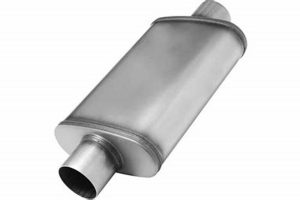
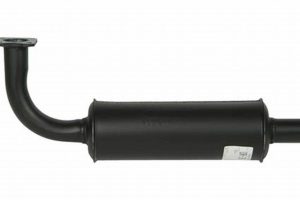
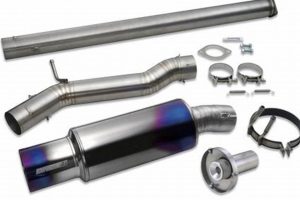
A component integral to the exhaust system of compression-ignition power plants, this device attenuates the sound pressure created by the engine’s combustion process. Functioning as a noise reduction mechanism, it utilizes internal baffles and chambers to disrupt and dissipate sound waves, thereby diminishing the level of audible emissions. A typical example would be a cylindrical or oblong-shaped component installed downstream from the exhaust manifold and catalytic converter, commonly found on heavy-duty trucks, construction equipment, and marine applications.
The incorporation of this device is crucial for compliance with noise pollution regulations, enhancing operator comfort, and mitigating community disturbance. Historically, rudimentary versions consisted of simple expansion chambers. Modern iterations employ sophisticated designs to maximize sound reduction while minimizing backpressure, thereby preserving engine performance and fuel efficiency. The effectiveness of these systems directly impacts the environmental footprint and operational acceptance of diesel-powered machinery.
The ensuing discussion will delve into the diverse designs, materials of construction, performance characteristics, and maintenance considerations associated with these essential noise control elements. Analysis will encompass various types, including reactive and absorptive models, along with an examination of their respective strengths and weaknesses in diverse operational environments. This exploration aims to provide a thorough understanding of these critical components within the broader context of diesel engine technology.
Maintenance and Optimization Strategies
Adhering to a consistent maintenance schedule and implementing appropriate operational strategies are crucial for preserving the efficacy and longevity of exhaust noise reduction systems. Neglecting these aspects can lead to diminished performance, increased noise emissions, and potential regulatory non-compliance.
Tip 1: Regular Inspection for Corrosion: Conduct frequent visual inspections for signs of rust, pitting, or structural degradation, particularly in environments with high humidity or exposure to corrosive substances. Early detection allows for timely repairs or replacements, preventing catastrophic failures.
Tip 2: Monitoring Backpressure Levels: Periodically measure exhaust backpressure. Elevated backpressure indicates potential blockage within the system, which can negatively impact engine performance and fuel economy. Address any identified restrictions promptly.
Tip 3: Proper Installation Techniques: Ensure correct installation during initial setup or replacement. Improper alignment, loose connections, or inadequate support can introduce stress points, leading to premature failure and increased noise levels.
Tip 4: Adherence to Recommended Cleaning Procedures: Follow manufacturer-recommended cleaning protocols. Accumulation of soot, carbon deposits, and other contaminants can reduce the effectiveness of the internal baffling and sound absorption materials.
Tip 5: Utilizing OEM or Equivalent Replacement Parts: Opt for original equipment manufacturer (OEM) or equivalent replacement components. Substandard aftermarket parts may not meet the required performance specifications or durability standards, resulting in compromised noise reduction and reduced lifespan.
Tip 6: Addressing Leaks Promptly: Immediately repair any detected exhaust leaks. Leaks not only increase noise emissions but also pose potential safety hazards, including the risk of carbon monoxide poisoning.
Tip 7: Implementing Vibration Dampening Measures: Employ vibration dampening materials or mounts to minimize the transmission of vibrations from the engine to the exhaust system. This reduces noise and extends the life of the components.
Consistent adherence to these maintenance practices not only optimizes noise reduction performance but also safeguards against premature failure, thereby minimizing operational downtime and associated costs. Proactive maintenance contributes directly to compliance with environmental regulations and enhances the overall efficiency of diesel engine operations.
The subsequent sections will explore troubleshooting common issues, selecting appropriate replacement units, and delving into advanced noise reduction technologies for improved performance.
1. Noise Reduction Efficiency

Noise Reduction Efficiency represents a critical performance metric in assessing the effectiveness of an exhaust silencing device designed for compression-ignition engines. This parameter quantifies the device’s capacity to attenuate sound pressure levels generated during the engine’s combustion cycle, measured in decibels (dB). Higher Noise Reduction Efficiency values signify a greater reduction in audible emissions, directly contributing to compliance with noise pollution regulations and enhancing the operational environment. For example, a silencing device rated at 30 dB Noise Reduction Efficiency will demonstrably reduce exhaust noise compared to one rated at 20 dB, creating a quieter, more regulated operational environment. The internal design, material composition, and overall configuration are paramount in defining this efficiency. Its importance is underscored by the necessity to meet stringent environmental standards and mitigate noise-induced health risks in industrial and urban settings.
The optimization of Noise Reduction Efficiency often necessitates a trade-off with engine backpressure. Designs achieving maximum noise attenuation may inadvertently increase backpressure, potentially compromising engine performance and fuel economy. Therefore, practical applications demand a balanced approach, utilizing advanced technologies such as reactive and absorptive designs to achieve optimal noise reduction without significant backpressure penalties. In heavy-duty trucking, for instance, achieving a balance between noise compliance and fuel efficiency is essential for economic viability and regulatory adherence. Effective measurement and simulation tools are crucial for optimizing the noise reduction capabilities of these systems while minimizing adverse effects on engine operation.
In conclusion, Noise Reduction Efficiency is a fundamental attribute dictating the performance and acceptability of exhaust silencing systems. Understanding its relationship with design parameters, operational constraints, and regulatory requirements is crucial for engineers, manufacturers, and operators. Ongoing research and development efforts are focused on improving Noise Reduction Efficiency without compromising engine performance or durability. Meeting these challenges enables better, more efficient systems to be designed and installed, contributing to a quieter, healthier, and more sustainable operating environment.
2. Backpressure Optimization

Exhaust backpressure, an inherent consequence of flow resistance within the exhaust system, directly impacts diesel engine performance. The exhaust silencing device contributes significantly to this backpressure. While its primary function involves sound attenuation, the internal designbaffles, chambers, and flow pathsinevitably restricts exhaust gas flow. Excessive backpressure impedes the evacuation of exhaust gases from the cylinders, reducing volumetric efficiency and increasing pumping losses. The result is diminished power output, reduced fuel economy, and potentially elevated exhaust gas temperatures. Therefore, backpressure optimization is a critical design consideration for any exhaust silencing device. Effective designs minimize flow restriction while maintaining the required levels of sound reduction, ensuring that engine performance is not unduly compromised. For example, a poorly designed unit on a heavy-duty truck could lead to a significant decrease in horsepower and increased fuel consumption over time.
The ideal exhaust silencing device achieves a delicate balance between sound attenuation and backpressure. This is frequently accomplished through advanced internal geometries and materials selection. Reactive silencing devices, which rely on reflected sound waves to cancel out noise, can often create higher backpressure compared to absorptive devices, which use sound-absorbing materials. Computational fluid dynamics (CFD) modeling is often employed during the design phase to predict and optimize flow characteristics, minimizing backpressure while achieving the desired noise reduction. Practical applications, such as in marine diesel engines, illustrate the importance of this optimization. Restricted exhaust flow in a marine environment can lead to overheating and reduced maneuverability, directly impacting operational safety.
In conclusion, Backpressure Optimization is an indispensable aspect of designing and implementing exhaust silencing devices for compression-ignition engines. Ignoring its effects can lead to detrimental consequences for engine performance, fuel efficiency, and long-term reliability. Ongoing research and development continue to focus on innovative designs and materials to minimize backpressure while maximizing sound attenuation. Effective noise reduction is essential, and the design must ensure backpressure from the muffler does not negatively impact overall vehicle or engine performance. The understanding and careful management of backpressure contribute significantly to the efficiency, longevity, and environmental acceptability of diesel-powered machinery.
3. Material Durability

The operational lifespan and sustained performance of a diesel engine muffler are intrinsically linked to the durability of its constituent materials. The harsh operating environment within an exhaust system exposes these components to a multitude of stressors, including high temperatures, corrosive combustion byproducts, mechanical vibrations, and external environmental factors. Selection of materials exhibiting superior resistance to these stressors is paramount to ensure extended service life and maintain effective noise attenuation. For example, stainless steel alloys, known for their corrosion resistance and high-temperature strength, are commonly employed in muffler construction to mitigate degradation from exhaust gases and moisture. Inadequate material selection inevitably leads to premature failure, resulting in increased noise emissions, potential engine damage due to increased backpressure, and costly replacements. Therefore, material durability stands as a critical factor influencing the overall cost-effectiveness and reliability of diesel engine mufflers.
The practical implications of material durability are evident in diverse applications. Consider heavy-duty trucks operating in regions with salted roads. The combination of corrosive salt and high temperatures accelerates degradation of muffler components constructed from less durable materials, such as mild steel. This results in frequent replacements and increased maintenance costs. Conversely, utilizing stainless steel or aluminized steel enhances corrosion resistance, extending the muffler’s lifespan and reducing the total cost of ownership. In marine applications, where exposure to saltwater is constant, the choice of highly corrosion-resistant alloys is essential to prevent rapid deterioration and ensure continuous operation. The specific operating conditions and environmental factors must be carefully considered when selecting materials to maximize durability and minimize life-cycle costs.
In conclusion, material durability is not merely a desirable attribute but a fundamental requirement for diesel engine mufflers. The selection of appropriate materials, considering factors such as corrosion resistance, temperature stability, and mechanical strength, directly impacts the muffler’s lifespan, noise reduction effectiveness, and overall cost-effectiveness. Overlooking material durability leads to premature failure, increased maintenance expenses, and potential operational disruptions. Understanding the material science principles governing durability is essential for engineers, manufacturers, and operators seeking to optimize the performance and longevity of diesel engine exhaust systems. Future developments in material technology promise to further enhance the durability and performance of these critical components.
4. Installation Integrity

Installation integrity, in the context of exhaust silencing devices for compression-ignition engines, refers to the proper and secure mounting, connection, and sealing of the muffler within the overall exhaust system. The quality of the installation directly impacts the device’s performance, longevity, and compliance with noise regulations. Compromised installation integrity can lead to a cascade of detrimental effects, including increased noise emissions, reduced engine efficiency, and potential safety hazards.
- Secure Mounting and Support
Proper mounting brackets and supports are essential to prevent excessive vibration and stress on the muffler body and connecting pipes. Inadequate support can lead to premature cracking, weld failures, and eventual detachment of the muffler from the exhaust system. For example, a muffler installed on a heavy-duty truck without sufficient vibration dampening may experience accelerated fatigue failure due to constant exposure to road-induced vibrations. Proper mounting also ensures that the muffler does not come into contact with other vehicle components, preventing potential heat damage or interference.
- Leak-Free Connections
Exhaust leaks at the inlet or outlet connections compromise the muffler’s noise attenuation performance and introduce harmful exhaust gases into the surrounding environment. Correctly sized and properly tightened clamps, flanges, and gaskets are critical for achieving leak-free seals. For instance, a loose clamp on a band clamp connection can allow exhaust gases to escape, negating the muffler’s intended noise reduction and potentially exposing personnel to carbon monoxide. Regular inspection and maintenance of these connections are vital to maintain installation integrity.
- Correct Alignment and Stress Mitigation
Improper alignment of the muffler with the rest of the exhaust system can induce stress on the connections and muffler body. Misalignment can occur due to incorrect installation or subsequent movement of engine or chassis components. Incorporating flexible joints or bellows sections into the exhaust system can mitigate these stresses and prevent premature failure. A muffler rigidly connected between a vibrating engine and a fixed chassis point is susceptible to stress-induced cracking, shortening its service life. Careful attention to alignment during installation and periodic inspection for signs of stress are crucial.
- Adherence to Manufacturer Specifications
Following the manufacturer’s installation instructions is paramount for ensuring installation integrity. The instructions typically specify the correct orientation, mounting hardware, torque values, and other critical details. Deviating from these specifications can compromise the muffler’s performance and void any warranty. For example, using the wrong type of gasket or over-tightening connection hardware can damage the muffler and create leak paths. Strict adherence to manufacturer guidelines ensures that the muffler operates as intended and achieves its design life.
The aforementioned facets underscore the importance of meticulous installation practices in maximizing the benefits and lifespan of diesel engine mufflers. Neglecting any of these aspects can lead to a significant degradation of performance, increased operational costs, and potential environmental and safety hazards. Regular inspections and prompt corrective actions are essential to maintain installation integrity throughout the muffler’s service life.
5. Regulatory Compliance

The operational deployment of diesel engine mufflers is inextricably linked to adherence to a complex matrix of environmental regulations enacted by various governmental bodies. These regulations primarily target the reduction of noise pollution emanating from diesel-powered machinery and vehicles, with stringent limits imposed on permissible sound pressure levels. Compliance mandates the incorporation of effective muffling systems that meet or exceed specified noise reduction thresholds.
- EPA Noise Emission Standards
The United States Environmental Protection Agency (EPA) establishes noise emission standards for various categories of vehicles and equipment powered by diesel engines. These standards dictate the maximum allowable noise levels at specified distances and operating conditions. Diesel engine mufflers must be designed and certified to meet these standards to permit legal operation within the United States. Failure to comply results in significant penalties, including fines and operational restrictions. An example includes the EPA’s regulations for heavy-duty trucks, which mandate specific noise levels during acceleration and steady-state operation, necessitating the use of high-performance mufflers.
- Local Noise Ordinances
In addition to federal regulations, numerous municipalities and local jurisdictions implement noise ordinances that further restrict permissible noise levels within their boundaries. These ordinances often target specific times of day or sensitive areas, such as residential neighborhoods and hospitals. Diesel-powered equipment operating within these jurisdictions must comply with these local restrictions, necessitating the use of mufflers that provide sufficient noise reduction to meet the more stringent local standards. An example is construction equipment operating near residential areas, where local ordinances may impose stricter noise limits than federal regulations.
- International Standards (e.g., EU Directives)
International organizations, such as the European Union (EU), have established noise emission standards for vehicles and equipment operating within their member states. These standards are typically implemented through EU Directives, which member states transpose into national legislation. Diesel engine mufflers intended for use in EU countries must comply with these Directives to obtain the necessary certifications for legal operation. An example includes the EU’s regulations for construction equipment, which mandate specific noise levels at the operator’s ear and in the surrounding environment, requiring the use of noise-reducing mufflers that meet these stringent criteria.
- Occupational Safety and Health Regulations
Regulations aimed at protecting worker health and safety also indirectly influence the use of diesel engine mufflers. Prolonged exposure to high noise levels can lead to hearing loss and other health problems. Employers are obligated to provide a safe working environment, including implementing measures to reduce noise exposure. Diesel engine mufflers play a crucial role in reducing workplace noise levels, helping employers comply with occupational safety and health regulations. An example is the use of quieter mufflers on diesel-powered forklifts operating in warehouses, reducing noise exposure for workers and promoting a safer work environment.
The multifaceted regulatory landscape necessitates that manufacturers and operators of diesel-powered machinery prioritize the selection and maintenance of effective muffling systems. Compliance with these regulations is not merely a legal obligation but also a critical factor in promoting environmental sustainability, protecting public health, and ensuring responsible operation. The continuous evolution of noise regulations requires ongoing innovation and development in muffler technology to meet increasingly stringent noise reduction requirements.
Frequently Asked Questions
The following section addresses common inquiries regarding diesel engine mufflers, their functionality, maintenance, and regulatory considerations. The information provided is intended to enhance understanding and promote informed decision-making concerning these critical components.
Question 1: What is the primary function of a diesel engine muffler?
The primary function of a diesel engine muffler is to attenuate the sound pressure generated by the engine’s combustion process. It reduces the level of audible emissions, thereby minimizing noise pollution and ensuring compliance with regulatory standards.
Question 2: How does a diesel engine muffler reduce noise?
Diesel engine mufflers typically utilize internal baffles, chambers, and/or sound-absorbing materials to disrupt and dissipate sound waves. These components force sound waves to travel through convoluted paths, causing them to interfere with each other and lose energy, resulting in a reduction in noise levels.
Question 3: What are the different types of diesel engine mufflers?
Common types include reactive mufflers, which use tuned chambers to reflect and cancel sound waves; absorptive mufflers, which use sound-absorbing materials to dissipate sound energy; and combination mufflers, which incorporate both reactive and absorptive elements to achieve optimal noise reduction.
Question 4: How does muffler performance affect engine performance?
A poorly designed or excessively restrictive muffler can increase exhaust backpressure, impeding the evacuation of exhaust gases from the cylinders. This can reduce engine power, fuel efficiency, and potentially increase exhaust gas temperatures. Optimizing muffler design to minimize backpressure is crucial for maintaining engine performance.
Question 5: What maintenance is required for diesel engine mufflers?
Regular inspections for corrosion, leaks, and physical damage are essential. Monitoring exhaust backpressure can indicate potential blockages within the muffler. Cleaning or replacing the muffler may be necessary to maintain optimal performance and prevent increased backpressure.
Question 6: What are the regulatory considerations regarding diesel engine mufflers?
Diesel engine mufflers must comply with noise emission standards established by governmental agencies, such as the EPA in the United States and similar bodies in other countries. These standards specify maximum allowable noise levels, and failure to comply can result in penalties.
In summary, diesel engine mufflers play a crucial role in mitigating noise pollution and ensuring compliance with environmental regulations. Understanding their function, maintenance requirements, and regulatory implications is essential for the responsible operation of diesel-powered machinery.
The following section will delve into advanced muffler technologies and future trends in noise reduction.
Conclusion
This exploration has illuminated the critical role of the diesel engine muffler in mitigating noise pollution and ensuring regulatory compliance. Key aspects, including design variations, material science considerations, installation protocols, and maintenance procedures, have been thoroughly examined. Effective selection, implementation, and upkeep of this component are paramount for optimizing engine performance, minimizing environmental impact, and adhering to legal mandates.
Continued advancements in noise reduction technology and evolving regulatory landscapes necessitate a proactive and informed approach to diesel engine muffler management. Further research and rigorous adherence to best practices are essential to promote a quieter, more sustainable future. Prioritizing effective noise control contributes significantly to both environmental stewardship and operational responsibility.