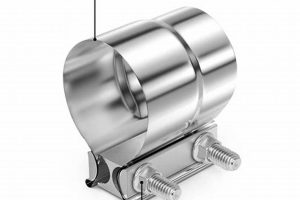
muffler%20bandage&w=1280&h=720&c=5&rs=1&p=0" alt="[BEST] Muffler Bandage Fix: Quick Exhaust Repair!" width="100%" style="margin-right: 8px;margin-bottom: 8px;" />
A heat-resistant wrap designed for temporary repair of exhaust systems, it typically comprises a fiberglass or similar material impregnated with a resin that hardens when exposed to heat. Applied directly to cracks or holes in a vehicle’s exhaust, it creates a seal to reduce noise and prevent further damage. For example, when a small hole develops in an exhaust pipe, this type of bandage can be applied to temporarily seal the breach and mitigate exhaust leaks.
The utility lies in its ability to offer a quick and often inexpensive solution to exhaust system problems, preventing complete system failure and potentially costly repairs. Historically, such repair methods have been utilized to extend the lifespan of exhaust components, particularly in situations where immediate replacement is not feasible or affordable. Benefits include noise reduction, prevention of harmful gas leaks, and temporary reinforcement of weakened exhaust sections, allowing for continued vehicle operation until a more permanent repair can be performed.
Understanding the application and limitations of temporary exhaust repairs is crucial for informed vehicle maintenance. The following sections will delve into proper application techniques, material composition, longevity expectations, and potential hazards associated with such temporary solutions. Further, the long-term impact on exhaust system integrity and alternative repair options will be addressed.
Application and Maintenance Tips
Following these guidelines will help maximize the effectiveness and safety when using a heat-activated exhaust wrap for temporary exhaust repairs.
Tip 1: Preparation is Paramount. Before application, thoroughly clean the affected area of the exhaust pipe. Remove any loose rust, dirt, or debris with a wire brush to ensure proper adhesion of the material. Failure to properly clean the surface may result in premature failure of the bandage.
Tip 2: Wear Protective Gear. Always wear gloves and eye protection during the application process. Some materials may contain irritants, and the abrasive nature of the bandage can cause skin and eye irritation. Safety glasses and gloves provide essential protection.
Tip 3: Follow Instructions Carefully. Adhere strictly to the manufacturer’s instructions regarding application procedure, curing time, and temperature requirements. Deviating from these instructions can compromise the integrity of the repair.
Tip 4: Secure the Bandage Tightly. Wrap the bandage firmly around the damaged area, overlapping each layer sufficiently to create a secure seal. Use the provided clamps or wire to tightly secure the bandage ends and prevent unraveling. Inadequate tightness will allow exhaust leaks and reduce the bandage’s lifespan.
Tip 5: Controlled Curing Process. After application, allow the engine heat to cure the bandage gradually. Avoid sudden temperature shocks, such as dousing the hot bandage with water, as this can cause cracking and failure. A gradual heat-up cycle ensures proper resin hardening and bonding.
Tip 6: Monitor Regularly. Periodically inspect the repair for signs of cracking, peeling, or exhaust leaks. Early detection of these issues allows for timely reapplication or alternative repair solutions. Regular monitoring is crucial for maintaining vehicle safety.
Tip 7: Temporary Solution Only. Remember that this type of repair is a temporary fix. It should not be considered a substitute for a permanent exhaust system repair or replacement. Prolonged reliance on it can lead to further exhaust system damage and potential safety hazards.
By adhering to these tips, the effectiveness of temporary exhaust repair can be maximized, ensuring safer and more reliable vehicle operation until a permanent solution can be implemented. Proper application and ongoing monitoring are critical for achieving optimal results.
The next section will discuss factors impacting the overall lifespan and expected performance of such repair solutions.
1. Temporary repair

The term “temporary repair,” when applied to exhaust systems and in relation to products like exhaust wrap, denotes an expedient solution intended to restore functionality for a limited duration. This approach directly addresses an immediate problem, such as an exhaust leak caused by a crack or small hole, without undertaking a comprehensive overhaul or replacement. A typical scenario involves a vehicle owner noticing increased engine noise and reduced fuel efficiency. Upon inspection, a small hole in the muffler is discovered. Instead of immediately replacing the entire muffler, a heat-activated exhaust wrap is applied to seal the hole, reducing noise and preventing further exhaust gas leakage. This restores acceptable functionality, allowing the driver to continue using the vehicle until a permanent repair can be scheduled. The essence lies in addressing the symptom rather than resolving the underlying cause of the exhaust system degradation.
The importance of recognizing the “temporary” nature of exhaust wrap repairs is paramount to avoiding long-term damage and potential safety hazards. Relying solely on a temporary fix can mask underlying issues, such as extensive corrosion, which may eventually lead to catastrophic failure of the exhaust system. For instance, continued vibration and thermal cycling can cause the exhaust wrap to crack and peel, re-exposing the original defect. Moreover, untreated corrosion can spread, weakening the entire exhaust system. Therefore, understanding the practical limitations allows vehicle owners to proactively plan for comprehensive repairs, ensuring the vehicle remains safe and compliant with emissions regulations. It’s critical for the owner to understand that the wrap is not a permanent solution and replacement or professional repair will be needed.
In summary, the application of exhaust wrap exemplifies a temporary repair strategy, offering immediate relief from exhaust system malfunctions. However, its effectiveness is contingent upon a clear understanding of its limitations and a proactive approach toward securing a permanent solution. Recognizing the “temporary repair” nature is not merely a semantic distinction; it is a crucial element in responsible vehicle maintenance, promoting safety and preventing escalating repair costs. By acknowledging this distinction, vehicle owners can make informed decisions that prioritize the long-term health and performance of their vehicles.
2. Heat-activated resin

The functionality of an exhaust wrap is inextricably linked to the properties of its heat-activated resin component. This resin acts as the binding agent, solidifying the bandage and adhering it to the damaged exhaust surface. Without a properly formulated and functional resin, the wrap would lack the structural integrity necessary to seal exhaust leaks and withstand the high temperatures and vibrations inherent in exhaust systems. The type of resin used is a key determinant of the product’s effectiveness. For instance, certain epoxy resins, formulated to withstand extreme temperature fluctuations, are frequently employed due to their robust adhesion and thermal stability. When an exhaust pipe develops a crack, the heat from the exhaust gases activates the resin within the wrap, causing it to cure and create a rigid, heat-resistant barrier over the damaged area. The success of this temporary repair hinges upon the resin’s ability to bond effectively to the metal surface of the exhaust pipe and maintain its integrity under sustained heat exposure.
The selection of the heat-activated resin has significant practical implications for the longevity and reliability of the repair. Resins with poor heat resistance can degrade over time, leading to cracking, peeling, and eventual failure of the wrap. Conversely, high-quality resins, designed for exhaust system applications, exhibit superior adhesion and thermal stability, extending the lifespan of the temporary repair. Moreover, the resin’s formulation affects its ability to resist chemical attack from exhaust gases and road salts, further influencing its durability. For example, a vehicle operating in a region with harsh winter conditions, where road salt is prevalent, requires a wrap with a resin formulated to resist corrosion. In practical application, insufficient attention to the resin’s properties results in premature degradation of the bandage. Therefore, it is important to choose wrap known for a robust and reliable resin formulation.
In summary, the heat-activated resin is a critical component of any exhaust repair wrap, determining its ability to seal leaks, withstand high temperatures, and resist environmental degradation. The performance of this wrap is directly related to the quality and properties of the resin used. Choosing a wrap with a resin specifically formulated for exhaust system applications, considering factors such as temperature resistance, adhesion strength, and chemical compatibility, is crucial for maximizing the effectiveness and longevity of the temporary repair. The interaction between the resin and heat is crucial for this function.
3. Exhaust leak sealant

Exhaust leak sealant is an essential function provided by a muffler bandage. The primary purpose of the bandage is to create a temporary seal over breaches in the exhaust system, preventing the escape of harmful gases and mitigating noise pollution. The effectiveness of a muffler bandage is directly proportional to its ability to function as an effective exhaust leak sealant.
- Material Composition and Sealing Properties
The materials used in muffler bandages, such as fiberglass or specialized fabrics impregnated with heat-activated resins, are crucial for their sealant capabilities. These materials must be capable of conforming to the contours of the damaged area and forming a tight, impermeable barrier against exhaust gases. For example, a bandage using a high-temperature silicone resin offers superior sealing properties compared to one using a lower-grade adhesive, especially under extreme thermal cycling conditions. The composition directly influences the bandage’s ability to maintain an effective seal.
- Application Technique and Seal Integrity
Proper application of a muffler bandage is vital for achieving an effective seal. This involves thoroughly cleaning the damaged area, applying the bandage with adequate overlap, and ensuring it is tightly secured to the exhaust pipe. For instance, if a bandage is loosely applied or the surface is not properly prepared, exhaust gases may still escape, reducing the effectiveness of the sealant. Therefore, the application technique significantly influences the bandage’s ability to function as an exhaust leak sealant.
- Heat Activation and Curing Process
Many muffler bandages rely on heat-activated resins to cure and form a durable seal. The heat from the exhaust system triggers a chemical reaction in the resin, causing it to harden and bond to the metal surface. For example, if the exhaust system does not reach a sufficient temperature, the resin may not fully cure, resulting in a weak seal that is prone to failure. Understanding the heat requirements and curing process is essential for maximizing the sealant capabilities of the bandage.
- Longevity and Seal Maintenance
The lifespan of a muffler bandage as an exhaust leak sealant is typically limited, as it is intended as a temporary repair. Factors such as exposure to moisture, road salts, and continued thermal stress can degrade the bandage over time, compromising its seal. For instance, in regions with harsh winter conditions, the corrosive effects of road salt can accelerate the deterioration of the bandage, leading to leaks. Regular inspection and maintenance are necessary to ensure the bandage continues to function effectively as a sealant until a permanent repair can be made.
The facets discussed highlight the complex interplay of factors that determine the effectiveness of a muffler bandage as an exhaust leak sealant. A well-designed bandage, properly applied and maintained, can provide a temporary solution to exhaust leaks. This offering is critical to the vehicles’ function until a long term fix can be implimented. This type of product serves as a temporary fix to keep vehicles running and allow the user time to make permanent repairs.
4. Application technique

The effectiveness of a muffler bandage is inextricably linked to the application technique employed. Even the highest-quality materials will fail to provide an adequate seal if the bandage is not applied correctly. Proper application ensures optimal adhesion, coverage, and durability of the repair, directly impacting its ability to function as an exhaust leak sealant.
- Surface Preparation
Thorough surface preparation is a critical first step. The area surrounding the damage must be cleaned of rust, dirt, grease, and any other contaminants. A wire brush or abrasive pad is typically used to remove loose debris. Failure to properly clean the surface compromises adhesion, preventing the bandage from bonding securely to the exhaust pipe. For example, applying a muffler bandage over a layer of oil or rust will result in premature failure, as the bandage will adhere to the contaminants rather than the pipe itself.
- Bandage Saturation and Activation
Many muffler bandages require pre-soaking in water or other activating solutions before application. This saturation process prepares the resin for curing and ensures flexibility during application. Insufficient saturation can lead to a brittle bandage that is difficult to mold and prone to cracking. For instance, if a bandage is applied dry, it may not conform properly to the shape of the exhaust pipe, leaving gaps and weak points in the seal.
- Wrapping and Overlapping
The bandage should be wrapped tightly around the damaged area, with sufficient overlap between each layer. This overlapping technique creates a multi-layered seal, enhancing its strength and durability. Inadequate overlap can result in weak spots that are susceptible to leaks. A common error is failing to extend the bandage far enough beyond the damaged area, leaving the edges vulnerable to peeling and cracking.
- Securing and Curing
Once the bandage is applied, it must be securely fastened with clamps, wire, or other securing mechanisms. This ensures constant pressure and promotes proper curing of the resin. Heat from the exhaust system then activates the resin, causing it to harden and bond to the pipe. Insufficient clamping or an improper curing process can lead to a loose or ineffective seal. A typical mistake is removing the clamps too early, before the resin has fully cured, resulting in a weakened bond that is prone to failure.
These facets collectively demonstrate that the application technique is not merely a procedural step, but a crucial determinant of the effectiveness and longevity of a muffler bandage repair. Proper surface preparation, bandage saturation, wrapping technique, and securing methods all contribute to creating a durable and reliable seal. Neglecting any of these aspects compromises the overall performance of the bandage, underscoring the importance of meticulous application.
5. Material composition

The functionality of a muffler bandage is directly dictated by its material composition. The materials selected determine the bandage’s ability to withstand extreme temperatures, adhere to exhaust system metals, and effectively seal exhaust leaks. A bandage primarily consists of a reinforcement material and a binding agent. The reinforcement material, typically fiberglass or a similar heat-resistant fabric, provides structural integrity and tensile strength. The binding agent, generally a heat-activated resin, bonds the reinforcement material to the exhaust pipe, creating a seal. In instances where a bandage uses a low-grade fiberglass, it may exhibit poor heat resistance, leading to premature degradation and failure. Conversely, a bandage constructed with high-quality fiberglass and a thermally stable epoxy resin can withstand higher temperatures and maintain its integrity for a longer period.
The specific properties of the chosen materials impact the muffler bandage’s practical application. For example, a bandage containing asbestos (now largely avoided due to health concerns) historically offered superior heat resistance but posed significant health risks. Modern bandages often incorporate synthetic fibers like aramid or basalt, offering a balance of heat resistance and safety. The resin component’s chemical composition is equally critical. Resins must resist degradation from exhaust gases, moisture, and road salts. A bandage using a resin susceptible to hydrolysis (degradation from water) may quickly lose its adhesive properties in wet environments, resulting in seal failure. Choosing materials compatible with the specific operating environment extends the bandage’s lifespan and effectiveness.
In conclusion, the material composition is not merely a design consideration but the defining factor in a muffler bandage’s performance. The selection of appropriate reinforcement materials and heat-activated resins, carefully chosen for their heat resistance, adhesion properties, and chemical compatibility, ensures the bandage effectively seals exhaust leaks and withstands the harsh conditions of an exhaust system. The selection of materials must reflect the conditions expected for performance.
6. Longevity expectations

The expected lifespan of a muffler bandage is a crucial consideration for vehicle owners opting for this temporary exhaust repair solution. It directly influences the cost-effectiveness and suitability of this approach, as it dictates how long the bandage can reliably perform its intended function before requiring replacement or a more permanent repair.
- Material Degradation
The materials used in a muffler bandage, such as fiberglass and heat-activated resins, are subject to degradation over time due to exposure to high temperatures, exhaust gases, moisture, and road salts. This degradation gradually weakens the bandage, compromising its ability to seal exhaust leaks and maintain structural integrity. The rate of degradation depends on the quality of the materials used and the severity of the operating conditions. For instance, a bandage exposed to frequent temperature fluctuations or corrosive substances will degrade more rapidly than one operating under milder conditions.
- Environmental Factors
Environmental factors significantly impact the longevity of a muffler bandage. Exposure to moisture, road salts, and UV radiation can accelerate the degradation of the bandage materials, leading to premature failure. In regions with harsh winter climates, the corrosive effects of road salt are particularly detrimental. For example, a bandage applied to a vehicle operating in a coastal area with high humidity and salt spray may only last a few months, while the same bandage applied in a dry, temperate climate could last much longer.
- Application Quality
The quality of the initial application directly affects the longevity of a muffler bandage. Proper surface preparation, bandage saturation, wrapping technique, and securing methods are essential for ensuring optimal adhesion and durability. A poorly applied bandage is more susceptible to premature failure due to leaks, peeling, or cracking. For instance, if the surface is not properly cleaned before application, the bandage will not bond securely to the exhaust pipe, resulting in a weak seal that quickly deteriorates.
- Usage Patterns and Vehicle Type
Vehicle usage patterns and type also influence the longevity of a muffler bandage. Vehicles that are driven frequently or under demanding conditions, such as towing or off-road driving, place greater stress on the exhaust system, accelerating bandage degradation. Similarly, certain vehicle types, such as those with high-performance engines or poorly maintained exhaust systems, may experience more rapid bandage failure. A bandage applied to a heavy-duty truck used for frequent towing will likely have a shorter lifespan than the same bandage applied to a passenger car used for light commuting.
These facets collectively underscore that the expected lifespan of a muffler bandage is highly variable and depends on a complex interplay of factors. While a muffler bandage can provide a temporary solution to exhaust leaks, vehicle owners must recognize its limitations and proactively plan for a permanent repair before the bandage fails completely. Neglecting these insights could result in vehicle damage.
7. System compatibility

System compatibility, concerning muffler bandages, refers to the suitability of the bandage for a specific vehicle’s exhaust system and the nature of the damage sustained. The effectiveness of this type of repair hinges on several factors directly related to the vehicle’s design and the location/severity of the exhaust leak. A bandage designed for a small-diameter exhaust pipe on a passenger car may prove ineffective, or even unusable, on a large-diameter exhaust system found on a heavy-duty truck. Similarly, a bandage might successfully seal a small pinhole leak but fail to contain a large crack or a section with extensive corrosion. Ignoring system compatibility can lead to premature bandage failure, continued exhaust leaks, and potential damage to other vehicle components.
Practical application necessitates a thorough assessment of the exhaust system before attempting a repair. This includes measuring the diameter of the pipe at the damaged location, identifying the material composition of the exhaust system (steel, stainless steel, etc.), and evaluating the extent of the damage. Some vehicles, particularly those with complex exhaust configurations or specialized exhaust coatings, may not be suitable for muffler bandage application. For instance, vehicles equipped with exhaust gas recirculation (EGR) systems or catalytic converters located close to the damaged area may experience impaired performance or even damage due to restricted exhaust flow caused by an improperly applied or incompatible bandage. Also, some composite exhaust systems may react negatively to the resin in the bandage.
In summary, system compatibility is a critical determinant of muffler bandage success. Selecting a bandage appropriate for the vehicle’s exhaust system size, material, and damage severity is essential for achieving a reliable temporary repair. Failure to consider system compatibility results in ineffective repairs, potential vehicle damage, and ultimately, increased repair costs. Vehicle owners should carefully assess their exhaust system and consult with a qualified mechanic when in doubt to ensure the chosen bandage is compatible and safe for their specific application. Understanding this aspect helps maximize the limited lifespan and temporary nature of the repair.
Frequently Asked Questions
The following questions address common inquiries and misconceptions regarding the application and limitations of exhaust repair bandages.
Question 1: What is the expected service life of an exhaust repair bandage?
The service life is inherently limited, typically ranging from a few weeks to several months. Factors influencing longevity include environmental conditions, driving habits, material quality of the bandage, and the severity of the existing exhaust system damage.
Question 2: Can an exhaust repair bandage serve as a permanent solution?
No. Exhaust repair bandages are designed as temporary fixes only. Reliance on a bandage for extended periods can lead to further exhaust system damage and potential safety hazards. A permanent repair or replacement is necessary.
Question 3: What safety precautions must be observed during the application of an exhaust repair bandage?
Eye and hand protection are imperative. Certain bandage materials contain irritants. Furthermore, the exhaust system should be cool to the touch to prevent burns. Adequate ventilation is also recommended during application.
Question 4: Are all exhaust repair bandages compatible with every type of exhaust system?
Compatibility varies. Bandage dimensions and material properties should be considered in relation to the exhaust system’s pipe diameter, material composition, and operating temperature. Consult product specifications before application.
Question 5: How should the exhaust pipe be prepared prior to bandage application?
The affected area must be thoroughly cleaned of rust, dirt, and grease. A wire brush is typically used to remove loose debris. Proper surface preparation is crucial for achieving optimal bandage adhesion and sealing performance.
Question 6: Will an exhaust repair bandage negatively impact vehicle performance or emissions?
If applied correctly, the bandage should not significantly impact performance or emissions. However, an improperly applied bandage can restrict exhaust flow, potentially reducing engine efficiency and increasing emissions. Regular monitoring of the repair is advised.
These FAQs provide a concise overview of the key considerations associated with exhaust repair bandages. Understanding these points facilitates informed decision-making and promotes safe and effective application.
The subsequent section will explore alternative exhaust repair methods and their respective advantages and disadvantages.
Conclusion
This exploration of the applications and limitations of muffler bandage as a temporary exhaust repair solution has covered multiple facets. Topics have ranged from material composition and application techniques to system compatibility and longevity expectations. This analysis has illuminated the crucial role proper preparation and informed decision-making play in maximizing the effectiveness of this stop-gap measure. A clear understanding of the temporary nature of this method is essential to managing expectations and preventing further vehicle damage.
Continued awareness of the principles of vehicle maintenance remains critical. While a muffler bandage offers a short-term solution, it does not negate the need for a comprehensive inspection and, ultimately, a permanent repair or exhaust system replacement. Prudent vehicle owners should view this method as a temporary measure, proactively addressing underlying exhaust system issues to ensure vehicle safety and optimal performance. Delaying proper service may result in increased costs, reduced efficiency, and potential hazards.