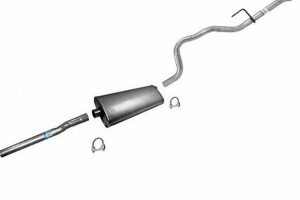
The exhaust silencing mechanism in a vehicle comprises several interconnected components designed to reduce engine noise and channel exhaust gases away from the passenger compartment. This assembly includes a resonator, which dampens specific sound frequencies, and a central canister filled with sound-absorbing material, such as fiberglass or steel wool. Connecting pipes ensure the passage of exhaust gases between these elements and to the tailpipe.
Effective operation of this noise reduction apparatus contributes significantly to driver and passenger comfort, and compliance with noise pollution regulations. Historically, the evolution of these systems has mirrored advancements in engine technology and increasing societal awareness of environmental concerns. Properly functioning components also improve engine efficiency and reduce harmful emissions.
The subsequent sections will detail the specific functions and potential issues associated with each element within the exhaust silencing assembly, including the inlet pipe, the main body, the outlet pipe, baffles, and any associated hangers and clamps.
Maintenance and Longevity Considerations
Proper maintenance and timely attention to potential issues are crucial for maximizing the lifespan and performance of the exhaust noise reduction setup. Neglecting regular inspections can lead to costly repairs and potential safety hazards.
Tip 1: Regular Visual Inspections: Periodically examine the system for signs of rust, corrosion, or physical damage. Pay close attention to weld points, hangers, and clamps, as these are common areas for failure. Early detection allows for preventative measures to be taken.
Tip 2: Listen for Unusual Noises: A change in exhaust sound, such as a rattling, hissing, or booming noise, may indicate a problem within the silencing assembly. These sounds can often pinpoint the location of a leak or internal damage.
Tip 3: Address Rust Promptly: Surface rust can often be treated with rust converters or inhibitors. Ignoring rust allows it to penetrate deeper, weakening the metal and leading to eventual failure.
Tip 4: Check Hangers and Mounts: Ensure that all hangers and mounts are securely attached and in good condition. Loose or broken hangers can cause excessive vibration and stress on the system, accelerating wear and tear.
Tip 5: Avoid Short Trips When Possible: Short trips do not allow the exhaust system to fully heat up, leading to condensation buildup inside. This condensation contributes to internal corrosion and reduces the lifespan of the components.
Tip 6: Consider Material Upgrades: When replacing the entire silencing mechanism, or components of it, consider opting for stainless steel or aluminized steel. These materials offer superior corrosion resistance compared to standard steel.
Tip 7: Ensure Proper Installation: When installing new components, ensure that all connections are properly sealed and torqued to the manufacturer’s specifications. Improper installation can lead to leaks and premature failure.
By adhering to these recommendations, vehicle owners can significantly extend the service life of their exhaust silencing apparatus and maintain optimal performance and noise reduction.
The following section will address common problems that may arise and offer guidance for diagnosis and repair.
1. Inlet Pipe

The inlet pipe serves as the initial conduit within the exhaust silencing assembly, directly connecting to the exhaust manifold or header. Its integrity and design are paramount to the overall performance and longevity of the entire system.
- Primary Channel for Exhaust Gases
The inlet pipe’s principal function is to channel hot exhaust gases from the engine to the muffler. Its diameter and configuration directly impact exhaust flow, potentially influencing engine performance and fuel efficiency. A restriction in the inlet pipe, caused by corrosion or damage, can increase backpressure, hindering engine output and potentially increasing fuel consumption.
- Material Composition and Durability
The material used in the inlet pipe’s construction dictates its resistance to corrosion and thermal stress. Common materials include steel, aluminized steel, and stainless steel. Steel offers adequate durability at a lower cost, while aluminized and stainless steel provide superior corrosion resistance, extending the lifespan of the component. The operating temperatures experienced necessitate materials capable of withstanding extreme heat cycles and exposure to corrosive exhaust byproducts.
- Connection and Sealing Mechanisms
The method by which the inlet pipe connects to the exhaust manifold and the muffler is crucial for preventing exhaust leaks. Flanges, gaskets, and exhaust clamps are commonly employed to create a tight seal. Leaks in these connections can result in increased noise levels, reduced engine performance, and the potential for harmful exhaust gases to enter the vehicle’s cabin. Proper torque specifications and the use of high-quality gaskets are essential for ensuring a reliable seal.
- Impact on Noise Reduction
While the primary noise reduction occurs within the muffler body, the inlet pipe’s design can influence the frequencies of sound that are transmitted. Variations in pipe diameter and the inclusion of resonators within the inlet pipe itself can contribute to the overall sound attenuation characteristics of the exhaust system. Consequently, modifications to the inlet pipe can alter the vehicle’s exhaust note.
The inlet pipe’s role as the entry point for exhaust gases highlights its significance within the silencing apparatus. Proper maintenance, material selection, and secure connections are fundamental to ensuring the efficient and quiet operation of the entire vehicle.
2. Muffler Body

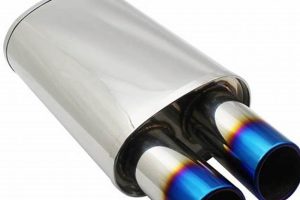
The muffler body represents the core component within the exhaust silencing apparatus. As an integral constituent of the complete system, its function directly impacts the effectiveness of noise reduction and overall exhaust flow. The internal architecture of the muffler body, including its baffles, chambers, and sound-absorbing materials, dictates the attenuation of engine noise. A compromised muffler body, due to rust, physical damage, or internal deterioration, directly impacts the efficiency of the noise reduction process, potentially resulting in increased exhaust noise and decreased vehicle performance. For example, a rusted-through muffler body can create an exhaust leak, leading to a louder exhaust note and potential safety concerns regarding carbon monoxide exposure.
The design and construction of the muffler body vary widely depending on the vehicle type and desired sound characteristics. Some muffler bodies employ a series of chambers and tubes to cancel out specific sound frequencies through interference, while others utilize sound-absorbing materials, such as fiberglass or steel wool, to dampen the exhaust noise. The specific configuration is engineered to meet regulatory noise standards and to provide a desired auditory experience for the vehicle’s occupants. A properly functioning muffler body ensures compliance with noise pollution laws and contributes to driver and passenger comfort. Conversely, aftermarket modifications to the muffler body can significantly alter the exhaust sound, potentially exceeding legal noise limits.
In summary, the integrity and design of the muffler body are crucial to the performance of the entire silencing system. Its function goes beyond simple noise reduction, impacting fuel efficiency, emissions, and overall vehicle operability. Understanding the role of the muffler body within the broader system is essential for effective diagnostics, maintenance, and repair, ensuring optimal performance and longevity of the vehicle’s exhaust system.
3. Outlet Pipe
The outlet pipe is a critical component of the exhaust silencing mechanism, serving as the final conduit for exhaust gases after they have passed through the muffler. Its design and construction directly influence the efficiency of exhaust expulsion and can subtly affect the vehicle’s sound profile.
- Final Conduit for Exhaust Gases
The outlet pipe’s primary function is to direct the silenced exhaust gases away from the vehicle’s undercarriage, preventing them from accumulating beneath the vehicle and potentially entering the passenger compartment. Its position and angle are designed to optimize dispersion of the gases into the atmosphere. Improper positioning or damage to the outlet pipe can result in exhaust fumes lingering near the vehicle, posing a health risk.
- Material Composition and Corrosion Resistance
Similar to other components of the exhaust silencing assembly, the outlet pipe is exposed to high temperatures and corrosive exhaust byproducts. Consequently, its material composition is crucial for ensuring longevity. Common materials include steel, aluminized steel, and stainless steel. Stainless steel offers the highest level of corrosion resistance, making it a preferred choice for vehicles operating in harsh environments.
- Impact on Exhaust Flow and Backpressure
The diameter and configuration of the outlet pipe can influence exhaust flow and backpressure. A restricted outlet pipe can increase backpressure, potentially reducing engine performance and fuel efficiency. Aftermarket modifications to the outlet pipe, such as installing larger diameter pipes, are often employed to improve exhaust flow and enhance engine power, but such modifications must be carefully considered to avoid exceeding legal noise limits or negatively impacting emissions.
- Influence on Exhaust Sound
While the majority of noise reduction occurs within the muffler body, the outlet pipe can subtly affect the vehicle’s exhaust sound. The length, diameter, and angle of the outlet pipe can influence the resonance of the exhaust gases, altering the tone and volume of the exhaust note. Variations in outlet pipe design are often used to fine-tune the exhaust sound to meet specific performance or aesthetic preferences.
The outlet pipe, therefore, serves a function extending beyond simply directing exhaust gases. Its material, configuration, and integration within the overall exhaust silencing setup influence efficiency, emissions, noise level, and safety. Understanding the role of this component is essential for effective maintenance, repair, and modification of the entire system.
4. Baffles
Baffles, integral to various “parts of a muffler system,” directly influence sound attenuation and exhaust flow characteristics. Their design, placement, and quantity within a muffler body determine the effectiveness of noise reduction and the level of backpressure exerted on the engine.
- Sound Wave Disruption
Baffles are designed to disrupt the direct path of sound waves traveling through the muffler. By creating a tortuous path, baffles force sound waves to reflect and interfere with each other, resulting in a reduction of noise intensity. For example, a series of perforated baffles can effectively dissipate high-frequency sounds, contributing to a quieter exhaust note. An insufficient number of baffles results in inadequate noise reduction, while excessive baffling can restrict exhaust flow.
- Exhaust Flow Control
The arrangement of baffles affects the flow of exhaust gases through the muffler. A well-designed baffle system minimizes backpressure, which can negatively impact engine performance and fuel efficiency. Conversely, poorly designed or damaged baffles can create excessive backpressure, hindering engine output. Performance mufflers often incorporate strategically placed baffles to balance sound attenuation with minimal flow restriction.
- Muffler Durability
Baffles contribute to the structural integrity of the muffler body. They provide internal support, preventing the muffler from collapsing or deforming under the pressure and heat of exhaust gases. Corroded or broken baffles compromise the muffler’s structural stability, potentially leading to premature failure and increased noise levels. Regular inspection of the muffler can identify baffle damage before it becomes a significant problem.
- Resonance Tuning
Baffles can be tuned to target specific sound frequencies, further enhancing noise reduction. By adjusting the size, shape, and placement of baffles, manufacturers can create a muffler that effectively dampens unwanted sounds. For example, certain baffle designs can minimize drone, a low-frequency sound that can be particularly irritating to vehicle occupants. This tuning process is crucial for achieving the desired sound characteristics of the exhaust system.
The preceding facets demonstrate the multifaceted role of baffles within the exhaust silencing mechanism. Baffles not only reduce noise levels but also influence exhaust flow, contribute to muffler durability, and allow for targeted sound tuning. Therefore, the design and condition of baffles are critical to the overall performance and longevity of “parts of a muffler system”.
5. Resonator
The resonator, an integral component within a “parts of a muffler system,” functions to attenuate specific sound frequencies that the main muffler might not effectively eliminate. Its inclusion is not universally mandated; rather, it is implemented to address undesirable noise characteristics, often referred to as “drone,” which can manifest at certain engine speeds. The resonator’s design typically involves a chamber or series of chambers tuned to resonate at the problematic frequencies, thereby canceling them out through destructive interference. Without a properly functioning resonator, the exhaust note can be perceived as excessively loud or irritating, especially during highway driving, thus affecting driver and passenger comfort.
The practical application of a resonator is exemplified in vehicles where engine design or exhaust system configuration inherently produces specific, bothersome frequencies. For instance, certain four-cylinder engines are prone to creating a droning sound around 2000-2500 RPM. A resonator tuned to this frequency range effectively mitigates this issue. Furthermore, aftermarket exhaust systems, designed for enhanced performance, sometimes sacrifice sound quality. Incorporating a resonator into these systems can restore a more refined and less intrusive exhaust note. The effectiveness of the resonator is contingent upon accurate tuning to the target frequencies, as an improperly tuned resonator may have negligible or even detrimental effects on the overall sound.
In summary, the resonator’s role within a “parts of a muffler system” is to refine the exhaust sound by targeting and neutralizing specific frequencies. Its presence is dictated by the inherent noise characteristics of the engine and exhaust system design, and its effectiveness hinges on accurate tuning. While not a mandatory component, the resonator significantly contributes to the overall sound quality and comfort experienced within the vehicle. The ongoing challenge lies in designing resonators that offer effective noise reduction without compromising exhaust flow or adding excessive weight to the vehicle.
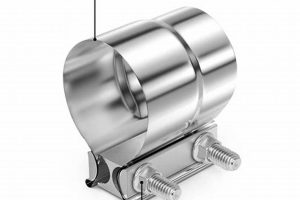
6. Hangers/Clamps
Hangers and clamps, though often overlooked, constitute essential support and securing elements within a vehicle’s exhaust silencing mechanism. Their function extends beyond mere attachment, directly influencing the longevity, performance, and safety of the entire system. Failure of these components can lead to significant operational issues and potential hazards.
- Securement and Vibration Dampening
Hangers and clamps affix the exhaust system to the vehicle’s undercarriage, preventing excessive movement and vibration. This securement minimizes stress on the exhaust pipes, muffler, and catalytic converter, extending their service life. Rubber isolators within the hangers dampen vibrations, reducing noise transmission into the vehicle’s cabin. A broken hanger can cause the exhaust system to rattle against the underbody, creating noticeable noise and potentially damaging other components.
- Alignment and Structural Support
Properly positioned hangers and clamps ensure correct alignment of the exhaust system components. Misalignment can create stress points, leading to premature failure of welds and joints. Hangers provide structural support, preventing the exhaust system from sagging, which can reduce ground clearance and increase the risk of damage from road debris. For instance, a loose clamp at a pipe connection can cause an exhaust leak, reducing engine performance and potentially allowing harmful gases to enter the passenger compartment.
- Corrosion Resistance and Material Selection
Hangers and clamps are exposed to harsh environmental conditions, including road salt, moisture, and extreme temperatures. Consequently, their material composition is crucial for resisting corrosion. Galvanized steel and stainless steel are common choices for hangers, offering varying degrees of corrosion protection. Rubber components within the hangers must be resistant to oil, grease, and temperature variations to maintain their flexibility and damping properties. Neglecting corrosion-resistant properties can result in premature failure.
- Installation and Maintenance
Proper installation of hangers and clamps is essential for ensuring their effectiveness. Overtightening clamps can damage exhaust pipes, while undertightening can lead to leaks. Regular inspection of hangers and clamps is necessary to identify signs of corrosion, wear, or damage. Replacing worn or damaged hangers and clamps promptly prevents more extensive and costly repairs to the exhaust system. Simple visual inspection of a clamps integrity save time and money.
In summation, hangers and clamps play a critical role in the overall integrity and functionality of the exhaust silencing setup. Their function is essential for secure positioning, noise dampening, and prevention of exhaust leaks. Routine inspection and timely replacement contribute significantly to the longevity and safety of the entire system.
Frequently Asked Questions About Exhaust Silencing Components
This section addresses common inquiries concerning the components integral to exhaust silencing systems, providing clear and concise answers based on factual information.
Question 1: What constitutes a typical exhaust silencing assembly?
A typical assembly includes an inlet pipe, resonator (optional), muffler body with internal baffles, outlet pipe, and associated hangers and clamps. These components collectively function to reduce engine noise.
Question 2: What is the primary function of the resonator?
The resonator’s primary function is to attenuate specific sound frequencies, often described as “drone,” that the main muffler may not effectively eliminate. It is tuned to target these undesirable frequencies.
Question 3: How do baffles contribute to noise reduction?
Baffles disrupt the direct path of sound waves within the muffler body, causing them to reflect and interfere with each other, thereby reducing the overall noise level. They also influence exhaust flow.
Question 4: What materials are commonly used in the fabrication of exhaust silencing assemblies?
Common materials include steel, aluminized steel, and stainless steel. Stainless steel offers the highest degree of corrosion resistance, extending component lifespan, particularly in corrosive environments.
Question 5: What are the potential consequences of a malfunctioning exhaust system?
A malfunctioning assembly can lead to increased noise levels, reduced engine performance, potential exhaust leaks posing health risks, and failure to comply with noise pollution regulations.
Question 6: How often should an exhaust system be inspected?
A visual inspection is recommended at least annually, with more frequent checks advisable for vehicles operating in harsh conditions or exhibiting unusual exhaust noises. Prompt attention to any identified issues prevents further damage.
Understanding the roles and maintenance requirements of these crucial components contributes to the prolonged operational life and efficient noise reduction capabilities of a vehicle’s exhaust system.
The subsequent discussion will focus on troubleshooting common problems encountered within exhaust silencing mechanisms and outlining potential repair strategies.
Parts of a Muffler System
This exposition has detailed the functions and interdependencies of the components that constitute a vehicle’s exhaust silencing apparatus. From the inlet pipe channeling exhaust gases to the outlet pipe expelling them, and encompassing the noise-attenuating roles of the muffler body, baffles, and resonator, each element contributes critically to the system’s overall performance. Hangers and clamps, while seemingly ancillary, provide essential structural support and minimize vibration. Material selection, proper installation, and routine maintenance are underscored as paramount factors in ensuring longevity and optimal operation.
Comprehending the intricacies of these components empowers vehicle owners and technicians to diagnose problems effectively and implement appropriate remedies. Investing in regular inspections and addressing issues promptly not only extends the lifespan of the exhaust silencing system but also contributes to environmental responsibility by minimizing noise pollution and maintaining optimal engine efficiency. Prioritizing this maintenance translates directly into enhanced vehicle performance, passenger comfort, and adherence to regulatory standards.