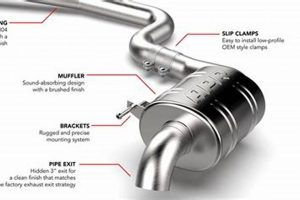
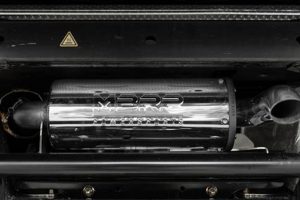
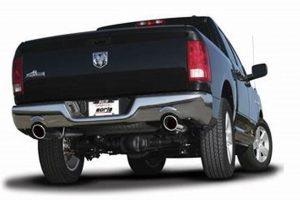
The process of detaching a muffler from a vehicle’s exhaust system without resorting to severance is a specialized automotive procedure. This technique preserves the integrity of both the muffler and the exhaust piping for potential reuse or specific modifications. An example would be carefully unbolting flanged connections or disengaging slip-fit joints secured by clamps to separate the muffler from the exhaust system.
This method is crucial when wishing to retain the original components for restoration purposes or for reverting a vehicle to its original factory configuration. The principal benefit lies in the preservation of the parts, preventing damage that cutting might cause, which is particularly important for vehicles with rare or hard-to-replace mufflers. Historically, mechanics often favored cutting as a quicker method, but the emphasis on preserving original parts has increased the importance of non-destructive removal methods.
Understanding the various connection types and employing appropriate tools and techniques are essential for successfully completing this task. Key aspects to consider include identifying the connection method, loosening corroded fasteners, and safely maneuvering the muffler to avoid damaging surrounding components. This approach necessitates methodical execution and the application of specialized knowledge related to exhaust system construction and disassembly.
Tips for Muffler Removal Without Severance
The following guidelines are designed to facilitate the detachment of a muffler from an exhaust system while maintaining the integrity of all components, avoiding the need for cutting.
Tip 1: Thoroughly Assess the Connection Type: Determine whether the muffler is connected via flanged bolts, clamps on slip-fit joints, or welded connections. This preliminary assessment dictates the required tools and approach.
Tip 2: Apply Penetrating Oil Liberally: Corroded fasteners are a common obstacle. Apply penetrating oil to bolts and joints several hours, or even a day, before attempting removal. Repeat applications may be necessary.
Tip 3: Employ the Correct Tools: Use appropriately sized wrenches, sockets, and specialized exhaust hanger removal tools. Avoid using makeshift tools, as they can damage fasteners or the exhaust system itself.
Tip 4: Use Heat Judiciously: If penetrating oil is insufficient, a torch can be used to apply heat to corroded bolts, expanding the metal and facilitating removal. Exercise extreme caution to prevent damage to surrounding components or fire hazards.
Tip 5: Support the Exhaust System: Use jack stands or hangers to support the exhaust system during muffler removal. This prevents undue stress on other components and ensures safety.
Tip 6: Gently Rock and Rotate: When disengaging slip-fit joints, gently rock and rotate the muffler to break the seal of corrosion. Avoid excessive force, which can damage the pipes.
Tip 7: Document the Process: Take photographs or notes of the muffler’s orientation and the location of any hangers or brackets. This simplifies reinstallation, should it be required.
Adhering to these recommendations maximizes the likelihood of successful muffler removal without resorting to cutting, preserving the components for future use or alternative applications.
Applying these techniques ensures a deliberate and controlled approach, contributing to the longevity and potential reuse of the exhaust system components.
1. Assessment of Connection type

The initial step in removing a muffler without severance centers on a precise assessment of the connection type. This assessment is foundational, directly influencing the subsequent steps and dictating the necessary tools and techniques. The connection methodwhether flanged with bolts, utilizing clamps on slip-fit joints, or involving welded unionsdetermines the approach to dismantling the exhaust system. Failure to accurately identify the connection can lead to the selection of inappropriate tools or methods, potentially resulting in damage to the components or the inability to complete the separation. For instance, attempting to loosen a welded joint with a wrench, instead of employing cutting equipment in a situation where a non-destructive approach is not feasible, will prove futile and may damage the surrounding metal. This initial assessment is therefore paramount.
A clear understanding of the connection also informs the order of operations. Flanged connections require the identification of bolt sizes and potential corrosion levels to prepare for loosening. Slip-fit joints necessitate an evaluation of clamp types and the extent of rust impeding separation. Welded connections, if present and a non-destructive method is imperative, will dictate exploring options such as cutting the pipe a distance away from the weld to preserve the muffler’s integrity, or if accessible, grinding down the weld. The practical significance lies in mitigating unnecessary force or improper techniques that could distort the exhaust piping or the muffler body, thereby compromising their future usability.
In summary, accurate assessment of the connection type is an indispensable prerequisite for successfully detaching a muffler while maintaining its integrity. The identification stage dictates the subsequent steps in the process, tool selection, and execution strategy. Neglecting this critical element undermines the effort, increasing the likelihood of damage and rendering the non-destructive removal objective unattainable. The link between accurate diagnosis and method is inextricable; success hinges upon precise evaluation and appropriate response.
2. Penetrating oil application

Penetrating oil application is a crucial preparatory step when undertaking the task of detaching a muffler without resorting to cutting. Its effectiveness directly influences the success of disassembling corroded exhaust system components.
- Dissolving Corrosion Bonds
Penetrating oil’s primary function involves infiltrating and dissolving the bonds formed by rust and corrosion between threaded fasteners, slip-fit joints, and other connected surfaces. Over time, moisture and environmental factors cause metal surfaces to oxidize and bind together, creating significant resistance to disassembly. The oils chemical composition allows it to seep into these microscopic spaces, loosening the grip of corrosion. A practical instance would be applying penetrating oil to the bolts securing a muffler flange; if left untreated, these bolts often seize completely, necessitating cutting.
- Facilitating Mechanical Disassembly
Beyond chemical dissolution, penetrating oil lubricates the surfaces within corroded joints, reducing friction and enabling mechanical force to be more effective. This lubrication allows wrenches and other tools to turn fasteners without snapping them or stripping their heads. An example would be the use of penetrating oil on a clamped slip-fit joint; the oil allows the clamp to be loosened and the joint to be separated with less force, minimizing the risk of damaging the pipes. Without it, excessive force may bend or crush the exhaust pipes.
- Time-Dependent Effectiveness
The effectiveness of penetrating oil is directly related to the duration of application. Allowing sufficient time for the oil to saturate the corroded areas significantly improves its performance. Multiple applications over several hours, or even days, may be required for severely corroded joints. A common mistake is attempting to remove a muffler immediately after applying penetrating oil, resulting in ineffective loosening and potential damage. Patience and repeated application are essential.
- Selection of Appropriate Product
Numerous penetrating oil products are available, each with varying chemical compositions and performance characteristics. Selecting a high-quality penetrating oil specifically formulated for loosening heavily corroded fasteners is essential. Some products contain additives designed to further enhance their penetrating and dissolving capabilities. For instance, specialized formulas incorporating rust converters can provide superior results compared to general-purpose lubricants. The correct product choice, when coupled with correct application, maximizes the chance of retaining the original parts during removal.
In conclusion, thorough penetrating oil application is an indispensable step in achieving non-destructive muffler removal. Its role in dissolving corrosion, lubricating surfaces, and enabling mechanical disassembly is vital. Successful application requires product selection, sufficient soaking time, and a methodical approach. Neglecting this crucial step significantly increases the likelihood of encountering seized fasteners and the necessity of resorting to cutting, which compromises the objective of preserving the original components. Therefore, meticulous preparation involving penetrating oil is paramount.
3. Appropriate tools selection

The correct selection of tools is paramount to successfully detaching a muffler without resorting to cutting. This stage is not merely about having tools available; it involves a deliberate choice of instruments tailored to the specific demands of exhaust system disassembly, prioritizing component preservation.
- Socket and Wrench Selection
The specific sizes of nuts and bolts securing the muffler necessitate using correctly sized sockets and wrenches. Metric or imperial measurements must be accurately identified to prevent rounding off the fastener heads, which often leads to irreparable damage. The use of six-point sockets, rather than twelve-point, is recommended for a more secure grip and to distribute force more evenly. For example, when dealing with a corroded exhaust flange secured by 13mm bolts, a 13mm six-point socket provides optimal purchase, minimizing the risk of slippage and potential rounding of the bolt head.
- Exhaust Hanger Removal Tools
Many mufflers are supported by rubber hangers connected to metal brackets. Specialized exhaust hanger removal tools are designed to safely and efficiently detach these hangers without damaging the rubber isolators. These tools typically feature a forked end that allows the hanger to be pushed off the bracket with leverage, avoiding the need for cutting or prying, which can tear the rubber. An example is a pair of pliers with specialized jaws designed to compress the rubber hanger and slide it off the metal post without damaging it.
- Penetrating Oil Applicators
While penetrating oil itself is a chemical agent, the means of its application constitutes a critical tool consideration. Long, flexible spray nozzles or dedicated applicators allow the oil to reach deeply embedded and difficult-to-access fasteners. Directed application ensures that the penetrating oil targets the areas most affected by corrosion, maximizing its effectiveness. The selection might involve a precision oiler for reaching threads within a confined space, contrasting with a broad spray for covering larger, uniformly corroded areas.
- Heat Application Devices (with caution)
In instances where penetrating oil alone proves insufficient, heat can be used to loosen corroded fasteners. However, this necessitates employing a heat application device with extreme caution. A propane or butane torch with a focused flame allows for precise heat application to the fastener without affecting surrounding components. Temperature monitoring is essential to prevent overheating and potential damage. An infrared thermometer can be used to monitor the temperature of the fastener and surrounding metal, ensuring that it does not exceed safe limits. Indiscriminate heat application is contrary to preserving the parts, highlighting the need for cautious and precise heating methods.
In summary, choosing appropriate tools extends beyond mere possession; it entails a strategic approach to facilitate the safe and efficient disassembly of exhaust systems. Correct socket selection, the utilization of specialized hanger removal tools, targeted penetrating oil application, and judicious use of heat when necessary are all fundamental. Employing these practices protects the components from damage and maximizes the likelihood of detaching the muffler without severance, adhering to the core objective of component preservation. These elements are not isolated acts, but interdependent, contributing to the integrity and potential reuse of the exhaust components.
4. Heat, applied cautiously
The application of heat represents a strategic, yet potentially detrimental, intervention in the process of detaching a muffler without resorting to severance. Its judicious use can facilitate disassembly by addressing corrosion-induced bonding, while its misapplication risks irreversible damage to components. The controlled introduction of thermal energy becomes a critical factor in balancing facilitation and potential harm.
- Localized Expansion and Contraction
Controlled heat application induces localized expansion and contraction within corroded fasteners and joints. This differential movement disrupts the bond created by rust, allowing penetrating oil to infiltrate more effectively and loosening the connection. An example is the selective heating of a seized bolt head. Expansion of the bolt, coupled with contraction upon cooling, can fracture the corrosion bonds, enabling subsequent removal. The absence of such controlled expansion often results in stripped or broken fasteners, necessitating cutting.
- Minimizing Material Degradation
Excessive heat can alter the metallurgical properties of the metal, leading to weakening, embrittlement, or distortion. Therefore, careful temperature monitoring is crucial. An infrared thermometer provides feedback, ensuring the metal does not exceed its safe operating temperature range. For example, prolonged exposure to high temperatures can weaken the steel of exhaust pipes, rendering them susceptible to cracking or collapse during disassembly. Cautious heat application mitigates this risk.
- Risk Mitigation of Fire Hazards
The presence of flammable materials, such as penetrating oil or nearby vehicle components, introduces a fire hazard during heat application. Adequate precautions must be taken, including shielding surrounding areas and having fire suppression equipment readily available. Inadequate precautions could result in ignition, causing extensive damage to the vehicle and potentially leading to injury. Thus, cautious heat application necessitates rigorous safety protocols.
- Alternatives and Limitations
Heat is not universally applicable. Certain materials, such as aluminum components or rubber mounts, are particularly sensitive to thermal damage. Alternative methods, such as extended soaking in penetrating oil or the use of specialized corrosion removal tools, should be explored before resorting to heat. Furthermore, severely corroded components may be beyond recovery through any non-destructive method, regardless of heat application techniques. Recognizing these limitations is essential for making informed decisions during the disassembly process.
The prudent and controlled application of heat serves as a valuable tool in the attempt to remove a muffler without severance. However, its utilization mandates a thorough understanding of its potential benefits and associated risks. When applied judiciously, in conjunction with other techniques, heat contributes to successful disassembly. Conversely, its misapplication can lead to irreversible damage, defeating the purpose of non-destructive removal.
5. Exhaust system support
Adequate exhaust system support is a critical element when undertaking muffler removal without cutting. Insufficient support introduces stress on remaining exhaust components, potentially leading to damage and compromising the objective of preserving parts. The principle operates on a cause-and-effect relationship: removal of the muffler without proper support places undue strain on connected pipes, hangers, and the exhaust manifold, increasing the likelihood of bending, cracking, or even fracturing these components. This negates the intent of a non-destructive removal process.
The importance of support is exemplified when detaching a heavy muffler from a system with corroded hangers. Without supplemental support via jack stands or dedicated exhaust supports, the weight of the muffler can cause the remaining exhaust piping to bend or break at weakened points, particularly near the catalytic converter or exhaust manifold. Furthermore, when loosening flanged connections or slip-fit joints, the uncontrolled shifting of the exhaust system can make fastener removal more difficult and risk damaging threads. Proper support stabilizes the system, allowing for controlled and deliberate disconnection.
Successful muffler removal without cutting depends on understanding that exhaust system support is not merely a precautionary measure but an integral part of the process. Failing to acknowledge this connection undermines the entire effort. By providing appropriate support, undue stress is minimized, facilitating controlled disassembly and ensuring the integrity of all components is maintained. The use of jack stands, specialized exhaust supports, or even strategically placed wooden blocks can significantly improve the outcome. The goal is always to preserve the state of the original parts.
6. Gentle maneuvering needed

Gentle maneuvering is an indispensable element in successfully detaching a muffler without resorting to cutting. The imperative stems from the potential for damage to exhaust components when employing excessive force or abrupt movements during the removal process. The correlation between brute force and component degradation is direct; rough handling can bend exhaust pipes, damage hanger brackets, or even crack the exhaust manifold, particularly in systems compromised by corrosion or age. To clarify, it describes the need to move the part with delicacy in the process of removing the part.
The significance of gentle maneuvering becomes acutely apparent when dealing with slip-fit joints secured by clamps. Applying excessive force in an attempt to separate a corroded joint can lead to the deformation of the pipe ends, rendering them unusable. Instead, a rocking and twisting motion, combined with penetrating oil, allows the corrosion to break gradually, minimizing the risk of damage. Further, when removing the muffler from rubber hangers, a slow, deliberate approach, potentially utilizing a lubricant, prevents tearing or overstretching of the rubber isolators. A swift, forceful pull, in contrast, often results in hanger failure, necessitating replacement and undermining the objective of preserving original parts. For instance, moving the muffler while someone else is guiding the pipe.
In summary, gentle maneuvering is not merely a suggestion, but a fundamental requirement for successful muffler removal without cutting. Its importance lies in minimizing stress on fragile components, preventing damage from abrupt force, and facilitating gradual disassembly. By prioritizing finesse over brute strength, the likelihood of preserving the integrity of all exhaust system components is significantly enhanced. Failure to adhere to this principle increases the risk of causing damage, thereby defeating the primary goal of component preservation.
Frequently Asked Questions
The following addresses common inquiries regarding the safe and effective removal of a muffler without cutting, emphasizing preservation of exhaust system components.
Question 1: What constitutes a “non-destructive” muffler removal?
A “non-destructive” muffler removal refers to detaching the muffler from the exhaust system without cutting any pipes or brackets. This involves disassembling existing connections, such as flanges, clamps, or slip-fit joints, while maintaining the integrity of all parts for potential reuse or restoration.
Question 2: Why is a non-destructive approach preferable to cutting?
This method is preferred when the original components are to be reused, are of historical value, or are difficult to replace. It avoids damaging the metal, preserving the option to reinstall the original muffler or exhaust piping.
Question 3: What are the primary challenges encountered during this process?
The most common challenges include corroded fasteners, seized joints, and the potential for damaging the exhaust system during disassembly. Overcoming these obstacles requires patience, the correct tools, and a methodical approach.
Question 4: Which tools are considered essential for this task?
Essential tools include appropriately sized sockets and wrenches, penetrating oil, exhaust hanger removal tools, and potentially a heat source for loosening corroded fasteners. The selection depends on the specific exhaust system configuration.
Question 5: How can corrosion be effectively addressed during removal?
Penetrating oil, applied liberally and allowed to soak for an extended period, is crucial for loosening corroded fasteners and joints. In severe cases, controlled heat application may be necessary, but it must be used with extreme caution.
Question 6: What safety precautions should be observed during muffler removal?
Safety precautions include wearing eye protection and gloves, supporting the exhaust system with jack stands, and taking fire prevention measures when using heat. Working in a well-ventilated area is also recommended, especially when using penetrating oil or heat.
Success depends on careful preparation, appropriate tool selection, and methodical execution.
This information aims to provide a clearer understanding of the nuances involved in non-destructive muffler removal, facilitating a more informed and successful approach to the task.
Conclusion
This exploration of “how to remove muffler without cutting” has emphasized the importance of careful assessment, strategic tool selection, and methodical execution. The non-destructive approach is dictated by the desire to retain original components or to facilitate specific modifications without compromising the integrity of the muffler and exhaust system. The discussed techniquesfrom applying penetrating oil to judiciously using heatserve to minimize damage and maximize the likelihood of a successful outcome.
The decision to prioritize preservation during exhaust system work reflects a commitment to both quality and resourcefulness. As automotive restoration becomes increasingly significant, the ability to disassemble components without resorting to cutting will remain a valuable skill. Therefore, adopting the principles outlined in this exposition serves to enhance the professional and environmentally conscious approach to automotive maintenance and modification. Embracing the knowledge and techniques is crucial to ensure the long-term viability of classic vehicles.