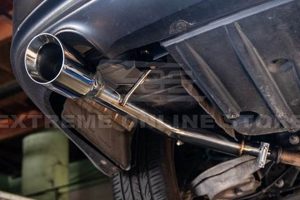
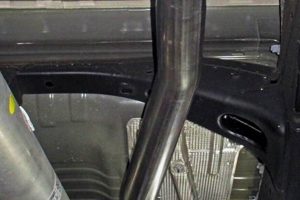
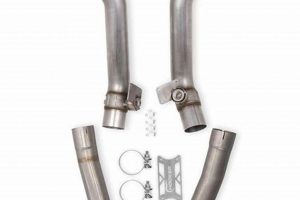
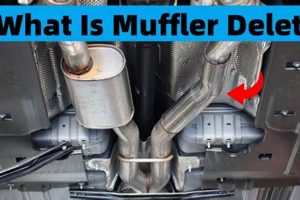
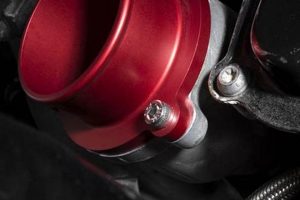
This aftermarket modification replaces the factory-installed muffler with a straight pipe section. The purpose of this change is primarily to alter the vehicle’s exhaust note, typically resulting in a louder and more aggressive sound. For instance, a vehicle equipped with such a component will generally produce a more pronounced exhaust sound during acceleration and deceleration.
The perceived benefits often include an enhanced auditory experience and, in some instances, a marginal weight reduction compared to the stock muffler. Historically, modifications of this type have been popular among automotive enthusiasts seeking to personalize their vehicle’s performance and sound characteristics. However, it’s important to consider that such alterations may impact compliance with local noise regulations and emission standards.
The following sections will delve into specific considerations regarding installation, potential performance implications, and legal aspects related to this modification, offering a detailed overview for informed decision-making.
Important Considerations
Modifying a vehicle’s exhaust system requires careful consideration of several factors. The information below provides essential points to evaluate before proceeding with any changes.
Tip 1: Research Local Regulations: Before acquiring any modification, thoroughly investigate local noise ordinances and emission standards. Many jurisdictions have specific limitations on exhaust noise levels and alterations to emission control systems. Failure to comply can result in fines or legal penalties.
Tip 2: Assess Performance Expectations: While alterations may offer auditory benefits, potential performance gains are often minimal or even negligible without other supporting modifications. Evaluate whether the intended modification aligns with overall performance goals.
Tip 3: Evaluate Installation Options: Consider whether to perform the installation personally or engage a qualified professional. Incorrect installation can lead to exhaust leaks, improper fitment, and potential damage to other vehicle components. Assess technical capabilities and the availability of necessary tools before proceeding.
Tip 4: Account for Drone and Resonance: Understand that eliminating the factory muffler can introduce unwanted drone or resonance within the vehicle cabin, especially at certain engine speeds. Research the specific sound characteristics associated with different products on the target vehicle model.
Tip 5: Consider Resale Value: Be aware that extensive modifications may potentially affect the vehicle’s resale value. Some buyers may be hesitant to purchase a vehicle with aftermarket components, while others may value the enhancements. Take into account personal preferences and future plans for the vehicle.
Tip 6: Examine Material Quality: Evaluate the material used in the fabrication of the new component. Stainless steel provides superior resistance to corrosion compared to aluminized steel, potentially extending the lifespan of the exhaust system.
Considering these points ensures a more informed approach to altering a vehicle’s exhaust system. Weighing the potential benefits against the associated risks and responsibilities is essential for a positive outcome.
The subsequent sections will explore specific product variations and address common misconceptions, providing further insight into this modification process.
1. Exhaust note amplification

The primary effect of a “vrsf muffler delete” is the amplification of the vehicle’s exhaust note. Removing the muffler, a component specifically designed to attenuate sound waves, directly results in a louder and more aggressive exhaust sound. This occurs because the exhaust gases are no longer forced through the restrictive baffles and chambers within the muffler, allowing them to exit the system with less impedance. The consequence is a more pronounced auditory signature, particularly during acceleration and deceleration events.
The degree of amplification varies depending on the vehicle model, engine configuration, and the design of the remaining exhaust components. For instance, a turbocharged engine coupled with a “vrsf muffler delete” will likely produce a different sound profile compared to a naturally aspirated engine with the same modification. Furthermore, the presence of other aftermarket exhaust components, such as a high-flow catalytic converter or an upgraded downpipe, will further influence the resultant sound characteristics. The specific vehicle and its existing modifications critically impact the exhaust note amplification level.
Understanding the relationship between muffler removal and sound amplification allows owners to anticipate the changes in their vehicle’s sound profile. It enables informed decisions regarding modifications, considering the potential impact on community noise levels and personal preferences. The amplification may be desired by some enthusiasts, but it also necessitates a responsible approach, accounting for potential legal repercussions and considerations for the surrounding environment. The core result of the “vrsf muffler delete” is an altered exhaust note.
2. Potential drone introduction

The implementation of a “vrsf muffler delete” frequently introduces the potential for drone, an undesirable resonance occurring within the vehicle’s cabin. This phenomenon arises from the alteration of exhaust gas flow and the elimination of the muffler’s sound-canceling properties. Understanding the factors contributing to drone is crucial for mitigating its effects.
- Harmonic Resonance
Exhaust systems exhibit natural resonant frequencies. A “vrsf muffler delete” can shift these frequencies, causing them to align with frequencies that amplify within the cabin. This alignment creates a sustained, low-frequency hum or “drone” that is particularly noticeable at certain engine speeds. For instance, cruising at a specific RPM range on the highway may induce prominent drone due to this harmonic alignment.
- Cabin Acoustics
The vehicle’s cabin design and materials influence how sound waves propagate. Certain cabin shapes and materials can amplify specific frequencies, exacerbating the effects of drone. A vehicle with a large, open cabin and minimal sound dampening will likely experience more pronounced drone compared to a vehicle with a smaller, well-insulated cabin. Vehicle-specific factors are key to consider for mitigating drone issues.
- Exhaust System Length and Diameter
Modifying the exhaust system’s length or diameter, as is inherent in a “vrsf muffler delete,” can alter the frequencies at which resonance occurs. A shorter exhaust system tends to produce higher-frequency resonance, while a wider diameter can amplify lower frequencies, potentially increasing drone. These adjustments to exhaust flow impact the vehicle’s frequency and resonance.
- Engine Characteristics
The engine’s firing order and cylinder configuration also contribute to exhaust system resonance. Engines with inherent imbalances or specific firing patterns may generate exhaust pulses that exacerbate drone when the muffler is removed. The engine characteristics can create drone related issues and should be considered.
The propensity for drone following a “vrsf muffler delete” is dependent on a complex interplay of factors. Addressing drone often involves adding resonators, strategically placed along the exhaust system to dampen specific frequencies, or implementing sound-deadening materials within the vehicle’s cabin. Ultimately, the successful management of drone requires careful consideration of these interlinked acoustic characteristics.
3. Compliance implications

Modifying a vehicle’s exhaust system through a “vrsf muffler delete” carries significant compliance implications that necessitate careful consideration. Such alterations often deviate from original equipment manufacturer (OEM) specifications, potentially contravening local, state, and federal regulations pertaining to noise emissions and vehicle modifications. Understanding these legal parameters is paramount prior to implementing such changes.
- Noise Ordinances
Many jurisdictions enforce noise ordinances that establish permissible sound levels for vehicles. A “vrsf muffler delete,” by increasing exhaust volume, can easily exceed these limits, resulting in fines or citations. Enforcement methods vary, but commonly involve decibel meters used by law enforcement officials to measure exhaust noise. For instance, a vehicle operating in a residential area exceeding the specified decibel limit during nighttime hours may be subject to penalties.
- Emission Standards
Although a “vrsf muffler delete” primarily targets sound reduction, it can indirectly affect emissions if it disrupts the overall exhaust flow dynamics designed by the manufacturer. Modern vehicles are equipped with sophisticated emission control systems, and any alteration, however seemingly minor, can potentially impact their efficacy. If the alteration causes the vehicle to fail an emissions test, the owner may face legal repercussions and be required to restore the system to its original configuration.
- Vehicle Inspection Requirements
Numerous states mandate periodic vehicle inspections, encompassing both safety and emissions checks. A vehicle equipped with a “vrsf muffler delete” may fail inspection if it does not conform to the established standards. This failure can lead to restrictions on vehicle registration and operation until the necessary corrections are made. These checks ensure vehicle modifications comply with state regulations.
- Warranty Considerations
Installing a “vrsf muffler delete” can potentially void portions of the vehicle’s warranty, particularly those related to the exhaust system and engine. Manufacturers may argue that the modification contributed to a subsequent mechanical failure, thereby negating warranty coverage. Understanding the potential impact on warranty coverage is crucial prior to making any modifications. This involves evaluating the vehicle’s current warranty status and discussing the potential ramifications with the manufacturer or dealer.
The legal landscape surrounding vehicle modifications is complex and jurisdiction-dependent. While the auditory enhancement afforded by a “vrsf muffler delete” may be appealing, it is incumbent upon vehicle owners to thoroughly research and understand the relevant compliance implications. This proactive approach ensures adherence to legal requirements and avoids potential penalties associated with non-compliant vehicle operation. Proper and documented evaluation is important to note before any modifications.
4. Installation complexity
The installation complexity associated with a “vrsf muffler delete” is a significant factor influencing the overall feasibility and outcome of this modification. Assessing the level of difficulty involved is critical to determining whether professional assistance is required or if the task can be undertaken successfully by an individual.
- Required Tools and Equipment
Installing a “vrsf muffler delete” typically necessitates specific tools, including a socket set, wrenches, exhaust pipe cutter or saw, welding equipment (if welding is required), and potentially a vehicle lift or jack stands for safe access to the undercarriage. The absence of these tools can significantly impede the installation process. For instance, improper cutting of the exhaust pipe without the correct tools can result in a poor fit and subsequent exhaust leaks.
- Vehicle-Specific Fitment Issues
Variations in vehicle models and exhaust system designs can lead to unforeseen fitment issues during the installation of a “vrsf muffler delete.” The component may not align perfectly with existing exhaust hangers or require modifications to the exhaust piping. Real-world examples include situations where the “vrsf muffler delete” requires custom welding or fabrication to achieve proper alignment and prevent contact with other vehicle components.
- Potential for Exhaust Leaks
Ensuring a tight seal between the “vrsf muffler delete” and the existing exhaust system is crucial to prevent exhaust leaks. This often involves using new gaskets or exhaust clamps and carefully aligning the components. Improper installation or the reuse of worn gaskets can lead to leaks, resulting in reduced performance, increased noise, and potential exposure to harmful exhaust gases.
- Risk of Damage to Surrounding Components
During the installation process, there is a risk of damaging surrounding vehicle components, such as heat shields, fuel lines, or wiring harnesses. Careless handling of tools or excessive force can lead to unintended damage. For example, inadvertently puncturing a fuel line or severing a wiring harness during the installation process can create significant safety hazards and require costly repairs.
The interplay of these facets underscores the need for careful planning and execution when installing a “vrsf muffler delete.” While seemingly straightforward, the process can be fraught with potential complications. Therefore, individuals should accurately assess their technical capabilities and access to necessary resources before attempting the installation to mitigate potential risks and ensure a successful outcome.
5. Material durability

Material durability is a critical consideration when evaluating a “vrsf muffler delete,” impacting its longevity, performance, and resistance to environmental factors. The choice of materials significantly influences the component’s ability to withstand the harsh conditions associated with exhaust systems, including high temperatures, corrosive elements, and physical stress.
- Stainless Steel Composition
Stainless steel, particularly grades 304 and 409, are frequently employed in “vrsf muffler delete” construction due to their superior corrosion resistance and high-temperature strength. Grade 304 offers enhanced resistance to rust and oxidation compared to 409, making it suitable for regions with high salt exposure or extreme weather conditions. The selection of a specific stainless steel grade directly affects the component’s lifespan and aesthetic appeal.
- Aluminized Steel Alternatives
Aluminized steel represents a cost-effective alternative to stainless steel, offering moderate corrosion resistance through an aluminum coating applied to the steel substrate. While providing initial protection against rust, aluminized steel is more susceptible to degradation over time, particularly in environments with frequent exposure to moisture and road salts. Consequently, “vrsf muffler delete” systems constructed from aluminized steel may exhibit a shorter service life compared to stainless steel counterparts.
- Weld Quality and Integrity
The durability of a “vrsf muffler delete” is intrinsically linked to the quality of its welds. Robust and properly executed welds ensure structural integrity, preventing cracks and leaks that can compromise the system’s performance and longevity. Factors such as weld penetration, filler material selection, and welding technique influence the weld’s ability to withstand thermal stress and vibration. Substandard welds can lead to premature failure, necessitating costly repairs or replacement.
- Thickness and Gauge of Material
The thickness or gauge of the material used in a “vrsf muffler delete” directly impacts its resistance to physical damage and deformation. Thicker-gauge materials provide greater structural rigidity, minimizing the risk of dents, bends, and punctures caused by road debris or accidental impacts. Conversely, thinner-gauge materials may be more prone to damage, potentially leading to exhaust leaks or system failure. Material thickness is a critical parameter for ensuring the component’s resilience in real-world driving conditions.
The long-term viability of a “vrsf muffler delete” is directly dependent on the material’s inherent properties, weld integrity, and overall construction quality. Selecting a system constructed from durable materials, such as high-grade stainless steel, coupled with meticulous welding practices, ensures prolonged performance and resistance to the demanding conditions encountered in exhaust system applications. Neglecting material durability considerations can lead to premature failure and necessitate frequent replacements, ultimately increasing the overall cost of ownership. Prioritize long-term viability by considering material when making your selection.
6. Weight reduction (minimal)

The “vrsf muffler delete” modification is often cited as contributing to weight reduction in a vehicle, although the magnitude of this reduction is typically minimal. The factory-installed muffler, designed for sound attenuation, often comprises a significant portion of the exhaust system’s weight. Replacing this muffler with a straight pipe section, the essence of the “vrsf muffler delete,” inherently removes some mass from the vehicle. However, the weight difference is frequently not substantial enough to produce a perceptible improvement in performance or handling in isolation. The material of both the original muffler and the replacement pipe influence the final weight savings.
The actual weight saved by a “vrsf muffler delete” varies depending on the vehicle model and the specific muffler design. In some cases, the reduction may be as little as 5-10 pounds, a negligible amount relative to the vehicle’s overall curb weight. While enthusiasts may pursue even minor weight savings in the interest of maximizing performance, the practical impact of this particular modification is often overshadowed by other factors, such as engine tuning or suspension upgrades. The focus on weight reduction is, therefore, often secondary to the modification’s primary goal: altering the exhaust note.
In summary, while a “vrsf muffler delete” does result in some weight reduction, its limited scale should be realistically assessed. The primary motivation for this modification remains the alteration of exhaust sound, with weight reduction serving as a potential, yet often insignificant, ancillary benefit. Prioritizing other performance enhancements is likely to yield more pronounced results if weight reduction is the primary objective.
7. Performance impact (marginal)

The connection between a “vrsf muffler delete” and any resultant performance gains is characterized as marginal, necessitating a careful understanding of the underlying factors. The premise that removing the muffler improves exhaust flow, thereby enhancing engine output, often oversimplifies the complex interplay of components within a modern exhaust system. While the factory muffler introduces some level of restriction, its elimination alone rarely yields substantial, readily measurable performance improvements without corresponding adjustments to other engine parameters.
The limited impact stems from several considerations. The exhaust manifold, catalytic converter, and exhaust piping ahead of the muffler typically present greater flow restrictions than the muffler itself. Thus, addressing these upstream bottlenecks becomes crucial for unlocking any tangible performance benefits. Additionally, modern engine control units (ECUs) are calibrated to operate with the factory exhaust system’s backpressure characteristics. Deviating from this design without recalibrating the ECU may not only negate any potential gains but could, in some instances, lead to suboptimal engine performance. For instance, a vehicle equipped with a turbocharger might experience negligible power increases from a “vrsf muffler delete” unless accompanied by a professional ECU tune to optimize boost levels and fuel delivery for the altered exhaust flow. Some enthusiasts may consider this alteration for the sound modifications without seeing increased performance.
In conclusion, the “vrsf muffler delete” primarily affects exhaust sound, with any associated performance gains remaining marginal in most scenarios. Achieving noticeable improvements necessitates a holistic approach, encompassing upgrades to other exhaust components and ECU recalibration. Evaluating the potential performance impact within the context of the entire vehicle system is critical for setting realistic expectations and making informed modification decisions. The marginal performance should be taken into consideration.
Frequently Asked Questions
The following questions address common concerns and misconceptions regarding the “vrsf muffler delete” modification.
Question 1: Does a “vrsf muffler delete” automatically increase horsepower?
No. The modification primarily alters exhaust sound. While some minimal performance gains may be realized in specific scenarios, they are generally not substantial without other supporting modifications and ECU tuning.
Question 2: Is a “vrsf muffler delete” legal in all areas?
No. Regulations regarding exhaust modifications vary significantly by jurisdiction. Many areas have noise ordinances that a “vrsf muffler delete” may violate, potentially resulting in fines or legal penalties. Researching local laws is crucial.
Question 3: Will installing a “vrsf muffler delete” void my vehicle’s warranty?
Potentially. Manufacturers may deny warranty claims if they determine that the modification caused or contributed to a mechanical failure. Consult the vehicle’s warranty documentation and/or a qualified mechanic.
Question 4: How difficult is it to install a “vrsf muffler delete?”
The installation complexity varies depending on the vehicle model and the individual’s mechanical skills. It typically requires specific tools and may necessitate welding or other fabrication work. Professional installation is recommended for those lacking experience.
Question 5: Does a “vrsf muffler delete” always result in noticeable drone inside the vehicle?
The likelihood of drone varies based on the vehicle’s design, exhaust system configuration, and the specific characteristics of the “vrsf muffler delete” component. Some installations may exhibit significant drone, while others may produce minimal or no noticeable drone.
Question 6: What material is best for a “vrsf muffler delete?”
Stainless steel offers superior corrosion resistance and durability compared to aluminized steel, making it a preferred choice for “vrsf muffler delete” systems. However, stainless steel options typically carry a higher price point.
The “vrsf muffler delete” is a modification that primarily changes the sound of the exhaust. Be certain to research local laws before making this change.
The following section will delve into user testimonials and case studies providing real-world perspectives on the modification.
Conclusion
This exploration of the “vrsf muffler delete” modification has highlighted its multifaceted nature, extending beyond a simple exhaust alteration. The analysis reveals that while amplified exhaust sound remains the primary outcome, potential drawbacks such as drone introduction, compliance issues, and marginal performance gains warrant careful consideration. Installation complexity and material durability further influence the long-term viability of this modification, demanding a comprehensive evaluation of vehicle-specific factors and local regulations.
The decision to implement a “vrsf muffler delete” should be grounded in informed understanding, weighing the desired auditory experience against potential repercussions. Responsible modification practices prioritize legal compliance and environmental consciousness, ensuring that individual enhancements align with broader societal considerations. Ongoing research and development in exhaust technology may yield alternative solutions that balance performance, sound, and regulatory adherence, shaping the future of automotive customization.