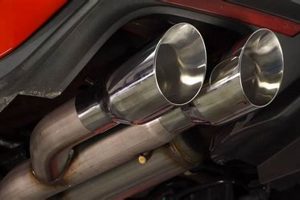
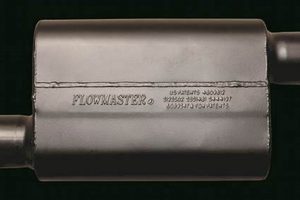
The objective of modifying a V6 engine’s exhaust system to emulate the sound characteristics of a V8 engine is a common pursuit among automotive enthusiasts. Achieving this desired auditory effect often involves replacing the factory-installed muffler with an aftermarket component designed to alter the exhaust note. The selected muffler type and its internal design significantly influence the final sound produced.
Altering a V6 engine’s exhaust note to resemble that of a V8 can provide a more aggressive or powerful perceived performance. This modification is often undertaken for aesthetic reasons, allowing drivers to personalize their vehicle’s sonic profile. The history of exhaust modifications reflects a long-standing desire among car owners to customize their vehicle’s performance and appearance, with sound playing a key role.
Several factors influence the success of these modifications, including muffler design, exhaust pipe diameter, and the presence or absence of resonators. Exploring the different types of mufflers available, along with the principles governing exhaust sound manipulation, is crucial to understanding how to achieve the desired V8-like sound from a V6 engine.
Achieving a V8-Like Exhaust Note from a V6 Engine
Modifying a V6 engine’s exhaust system to emulate the sound of a V8 requires careful planning and execution. The following tips offer guidance for selecting and installing components to achieve the desired result.
Tip 1: Muffler Selection is Paramount: The choice of muffler is the most critical factor. Chambered mufflers, known for their ability to produce a deep rumble, are often preferred. Look for models specifically engineered to enhance low-frequency sounds.
Tip 2: Consider Exhaust Pipe Diameter: Increasing the exhaust pipe diameter can amplify the exhaust note. However, excessively large pipes can reduce backpressure, potentially affecting low-end torque. Strike a balance between sound and performance.
Tip 3: Incorporate an X-Pipe or H-Pipe: These components connect the two exhaust banks, allowing exhaust pulses to equalize. This can create a smoother, more balanced sound, often associated with V8 engines.
Tip 4: Evaluate Resonator Usage: Resonators can be used to fine-tune the exhaust note and eliminate unwanted frequencies, such as drone. Experiment with different resonator sizes and placements to achieve the desired sound characteristics.
Tip 5: Research Muffler Construction and Materials: Stainless steel mufflers offer superior durability and corrosion resistance compared to aluminized steel. The internal construction also influences sound; baffled designs generally produce a quieter tone, while straight-through designs are louder.
Tip 6: Consult Professional Exhaust Specialists: Seeking advice from experienced exhaust technicians can provide valuable insights and prevent costly mistakes. They can assess the vehicle’s specific requirements and recommend suitable components.
Tip 7: Prioritize Sound Quality Over Sheer Volume: The goal is to emulate the tonal qualities of a V8, not simply create the loudest exhaust possible. Focus on achieving a deep, resonant sound rather than an excessively raspy or tinny tone.
By carefully considering these factors and selecting the appropriate components, it is possible to significantly alter the exhaust note of a V6 engine and achieve a sound profile that more closely resembles that of a V8. However, realistic expectations are crucial, as a V6 will never sound exactly like a V8 due to fundamental differences in engine architecture.
The subsequent sections will delve into specific muffler types and their characteristics, providing a more detailed analysis of their suitability for achieving a V8-like exhaust sound.
1. Chambered muffler design

Chambered muffler design plays a significant role in shaping the exhaust note of a V6 engine attempting to emulate the sound characteristics of a V8. The internal structure of these mufflers is specifically engineered to manipulate sound waves, contributing significantly to the final auditory output.
- Sound Wave Manipulation
Chambered mufflers utilize a series of internal chambers and baffles to reflect and redirect sound waves. This process cancels out certain frequencies while amplifying others, resulting in a deeper, more resonant exhaust note. The strategic arrangement of these chambers is crucial in mimicking the low-frequency rumble associated with V8 engines. An example is a multi-chambered muffler that can selectively attenuate higher frequencies, emphasizing the deeper tones.
- Harmonic Enhancement
The design promotes the creation of specific harmonics within the exhaust sound. By carefully tuning the size and shape of the chambers, manufacturers can accentuate frequencies that are characteristic of V8 engines. This often involves emphasizing lower frequencies while suppressing higher-pitched tones that are more typical of V6 engines. This harmonic control directly affects the perceived ‘muscle car’ sound.
- Backpressure Management
The internal structure introduces a degree of backpressure within the exhaust system. While excessive backpressure can hinder engine performance, a carefully calibrated amount can contribute to a richer exhaust tone. The chambers create a controlled resistance to exhaust flow, which can enhance the depth and volume of the sound. Improper backpressure can make the exhaust sound raspy instead of rumbling.
- Material and Construction Impact
The material used in the construction of a chambered muffler, along with its overall build quality, also influences the final sound. Thicker materials, such as stainless steel, tend to produce a deeper, less tinny sound compared to thinner, less durable alternatives. Precise welding and construction minimize vibrations and rattles, ensuring a clean and consistent exhaust note. A well-constructed muffler will produce a clearer and deeper tone.
Therefore, the design features of the chambered muffler have a direct bearing on the success of replicating V8 sound characteristics. Each aspect works in concert to produce a specific sound that helps to transform the sound of a V6, making it the best muffler to make a V6 sound like a V8. It is crucial that potential alterations to any exhaust system also consider the performance factors that the altered system can have on the vehicle’s performance.
2. Exhaust note frequency

Exhaust note frequency is a critical determinant in the pursuit of a muffler that effectively replicates the auditory characteristics of a V8 engine within a V6 platform. The fundamental difference in firing order and cylinder configuration between these engine types results in distinct frequency profiles in their respective exhaust sounds. A V8 engine typically produces lower fundamental frequencies and a richer harmonic structure, contributing to its characteristically deep rumble. Therefore, the effectiveness of a muffler in achieving this sound hinges on its ability to manipulate the exhaust frequencies generated by the V6 engine.
The role of the muffler in this transformation is to attenuate higher frequencies, which are often more prominent in V6 exhaust notes, and enhance lower frequencies to create a more profound and resonant sound. Examples of mufflers designed to achieve this include those with complex internal baffling and resonating chambers tuned to specific frequency ranges. Certain aftermarket mufflers even incorporate Helmholtz resonators, specifically engineered to cancel out unwanted frequencies and amplify desired ones. Selecting a muffler without considering its frequency-altering capabilities often results in an exhaust note that remains distinctly V6-like, characterized by a higher pitch and less prominent low-end rumble. This understanding is practically significant for consumers, as it guides them towards products that align with their sonic objectives, ensuring a satisfactory modification outcome.
In conclusion, achieving a V8-like exhaust note from a V6 engine relies heavily on selecting a muffler that effectively manages and modifies exhaust note frequency. The ability to attenuate unwanted high frequencies and amplify desired low frequencies is paramount. Challenges in achieving a perfect emulation exist due to the inherent differences in engine design, but a well-chosen muffler, with frequency manipulation as a central design element, can significantly narrow the auditory gap, creating a more desirable and powerful-sounding exhaust note. This links directly to the overall goal of finding the “best muffler to make v6 sound like v8,” underlining the importance of frequency as a defining attribute.
3. Pipe diameter compatibility

The successful integration of an aftermarket muffler designed to emulate a V8 exhaust note on a V6 engine hinges significantly on pipe diameter compatibility. A mismatch between the muffler inlet/outlet diameter and the existing exhaust piping can compromise both sound quality and engine performance, rendering the attempt to achieve the desired auditory effect unsuccessful.
- Optimal Exhaust Flow
Proper pipe diameter ensures optimal exhaust gas flow. An undersized pipe restricts exhaust flow, increasing backpressure and potentially reducing engine power. Conversely, an oversized pipe can reduce exhaust velocity, negatively affecting scavenging efficiency and low-end torque. The ideal pipe diameter is determined by engine displacement, horsepower, and intended use. A correctly sized exhaust system facilitates efficient cylinder evacuation and contributes to a smoother, more resonant exhaust note.
- Acoustic Resonance and Tone
Exhaust pipe diameter influences the acoustic resonance of the exhaust system, directly impacting the generated sound. Different diameters resonate at different frequencies, affecting the overall tone and timbre of the exhaust note. Matching the muffler’s inlet/outlet diameter to the existing piping ensures that the muffler’s designed acoustic properties are properly realized. A well-matched system produces a balanced sound, avoiding unwanted raspiness or drone.
- Ease of Installation and Sealing
Compatible pipe diameters simplify installation and ensure a secure, leak-free connection between the muffler and the exhaust system. Mismatched diameters require adapters or custom fabrication, increasing installation complexity and the risk of exhaust leaks. Exhaust leaks disrupt the intended exhaust flow and sound characteristics, negating the benefits of the aftermarket muffler. A straightforward installation process minimizes potential problems and ensures optimal performance.
- System-Wide Performance Consistency
Pipe diameter compatibility extends beyond the muffler itself and encompasses the entire exhaust system, including the catalytic converter, resonators, and exhaust manifolds. Inconsistencies in pipe diameter throughout the system can create bottlenecks or turbulence, negatively impacting both engine performance and sound quality. Maintaining a consistent or gradually increasing pipe diameter from the engine to the muffler promotes smooth exhaust flow and maximizes the effectiveness of the aftermarket muffler.
In summary, pipe diameter compatibility is a non-negotiable aspect of selecting a muffler to transform a V6 engine’s sound profile. Ensuring a proper match between the muffler and the existing exhaust system is critical for achieving optimal exhaust flow, realizing the intended acoustic properties of the muffler, simplifying installation, and maintaining consistent performance throughout the entire exhaust system. Neglecting this aspect can result in a compromised sound, reduced engine performance, and a ultimately unsuccessful attempt to achieve the desired V8-like exhaust note.
4. Resonator integration options

Resonator integration options represent a critical element in achieving a V8-like exhaust note from a V6 engine, directly impacting the effectiveness of any muffler selected for this purpose. Resonators function as acoustic filters, selectively attenuating specific frequencies within the exhaust stream. This capability allows for fine-tuning the exhaust note, mitigating undesirable characteristics such as drone or raspiness that may be amplified by the muffler itself. The absence of suitable resonator integration strategies can limit the potential of even the most sophisticated muffler design.
For instance, a muffler known for producing a deep rumble might, when installed on a specific V6 engine, generate an accompanying high-frequency drone at cruising speeds. Resonator integration, through the installation of a tuned resonator in the exhaust system, can target and eliminate this drone, leaving the desired low-frequency rumble intact. Different resonator designs, such as chambered resonators or Helmholtz resonators, offer varying degrees of frequency-specific attenuation, allowing for precise control over the final sound profile. The strategic placement of resonators along the exhaust system further influences their effectiveness, requiring careful consideration of exhaust gas flow and acoustic wave propagation.
In conclusion, resonator integration options are inextricably linked to the overall success of achieving a V8-like exhaust note from a V6 engine. While the muffler serves as the primary sound-shaping device, resonators act as supplementary tools for refining the acoustic output and eliminating undesirable noise artifacts. Without flexible resonator integration capabilities, the potential of any muffler, regardless of its inherent design, may be significantly constrained. The consideration of resonator options is therefore a crucial step in selecting the “best muffler to make v6 sound like v8,” ensuring a balanced and refined exhaust note that closely emulates the desired V8 characteristics.
5. Material durability and longevity

Material durability and longevity are intrinsically linked to the selection of the “best muffler to make v6 sound like v8”. The exhaust system endures extreme temperature fluctuations, corrosive byproducts of combustion, and constant vibration. Consequently, the muffler material directly influences its lifespan and the consistency of its sound characteristics over time. Inferior materials degrade, leading to structural failure, internal baffle disintegration, and a deterioration of the intended exhaust note.
For example, a muffler constructed from aluminized steel may exhibit surface rust within a year in environments with high humidity or road salt exposure. This corrosion can compromise the muffler’s structural integrity, leading to exhaust leaks and a change in sound. In contrast, a stainless steel muffler offers superior corrosion resistance, maintaining its structural integrity and sound characteristics for a significantly longer period. Instances exist where stainless steel mufflers have lasted for over a decade, while aluminized steel counterparts required replacement within a few years. The practical significance of this durability is reduced maintenance costs and a sustained, desired exhaust note.
In conclusion, prioritizing material durability and longevity is not merely a matter of cost savings, but rather a fundamental aspect of ensuring the long-term satisfaction of modifying a V6 engine’s exhaust to emulate a V8 sound. While the initial cost of a more durable muffler may be higher, its extended lifespan and consistent performance offer a more economically sound and audibly pleasing investment in the long run. The pursuit of the “best muffler to make v6 sound like v8” must consider not only sound characteristics but also the material’s ability to withstand the harsh operating conditions of an exhaust system, guaranteeing enduring performance.
Frequently Asked Questions
The following questions and answers address common concerns and misconceptions regarding the selection and installation of mufflers intended to emulate a V8 engine’s sound on a V6 platform.
Question 1: Will any aftermarket muffler make a V6 sound exactly like a V8?
No. While a carefully selected muffler can significantly alter the exhaust note of a V6 engine, inherent differences in engine architecture (cylinder configuration, firing order) prevent an exact replication of a V8 engine’s sound.
Question 2: Are expensive mufflers always better at achieving a V8-like sound?
Not necessarily. Price does not always correlate directly with sound quality or effectiveness. Factors such as muffler design, internal construction, and material selection are more critical than cost alone.
Question 3: Does increasing exhaust pipe diameter always improve the sound?
Not always. While a larger diameter can amplify the exhaust note, excessively large pipes can reduce backpressure, potentially affecting low-end torque and creating a raspy or hollow sound.
Question 4: Is it necessary to install an X-pipe or H-pipe?
An X-pipe or H-pipe is not strictly necessary, but it can contribute to a smoother, more balanced exhaust note, often associated with V8 engines. These components equalize exhaust pulses between the cylinder banks.
Question 5: Can resonators eliminate all unwanted exhaust drone?
Resonators can significantly reduce exhaust drone, but their effectiveness depends on proper selection, placement, and tuning. It may be necessary to experiment with different resonator configurations to achieve the desired results.
Question 6: Is stainless steel the only suitable material for a durable muffler?
While stainless steel offers superior corrosion resistance, other materials, such as aluminized steel, can provide adequate durability in certain environments. However, stainless steel generally offers a longer lifespan and better resistance to the elements.
Selecting the “best muffler to make v6 sound like v8” requires a comprehensive understanding of exhaust system dynamics and acoustic principles. No single solution guarantees perfect emulation, but a careful approach can yield satisfying results.
The subsequent sections will focus on the legal implications of exhaust modifications and provide guidance on ensuring compliance with local noise regulations.
Conclusion
The endeavor to identify the “best muffler to make v6 sound like v8” is a multifaceted pursuit. Achieving a V8-like exhaust note on a V6 engine involves careful consideration of muffler design, exhaust pipe diameter, resonator integration, and material durability. Success hinges on understanding the interplay between these factors and their impact on the resulting sound profile. While a perfect replication of a V8’s auditory signature remains unattainable due to inherent engine architecture differences, a judiciously selected muffler can significantly alter the exhaust note, producing a deeper, more resonant tone that aligns with the desired aesthetic.
The information presented herein provides a foundation for informed decision-making in this area. Further research and consultation with experienced exhaust professionals are recommended to ensure optimal results and compliance with local regulations. The pursuit of an enhanced auditory experience must be balanced with considerations of performance, legality, and responsible vehicle operation.