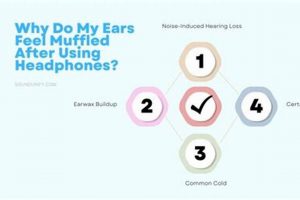
Addressing diminished audio clarity from headphones, often perceived as a loss of high frequencies and an overemphasis on lower frequencies, requires a systematic approach to identify and resolve the underlying cause. This deterioration in sound quality can manifest as difficulty distinguishing individual instruments or vocals in a musical track, or struggling to clearly understand speech in a podcast or audiobook. For instance, a previously vibrant recording might sound dull and indistinct.
Restoring audio fidelity in headphones enhances the listening experience, allowing for a more accurate representation of the original audio source. This benefits music enthusiasts seeking to appreciate nuanced details, professionals requiring accurate audio monitoring, and individuals relying on clear communication for work or leisure. Historically, addressing such issues involved specialized equipment or professional audio technicians. Modern solutions often leverage accessible techniques and readily available resources.
The subsequent sections will detail common causes of degraded headphone audio and provide step-by-step procedures for troubleshooting and implementing effective remedies. These will encompass physical inspections, software adjustments, and hardware considerations, aiming to provide a comprehensive guide to improving headphone audio quality. The diagnostic process will guide the user through assessing potential sources of distortion, ultimately leading to improved sound clarity.
Techniques for Addressing Suboptimal Headphone Audio Clarity
The following outlines strategies to diagnose and resolve a perceived lack of clarity in headphone audio, commonly described as a “muffled” sound. These techniques range from simple physical checks to more involved software and hardware adjustments.
Tip 1: Examine Physical Connections: Inspect the headphone cable and connector for any signs of damage or loose connections. A partially disconnected plug can disrupt signal transmission, leading to reduced audio quality. Ensure the connector is fully inserted into the audio output port.
Tip 2: Clean Headphone Components: Earwax, dust, and debris can accumulate on the headphone drivers or within the earcups, physically obstructing sound waves and degrading clarity. Gently clean these areas with a soft, dry cloth or specialized cleaning tools.
Tip 3: Evaluate Audio Source Quality: The audio source itself may be the cause of the perceived muffling. Test the headphones with different audio sources, such as different songs or devices, to determine if the issue is specific to a particular file or hardware component. Low-bitrate audio files can lack the detail necessary for clear sound reproduction.
Tip 4: Adjust Equalization Settings: Utilize equalization (EQ) settings on the playback device or within audio software to fine-tune the frequency response. Experiment with boosting higher frequencies and slightly reducing lower frequencies to compensate for a perceived imbalance. However, avoid excessive adjustments, which can introduce distortion.
Tip 5: Update Audio Drivers: Outdated or corrupted audio drivers on a computer or mobile device can negatively impact headphone performance. Ensure that the latest drivers are installed from the device manufacturer’s website or through the operating system’s update mechanism.
Tip 6: Test with Different Headphones: If possible, compare the audio quality of the headphones in question with another set of headphones known to function correctly. This comparison can help isolate whether the problem lies with the headphones themselves or with the audio source or playback device.
Tip 7: Consider Impedance Matching: High-impedance headphones may require a dedicated headphone amplifier to achieve optimal performance, particularly when connected to low-power audio outputs. Insufficient power can result in a weak and indistinct sound.
Implementing these diagnostic and corrective measures can often restore optimal sound quality and enhance the overall listening experience. A systematic approach will help to identify and address the root cause of perceived audio degradation.
The following section will address more advanced troubleshooting techniques, as well as options for professional repair or replacement, should the preceding steps prove insufficient.
1. Connections

The integrity of physical connections constitutes a foundational element in achieving optimal headphone audio quality. A compromised connection, whether at the headphone jack, cable joints, or internal wiring, introduces signal impedance that directly diminishes audio clarity. This degradation manifests as a reduction in signal strength, impacting the transmission of frequency information and resulting in a perceived “muffled” sound. For instance, a partially inserted headphone plug may establish a weak electrical circuit, selectively attenuating high frequencies while permitting lower frequencies to pass relatively unimpeded, creating an imbalanced sound profile. Similarly, frayed or damaged cable insulation can lead to signal leakage and interference, further distorting the audio signal.
Consider the scenario of a professional audio engineer attempting to monitor a mix through headphones with a faulty connection. The engineer might misinterpret the frequency balance, leading to inaccurate adjustments that compromise the final product. Alternatively, an individual listening to music recreationally may experience reduced enjoyment due to the inability to discern the subtle nuances and details present in the recording. Diagnosing connection issues requires careful visual inspection of cables and connectors for signs of wear, corrosion, or physical damage. Furthermore, gently wiggling the connection points while audio is playing can help identify intermittent signal disruptions indicative of a loose or failing connection. Replacing a damaged cable or re-soldering a faulty joint can often restore full audio fidelity, thus resolving the muffled sound.
In summary, the robust nature of connections significantly affects perceived audio quality. A compromised connection effectively acts as a bottleneck, restricting the flow of audio information and leading to a diminished listening experience. Recognizing the critical role of connections and proactively addressing any potential issues is a vital step in restoring clarity and resolving the problem of a muffled sound in headphones. Identifying and rectifying these points of signal weakness is critical in the broader effort to fix the perceived “muffled” sound in headphones.
2. Cleanliness

The presence of contaminants, such as earwax, dust, or debris, within or on headphone components can substantially degrade audio fidelity, contributing to the perception of a “muffled” sound. These foreign substances physically obstruct the transmission of sound waves, alter the intended acoustic response of the headphones, and introduce unwanted resonances that obscure detail.
- Driver Obstruction
Accumulated debris on the headphone driver, the component responsible for converting electrical signals into audible sound, directly impedes its movement. This restricted movement reduces the driver’s ability to accurately reproduce sound waves, particularly in the higher frequencies, leading to a dull and indistinct sound. For example, a thin layer of earwax can dampen the driver’s vibrations, attenuating high-frequency sounds and creating the sensation of a muffled audio output. This directly impacts the listener’s ability to perceive finer details and nuances in music or speech.
- Earcup Acoustic Modification
Contaminants lining the inside of the earcups alter the acoustic environment surrounding the driver. This change can lead to unintended sound reflections and resonances, which distort the frequency response and reduce clarity. Accumulated dust, for instance, can absorb certain frequencies, altering the perceived tonal balance and contributing to a “muddy” sound. This is particularly detrimental in closed-back headphones, where the enclosed space amplifies the effects of these acoustic modifications.
- Port Blockage
Many headphones incorporate small ports or vents designed to optimize airflow and control internal pressure, contributing to a balanced sound signature. The blockage of these ports by debris disrupts the intended acoustic design, potentially resulting in distorted sound reproduction, particularly in the bass frequencies. Obstructed ports prevent the proper damping of the driver, leading to uncontrolled oscillations and a “boomy” or indistinct low-end response. This imbalance further contributes to the overall perception of muffled audio.
- Connector Contamination
Although less directly related to the internal acoustic environment, contamination of the headphone connector can also indirectly contribute to a perceived lack of clarity. A buildup of dirt or corrosion on the connector pins impedes electrical conductivity, resulting in a weaker or inconsistent signal transmission. This reduced signal strength can manifest as a quieter overall volume and a loss of detail, creating the impression of muffled audio. Thorough cleaning of the headphone connector is crucial for ensuring optimal signal transfer.
Addressing cleanliness concerns through regular maintenance and careful cleaning of headphone components is a vital step in preventing and resolving issues related to muffled audio. By removing physical obstructions and ensuring optimal acoustic conditions, one can restore the intended sound quality and enhance the overall listening experience. In the context of “how to fix muffled sound on headphones,” cleanliness represents a fundamental aspect of preventative maintenance and troubleshooting, often overlooked but crucial for achieving optimal audio performance.
3. Source Quality
The quality of the audio source significantly influences the perceived clarity and overall fidelity of headphone audio. Even with high-end headphones, a low-quality source file will limit the achievable sound reproduction, potentially resulting in a muffled or indistinct listening experience. Therefore, evaluating and optimizing the audio source is a critical step in addressing audio clarity issues.
- Bit Rate and Compression
Audio files are often compressed to reduce file size, which can result in a loss of audio information, especially with highly compressed formats such as MP3 at low bit rates (e.g., 128kbps or lower). Lower bit rates remove subtle details and compress the dynamic range, leading to a flattened and less detailed sound. For example, a complex orchestral piece encoded at a low bit rate will likely sound muddy and lack the distinct separation of instruments compared to the same piece encoded at a higher bit rate or in a lossless format. Addressing “how to fix muffled sound on headphones” begins with ensuring audio files have sufficient bit rates (ideally 256kbps or higher for lossy formats) or utilizing lossless formats (e.g., FLAC, WAV) to preserve the full audio spectrum.
- Recording Quality
The original recording’s quality directly dictates the potential for clarity. Poor recording techniques, inadequate microphones, or improper mixing can introduce noise, distortion, and imbalances that cannot be rectified through headphone adjustments. For instance, a recording made with a poorly positioned microphone may lack clarity in specific vocal ranges, resulting in a muffled sound even when using high-quality headphones. Assessing recording quality necessitates considering the source material’s provenance and, if possible, seeking out remastered or higher-quality versions of the audio.
- Streaming Services and Platforms
Streaming services vary in their audio quality offerings. While some services offer high-resolution audio options, others may utilize lower bit rates or proprietary compression algorithms that compromise fidelity. Furthermore, the platform itself can introduce processing or equalization that alters the original audio signal. For example, a streaming service that prioritizes bandwidth efficiency over audio quality may deliver a noticeably inferior listening experience compared to playing the same track from a local lossless file. Therefore, understanding and adjusting the streaming service’s audio quality settings is essential when diagnosing perceived “muffled” sound issues.
- Device Output Limitations
The audio output capabilities of the playback device can also limit the achievable sound quality. Some smartphones, computers, or audio players may have inferior digital-to-analog converters (DACs) or headphone amplifiers that introduce distortion or limit the dynamic range. Even a high-quality audio file will sound subpar if the device’s output is incapable of accurately reproducing the signal. Testing headphones with different devices or utilizing an external DAC/amplifier can help determine if the playback device is contributing to the problem.
In summary, source quality functions as a foundational element in achieving optimal headphone audio. Addressing the root cause of perceived muffling might necessitate upgrading to higher-quality audio files, selecting streaming services with superior audio options, or utilizing higher quality playback devices or external DACs and amplifiers. These considerations are critical steps in optimizing the listening experience and mitigating the perception of “muffled sound on headphones”.
4. Equalization

Equalization (EQ) serves as a critical tool in the remediation of perceived “muffled sound on headphones” by allowing precise adjustment of the frequency response, addressing imbalances that contribute to the issue. Muffled sound often arises from either an overemphasis on low frequencies, obscuring higher frequencies, or a deficiency in high-frequency reproduction, resulting in a lack of clarity and detail. EQ provides the means to selectively amplify or attenuate specific frequency ranges to correct these imbalances. For instance, if a perceived “muffled sound on headphones” is due to excessive bass, reducing the amplitude of frequencies below 200Hz can restore clarity to the midrange and treble frequencies. Conversely, if the higher frequencies are deficient, a gentle boost in the range of 8kHz to 16kHz can improve the presence and articulation of vocals and instruments. This targeted adjustment allows for tailoring the sound to compensate for headphone deficiencies or individual preferences, ultimately mitigating the perception of muffled audio.
The effectiveness of EQ in addressing muffled audio depends on a nuanced understanding of frequency ranges and their impact on perceived sound quality. For example, boosting frequencies in the 2kHz-4kHz range can enhance the clarity of vocals and improve speech intelligibility, which is particularly relevant for podcasts and audiobooks. However, excessive boosting in this range can also lead to harshness or sibilance. Similarly, adjusting the 1kHz range can affect the perceived warmth and body of instruments, but over-boosting can result in a “boxy” or unnatural sound. Therefore, employing EQ requires a careful and iterative approach, using test signals and reference tracks to accurately assess the impact of each adjustment. Many modern audio players and operating systems include built-in EQ settings, while more advanced parametric EQs offer finer control over frequency, bandwidth, and gain, enabling more precise corrections. In a professional audio setting, engineers routinely utilize EQ to compensate for the frequency response characteristics of headphones, ensuring accurate monitoring and mixing. The implementation of EQ serves not just to correct deficiencies but to optimize the overall tonal balance and create a more pleasing and accurate listening experience.
In conclusion, equalization represents a versatile and essential technique for addressing the issue of “muffled sound on headphones.” By selectively adjusting frequency ranges, EQ allows for correcting imbalances, enhancing clarity, and tailoring the sound to individual preferences. While effective, proper use of EQ requires a nuanced understanding of frequency ranges and a careful approach to avoid introducing unwanted artifacts. When addressing audio clarity problems, it is important to evaluate the audio before making sweeping changes to the equalization of your audio, by doing so you can address whether the root cause is an unbalanced frequency response that manifests “muffled sound on headphones”.
5. Audio Drivers

Audio drivers constitute a critical software component that facilitates communication between the operating system and the audio hardware, including headphones. Their proper functioning is paramount for accurate audio reproduction and optimal headphone performance. When addressing concerns about “how to fix muffled sound on headphones”, evaluating and updating audio drivers becomes a necessary step.
- Driver Corruption or Incompatibility
Corrupted or incompatible audio drivers can lead to a range of audio-related issues, including distorted sound, reduced volume, and the perception of “muffled” audio. Driver corruption may arise from incomplete installations, system errors, or conflicts with other software. Incompatibility can occur after operating system updates, where the existing drivers are no longer fully supported. As an example, consider a scenario where a Windows update installs a generic audio driver that lacks specific optimizations for a particular headphone model. This can result in a flat or lifeless sound profile, often described as “muffled.” Addressing “how to fix muffled sound on headphones” in such instances involves identifying the correct driver from the headphone manufacturer’s website and installing it manually.
- Outdated Driver Software
Outdated audio drivers may lack the necessary optimizations or bug fixes to ensure optimal performance with modern headphones or audio codecs. Manufacturers regularly release updated drivers to improve compatibility, enhance audio quality, and address known issues. Neglecting to update these drivers can result in suboptimal audio reproduction, leading to a perceived lack of clarity or a muffled sound. For instance, older drivers may not fully support advanced audio processing technologies present in newer headphones, such as virtual surround sound or high-resolution audio. Regular driver updates, therefore, are crucial in preventing or resolving “how to fix muffled sound on headphones” problems arising from software limitations.
- Incorrect Driver Configuration
Even with a properly installed and updated driver, incorrect configuration settings can negatively impact headphone audio quality. Many audio drivers provide options for adjusting sample rates, bit depths, and other audio parameters. Inappropriate settings can lead to resampling artifacts, distortion, or a reduced dynamic range, contributing to the perception of a “muffled” sound. For example, setting the sample rate too low can truncate high-frequency information, resulting in a loss of clarity and detail. Restoring default settings or experimenting with different configurations within the audio driver control panel can potentially resolve “how to fix muffled sound on headphones” concerns stemming from improper software settings.
- Driver Conflicts
Conflicts between multiple audio drivers or other system software can also lead to audio-related problems. Having multiple audio devices or virtual audio drivers installed can create conflicts that interfere with the proper functioning of the primary audio driver. This can manifest as distorted sound, reduced volume, or a general lack of clarity. Disabling or uninstalling unnecessary audio drivers can help resolve these conflicts and improve headphone audio quality. Additionally, ensuring that the correct audio output device is selected within the operating system’s sound settings is crucial in preventing driver conflicts from impacting the performance of headphones.
In summary, audio drivers play a pivotal role in the accurate reproduction of audio through headphones, and addressing issues related to driver corruption, incompatibility, outdated software, incorrect configuration, or conflicts is crucial in resolving “how to fix muffled sound on headphones”. Maintaining updated and properly configured audio drivers is a fundamental step in optimizing headphone performance and ensuring a clear and enjoyable listening experience.
6. Headphone Test
The systematic evaluation of headphone performance, commonly termed “Headphone Test,” serves as a crucial diagnostic step in identifying the underlying causes of diminished audio clarity and addressing “how to fix muffled sound on headphones.” Through controlled assessments, potential sources of audio degradation can be isolated, facilitating targeted troubleshooting and resolution strategies. This process provides objective data points that guide subsequent corrective actions.
- Frequency Response Evaluation
A fundamental aspect of the headphone test involves assessing its frequency response, which indicates the headphone’s ability to reproduce different frequencies at consistent levels. Utilizing test tones that span the audible spectrum (20Hz to 20kHz), one can identify regions where the headphone exhibits either a significant boost or attenuation, a common cause of perceived muffling. For instance, a headphone with a recessed high-frequency response will present audio with a lack of clarity and detail, creating a “muffled” sensation. Identifying these frequency imbalances through a headphone test informs subsequent equalization adjustments to compensate for these deficiencies and address “how to fix muffled sound on headphones”.
- Channel Balance Assessment
Evaluating channel balance ensures that both the left and right drivers of the headphone produce audio at comparable levels. An imbalance in channel output can manifest as a perceived shift in the soundstage or a difficulty in accurately localizing sound sources. A significant disparity between the channels can create a “muffled” sensation in the quieter ear, as certain frequencies may be less prominent. The headphone test involves playing identical signals through both channels and measuring the output levels to verify consistent performance. Correcting channel imbalances, whether through software adjustments or hardware repairs, is crucial in achieving a balanced and clear audio presentation when addressing “how to fix muffled sound on headphones”.
- Distortion Measurement
Headphone tests include the measurement of harmonic distortion, which quantifies the presence of unwanted frequencies introduced by the headphone itself. High levels of distortion can mask subtle details in the audio signal and contribute to a “muffled” or “muddy” sound. Distortion measurements involve playing a pure sine wave through the headphone and analyzing the output signal for the presence of harmonic frequencies that were not present in the original signal. Identifying and mitigating distortion, whether through replacing damaged components or adjusting playback levels, is critical for achieving a clean and clear audio output when evaluating “how to fix muffled sound on headphones.”
- Impedance and Sensitivity Verification
The electrical characteristics of headphones, specifically impedance and sensitivity, influence their compatibility with different audio sources. Headphones with high impedance may require more power to drive them effectively, and if the audio source is insufficient, the resulting audio may sound weak and muffled. Sensitivity, on the other hand, determines how loud the headphones will play at a given input level. A headphone test verifies that the impedance and sensitivity are within expected ranges for the intended audio source. Addressing any impedance mismatch through the use of a headphone amplifier can improve audio clarity and resolve perceived “muffled” sound issues, playing a key role in exploring “how to fix muffled sound on headphones”.
The insights gained from a comprehensive headphone test are invaluable in determining the root cause of diminished audio clarity. By objectively assessing frequency response, channel balance, distortion, and electrical characteristics, targeted corrective actions can be implemented to restore optimal headphone performance and address the issue of “how to fix muffled sound on headphones.” This diagnostic process minimizes guesswork and ensures that troubleshooting efforts are focused on the specific factors contributing to the perceived muffling.
7. Impedance Match

Impedance matching is a critical consideration when addressing degraded audio quality, particularly when attempting “how to fix muffled sound on headphones.” The electrical impedance of headphones must be appropriately matched to the output impedance of the audio source to ensure efficient power transfer and prevent signal degradation that can manifest as a muffled sound.
- Efficient Power Transfer
Maximum power transfer from an audio source (e.g., smartphone, amplifier) to headphones occurs when the impedance of the headphones closely matches the output impedance of the source. An impedance mismatch results in reduced power transfer, leading to lower volume levels and a potential loss of detail in the audio signal. For example, connecting high-impedance headphones (e.g., 300 ohms) to a low-output-impedance smartphone may result in significantly reduced volume and a perceived lack of clarity, contributing to the “muffled” sound. In such cases, the power delivered by the source is insufficient to drive the headphones effectively, resulting in a diminished audio experience. This relationship is crucial to understanding “how to fix muffled sound on headphones.”
- Frequency Response Alterations
An impedance mismatch can also alter the frequency response of headphones. Headphones are designed with a specific frequency response curve based on a defined source impedance. When connected to a source with a significantly different impedance, the frequency response can be altered, leading to peaks and dips in the audio spectrum. For example, connecting low-impedance headphones to a high-output-impedance amplifier may result in a boosted bass response and a recessed treble, creating a “muffled” and unbalanced sound. Understanding and addressing these frequency response alterations is paramount in determining “how to fix muffled sound on headphones.”
- Damping Factor Impact
The damping factor, related to the impedance match, influences the control that the audio source has over the movement of the headphone drivers. A higher damping factor, achieved with a better impedance match, results in tighter control over the driver, reducing unwanted resonances and improving transient response. A low damping factor, caused by an impedance mismatch, can lead to uncontrolled driver movements, resulting in a “smeared” or “muffled” sound. Imagine a speaker cone vibrating freely after the signal has stopped; a similar effect can occur with headphone drivers when the impedance is not properly matched. This impact on the damping factor is a critical consideration in the context of “how to fix muffled sound on headphones.”
- Headphone Amplifier Solutions
When an impedance mismatch is identified as the cause of a “muffled” sound, utilizing a dedicated headphone amplifier can often provide a solution. Headphone amplifiers are designed to provide a low output impedance and sufficient power to drive a wide range of headphones, ensuring optimal power transfer and damping. For example, connecting high-impedance headphones to a dedicated headphone amplifier with a low output impedance will typically result in a significant improvement in volume, clarity, and overall audio quality. The implementation of a headphone amplifier is a practical step in addressing “how to fix muffled sound on headphones,” especially when dealing with high-impedance headphones or low-power audio sources.
In summary, impedance matching constitutes a fundamental consideration in optimizing headphone audio quality. Failure to properly match headphone impedance with the audio source can lead to reduced volume, altered frequency response, and compromised driver control, all of which contribute to the perception of a “muffled” sound. The utilization of a headphone amplifier represents a viable solution for addressing impedance mismatch issues and improving the overall listening experience, playing a key role in answering “how to fix muffled sound on headphones.”
Frequently Asked Questions
This section addresses common inquiries regarding diminished audio fidelity in headphones, often characterized by a “muffled” sound. It aims to provide clear and concise answers based on established audio principles.
Question 1: Why do headphones sometimes sound clear initially but degrade over time?
Gradual degradation of headphone audio quality typically results from accumulated debris within the earcup or on the driver itself. Earwax, dust, and other particulate matter obstruct sound waves, leading to a perceived loss of high frequencies and reduced clarity. Regular cleaning can mitigate this effect.
Question 2: Can software settings genuinely improve a noticeably muffled headphone?
Yes, software equalization (EQ) settings can compensate for frequency response deficiencies in headphones, potentially improving the perception of clarity. However, excessive EQ adjustments can introduce distortion. The source quality must also be considered, as software adjustments cannot fully compensate for inherently low-quality audio files.
Question 3: Is it possible that the audio port itself contributes to the sound problem?
Yes, a damaged or corroded audio output port can impede signal transmission, resulting in reduced volume and a perceived loss of clarity. This effect is more pronounced with headphones requiring significant power. Testing the headphones with an alternate output port is recommended.
Question 4: Does the price point of the headphones guarantee better audio quality?
While higher-priced headphones often incorporate superior components and engineering, price alone does not guarantee optimal audio quality. Factors such as frequency response, impedance matching, and user preference also play a significant role. It is advisable to research and compare specifications before assuming a correlation between price and performance.
Question 5: Are wireless headphones more prone to audio quality issues than wired ones?
Wireless headphones rely on Bluetooth or other wireless protocols for audio transmission, which can introduce compression artifacts and latency. While modern Bluetooth codecs have improved significantly, wired headphones generally offer a more direct and uncompressed signal path, potentially resulting in superior audio quality. However, the quality of the Bluetooth codec and the source device also impact the outcome.
Question 6: Can a headphone amplifier always fix “muffled sound on headphones”?
Headphone amplifiers primarily address issues related to impedance mismatch and insufficient power delivery. If the “muffled” sound stems from these factors, a headphone amplifier can significantly improve clarity and volume. However, if the underlying cause is related to driver damage, poor source quality, or other issues, a headphone amplifier will not provide a complete solution.
Addressing suboptimal headphone audio requires a systematic approach that considers both hardware and software factors. Routine maintenance, careful evaluation of audio sources, and appropriate adjustments can often restore optimal sound quality.
The subsequent section will provide detailed instructions on performing specific diagnostic tests to further pinpoint the cause of muffled sound.
Conclusion
The preceding exploration of techniques to address diminished headphone audio clarity, commonly described as “how to fix muffled sound on headphones,” has highlighted the multi-faceted nature of the problem. Effective remediation necessitates a systematic approach, encompassing physical inspection, software adjustments, and hardware considerations. Key intervention points include ensuring secure physical connections, maintaining component cleanliness, optimizing audio source quality, and utilizing appropriate equalization settings. Furthermore, the functionality of audio drivers and the potential benefits of headphone impedance matching warrant careful consideration.
While no single solution guarantees complete restoration of audio fidelity in all scenarios, a diligent application of the presented methodologies significantly increases the likelihood of improvement. Prolonged or unresolved audio deficiencies may indicate underlying hardware malfunctions necessitating professional repair or replacement. Ultimately, the pursuit of optimal headphone audio necessitates both informed troubleshooting and a commitment to maintaining equipment in optimal working condition and therefore in how to fix muffled sound on headphones.