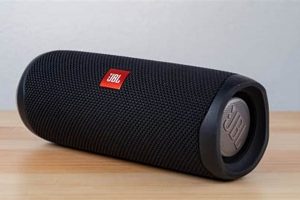
The degradation of audio fidelity, specifically the reduction in clarity and sharpness of sound emanating from loudspeakers, is a common auditory experience. This can be perceived as a loss of high-frequency sounds, resulting in a dull or indistinct audio output. As an example, musical instruments like cymbals or vocals may lack their characteristic brightness.
Addressing this auditory phenomenon is important for several reasons. Audio quality is paramount for optimal listening experiences in various domains, including entertainment, communication, and professional audio production. Identifying and resolving the underlying causes can significantly enhance the perceived value and utility of audio equipment. Historically, advancements in audio technology have consistently strived to minimize distortions and ensure faithful sound reproduction.
Understanding the potential causes behind diminished audio clarity is the first step towards remediation. This article will explore common reasons for compromised sound quality, including physical obstructions, hardware malfunctions, and software misconfigurations, offering practical solutions to restore the intended audio fidelity.
Troubleshooting Degraded Loudspeaker Audio
This section provides guidance on identifying and resolving issues that lead to reduced sound clarity in loudspeakers.
Tip 1: Inspect Speaker Wiring and Connections: Ensure all cables are securely connected to both the audio source and the loudspeakers. Loose or damaged wiring can introduce interference and reduce signal strength, leading to diminished audio quality.
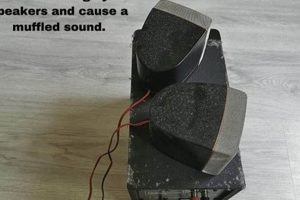
Tip 2: Examine Speaker Placement and Surroundings: Physical obstructions between the speakers and the listener can absorb or deflect sound waves, resulting in a muffled sound. Consider repositioning the speakers or removing any objects that may be blocking the sound path.
Tip 3: Evaluate Speaker Condition: Over time, loudspeaker components can degrade. Check for any visible damage to the speaker cones or surrounds. If damage is apparent, professional repair or replacement may be necessary.
Tip 4: Adjust Audio Equalization Settings: Incorrect equalization settings on the audio source device or amplifier can disproportionately reduce high-frequency sounds. Verify that the equalizer settings are appropriately configured for the listening environment and audio content.
Tip 5: Test with Alternative Audio Sources: If the issue persists, test the loudspeakers with different audio sources (e.g., different music files, devices). This helps determine whether the problem lies with the speakers themselves or with the original audio signal.
Tip 6: Check for Software or Driver Issues: When using computer-connected speakers, ensure that the audio drivers are up-to-date and properly configured. Outdated or incompatible drivers can cause audio processing errors that result in degraded sound quality.
Implementing these troubleshooting steps can often restore the original clarity and fidelity of loudspeaker audio. Regular maintenance and careful attention to audio settings are crucial for optimal performance.
The following sections will delve into specific hardware and software issues and offer additional, more in-depth solutions.
1. Obstruction

Physical obstructions significantly impact the acoustic properties of sound waves emanating from loudspeakers, frequently resulting in a perceived reduction in clarity, often described as “muffled.” The presence of intervening barriers alters the sound field, disrupting the direct path from the speaker to the listener and causing undesirable acoustic effects.
- Absorption of High-Frequency Components
Certain materials, such as thick fabrics or porous surfaces, selectively absorb high-frequency sound waves. When placed between the loudspeaker and the listener, these materials attenuate the higher frequencies more effectively than lower frequencies, leading to a perceived loss of detail and sharpness in the sound. Consequently, speech may become less intelligible, and musical instruments may lack their characteristic brightness.
- Diffraction and Scattering of Sound Waves
Obstructions with dimensions comparable to the wavelength of sound can cause diffraction and scattering. These phenomena alter the direction of sound propagation, dispersing the energy and creating complex interference patterns. The resulting sound field becomes less focused, and the listener may perceive a blurred or indistinct sound image. The placement of loudspeakers near reflective surfaces can also exacerbate these effects.
- Creation of Acoustic Shadows
Large, opaque objects can create acoustic shadows, regions where the direct sound from the loudspeaker is significantly attenuated. Within these shadowed areas, the listener primarily hears reflected or diffracted sound, which tends to be lower in level and less clear than the direct sound. The size and shape of the acoustic shadow depend on the dimensions of the obstruction and the frequency of the sound.
- Resonance and Reverberation Effects
Enclosed spaces or objects near the loudspeakers can exhibit resonant behavior, amplifying certain frequencies and creating unwanted reverberation. This can smear the sound, making it difficult to distinguish individual sounds and reducing overall clarity. Identifying and mitigating these resonant frequencies is essential for achieving accurate sound reproduction.
The acoustic effects of obstructions collectively contribute to the phenomenon of diminished sound clarity emanating from loudspeakers. Understanding these effects allows for strategic placement of speakers and the careful selection of materials to minimize unwanted sound alterations, thus improving overall audio quality and reducing the sensation of muffled sound.
2. Connections

The integrity of electrical and physical connections within an audio system plays a crucial role in signal transmission and, consequently, the perceived clarity of sound emanating from loudspeakers. Compromised connections represent a significant potential source of audio degradation, often manifesting as a reduction in sound clarity.
- Loose or Intermittent Connections
Insecure connections, whether at the loudspeaker terminals, amplifier outputs, or within cabling, can cause intermittent signal disruptions. This leads to inconsistent audio output and a loss of signal strength, effectively attenuating the overall sound and impacting the transmission of higher frequencies in particular. A loose connection can also introduce unwanted noise or crackling sounds, further masking the intended audio signal.
- Corroded or Oxidized Contacts
Over time, metallic contacts within audio connectors can corrode or oxidize due to environmental exposure. This oxidation introduces resistance into the signal path, impeding the flow of electrical current. As a result, the audio signal weakens, and higher frequencies are disproportionately affected, resulting in a perceived dullness or muddiness in the sound. Regular cleaning and maintenance of connections can mitigate this issue.
- Damaged or Faulty Cables
Speaker cables are responsible for transmitting the amplified audio signal from the amplifier to the loudspeakers. Damage to these cables, such as fraying, cuts, or internal wire breakage, can disrupt signal transmission and introduce distortion. A compromised cable may not be able to carry the full audio signal effectively, leading to a reduction in volume, clarity, and overall audio fidelity. Shielding effectiveness is also reduced, making the system susceptible to interference.
- Improper Connector Seating
Even with intact cables and clean contacts, improper seating of connectors can create a weak or incomplete connection. This may occur when connectors are not fully inserted or properly locked into place. The resulting impedance mismatch can lead to signal reflections and loss of energy, particularly at higher frequencies. Ensuring a firm and secure connection is essential for optimal signal transfer.
The cumulative effect of compromised connections throughout the audio signal chain can significantly degrade sound quality, leading to the perception of reduced clarity. Addressing connection issues through regular inspection, cleaning, and replacement of damaged components is a fundamental step in maintaining optimal audio performance and mitigating the experience of speakers sounding muffled.
3. Hardware Degradation

Deterioration of loudspeaker components over time is a significant factor contributing to reduced audio fidelity, often resulting in the perception of muffled sound. The gradual breakdown of materials and mechanical elements compromises the speaker’s ability to accurately reproduce sound waves, leading to a loss of clarity and detail.
- Driver Cone Deterioration
The driver cone, responsible for physically moving air to create sound waves, is susceptible to degradation. Over time, the cone material can become brittle, cracked, or warped due to environmental factors such as humidity, temperature fluctuations, and prolonged exposure to ultraviolet light. This damage alters the cone’s resonant frequency and responsiveness, leading to distorted or muffled sound. For instance, the paper cones found in many loudspeakers may exhibit a loss of rigidity, impacting their ability to accurately reproduce transient sounds.
- Surround and Suspension Fatigue
The surround, which connects the cone to the speaker basket, and the suspension, which centers the voice coil, are both subject to fatigue. The surround can dry out, crack, or become detached, while the suspension can lose its elasticity. These issues compromise the cone’s ability to move freely and accurately, resulting in reduced bass response, distortion, and a general lack of clarity. A common example is the foam surrounds found in older speakers, which are known to degrade over time, requiring replacement to restore proper function.
- Voice Coil Damage
The voice coil, a critical component that drives the cone, can suffer damage due to overheating, excessive power, or mechanical stress. Overheating can cause the voice coil windings to become deformed or even partially melted, leading to reduced efficiency and distortion. Mechanical stress, such as from excessive cone excursion, can cause the voice coil to rub against the magnet structure, generating unwanted noise and further degrading sound quality. This often manifests as a buzzing or scraping sound, superimposed on the intended audio signal.
- Capacitor Degradation in Crossover Networks
Many loudspeakers incorporate crossover networks, which divide the audio signal into different frequency ranges for the individual drivers. These networks often rely on capacitors, which can degrade over time due to heat and electrical stress. As capacitors age, their capacitance value can drift, altering the crossover frequencies and affecting the balance between the drivers. This can lead to a loss of high-frequency response or a muddiness in the midrange, contributing to the perception of muffled sound. Regular replacement of capacitors in older loudspeakers can often restore their original sonic performance.
The effects of hardware degradation collectively contribute to a diminished listening experience, characterized by reduced clarity, distortion, and an overall lack of fidelity. Addressing these issues through component replacement or speaker refurbishment can often significantly improve sound quality and restore the intended performance of the loudspeaker system.
4. Equalization

Inappropriate equalization settings represent a frequent cause of reduced audio clarity from loudspeakers. Equalization, the process of adjusting the relative levels of different frequency bands in an audio signal, is intended to tailor the sound to the listening environment and personal preferences. However, maladjusted equalization can disproportionately attenuate high frequencies, leading to a perception of reduced sound clarity. A graphical equalizer with its high-frequency bands set to minimum values, for example, simulates the loss of detail associated with low-quality speakers or obstructed sound paths.
The importance of correct equalization stems from its direct influence on perceived tonal balance. Each frequency range contributes to distinct elements of the sound. High frequencies are critical for clarity, articulation, and the perception of detail. A deficiency in this region creates a dull or muddy sound, obscuring subtle nuances in music and speech. In a home theater setting, for instance, an improperly configured equalizer could diminish the impact of high-frequency sound effects, such as shattering glass or the chirping of birds, thereby reducing the immersive quality of the experience. Furthermore, over-boosting low frequencies can mask the presence of higher frequencies, leading to auditory masking and a reduced ability to discern fine details in the sound.
Therefore, careful adjustment of equalization is essential to optimize audio clarity. This involves identifying and compensating for any frequency imbalances inherent in the audio source, the loudspeakers, or the listening environment. In practice, this often requires a combination of objective measurement using acoustic analysis tools and subjective listening tests to determine the optimal settings. Restoring a flat or neutral frequency response is often the primary goal, followed by subtle adjustments to suit individual preferences, while ensuring adequate preservation of higher frequency content. Failure to attend to equalization settings results in compromised audio reproduction and the persistent sensation of muffled sound.
5. Driver Issues

Defective or improperly configured audio drivers frequently contribute to degraded audio quality, leading to the perception of muffled sound from loudspeakers. These drivers, software components that facilitate communication between the operating system and the audio hardware, are essential for the correct processing and output of audio signals. When these drivers malfunction, audio data may be misinterpreted, distorted, or incompletely rendered, resulting in a reduced fidelity and overall dullness in the sound emanating from the speakers. Such driver malfunctions encompass a range of scenarios, including outdated driver versions, driver corruption, incompatibility with the operating system, and improper configuration settings. The consequences of these issues manifest as an attenuation of high-frequency content, causing speech to sound indistinct and music to lack its characteristic brilliance. A real-world example is observed when a newly upgraded operating system renders previously functional audio drivers obsolete, leading to a noticeable drop in audio quality.
The significance of addressing driver-related problems lies in restoring the intended audio signal fidelity. Troubleshooting driver issues involves several steps, beginning with verification of driver compatibility with the current operating system. Updating to the latest driver version, obtainable from the hardware manufacturer’s website, is crucial to rectify known bugs and optimize performance. In cases of driver corruption, a complete reinstallation of the driver may be necessary to eliminate any residual errors that could be affecting the audio output. Furthermore, inspecting and adjusting the audio settings within the driver’s control panel is important to ensure that parameters such as sample rate, bit depth, and buffer size are appropriately configured for the audio hardware and the intended use case.
In summary, resolving driver issues constitutes a fundamental aspect of troubleshooting loudspeaker audio quality. By maintaining up-to-date and properly configured audio drivers, users can mitigate potential sources of audio degradation and ensure that their loudspeaker systems deliver the intended sound fidelity. The challenges associated with driver management are often outweighed by the significant improvements in audio clarity and overall listening experience that result from these efforts.
Frequently Asked Questions
The following section addresses common inquiries concerning the causes and solutions related to a reduction in audio fidelity emanating from loudspeakers.
Question 1: What are the most prevalent physical factors that diminish loudspeaker audio clarity?
Obstructions situated between the listener and loudspeakers, such as furniture or dense materials, absorb high-frequency sound waves, leading to a dull or muffled sound. Furthermore, improper speaker placement, particularly near walls or corners, can create undesirable reflections and resonances that negatively impact sound clarity.
Question 2: How do faulty cable connections contribute to degraded loudspeaker sound?
Loose, corroded, or damaged speaker cables disrupt the transmission of audio signals, resulting in a loss of signal strength and a reduction in high-frequency response. This may manifest as a static noise or intermittent signal dropout, further compromising the integrity of the audio output.
Question 3: What role does hardware degradation play in reduced loudspeaker performance?
Over time, loudspeaker components, such as the driver cone, surround, and voice coil, can deteriorate due to wear and environmental factors. This degradation alters the speaker’s ability to accurately reproduce sound waves, leading to distortion, reduced frequency response, and a general lack of clarity.
Question 4: How can incorrect equalization settings affect loudspeaker audio clarity?
Improper equalization, particularly excessive attenuation of high frequencies, can create a muffled sound by reducing the presence of essential details and overtones in the audio signal. Conversely, excessive boosting of low frequencies can mask higher frequencies, contributing to a lack of clarity.
Question 5: Why are audio driver issues a common cause of muffled loudspeaker sound when using computer audio systems?
Outdated, corrupted, or incompatible audio drivers can cause processing errors that affect the quality of the audio signal being sent to the loudspeakers. These errors can manifest as a loss of detail, distortion, or a general reduction in clarity. Ensuring that the correct and updated drivers are installed is crucial for optimal audio performance.
Question 6: What steps can be taken to diagnose and address issues affecting loudspeaker audio clarity?
The process typically involves a systematic approach that includes inspecting speaker placement and surroundings, verifying cable connections, assessing the condition of speaker components, adjusting equalization settings, and ensuring that audio drivers are properly installed and configured. Testing with alternative audio sources and playback devices can help isolate the source of the problem.
Addressing diminished audio clarity requires a comprehensive approach that considers both physical and software-related factors. Regular maintenance and careful configuration can significantly improve loudspeaker audio performance.
The following section provides guidance on resolving specific loudspeaker issues.
My Speakers Sound Muffled
This article has explored the various factors contributing to diminished audio clarity from loudspeakers, often described as a “muffled” sound. Critical areas of examination included physical obstructions, compromised connections, hardware degradation, improper equalization, and problematic audio drivers. Understanding each factor’s impact provides a foundation for effective troubleshooting.
Optimal audio fidelity requires proactive attention and maintenance. Listeners are encouraged to systematically evaluate their audio setups, addressing potential sources of degradation. Consistent upkeep and informed adjustments will ensure loudspeakers deliver the intended audio experience, preserving clarity and minimizing sonic distortions. Prioritizing audio quality enhances appreciation and engagement with sound.