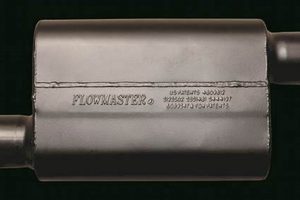
The apparatus in question facilitates the expulsion of exhaust gases from an internal combustion engine while concurrently modifying the acoustic characteristics of the resultant sound. Typically implemented in high-performance vehicles, these devices are engineered to provide a more aggressive and pronounced auditory experience. An example would be a specialized component installed on a track-focused automobile, designed to reduce backpressure and amplify the engine’s natural acoustics.
The significance of selecting the appropriate aftermarket part lies in the balance between performance enhancement and aural quality. Benefits can include improved engine output due to reduced exhaust restriction, coupled with a more visceral and engaging driving experience. Historically, such enhancements were primarily the domain of professional racing, but their popularity has expanded to enthusiast vehicles seeking both aesthetic and functional upgrades.
Subsequent discussion will delve into factors influencing tonal characteristics, material composition considerations, design variations affecting sound propagation, and objective measurement techniques employed in evaluating auditory performance.
Considerations for Aural Optimization of Exhaust Systems
Selecting an exhaust component that enhances both performance and auditory experience necessitates careful deliberation. Several factors contribute to the final sound profile; therefore, informed decision-making is paramount.
Tip 1: Material Composition Matters. Stainless steel offers durability and a bright, resonant tone, while titanium provides weight reduction and a unique, higher-pitched sound signature. Aluminized steel represents a more economical option, albeit with reduced corrosion resistance and a less distinctive sound.
Tip 2: Internal Design Influences Tone. Straight-through designs typically yield louder and more aggressive tones, prioritizing maximum exhaust flow. Chambered designs tend to produce a deeper, more controlled sound, often minimizing unwanted resonance or drone.
Tip 3: Diameter Impacts Exhaust Note. Larger diameter piping generally results in a louder exhaust note, particularly at higher engine speeds. However, excessively large diameters may negatively impact low-end torque. A balance must be struck based on engine characteristics and intended use.
Tip 4: Resonance Chamber Placement is Crucial. Strategically placed resonance chambers can mitigate specific frequencies, minimizing drone at cruising speeds without sacrificing overall volume. Careful consideration of chamber size and location is essential.
Tip 5: Evaluate Sound Clips Before Purchase. While subjective, listening to audio samples of different exhaust configurations on similar vehicle models can provide valuable insight into the potential sound characteristics. Seek out recordings captured under various driving conditions.
Tip 6: Understand Local Noise Regulations. Ensure that the selected component complies with applicable noise ordinances in your jurisdiction. Exceeding permissible sound levels can result in fines or other penalties.
Tip 7: Professional Installation Recommended. Proper installation is critical to achieve optimal performance and sound quality. Incorrect fitment can lead to exhaust leaks, reduced power output, and undesirable sound characteristics.
Thorough assessment of material, design, diameter, resonance, and applicable regulations will facilitate the selection of an exhaust system that delivers the desired auditory experience while complementing the vehicle’s performance characteristics.
The following section will address objective sound measurement techniques used to quantify and compare exhaust system performance.
1. Material Composition
The sonic characteristics of an exhaust system are intrinsically linked to its material composition. The material used in construction dictates the vibrational properties of the system, directly influencing the frequencies that are amplified and dampened, thereby shaping the resultant auditory output. A direct causal relationship exists: a change in material leads to an alteration in the exhaust note. This understanding is critical in achieving a desired sound profile, a key factor in the selection of a high-performance muffler.
Stainless steel, a common choice, offers a balance of durability and sonic resonance. It tends to produce a brighter, more metallic tone, often preferred for its aggressive characteristics at higher engine speeds. Titanium, by contrast, is significantly lighter and exhibits a higher resonant frequency, resulting in a unique, often higher-pitched exhaust note. Aluminized steel represents a cost-effective alternative, but its reduced corrosion resistance and damping properties typically yield a less refined and often more muted sound. The choice of material, therefore, represents a fundamental design decision with substantial acoustic implications.
In summary, the selection of materials for exhaust construction plays a crucial role in determining the resultant sound characteristics. Disregarding material properties can lead to an undesired auditory outcome, regardless of other design considerations. Understanding the relationship between material composition and sonic output is therefore essential for achieving a truly desirable auditory experience.
2. Internal Design
The configuration of internal components within an exhaust system significantly influences its sound characteristics. The architecture dictates how exhaust gases flow and interact, shaping the resultant auditory output. This aspect is crucial when pursuing a specific sonic signature in high-performance applications.
- Chambered Design
Chambered mufflers utilize a series of internal baffles and chambers to redirect exhaust gases. This process effectively dampens certain frequencies, resulting in a deeper, more subdued tone. An example is a factory-installed muffler designed to minimize noise for street use. The implications include reduced overall volume and a less aggressive exhaust note.
- Straight-Through Design
Straight-through mufflers feature a perforated core surrounded by packing material, allowing for unrestricted exhaust flow. This design typically produces a louder and more aggressive sound, prioritizing performance over noise reduction. An example is a racing muffler used on track vehicles. This can result in a higher-pitched and more pronounced exhaust note.
- Baffled Design
Baffled designs incorporate strategically placed plates within the muffler to disrupt the flow of exhaust gases, modifying the sound characteristics. The arrangement of these baffles affects the tonal qualities, allowing for fine-tuning of the exhaust note. A sophisticated baffled system can produce a deep, resonant sound without excessive volume, suitable for blending performance with street drivability.
- Resonator Integration
Resonators are specifically designed to cancel out certain frequencies that cause unwanted drone or resonance. They are often used in conjunction with other muffler designs to refine the exhaust note and improve the overall auditory experience. Their strategic placement along the exhaust pathway allows for targeted noise reduction. This creates a balance between performance and cabin comfort.
The selection of a specific internal design hinges on the desired sound profile and performance characteristics. While a straight-through design may maximize horsepower, it may also result in excessive noise. Conversely, a chambered design may prioritize sound reduction at the expense of performance. Resonators provide an additional layer of control, mitigating unwanted frequencies and enhancing the overall auditory experience. The design represents a critical factor in achieving the desired results.
3. Exhaust Note
The auditory perception of an engine’s exhaust, commonly referred to as the exhaust note, is a primary consideration when selecting a high-performance muffler. The desired sound is subjective, yet specific characteristics contribute to an objectively “good” or “bad” sound profile. Thus, comprehending the factors influencing an exhaust note is critical in selecting a muffler that aligns with individual preferences and performance objectives.
- Frequency and Pitch
The frequency spectrum of the exhaust note determines its perceived pitch. Higher frequencies translate to a raspy or metallic sound, while lower frequencies produce a deeper, more throaty tone. The engine’s firing order, exhaust system length, and muffler design all influence the dominant frequencies. An example is a high-revving, four-cylinder engine, typically producing a higher-pitched exhaust note than a low-revving, eight-cylinder engine. The proper muffler selection should complement the engine’s inherent sonic tendencies to avoid an unpleasant or dissonant sound.
- Amplitude and Volume
The amplitude, or loudness, of the exhaust note directly impacts the overall auditory experience. Regulations often dictate maximum permissible noise levels, necessitating a balance between performance and compliance. A race-oriented muffler, while designed for optimal flow, must still adhere to these limitations, or the resulting volume may render the vehicle illegal for street use. Thus, volume control is a key consideration, often achieved through muffler design and the integration of resonators.
- Harmonics and Overtones
Harmonics and overtones contribute to the complexity and richness of the exhaust note. These are secondary frequencies that resonate along with the primary frequency, adding depth and character to the sound. A muffler that effectively manages harmonics can produce a more refined and pleasing auditory experience, as opposed to a harsh or dissonant sound. Certain muffler designs are engineered to enhance specific harmonics, tailoring the exhaust note to a desired characteristic, such as a smoother tone.
- Resonance and Drone
Resonance, particularly low-frequency drone, can be a significant detriment to the driving experience, especially during sustained cruising speeds. This is an undesirable amplification of specific frequencies within the cabin. Effective muffler design and the implementation of resonators can mitigate drone by canceling out these problematic frequencies. A well-designed system minimizes resonance without sacrificing overall performance or desirable sound characteristics.
The various facets of an exhaust note are inextricably linked to the selection of a “best sounding race muffler”. A thorough understanding of frequency, amplitude, harmonics, and resonance allows for informed decisions, ensuring a desirable auditory experience that complements the vehicle’s performance capabilities. Examples include specific muffler designs that minimize drone or enhance particular tonal characteristics, demonstrating the direct impact of muffler choice on the overall sound.
4. Resonance Control
Resonance control is an essential element in achieving a subjectively optimal exhaust note. Uncontrolled resonance can manifest as undesirable drone, particularly at cruising speeds, detracting from the overall auditory experience. Therefore, the ability to manage and mitigate resonant frequencies is paramount in the design and selection of a high-performance muffler.
- Helmholtz Resonators
Helmholtz resonators are chambers designed to cancel out specific frequencies. Their effectiveness stems from their ability to create destructive interference at the target frequency, thereby reducing its amplitude. An application involves their integration into an exhaust system to eliminate drone at common highway speeds. The implication is a more comfortable driving experience without sacrificing the desired performance and sound characteristics at other engine speeds. For example, a Helmholtz resonator tuned to 120Hz may be incorporated into the exhaust system of a vehicle known to exhibit drone at that frequency, thereby substantially reducing its audibility inside the cabin.
- Quarter-Wave Resonators
Quarter-wave resonators utilize a pipe of a specific length, typically one-quarter of the wavelength of the target frequency, to create a standing wave that cancels out the problematic frequency. The length of the pipe is crucial for accurate tuning. Implementation often involves welding a capped pipe onto the exhaust system at a calculated location. This design choice can effectively eliminate specific frequencies responsible for drone, contributing to a more refined sound. For example, a quarter-wave resonator tuned to a specific drone frequency will generate a reflected sound wave that is 180 degrees out of phase with the original, leading to cancellation and a reduction in the overall noise level.
- Muffler Chamber Design
The internal chamber design of a muffler can significantly influence resonance. Baffles and chambers can be strategically arranged to disrupt and dampen specific frequencies, reducing the overall resonance within the exhaust system. Sophisticated designs utilize complex internal geometries to achieve targeted frequency attenuation. A well-designed muffler chamber can reduce overall noise levels and refine the exhaust note by effectively managing resonance. For example, a multi-chambered muffler incorporates varied chamber sizes and baffle configurations to attenuate a broader range of frequencies, resulting in a more subdued and controlled sound.
- Acoustic Absorption Materials
Packing materials, such as fiberglass or steel wool, are commonly used within mufflers to absorb sound energy and reduce resonance. These materials convert sound energy into heat, thereby damping the amplitude of sound waves. The type and density of the packing material influence its effectiveness at different frequencies. An exhaust with degraded or insufficient packing material may exhibit increased resonance and a harsher sound. For instance, a straight-through muffler with a core wrapped in high-temperature fiberglass will attenuate higher frequencies and reduce overall noise levels while maintaining a relatively unrestricted exhaust flow. When the fiberglass degrades, the muffler will become noticeably louder and more prone to resonance.
In conclusion, effective resonance control is indispensable for achieving a desirable exhaust note. Utilization of Helmholtz resonators, quarter-wave resonators, strategic muffler chamber design, and acoustic absorption materials all contribute to mitigating undesirable frequencies and refining the overall auditory experience. The selection of a best sounding race muffler necessitates careful consideration of these techniques to ensure a harmonious balance between performance and sound quality.
5. Diameter Sizing
Diameter sizing in exhaust systems is a critical parameter impacting both engine performance and auditory characteristics. The correlation between exhaust pipe diameter and the resultant sound profile warrants careful consideration when selecting a high-performance muffler, particularly to achieve a desired auditory signature. Inappropriate diameter selection can lead to suboptimal performance and an undesirable exhaust note.
- Exhaust Flow Capacity
Diameter directly influences the exhaust flow capacity. A larger diameter pipe permits greater volumetric flow, reducing backpressure and potentially increasing horsepower, particularly at higher engine speeds. An undersized diameter restricts exhaust flow, increasing backpressure and potentially limiting engine performance. For instance, a high-performance engine operating at elevated RPMs requires a larger diameter exhaust system to efficiently evacuate exhaust gases. However, simply increasing the diameter indiscriminately does not guarantee improved results; an excessively large diameter can reduce exhaust gas velocity, negatively impacting scavenging effects and potentially decreasing low-end torque.
- Frequency Response and Pitch
Diameter affects the frequency response of the exhaust system and, consequently, the perceived pitch of the exhaust note. Larger diameter pipes tend to resonate at lower frequencies, resulting in a deeper, more bass-heavy sound. Conversely, smaller diameter pipes tend to resonate at higher frequencies, producing a raspier or more metallic tone. For instance, a smaller diameter exhaust pipe on a four-cylinder engine may enhance the higher frequencies associated with its firing order, producing a more pronounced “buzz.” The correlation between diameter and frequency response is a vital factor in determining the overall sound characteristics.
- Gas Velocity and Tone
The exhaust pipe diameter directly affects the gas velocity within the system. Smaller diameters increase gas velocity, enhancing scavenging at lower engine speeds but potentially creating excessive backpressure at higher speeds. Larger diameters reduce gas velocity, potentially diminishing scavenging at low speeds but reducing backpressure at high speeds. The velocity of the exhaust gases influences the tone quality. Higher velocities tend to create a more turbulent flow, generating a raspier, more aggressive sound. Lower velocities result in a smoother, more refined tone. The balance between velocity and diameter is critical. For instance, if you increase the diameter of the exhaust and make it too big for what you are trying to achieve, you will lose the sound of the exhaust; however, if the diameter is too small, the exhaust may be too loud and have a high pitch.
- Resonance and Drone Mitigation
Exhaust pipe diameter contributes to the overall resonance characteristics of the system and can influence the prevalence of drone. Specific diameters may amplify certain frequencies, leading to unwanted drone, particularly at cruising speeds. Proper diameter selection, coupled with strategically placed resonators, can mitigate drone and refine the exhaust note. For example, an inappropriately sized exhaust pipe on a V6 engine may resonate at frequencies that coincide with common highway speeds, producing a noticeable and undesirable drone. Therefore, mitigating any additional resonances using diameter selection combined with resonator placements is crucial.
Diameter sizing directly impacts exhaust flow, frequency response, gas velocity, and resonance characteristics, all of which contribute to the overall auditory experience. Consequently, a careful consideration of diameter sizing is indispensable in achieving the desired balance between performance and sound. The “best sounding race muffler” therefore requires a diameter that complements the engine’s characteristics and aligns with the intended sound profile. The factors that you must account for when changing the exhaust will determine the exact performance and sound you are targeting.
6. Installation Quality
The realization of a “best sounding race muffler” is inextricably linked to the quality of its installation. Even the most meticulously designed and constructed muffler will fail to deliver its intended sonic and performance benefits if improperly installed. The precision with which the muffler is integrated into the exhaust system directly dictates its effectiveness in shaping the exhaust note and optimizing engine output. Substandard installation can negate any advantages inherent in the component itself.
A primary concern is the integrity of the exhaust seals. Leaks at the muffler connections or elsewhere in the exhaust system introduce extraneous noise, distorting the intended sound profile and potentially compromising engine performance. Furthermore, misaligned components can induce stress on the exhaust system, leading to premature failure. For instance, an improperly aligned muffler may create excessive vibrations, resulting in metal fatigue and ultimately, cracks or complete detachment. Proper welding techniques, precise alignment, and the use of appropriate gaskets and fasteners are essential to guarantee a leak-free and mechanically sound installation. Consider a scenario where a high-end muffler is attached to the exhaust piping using poorly executed welds. The resulting leaks would generate a hissing sound, masking the desired deep and resonant tone, while simultaneously diminishing the muffler’s intended performance gains. Similarly, a system installed with incorrect hangers can cause the muffler to rattle against the vehicle’s undercarriage, adding an unwanted and distracting noise.
In conclusion, achieving the benefits of a “best sounding race muffler” is contingent upon adherence to rigorous installation standards. Poor workmanship undermines even the most sophisticated engineering. Ensuring a leak-free, properly aligned, and mechanically sound installation is paramount to realizing the desired sonic characteristics and performance enhancements. This understanding highlights the significance of engaging skilled professionals or adhering meticulously to manufacturer instructions during installation. Only then can the true potential of the aftermarket exhaust component be fully realized.
Frequently Asked Questions
The following questions address common inquiries regarding aftermarket exhaust component selection, installation, and expected performance. Each response is intended to provide a clear and concise explanation of the relevant technical considerations.
Question 1: Is a “best sounding race muffler” inherently louder than a factory-installed muffler?
The decibel output of an aftermarket component often exceeds that of its stock counterpart due to design characteristics that prioritize performance over noise reduction. However, variations exist, and specific models prioritize sound quality over sheer volume. Adherence to local noise ordinances should be verified prior to installation.
Question 2: How does material composition affect the long-term durability of a “best sounding race muffler”?
Stainless steel offers superior corrosion resistance compared to aluminized steel, extending the lifespan of the exhaust component in environments prone to road salt or moisture exposure. Titanium provides exceptional strength-to-weight ratio and corrosion resistance but typically commands a higher price.
Question 3: Will a “best sounding race muffler” void a vehicle’s warranty?
Installation of an aftermarket component may potentially affect the vehicle manufacturers warranty, particularly if the modification is deemed to contribute to a subsequent failure. Consulting with the vehicle manufacturer or a qualified service technician is advisable.
Question 4: What is the significance of “drone” and how can it be mitigated in a “best sounding race muffler” application?
Drone refers to unwanted low-frequency resonance that occurs at certain engine speeds. Resonance mitigation can be achieved through the use of Helmholtz resonators, quarter-wave resonators, and strategic muffler chamber design.
Question 5: Can a “best sounding race muffler” improve fuel efficiency?
While not the primary objective, reduced backpressure resulting from the installation of an aftermarket exhaust may contribute to marginal improvements in fuel efficiency under specific operating conditions. The magnitude of improvement is typically negligible.
Question 6: Is professional installation required for a “best sounding race muffler”?
While self-installation may be feasible for individuals with mechanical aptitude, professional installation is generally recommended to ensure proper fitment, leak-free connections, and optimal performance. Incorrect installation can lead to compromised performance, undesirable sound characteristics, and potential damage to the exhaust system or vehicle.
Careful evaluation of material composition, sound profile, resonance characteristics, and installation considerations is crucial when selecting an aftermarket component to achieve the desired auditory experience.
The following article section will delve into specific “best sounding race muffler” model comparisons and case studies.
Concluding Remarks
This discourse has illuminated the multifarious factors influencing the sonic characteristics of aftermarket exhaust systems. A careful synthesis of material selection, internal design principles, resonance control methodologies, and meticulous installation practices is crucial in realizing the full potential of a component identified as the “best sounding race muffler.” The pursuit of an optimal auditory experience necessitates an understanding of exhaust flow dynamics, frequency response manipulation, and the mitigation of undesirable resonance phenomena.
The selection process, therefore, transcends mere subjective preference; it demands a rigorous evaluation of performance parameters and acoustic attributes. As automotive technology evolves, further advancements in materials science and sound engineering will undoubtedly refine the art of aural enhancement, promising an even more nuanced and individualized experience for discerning enthusiasts. Continued research and development in this field are essential to push the boundaries of both performance and auditory satisfaction.