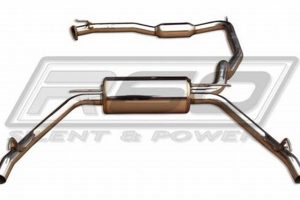
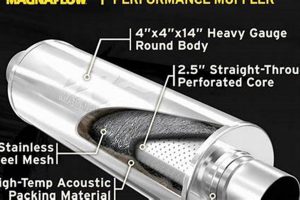
A deteriorated exhaust system component, often manifesting as audible disruptions, results from corrosion or physical damage. This compromised part permits the escape of exhaust gases before they reach the intended outlet. An example of such a fault is the presence of a hole in the metallic casing of this component, leading to a noticeable increase in engine noise.
Addressing the issue of a damaged component is crucial for several reasons. It directly impacts vehicle performance by potentially reducing engine efficiency and power. Furthermore, it has significant implications for environmental compliance due to increased emissions. Historically, the development of durable and efficient exhaust systems has been a key area of automotive engineering, with ongoing efforts focused on extending their lifespan and minimizing their environmental impact. Prompt repair or replacement ensures optimal vehicle operation and adherence to environmental regulations.
The subsequent sections will delve into the causes of degradation, the symptoms associated with its presence, the diagnostic methods employed, and the recommended repair or replacement procedures. Furthermore, preventative measures and cost considerations will be thoroughly examined.
Addressing Exhaust System Integrity
Maintaining the integrity of the exhaust system is crucial for optimal vehicle performance, emissions control, and noise reduction. Early detection and appropriate response to issues can prevent further damage and costly repairs. The following guidelines provide essential information regarding potential problems.
Tip 1: Conduct Regular Visual Inspections: Periodically examine the undercarriage of the vehicle, paying close attention to the exhaust system components. Look for signs of rust, corrosion, physical damage (dents or punctures), and loose connections. Early detection of minor damage can prevent it from escalating.
Tip 2: Monitor for Unusual Noises: Be attentive to changes in engine noise. An increase in loudness or the presence of a rattling, hissing, or sputtering sound emanating from beneath the vehicle may indicate an exhaust leak. Pinpointing the location of the noise can assist in diagnosis.
Tip 3: Be Aware of Changes in Fuel Efficiency: A compromised exhaust system can impact engine efficiency, leading to reduced fuel economy. If a noticeable drop in miles per gallon is observed, it warrants further investigation, including an examination of the exhaust system.
Tip 4: Inspect Exhaust System Mounts: The exhaust system is held in place by rubber mounts. These mounts can deteriorate over time, causing the system to sag or vibrate excessively. Inspect these mounts for cracks, breaks, or signs of wear and tear.
Tip 5: Consider Professional Inspection: If any of the aforementioned symptoms are observed, or if there is any uncertainty regarding the condition of the exhaust system, seek a professional inspection from a qualified mechanic. Diagnostic tools and expertise can accurately identify the source of the problem.
Tip 6: Address Issues Promptly: Ignoring exhaust system problems can lead to more extensive damage and increased repair costs. Addressing issues promptly can prevent further deterioration and ensure the vehicle continues to operate safely and efficiently.
By implementing these practices, the lifespan and functionality of the exhaust system can be preserved, contributing to optimal vehicle performance, reduced emissions, and cost-effective maintenance.
The concluding section will summarize the key findings and provide overall recommendations regarding exhaust system care and maintenance.
1. Increased Exhaust Noise

The presence of elevated sound emanating from the exhaust system is a primary indicator of compromised exhaust integrity. It signals a deviation from the designed parameters of noise suppression, directly impacting the acoustic environment and potentially violating noise regulations.
- Acoustic Disruption Mechanism
A damaged component allows for the premature release of high-pressure exhaust gases directly into the atmosphere. This disrupts the intended flow path through the internal chambers designed to attenuate sound waves. The resulting effect is a significant increase in the audible noise level produced by the vehicle.
- Frequency and Amplitude Changes
The nature of the emitted noise is not merely louder but also qualitatively different. A leak introduces a wider range of frequencies and often creates irregular, sputtering sounds, contrasting with the smoother, lower frequencies characteristic of a properly functioning exhaust system. This altered acoustic signature serves as a readily detectable symptom.
- Environmental Noise Pollution
Beyond the immediate inconvenience to the vehicle operator, elevated exhaust noise contributes to environmental noise pollution, impacting the quality of life in surrounding areas. This is particularly relevant in densely populated urban environments where noise levels are already elevated. Furthermore, persistent loud noises can have adverse effects on human health, including stress and sleep disturbances.
- Legal and Regulatory Implications
Many jurisdictions have noise ordinances in place that regulate the maximum permissible sound levels emitted by vehicles. A compromised exhaust system can result in a vehicle exceeding these limits, leading to fines, mandatory repairs, and potential operational restrictions. Adherence to these regulations is an integral aspect of responsible vehicle ownership and operation.
The correlation between excessive audible emissions and a compromised exhaust component is demonstrably clear. The identification and remediation of such issues are paramount, both from an environmental compliance standpoint and for ensuring responsible vehicle operation within the parameters of established legal and social norms.
2. Reduced Engine Efficiency

A compromised exhaust component, specifically one exhibiting leakage, precipitates a reduction in engine efficiency. This stems from the disruption of optimized backpressure within the exhaust system. The engine management system relies on specific pressure parameters to ensure complete combustion and efficient scavenging of exhaust gases from the cylinders. A breach in the exhaust system alters these parameters, leading to incomplete combustion, loss of power, and increased fuel consumption. Real-world instances include a noticeable decrease in acceleration performance, requiring more throttle input to maintain speed, coupled with more frequent refueling.
The degree of efficiency reduction is directly proportional to the size and location of the breach. A small perforation may result in a marginal decrease, hardly perceptible to the average driver. However, a significant rupture located closer to the engine manifold can cause a more pronounced drop in performance. In such cases, the engine management system might attempt to compensate for the altered pressure by adjusting fuel trim, further exacerbating fuel consumption. Moreover, the unmetered escape of exhaust gases can interfere with the proper functioning of oxygen sensors, leading to inaccurate feedback to the engine control unit (ECU) and further compromised combustion control.
The ramifications of diminished engine efficiency extend beyond increased fuel costs. Incomplete combustion contributes to elevated levels of pollutants released into the atmosphere. This not only violates environmental regulations but also accelerates wear and tear on other engine components, such as catalytic converters. Therefore, addressing exhaust leaks promptly is critical for maintaining optimal engine performance, minimizing environmental impact, and preventing potential downstream damage to related systems.
3. Emissions Non-Compliance

The operational integrity of the exhaust system is intrinsically linked to regulatory compliance concerning vehicle emissions. A compromise to this system, particularly in the presence of exhaust gas leakage, precipitates a state of non-compliance, subjecting the vehicle to potential penalties and contributing to environmental degradation.
- Uncontrolled Release of Pollutants
The primary function of the exhaust system, including the catalytic converter, is to mitigate the release of harmful pollutants, such as hydrocarbons (HC), carbon monoxide (CO), and nitrogen oxides (NOx). A compromised exhaust component bypasses this filtration process, permitting the uncontrolled release of these substances directly into the atmosphere. This breach directly violates established emissions standards.
- Catalytic Converter Inefficiency
Even in instances where exhaust gases are partially routed through the catalytic converter, a leak upstream of the device can negatively impact its efficiency. The introduction of excess air into the exhaust stream can alter the air-fuel ratio reaching the converter, disrupting its chemical reactions and reducing its ability to effectively neutralize pollutants. This renders the catalytic converter less effective, contributing to emissions non-compliance.
- Oxygen Sensor Malfunction
Exhaust leaks occurring near oxygen sensors can introduce false readings, causing the engine control unit (ECU) to incorrectly adjust the air-fuel mixture. This can result in increased fuel consumption and elevated emissions levels. The erroneous data from the oxygen sensor leads to suboptimal combustion, further exacerbating the problem of emissions non-compliance.
- Inspection and Testing Failure
Vehicles are subject to periodic emissions inspections in many jurisdictions. The presence of exhaust leakage is readily detectable during these inspections, typically resulting in a failing grade. The vehicle must then undergo repairs and re-inspection to achieve compliance. Failure to address exhaust leaks can therefore result in operational restrictions and financial penalties.
The direct correlation between exhaust system integrity and regulatory compliance regarding vehicle emissions is evident. Addressing exhaust leakage is not merely a matter of vehicle maintenance but also a critical aspect of environmental responsibility and legal compliance. The implications of neglecting this issue extend beyond the individual vehicle, contributing to broader environmental concerns and potentially subjecting the vehicle owner to regulatory sanctions.
4. Potential Safety Hazard

A compromised exhaust system, specifically a component exhibiting leakage, presents several potential safety hazards. These hazards stem from the nature of exhaust gases and the potential for system malfunction, impacting both vehicle occupants and the surrounding environment. Understanding these risks is crucial for prioritizing maintenance and ensuring safe vehicle operation.
- Carbon Monoxide Ingress into the Cabin
Exhaust gases contain carbon monoxide (CO), an odorless, colorless, and highly toxic gas. A breach in the exhaust system allows CO to accumulate under the vehicle and potentially enter the passenger cabin through gaps in the body or ventilation system. Prolonged exposure to CO can lead to symptoms ranging from headaches and nausea to loss of consciousness and, in severe cases, death. This is especially dangerous in vehicles with compromised seals or inadequate ventilation.
- Elevated Surface Temperatures
Exhaust gases are extremely hot, and a leak can direct this heat onto nearby flammable materials, such as undercarriage components, wiring harnesses, or spilled fluids. This increases the risk of a fire hazard. In dry conditions, hot exhaust gases escaping near vegetation can also pose a risk of igniting wildfires. The localized high temperatures associated with an exhaust leak can also damage adjacent vehicle components, leading to further malfunctions.
- Compromised Vehicle Control
While less direct, an exhaust leak can indirectly compromise vehicle control. The distraction caused by loud exhaust noises can impair the driver’s ability to focus on the road. Additionally, severe exhaust leaks can cause vibrations that affect the vehicle’s handling. Moreover, the engine performance reduction associated with an exhaust leak can make it more difficult to accelerate or maintain speed in critical situations.
- Risk of Burns
Direct contact with hot exhaust gases escaping from a compromised system can cause severe burns. This is a particular risk during vehicle maintenance or repair attempts. Extreme caution should be exercised when working near a potentially damaged exhaust system, allowing sufficient time for the components to cool before initiating any repairs. Appropriate personal protective equipment, including gloves and eye protection, is essential.
These safety considerations highlight the importance of addressing compromised exhaust system components promptly. Regular inspections, attentive monitoring for unusual noises or smells, and prompt repairs are crucial for mitigating these potential hazards and ensuring the safe operation of the vehicle.
5. Component Deterioration Speed
The rate at which an exhaust system component degrades is a critical factor influencing the lifespan and performance of the entire system, directly correlating with the likelihood of an exhaust leak. Several elements contribute to this deterioration speed, impacting the frequency and severity of issues.
- Material Composition
The materials used in the construction of an exhaust system significantly influence its resistance to corrosion and thermal stress. Systems constructed from low-grade steel are more susceptible to rust than those manufactured using stainless steel or aluminized steel. Exposure to road salt, particularly in regions with harsh winter conditions, accelerates corrosion. The choice of material directly impacts the component deterioration speed.
- Environmental Exposure
External environmental factors play a prominent role in the degradation process. Consistent exposure to moisture, road debris, and extreme temperature fluctuations accelerates corrosion and physical damage. Vehicles operated in coastal regions are subject to increased saltwater exposure, which significantly hastens rust formation. Similarly, frequent driving on unpaved roads increases the risk of physical damage from impacts with rocks or other debris.
- Operating Temperature and Cycles
The cyclical heating and cooling of exhaust components induce thermal stress, leading to fatigue and cracking. Frequent short trips, where the exhaust system does not reach its optimal operating temperature, can exacerbate this effect, as condensation accumulates within the system, promoting internal corrosion. Higher operating temperatures, often associated with high-performance engines, can also accelerate material degradation.
- Maintenance Practices
The level of preventative maintenance performed on a vehicle directly impacts the longevity of its exhaust system. Regular inspections can identify early signs of corrosion or damage, allowing for timely repairs that prevent further deterioration. Applying protective coatings to exposed components can also help to slow down the corrosion process. Neglecting routine maintenance accelerates component deterioration speed.
These interconnected factors underscore the complex relationship between component deterioration speed and the incidence of exhaust leaks. By understanding the influence of material composition, environmental exposure, operating conditions, and maintenance practices, vehicle owners can take proactive steps to mitigate the degradation process and extend the lifespan of their exhaust systems.
Frequently Asked Questions
This section addresses common inquiries regarding compromised exhaust systems. The following questions aim to clarify pertinent aspects and provide objective information.
Question 1: What are the primary indicators of a compromised exhaust component?
The presence of elevated exhaust noise, reduced engine efficiency, and a failing emissions test are primary indicators. A visual inspection may reveal physical damage, such as rust or holes.
Question 2: Is it safe to operate a vehicle with a deteriorated exhaust component?
Operating a vehicle with such a component poses safety risks due to potential carbon monoxide leaks and elevated surface temperatures, which can be a fire hazard.
Question 3: What environmental consequences arise from operating a vehicle with a compromised exhaust system?
The uncontrolled release of pollutants, such as hydrocarbons and nitrogen oxides, contributes to air pollution and violates emissions regulations.
Question 4: How frequently should the exhaust system be inspected?
A thorough inspection of the exhaust system should be conducted at least annually or whenever unusual noises or performance issues are observed.
Question 5: Can a deteriorated exhaust component affect fuel efficiency?
Yes, a compromised exhaust system can disrupt the air-fuel ratio, leading to reduced fuel economy and increased fuel consumption.
Question 6: What is the typical lifespan of an exhaust system?
The lifespan varies depending on factors such as material quality, driving conditions, and maintenance practices. Generally, an exhaust system can last from 5 to 10 years.
In conclusion, identifying and addressing the issues associated with compromised exhaust systems is crucial for maintaining vehicle safety, performance, and environmental compliance.
The subsequent section will provide guidance on selecting appropriate replacement components and preventative maintenance strategies.
Conclusion
The preceding analysis has underscored the multifaceted implications of a leaky muffler. From compromised engine efficiency and regulatory non-compliance to significant safety hazards and accelerated component degradation, the detrimental effects are far-reaching. The evidence presented establishes a clear need for vigilant monitoring, prompt diagnosis, and decisive remediation when exhaust system integrity is breached.
The sustained functionality of the exhaust system is not merely a matter of vehicle maintenance; it is intrinsically linked to public safety, environmental responsibility, and adherence to legal standards. Neglecting the early signs of deterioration can lead to escalating repair costs, potential health risks, and adverse environmental consequences. Therefore, prioritizing regular inspection and proactive maintenance is paramount to ensuring optimal vehicle operation and minimizing the negative externalities associated with a compromised exhaust system.