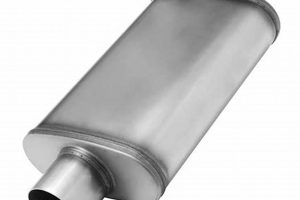
The exhaust component under examination is designed for the Kawasaki KRX 1000 side-by-side vehicle. It plays a vital role in managing exhaust gases produced by the engine, reducing noise emissions, and potentially influencing engine performance characteristics.
The aftermarket component can offer various advantages over stock exhaust systems. These may include increased horsepower and torque, a lighter overall weight, and a more aggressive exhaust note. Historically, enthusiasts have modified exhaust systems to improve vehicle performance and personalize their machines. The demand for these modifications stems from the desire for enhanced power, improved sound, and aesthetic appeal.
The following sections will delve into the specific materials, construction techniques, performance impacts, and considerations involved in selecting the correct type for optimal utility. These factors will be examined in detail to provide a comprehensive understanding of this critical component.
Considerations for Exhaust System Selection
Proper selection and maintenance are crucial for optimal performance and longevity of the exhaust system component under consideration. The following guidelines provide essential considerations.
Tip 1: Material Selection: Evaluate the material composition. Stainless steel offers corrosion resistance and durability. Titanium provides weight reduction and high-temperature tolerance. Aluminum, while lightweight, may be less durable in harsh environments.
Tip 2: Sound Level Considerations: Adhere to noise regulations in your operating area. Some aftermarket systems may exceed permissible sound limits. Research and select systems that meet or exceed legal requirements while providing the desired sound profile.
Tip 3: Performance Mapping: Altering the exhaust system can impact engine performance. Consider remapping the engine control unit (ECU) to optimize air-fuel ratios and maximize potential gains. This process may require professional assistance.
Tip 4: Installation Procedures: Ensure proper installation. Incorrect installation can lead to exhaust leaks, reduced performance, and potential damage to the engine. Follow manufacturer instructions meticulously, or engage a qualified technician.
Tip 5: Maintenance and Inspection: Regularly inspect the exhaust system for signs of damage, such as cracks, leaks, or corrosion. Address any issues promptly to prevent further deterioration and maintain optimal performance.
Tip 6: Compatibility Verification: Confirm compatibility with the specific vehicle model and year. Mismatched components can result in improper fitment, reduced performance, and potential damage. Consult manufacturer specifications or a knowledgeable retailer.
Adhering to these guidelines will contribute to the reliable function of the critical vehicle component and help to realize its intended benefits.
The subsequent discussion will offer a summary of the topic.
1. Performance Optimization
The design and construction of the exhaust system directly influence engine performance. The component is engineered to manage exhaust gases, and modifications to its design can alter exhaust flow, backpressure, and ultimately, engine output. Performance optimization, in the context of this specific component, focuses on achieving the ideal balance between exhaust scavenging and maintaining adequate backpressure to promote efficient combustion. Insufficient backpressure can lead to reduced low-end torque, while excessive backpressure restricts high-end horsepower. Aftermarket systems often aim to improve upon stock designs by reducing flow restrictions and utilizing tuned lengths to maximize exhaust pulse energy. For example, a well-designed system may incorporate larger diameter tubing and smoother bends to minimize flow turbulence, thereby increasing exhaust velocity and promoting better cylinder scavenging during the exhaust stroke.
The selection of the exhaust system requires careful consideration of the engine’s operating parameters and intended use. Systems designed for high-performance applications, such as racing, typically prioritize maximum horsepower gains, often at the expense of low-end torque. Conversely, systems designed for recreational use may prioritize a broader powerband and improved throttle response across the RPM range. Engine control unit (ECU) recalibration is often necessary after installing an aftermarket system to optimize fuel delivery and ignition timing for the altered exhaust characteristics. Real-world testing and dyno tuning are critical to validate performance gains and ensure proper engine operation.
In summary, achieving performance optimization with the exhaust system necessitates a holistic approach encompassing design, material selection, and proper engine tuning. While potential performance gains exist, careful consideration must be given to ensure compatibility with the engine’s operational characteristics and intended application. Without proper tuning, anticipated performance improvements may not be realized, or worse, negatively impact engine reliability. Thus, understanding the interplay between the component, the engine, and the ECU is paramount for maximizing performance benefits.
2. Noise Reduction

Noise reduction is a primary function of the exhaust component within the KRX 1000, aiming to mitigate the audibility of engine exhaust. This is achieved through a combination of sound attenuation techniques integrated into the muffler design, balancing performance with regulatory compliance and operator comfort.
- Internal Baffling Design
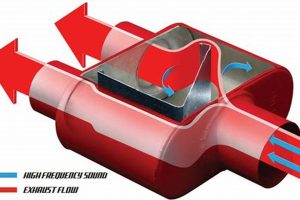
Internal baffling constitutes a critical method for attenuating sound waves within the muffler. Baffles are strategically positioned partitions that redirect and diffuse sound energy, converting it into heat through friction and interference. Different baffle designs, such as straight-through, chambered, and reverse-flow, offer varying levels of noise reduction and backpressure characteristics. The selection of a specific baffle configuration represents a trade-off between minimizing noise and optimizing exhaust flow. An example of a straight-through design improves exhaust flow by creating a direct path for gases to exit with less back pressure, however, sound waves will not be interrupted. Chambered designs create multiple paths where sound is directed to travel. This helps to decrease noise but reduces efficiency and creates back pressure.
- Acoustic Absorption Materials
Acoustic absorption materials line the inner walls of the muffler, absorbing sound energy and further reducing noise emissions. These materials, typically fiberglass, rock wool, or specialized synthetic fibers, possess a porous structure that traps sound waves and dissipates their energy as heat. The effectiveness of acoustic absorption materials depends on factors such as material density, thickness, and frequency range. Over time, these materials can degrade due to exposure to high temperatures and exhaust gases, necessitating periodic replacement to maintain optimal noise reduction performance.
- Resonator Integration
Resonators are tuned chambers designed to cancel out specific frequencies of sound waves. These chambers are precisely sized and positioned to create destructive interference, where sound waves collide and cancel each other out, resulting in a noticeable reduction in noise. Resonators are particularly effective at targeting dominant frequencies produced by the engine, such as exhaust pulses, thereby reducing overall noise levels. The implementation of resonators requires precise tuning to match the engine’s specific acoustic characteristics.
- Exhaust Gas Flow Dynamics
The overall design of the exhaust system, including the muffler, significantly impacts exhaust gas flow and subsequent noise generation. A properly designed system minimizes turbulence and flow restrictions, reducing the amplitude of exhaust pulses and associated noise. Gradual changes in pipe diameter and smooth bends are essential for maintaining laminar flow and minimizing noise. Sharp bends and constrictions can create turbulence, amplifying noise levels and reducing engine performance.
Collectively, the strategies used to reduce noise are vital to the vehicle’s functionality. These must be balanced carefully to create a desirable driving experience while not impeding the vehicles overall output. The importance of noise reduction components cannot be understated given the legal restrictions in place regarding noise pollution.
3. Material Durability

Material durability is paramount in the context of the Kawasaki KRX 1000 exhaust component due to the severe operating conditions it encounters. The exhaust system is subjected to extreme temperatures, vibration, and exposure to corrosive elements such as water, mud, and road salts. The lifespan and performance of the system are directly correlated with the ability of its constituent materials to withstand these stresses without degradation. Premature failure due to corrosion, cracking, or other forms of material failure can lead to reduced engine performance, increased noise levels, and potential safety hazards. For example, a system constructed from low-grade steel may exhibit significant rust within a short period, compromising its structural integrity and necessitating replacement. The choice of material is not merely an aesthetic consideration; it is a critical factor in ensuring the reliable and safe operation of the vehicle.
Several materials are commonly employed in the manufacture of these aftermarket components, each offering a distinct balance of properties. Stainless steel, particularly grades 304 and 409, is widely used due to its corrosion resistance, high-temperature strength, and relatively low cost. Titanium alloys offer superior strength-to-weight ratios and exceptional corrosion resistance but are significantly more expensive. Aluminum, while lightweight, is generally unsuitable for exhaust manifolds or catalytic converters due to its lower melting point, but may be used for muffler bodies where temperatures are lower. The selection of a specific material depends on factors such as the intended application, budget constraints, and desired performance characteristics. A system intended for off-road racing, where weight reduction is paramount, might justify the use of titanium, while a system intended for general recreational use may opt for stainless steel to balance cost and durability.
In summary, material durability is a critical determinant of the longevity, performance, and safety of the exhaust system. The selection of appropriate materials, such as stainless steel or titanium, is essential to withstand the harsh operating environment and prevent premature failure. Understanding the properties of different materials and their suitability for specific applications is crucial for making informed decisions regarding the purchase and maintenance of these components. Choosing components with an emphasis on material quality and durability is a long-term investment in the reliable and efficient operation of the Kawasaki KRX 1000.
4. Exhaust Flow
The exhaust component of the KRX 1000 directly dictates exhaust flow characteristics. Exhaust flow, defined as the rate and manner in which combustion gases are evacuated from the engine, profoundly influences engine performance, efficiency, and overall operational characteristics. The component’s internal design, including pipe diameter, bend radii, and baffling configurations, serves as the primary determinant of exhaust flow. A restrictive design impedes exhaust gas evacuation, resulting in increased backpressure, reduced volumetric efficiency, and diminished power output. Conversely, an overly permissive design, while minimizing backpressure, can compromise exhaust scavenging, leading to incomplete combustion and decreased low-end torque. For example, a component utilizing excessively narrow piping will exhibit restricted flow, causing the engine to work harder to expel exhaust gases, negatively impacting power delivery. In contrast, an aftermarket component with excessively large diameter piping may diminish the velocity of exhaust gases, resulting in poor cylinder scavenging and reduced low-end torque.
The relationship between exhaust flow and engine performance is non-linear and highly dependent on engine characteristics and operating conditions. An exhaust system optimized for high-RPM operation, such as in racing applications, will typically prioritize maximizing exhaust flow at the expense of low-end torque. This approach may involve larger diameter piping, minimal baffling, and a straight-through muffler design. Conversely, an exhaust system designed for recreational use, where a broad powerband is desired, will typically prioritize a balance between exhaust flow and backpressure. This balance can be achieved through carefully tuned baffling configurations and strategically sized piping. For instance, incorporating a chambered muffler design can create controlled backpressure to improve low-end torque without significantly restricting high-end power.
In summary, the exhaust component’s design is paramount in determining exhaust flow characteristics. Optimal exhaust flow is essential for maximizing engine performance, efficiency, and drivability across the operating range. Challenges arise in balancing exhaust flow and backpressure to achieve the desired performance characteristics for a given application. A comprehensive understanding of engine dynamics and exhaust system design principles is essential for selecting and installing the component that provides optimal performance and satisfies operational requirements. Furthermore, careful consideration of legal and environmental regulations relating to noise emissions is critical in the design and selection process.
5. Legal Compliance

The design, installation, and operation of exhaust components for the Kawasaki KRX 1000 are subject to various legal compliance regulations, primarily concerning noise emissions and environmental impact. These regulations, enforced at federal, state, and local levels, aim to mitigate noise pollution and maintain air quality standards. Non-compliance can result in fines, vehicle impoundment, and restrictions on vehicle usage. The exhaust component, therefore, must be designed and certified to meet these established legal requirements. An exhaust system that exceeds noise level limits established by a municipality, for example, will render the vehicle illegal for operation within that jurisdiction. Similarly, modifications that remove or alter catalytic converters will violate federal emissions standards, subjecting the owner to potential penalties.
The “krx 1000 muffler,” whether original equipment or aftermarket, must adhere to stipulated noise level restrictions, typically measured in decibels (dB). Aftermarket systems often advertise compliance with these noise standards, often displaying a “sound level” rating. However, verifying compliance may require independent testing, as advertised claims are not always accurate. Furthermore, modifications to an otherwise compliant muffler, such as removing internal baffles or altering exhaust routing, can negate its compliance status. Real-world examples include off-road vehicle parks that mandate specific dB limits for operation, requiring vehicles to undergo sound level testing before being permitted entry. These measures ensure a controlled noise environment, minimizing disturbance to surrounding areas and preserving the recreational experience for all users.
Legal compliance, in the context of the exhaust component, is not merely an administrative formality but a critical aspect of responsible vehicle ownership and operation. Adherence to noise and emissions regulations demonstrates a commitment to environmental stewardship and respects the rights and well-being of the community. Challenges arise from the variability in regulations across different jurisdictions and the potential for aftermarket modifications to compromise compliance. However, by prioritizing legal compliance in the selection, installation, and maintenance of the system, vehicle owners can avoid potential penalties and contribute to a more sustainable and harmonious operating environment. Careful product selection and thorough research are vital to ensure the modified vehicle meets legal standards.
Frequently Asked Questions
The following questions address common inquiries regarding the component for the Kawasaki KRX 1000, providing clarification on its function, selection, and maintenance.
Question 1: What is the primary function of the KRX 1000 muffler?
The primary function is to attenuate exhaust noise generated by the engine. Secondary functions include facilitating efficient exhaust gas flow and, in some cases, influencing engine performance characteristics.
Question 2: How does aftermarket muffler selection impact vehicle performance?
Aftermarket component selection can influence horsepower, torque, and exhaust note. Systems designed for performance may increase power output but potentially elevate noise levels. Careful consideration of the trade-offs is necessary.
Question 3: What materials are commonly used in component construction, and what are their advantages?
Common materials include stainless steel and titanium. Stainless steel provides corrosion resistance and durability. Titanium offers a superior strength-to-weight ratio, contributing to weight reduction.
Question 4: Are there legal limitations regarding exhaust noise levels?
Jurisdictions often impose noise level limits for off-road vehicles. Exceeding these limits can result in fines and restrictions. Ensure compliance with applicable regulations during selection and installation.
Question 5: How frequently should the component be inspected and maintained?
Regular inspection for damage, corrosion, and leaks is recommended. The inspection interval depends on operating conditions. Address issues promptly to prevent further deterioration and maintain optimal performance.
Question 6: Can the component impact fuel efficiency?
Alterations to exhaust flow can affect fuel efficiency. Optimized designs may improve fuel economy, while restrictive or poorly designed systems can reduce it. Engine tuning adjustments may be necessary to maximize fuel efficiency.
In summary, understanding the function, selection, and maintenance considerations for the component is essential for responsible vehicle ownership. Compliance with legal regulations and proactive maintenance contribute to long-term performance and environmental stewardship.
The subsequent section will offer guidance on troubleshooting common issues.
KRX 1000 Muffler
The preceding exploration of the “krx 1000 muffler” has underscored its multifaceted role beyond simple noise suppression. This component, critical to the Kawasaki KRX 1000’s operation, demonstrably influences engine performance, legal compliance, and long-term vehicle durability. Through careful design and material selection, aftermarket and OEM systems alike seek to balance these often competing demands, shaping the vehicle’s overall utility and operator experience.
As technology evolves and regulatory pressures intensify, the demands placed upon the component will only increase. Continued research and development are essential to optimize its performance while minimizing its environmental impact. Owners and operators must remain vigilant in their selection and maintenance practices, ensuring that the “krx 1000 muffler” continues to serve as a responsible and effective element of the KRX 1000’s overall design.

![Avondale Muffler Masters: Exhaust Repair Pros, [Year] | Best Mufflers for Cars & Trucks | Performance, Sound & Durability Upgrades](https://dnamufflers.com/wp-content/uploads/2026/09/th-5-300x200.jpg "Avondale Muffler Masters: Exhaust Repair Pros, [Year] Best Mufflers for Cars & Trucks | Performance, Sound & Durability Upgrades")