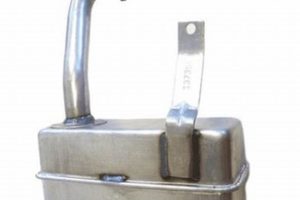
The exhaust component located at the rear of the 2006 Honda Civic’s undercarriage serves to reduce engine noise. This device utilizes baffles and chambers to attenuate sound waves produced by the combustion process. Its placement at the terminal end of the exhaust system allows for maximum noise reduction before gases are expelled into the atmosphere.
Proper functionality of this part is essential for maintaining vehicle compliance with noise regulations. A malfunctioning or deteriorated component can result in increased noise levels, potentially leading to citations or the vehicle failing inspections. Furthermore, a properly functioning system contributes to a more comfortable and quieter driving experience for the vehicle’s occupants. The design and construction evolved over time, reflecting advancements in noise reduction technology and material science.
The subsequent sections will detail the symptoms of a failing unit, the replacement process, and factors influencing the selection of aftermarket alternatives. We will also examine common issues and preventative maintenance measures that can extend the lifespan of this critical element.
Maintenance and Longevity Enhancement
The following guidelines are designed to prolong the operational lifespan of the rear exhaust component in a 2006 Honda Civic and ensure continued noise reduction effectiveness.
Tip 1: Inspect Regularly for Corrosion: Conduct routine visual inspections, particularly in regions with prevalent road salt usage. Pay close attention to weld points and areas exposed to direct moisture. Early detection of rust can facilitate timely intervention and prevent more extensive damage.
Tip 2: Address Exhaust Leaks Promptly: Investigate any unusual exhaust noises, as these may indicate leaks. Escaping exhaust gases accelerate corrosion and degrade performance. Repairing leaks minimizes backpressure issues and preserves overall system efficiency.
Tip 3: Avoid Short Trips When Possible: Frequent short trips prevent the exhaust system from reaching optimal operating temperatures. Condensation buildup inside the exhaust accelerates corrosion from within. Longer drives promote the evaporation of moisture, extending the lifespan.
Tip 4: Consider a Protective Coating: Application of a high-temperature protective coating can provide an additional barrier against corrosion. This is particularly beneficial in harsh climates. Ensure the coating is compatible with exhaust system materials and applied according to manufacturer instructions.
Tip 5: Verify Hanger Integrity: Ensure that all exhaust system hangers are intact and properly supporting the exhaust system. Damaged or missing hangers place undue stress on the system, potentially leading to premature failure. Replace worn hangers as needed.
Tip 6: Avoid Impact Damage: Exercise caution when navigating uneven road surfaces or obstacles that could potentially impact the underside of the vehicle. Impacts can damage or displace the exhaust system, compromising its integrity.
Tip 7: Ensure Proper Engine Maintenance: Proper engine function minimizes excessive backpressure and ensures complete combustion. A well-maintained engine reduces the strain on the entire exhaust system, extending its life.
Adhering to these maintenance practices can significantly improve the durability and performance of the exhaust component, contributing to a quieter and more reliable vehicle.
The next section addresses common issues and diagnostic procedures related to this component.
1. Sound Attenuation

Sound attenuation is the primary design function of the exhaust component located on a 2006 Honda Civic. This process refers to the reduction of noise generated by the engine’s combustion cycle before it exits the vehicle. The component achieves this through a combination of internal chambers, baffles, and sound-absorbing materials designed to dissipate sound waves. Ineffective sound attenuation results in elevated noise levels, potentially violating local ordinances and creating an uncomfortable driving experience. For instance, a corroded or damaged unit may exhibit a noticeable increase in exhaust noise, indicating a failure in its ability to effectively dampen sound.
The effectiveness of sound attenuation directly correlates with the internal condition of the unit. Deterioration of the internal baffles or the presence of rust-induced perforations compromises its ability to control and reduce sound waves. This degradation not only increases noise pollution but also signals a potential exhaust leak, impacting engine efficiency. Regular inspections for excessive noise or visual signs of damage are critical for maintaining effective sound attenuation. Choosing a replacement unit with high-quality sound-absorbing materials can ensure optimal noise reduction and compliance with noise regulations.
Understanding the relationship between sound attenuation and the exhaust component highlights the importance of maintaining this part of the vehicle. Failure to do so results in increased noise pollution and indicates potential underlying mechanical issues. Prioritizing regular inspections and prompt replacements, when necessary, ensures the vehicle operates within acceptable noise limits and contributes to a more environmentally responsible driving experience. The challenges involved in sound attenuation stem from balancing noise reduction with minimal exhaust restriction to maintain engine performance, requiring careful design and engineering.
2. Corrosion Resistance
Corrosion resistance is a critical attribute of the exhaust component on a 2006 Honda Civic due to its constant exposure to harsh environmental conditions. The exhaust system operates at high temperatures and is subjected to moisture, road salts, and other corrosive elements. Inadequate corrosion resistance leads to premature degradation of the component, resulting in exhaust leaks, increased noise, and ultimately, failure requiring replacement. For instance, a unit constructed with low-grade steel is highly susceptible to rust, particularly in regions with heavy winter salting practices. This corrosion weakens the metal, leading to perforations and compromising the component’s structural integrity and sound-dampening capabilities.
The choice of materials significantly influences the component’s resistance to corrosion. Stainless steel offers superior protection compared to aluminized steel, albeit at a higher cost. Aluminized coatings provide a sacrificial layer of protection, but this coating can be compromised by physical damage or prolonged exposure to corrosive substances. Understanding the environmental conditions the vehicle will be exposed to informs the selection of an appropriate replacement unit. Proper maintenance, such as regular washing to remove road salts and the application of protective coatings, can mitigate the effects of corrosion and extend the lifespan of the component. Failure to address corrosion can lead to costly repairs and negatively impact vehicle emissions.
In summary, corrosion resistance is paramount for the longevity and performance of the exhaust component. Choosing materials and employing maintenance strategies that enhance corrosion resistance is a practical measure to reduce repair costs and maintain the vehicle’s operational efficiency. Neglecting this aspect will inevitably lead to premature failure, underscoring the significance of material selection and preventive maintenance in maximizing the lifespan of the component. This demonstrates a direct relationship between material properties and operational lifespan.
3. Exhaust Backpressure

Exhaust backpressure, defined as the resistance to exhaust gas flow, is a critical parameter influencing the performance and efficiency of a 2006 Honda Civic. The rear exhaust component directly affects the level of backpressure within the exhaust system. A properly designed unit minimizes restriction, allowing exhaust gases to exit the engine efficiently. Excessive backpressure, conversely, impedes this flow, leading to reduced engine power, diminished fuel economy, and potential engine damage. The design and condition of the exhaust component contribute significantly to determining backpressure levels; for instance, a clogged or overly restrictive unit increases backpressure, hindering the engine’s ability to expel exhaust gases effectively.
The design of the rear exhaust component is an exercise in balancing sound attenuation with minimal flow restriction. An aftermarket unit with insufficient internal volume or poorly designed baffles can generate excessive backpressure, negating any potential performance gains. Furthermore, corrosion and internal collapse within the unit can create obstructions, similarly raising backpressure. Diagnostics for excessive backpressure include monitoring engine performance and inspecting the exhaust system for obstructions or damage. Selecting a replacement unit that meets OEM specifications, including diameter and internal design, helps ensure proper backpressure levels are maintained. Ignoring the effect of the exhaust component on backpressure will invariably lead to suboptimal engine performance and potential long-term issues.
In summary, the rear exhaust component of a 2006 Honda Civic directly influences exhaust backpressure, with significant implications for engine performance and fuel efficiency. Maintaining a balance between sound attenuation and minimizing flow restriction is paramount. Choosing a replacement unit that adheres to OEM specifications and conducting regular inspections for obstructions are essential steps in ensuring optimal backpressure levels and preserving the vehicle’s performance characteristics. The overall condition of the unit directly affects the engine’s ability to efficiently expel exhaust gases.
4. Mounting Integrity

Mounting integrity, concerning the exhaust component for a 2006 Honda Civic, denotes the structural soundness and secure attachment of the exhaust component to the vehicle’s undercarriage. This aspect is fundamental to the proper functioning and longevity of the component. A compromised mounting system, due to factors such as corroded hangers or damaged attachment points, introduces excessive stress and vibration. This stress, in turn, can accelerate wear and tear on the unit itself, potentially leading to cracks, leaks, or even complete detachment. For instance, if the rubber isolators supporting the exhaust system deteriorate, the resulting metal-on-metal contact transmits vibrations directly to the component, increasing the risk of structural failure.
Proper mounting involves the use of correctly sized and rated hangers, brackets, and fasteners. These components must be resistant to corrosion and capable of withstanding the high temperatures and vibrations associated with exhaust system operation. Neglecting mounting integrity can result in increased noise levels, as loose components rattle against the vehicle’s frame. Furthermore, a detached or poorly supported unit poses a safety hazard, as it can drag on the road surface or damage other vehicle components. Regular inspections of the mounting hardware are essential to identify and address any signs of wear or damage. Replacing worn hangers and ensuring all fasteners are properly tightened are crucial maintenance tasks.
In summary, mounting integrity is a critical factor in the overall health and performance of the exhaust component. A secure and well-supported unit minimizes stress, reduces vibration, and prevents premature failure. Regular inspections, proper maintenance, and the use of quality mounting hardware contribute significantly to the longevity and safe operation of the exhaust system. Disregarding mounting integrity has significant ramifications for the operational life of the component and the safety of the vehicle.
5. OEM Compatibility
OEM compatibility, in the context of a 2006 Honda Civic exhaust component, signifies that a replacement part adheres to the original equipment manufacturer’s (Honda’s) specifications. This includes dimensions, materials, and performance characteristics. The exhaust component’s design directly affects engine performance, emissions, and noise levels; therefore, deviation from OEM standards can have adverse effects. The cause-and-effect relationship is evident: an incompatible aftermarket component may result in reduced engine power, increased fuel consumption, or failure to meet emissions regulations. OEM compatibility is thus paramount for maintaining the vehicle’s intended operational parameters.
Practical examples underscore the importance of this compatibility. Installing an aftermarket unit with incorrect pipe diameter or internal baffling can significantly alter exhaust backpressure. As previously stated, excessive backpressure reduces engine efficiency, while insufficient backpressure can damage the catalytic converter. Furthermore, an ill-fitting component may create exhaust leaks, triggering warning lights on the dashboard or posing a health hazard to vehicle occupants due to carbon monoxide exposure. Honda’s rigorous testing and validation processes ensure that OEM parts function optimally within the vehicle’s overall system. Using an OEM-compatible replacement ensures these performance and safety standards are upheld. The application of this understanding translates directly into informed purchasing decisions, enabling vehicle owners to select replacements that maintain the integrity of the exhaust system.
In summary, OEM compatibility is a non-negotiable factor when replacing the exhaust component on a 2006 Honda Civic. It preserves the vehicle’s performance, emissions compliance, and safety characteristics. While aftermarket options may be less expensive, failing to prioritize OEM compatibility risks compromising these critical attributes. Challenges exist in identifying truly compatible aftermarket options, necessitating careful research and reliance on reputable suppliers. Understanding this connection empowers vehicle owners to make informed decisions and maintain the proper functioning of their vehicles. It also reduces the risk of potential issues relating to mechanical failure.
Frequently Asked Questions
The following questions address common inquiries and concerns regarding the rear exhaust component of the 2006 Honda Civic. The purpose of this section is to provide clear, concise information to facilitate informed decision-making regarding maintenance and replacement.
Question 1: What are the typical symptoms of a failing rear exhaust component on a 2006 Honda Civic?
Common indicators include increased exhaust noise, rattling sounds emanating from the undercarriage, visible rust or physical damage to the unit, reduced fuel efficiency, and potential illumination of the check engine light.
Question 2: How often should the rear exhaust component on a 2006 Honda Civic be inspected?
It is recommended to visually inspect the exhaust system, including the rear component, at least annually or during routine maintenance checks. More frequent inspections may be necessary in regions with harsh winter conditions or high road salt usage.
Question 3: Can a damaged rear exhaust component affect engine performance?
Yes. A damaged unit can alter exhaust backpressure, potentially reducing engine power and fuel efficiency. Exhaust leaks can also disrupt the engine’s air-fuel mixture, leading to performance issues.
Question 4: Is it possible to repair a damaged rear exhaust component, or is replacement always necessary?
Minor rust or small perforations may be repairable by a qualified technician. However, extensive damage, such as significant corrosion or structural collapse, generally necessitates replacement for optimal performance and longevity.
Question 5: Are aftermarket rear exhaust components as reliable as OEM components?
Aftermarket components vary widely in quality. While some aftermarket options offer comparable performance and durability to OEM parts, others may be constructed from lower-grade materials or exhibit inferior design. It is crucial to research and select a reputable brand with a proven track record of quality.
Question 6: What factors influence the cost of replacing the rear exhaust component on a 2006 Honda Civic?
The cost depends on several factors, including the type of replacement unit (OEM or aftermarket), the labor rate of the repair shop, and the geographical location. Stainless steel units typically command a higher price than aluminized steel options.
This FAQ section has outlined key considerations concerning the exhaust component. The information presented highlights the importance of regular inspections, proper maintenance, and informed replacement decisions.
The subsequent sections will delve into specific replacement procedures and address relevant safety precautions.
Conclusion
This exploration has thoroughly examined the characteristics, functionality, maintenance, and replacement considerations for the 2006 Honda Civic exhaust component. Key points include the importance of sound attenuation, corrosion resistance, exhaust backpressure management, mounting integrity, and adherence to OEM compatibility standards. The consequences of neglecting these aspects, ranging from reduced engine performance to potential safety hazards, have been clearly outlined.
Ultimately, the proper care and maintenance of this component are vital to the reliable and efficient operation of the vehicle. While replacement may become necessary over time, understanding the factors influencing its performance empowers vehicle owners to make informed decisions, ensuring the continued functionality and longevity of their 2006 Honda Civic. Continued diligence in this area will yield lasting benefit and value.
![Walker Muffler Specs Guide: Find Your Perfect Muffler [Updated] | Best Mufflers for Cars & Trucks | Performance, Sound & Durability Upgrades](https://dnamufflers.com/wp-content/uploads/2026/09/th-21-300x200.jpg "Walker Muffler Specs Guide: Find Your Perfect Muffler [Updated] Best Mufflers for Cars & Trucks | Performance, Sound & Durability Upgrades")