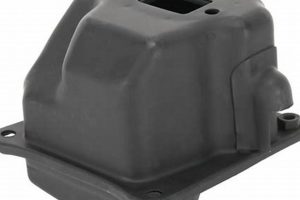
A specialized exhaust component features two entry points for exhaust gases and two exit points for the processed emissions. This design differs from standard single-inlet, single-outlet units and can be implemented in various automotive applications, often aimed at enhancing engine performance or modifying exhaust tone. For example, a vehicle with a V-configured engine might employ such a system to more efficiently manage the exhaust flow from each cylinder bank.
The implementation of this configuration can lead to improved exhaust gas scavenging, potentially resulting in increased horsepower and torque. Moreover, this design choice enables greater flexibility in tailoring the sound characteristics of the exhaust system, allowing for a deeper or more aggressive tone. Historically, variations of this technology have been utilized in high-performance vehicles and aftermarket modifications seeking both performance and auditory enhancements.
The following sections will delve into the specific applications, performance implications, installation considerations, and noise level management associated with this type of exhaust system component. Further exploration will consider the material science aspects involved in their construction and their effect on overall vehicle efficiency.
Tips for Evaluating Dual Inlet and Outlet Mufflers
Selecting the appropriate exhaust component of this type requires careful consideration of several factors. Prioritizing these tips can aid in making an informed decision.
Tip 1: Assess Engine Compatibility: Verify that the specific model is designed for the engine configuration and displacement of the vehicle. Incompatibility can lead to reduced performance or damage.
Tip 2: Evaluate Flow Capacity: Determine the exhaust flow requirements based on engine specifications and desired performance gains. Insufficient flow can create backpressure, hindering engine efficiency.
Tip 3: Consider Sound Characteristics: Different designs produce varying exhaust tones. Research the sound profile associated with each model to ensure it aligns with personal preferences and legal requirements.
Tip 4: Inspect Material Quality: Opt for stainless steel or aluminized steel construction for enhanced durability and resistance to corrosion. Inferior materials can lead to premature failure.
Tip 5: Review Installation Requirements: Determine the level of complexity involved in the installation process. Professional installation may be necessary for certain models.
Tip 6: Check for Compliance with Regulations: Ensure that the selected component meets all applicable noise level regulations in the vehicle’s operating region. Non-compliance can result in fines or vehicle restrictions.
Tip 7: Research Brand Reputation: Consider established manufacturers with a proven track record of producing high-quality exhaust components. Reputable brands often offer warranties and technical support.
By carefully evaluating these factors, users can select a component that optimizes performance, sound, and durability, ultimately enhancing their driving experience.
The following sections will explore the long-term maintenance requirements and potential performance enhancements associated with the correct implementation of such exhaust components.
1. Engine Compatibility

Engine compatibility represents a critical determinant of a dual inlet and outlet muffler’s performance and operational effectiveness. This compatibility encompasses matching the muffler’s physical dimensions and flow characteristics to the engine’s specifications. An incorrect fitment can lead to compromised exhaust flow dynamics, potentially resulting in reduced power output and increased fuel consumption. As an example, installing a muffler designed for a V8 engine on an inline-four engine can create excessive backpressure, hindering the engine’s ability to expel exhaust gases efficiently. This incompatibility leads to a decrease in overall engine performance and may contribute to premature engine wear.
Beyond physical dimensions, the internal design of the muffler must align with the engine’s exhaust pulsation characteristics. A muffler engineered for a high-revving engine might not function optimally on a low-RPM, high-torque engine, and vice versa. If the engine is turbocharged or supercharged, the muffler design must also accommodate the increased exhaust gas volume and velocity. Therefore, specifying the correct muffler tailored to the vehicle’s engine type (e.g., V6, V8, inline-four) is essential to ensure optimal performance. Aftermarket manufacturers typically provide detailed compatibility charts to guide the selection process.
In summation, ensuring precise engine compatibility is paramount when choosing a dual inlet and outlet muffler. Neglecting this aspect can negate any potential performance benefits and may cause adverse effects on the engine’s operation and longevity. Selecting a muffler designed explicitly for the vehicle’s engine configuration and specifications is critical for maintaining optimal engine performance and preventing potential damage. Failure to adhere to these guidelines can lead to suboptimal performance and potentially costly repairs.
2. Exhaust Flow Capacity

Exhaust flow capacity represents a critical parameter in the design and selection of dual inlet and outlet mufflers. It dictates the muffler’s ability to efficiently evacuate exhaust gases from the engine, directly impacting engine performance, fuel efficiency, and overall system longevity. Insufficient flow capacity can lead to increased backpressure, hindering the engine’s ability to breathe and potentially causing damage. The subsequent points elaborate on essential facets of this relationship.
- Muffler Internal Design and Flow Rate
The internal configuration of the muffler, including chamber size, baffle design, and core diameter, significantly influences exhaust flow capacity. A restrictive design impedes the free flow of exhaust gases, increasing backpressure and diminishing engine power. Conversely, a less restrictive design facilitates higher flow rates, potentially enhancing engine performance, particularly at higher RPMs. The selection of materials and manufacturing techniques further influences the consistency and predictability of flow rates. Actual performance should be verified through testing procedures.
- Engine Size and Performance Requirements
The engine’s displacement and intended performance characteristics determine the exhaust flow requirements. Larger engines and high-performance applications necessitate mufflers with greater flow capacity to accommodate the increased volume of exhaust gases generated. Selecting a muffler with inadequate flow capacity for a given engine can result in a noticeable reduction in horsepower and torque, particularly at higher engine speeds. The intended usage of the vehicle, whether for daily driving or competitive racing, should inform the muffler selection process.
- Backpressure Effects on Engine Efficiency
Backpressure, the resistance to exhaust gas flow, is a direct consequence of insufficient exhaust flow capacity. Excessive backpressure reduces the scavenging efficiency of the engine, hindering its ability to expel exhaust gases completely from the combustion chambers. This incomplete expulsion results in reduced cylinder filling with fresh air and fuel, leading to decreased power output and increased fuel consumption. Maintaining optimal backpressure levels is crucial for achieving a balance between performance and efficiency.
- Dual Inlet and Outlet Configuration Advantages
The dual inlet and outlet configuration inherently offers the potential for increased exhaust flow capacity compared to single inlet and outlet designs. By providing two separate pathways for exhaust gases to enter and exit the muffler, the overall flow rate can be significantly enhanced. This design is particularly beneficial for engines with dual exhaust manifolds, such as V-configured engines, where each manifold can be connected to a separate inlet. The enhanced flow capacity can lead to improved engine performance and a more aggressive exhaust note.
The interplay between exhaust flow capacity and the design of dual inlet and outlet mufflers is a nuanced consideration, with numerous factors impacting overall performance. Selecting a muffler with appropriate flow characteristics relative to the engine’s requirements is critical. Inaccurate selection not only diminishes performance but can cause premature component failure. Precise understanding of engine size, performance targets, and internal muffler design elements is required.
3. Sound Customization

Sound customization, in the context of a dual inlet and outlet muffler, refers to the manipulation of exhaust acoustics achieved through variations in muffler design. This is not simply about increasing volume; it encompasses shaping the frequency, tone, and overall character of the exhaust note. The dual configuration allows for greater manipulation of these factors compared to single-outlet systems. The geometry of the internal chambers, the materials used in construction, and the specific configuration of the inlets and outlets all contribute to the final sound produced. For example, a muffler with larger internal chambers and less restrictive baffling will generally produce a deeper, more resonant tone, while a smaller muffler with more complex baffling will yield a higher-pitched, more controlled sound. The specific layout of the dual inlets and outlets can also influence the sound; staggered outlets, for instance, might produce a more complex and layered exhaust note.
The importance of sound customization stems from its impact on the driving experience. For some vehicle owners, a specific exhaust note is integral to the enjoyment of their vehicle, contributing to the perception of power and performance. Furthermore, sound customization plays a role in branding and vehicle identity. Certain manufacturers associate particular exhaust sounds with their performance models. However, the pursuit of a desirable exhaust note must be balanced with legal considerations, as noise regulations in many jurisdictions place limits on permissible sound levels. The dual inlet and outlet muffler allows for tailored solutions that can meet both aesthetic preferences and regulatory requirements. Aftermarket manufacturers offer a wide array of mufflers designed to produce a variety of sound profiles, from subtle enhancements to aggressive, race-inspired tones. An example includes utilizing Helmholtz resonators within the muffler to cancel out specific frequencies, thereby reducing drone at cruising speeds while maintaining a powerful sound during acceleration.
In conclusion, sound customization is a significant attribute of a dual inlet and outlet muffler, providing the ability to fine-tune the auditory characteristics of a vehicle’s exhaust system. This capability allows for a personalized driving experience, reflecting both the owner’s preferences and the vehicle’s intended performance profile. The dual design offers greater flexibility in achieving these goals, though careful consideration must be given to noise regulations and the potential impact on overall vehicle performance. The challenge lies in balancing the desire for a particular sound with the practical constraints of legality and optimal engine operation. Further research and development in muffler design continue to refine the art of sound customization, providing increasingly sophisticated options for vehicle enthusiasts.
4. Material Durability

Material durability is a paramount consideration in the design and longevity of dual inlet and outlet mufflers. The materials utilized must withstand the harsh operating environment, including extreme temperatures, corrosive exhaust gases, and mechanical stresses induced by vibration and road debris. The selection of appropriate materials is essential to ensure extended service life and reliable performance.
- Corrosion Resistance
Exhaust gases contain various corrosive compounds, including water vapor, sulfur dioxide, and nitrogen oxides. These compounds can attack the muffler’s internal and external surfaces, leading to rust and eventual failure. Stainless steel, particularly grades 304 and 409, offers excellent corrosion resistance due to its chromium content, which forms a protective oxide layer. Aluminized steel provides a more cost-effective alternative with a layer of aluminum that sacrificially corrodes to protect the underlying steel. Material selection dictates the lifespan of the muffler in corrosive environments.
- Thermal Stability
Mufflers are subjected to extreme temperature fluctuations, ranging from ambient temperatures during cold starts to several hundred degrees Celsius during operation. Materials must maintain their mechanical properties and dimensional stability across this temperature range to prevent distortion, cracking, and weld failures. Stainless steel exhibits superior thermal stability compared to aluminized steel, making it a preferred choice in high-performance applications or regions with extreme climates. The effects of thermal cycling can induce fatigue and premature failure in inadequately chosen materials.
- Mechanical Strength
The muffler must withstand mechanical stresses induced by engine vibrations, road impacts, and exhaust gas pressure. The material’s yield strength and tensile strength determine its resistance to deformation and fracture under these loads. Thicker gauge materials generally offer greater mechanical strength, but they also increase weight and cost. Reinforcements, such as ribs or gussets, can improve structural integrity without significantly increasing weight. The muffler should be designed to withstand the mechanical stresses imposed by its operating environment.
- Weld Integrity
Dual inlet and outlet mufflers are typically fabricated from multiple components joined by welding. The weld quality is crucial for ensuring structural integrity and preventing leaks. Welding processes, such as TIG (Tungsten Inert Gas) or MIG (Metal Inert Gas), are commonly employed to create strong, durable welds. The weld material must be compatible with the base material to avoid galvanic corrosion or embrittlement. Proper welding techniques and quality control are essential to ensure long-term reliability.
The material durability of a dual inlet and outlet muffler directly influences its performance, longevity, and overall value. Selecting materials with appropriate corrosion resistance, thermal stability, and mechanical strength is critical to ensure reliable operation and prevent premature failure. Proper weld integrity is also essential for maintaining structural integrity and preventing leaks. Careful consideration of these factors will result in a muffler that can withstand the harsh operating environment and provide years of dependable service.
5. Installation Complexity

The installation complexity of a dual inlet and outlet muffler arises from several factors related to its design and integration with the vehicle’s exhaust system. Unlike a standard single-inlet, single-outlet muffler, this type of component requires precise alignment and connection to two separate exhaust pipes originating from the engine. This necessity introduces added complexity due to the need for accurate measurements, specialized tools, and potential modifications to the existing exhaust system. For instance, if the dual inlets are not properly aligned with the exhaust manifolds, stresses can be introduced into the system, leading to premature failure of the connections or even damage to the manifolds themselves. The increased number of connection points inherently elevates the risk of leaks and necessitates meticulous attention to sealing and fastening procedures. As a direct effect of these factors, the installation process often demands a higher level of technical expertise and more time compared to simpler muffler replacements.
Furthermore, variations in vehicle models and exhaust system configurations contribute to the overall installation complexity. Some vehicles may require custom fabrication or modification of exhaust pipes to accommodate the dual inlet muffler, especially if the original system was designed for a single outlet. This can involve cutting, welding, and bending pipes to ensure proper fitment and clearance. Aftermarket components may introduce further challenges due to inconsistent manufacturing tolerances or lack of compatibility with specific vehicle models. A real-world example is seen in older vehicles where rust and corrosion can make it difficult to disconnect the existing exhaust system, adding time and labor to the installation process. Therefore, a thorough assessment of the vehicle’s existing exhaust system and the compatibility of the new muffler is crucial before commencing the installation. Pre-planning and acquisition of the necessary tools and hardware can mitigate potential complications and ensure a smoother installation.
In conclusion, the installation complexity associated with a dual inlet and outlet muffler stems from the need for precise alignment, the increased number of connection points, and potential modifications to the existing exhaust system. Addressing these challenges requires a comprehensive understanding of exhaust system dynamics, proficiency in fabrication techniques, and careful attention to detail. While the performance and sound benefits of a dual inlet and outlet muffler can be significant, installers must be prepared to address the inherent complexities of the installation process to ensure a successful and reliable outcome.
6. Regulatory Compliance

The implementation of a dual inlet and outlet muffler is directly impacted by regulatory compliance standards governing vehicle emissions and noise levels. These regulations, enacted by governmental bodies such as the Environmental Protection Agency (EPA) in the United States and similar organizations internationally, establish permissible limits for pollutants released into the atmosphere and the maximum decibel levels permitted from vehicle exhaust systems. A dual inlet and outlet muffler, whether installed as original equipment or as an aftermarket modification, must adhere to these regulations to ensure legal operation on public roadways. Non-compliance can result in fines, vehicle impoundment, and mandatory corrective actions.
The design and performance characteristics of the muffler directly influence its ability to meet these regulatory requirements. For example, the internal baffling and catalytic converter integration within the muffler play a crucial role in reducing harmful emissions such as hydrocarbons, carbon monoxide, and nitrogen oxides. Similarly, the muffler’s construction and acoustic properties determine the overall noise level produced. Manufacturers employ sophisticated testing methodologies and simulations to ensure that their products meet or exceed the specified regulatory thresholds. Failure to meet these standards can result in significant financial penalties and reputational damage. An illustrative case involves aftermarket exhaust systems that, while marketed for performance enhancement, exceeded permissible noise levels, leading to recalls and legal action.
Therefore, regulatory compliance represents a critical component in the lifecycle of a dual inlet and outlet muffler, from initial design and manufacturing to installation and operation. It is incumbent upon manufacturers, installers, and vehicle owners to ensure adherence to all applicable regulations. Ignoring these requirements can have serious legal and environmental consequences. The increasing stringency of emissions and noise regulations necessitates ongoing innovation in muffler technology and a commitment to responsible product development and application.
7. Brand Reputation
Brand reputation constitutes a crucial factor in the market for dual inlet and outlet mufflers, serving as a tangible indicator of product quality, reliability, and overall customer satisfaction. Consumers often rely on brand reputation as a heuristic to navigate the complex landscape of aftermarket automotive parts, particularly when technical specifications and performance data are difficult to interpret or verify independently.
- Product Quality and Performance Consistency
A positive brand reputation frequently correlates with consistent product quality and adherence to performance specifications. Established brands invest significantly in research and development, quality control, and rigorous testing procedures to ensure that their dual inlet and outlet mufflers deliver the promised performance enhancements and durability. Examples include brands that conduct extensive dyno testing to validate horsepower gains or employ advanced materials to resist corrosion and heat. The consistency associated with a reputable brand reduces the risk of purchasing a substandard product.
- Warranty and Customer Support
Brands with strong reputations typically offer comprehensive warranties and robust customer support networks. This provides consumers with added assurance and recourse in the event of product defects or performance issues. Reputable brands are more likely to honor warranty claims promptly and provide technical assistance to resolve installation or operational challenges. This level of support is often absent from lesser-known or generic brands, leaving consumers vulnerable to potential losses.
- Market Longevity and Industry Expertise
Long-standing brands in the dual inlet and outlet muffler market often possess a wealth of accumulated knowledge and expertise. Their sustained presence indicates an ability to adapt to evolving customer needs and technological advancements. These brands are more likely to have established relationships with automotive engineers, technicians, and racing teams, allowing them to leverage real-world feedback and incorporate it into product development. This experience translates into products that are better optimized for performance and reliability.
- Perceived Value and Brand Loyalty
Brand reputation influences the perceived value of a dual inlet and outlet muffler and fosters brand loyalty among consumers. A well-regarded brand commands a premium price due to the perceived benefits of superior quality, performance, and support. Satisfied customers are more likely to repurchase from the same brand and recommend it to others, creating a positive feedback loop that further strengthens the brand’s reputation. This loyalty can translate into long-term market share and pricing power for established brands.
In summary, brand reputation is a powerful determinant in the dual inlet and outlet muffler market, shaping consumer perceptions, influencing purchasing decisions, and impacting long-term product success. Selecting a muffler from a reputable brand provides a greater degree of confidence in product quality, performance, and support, mitigating the risks associated with less-established or generic alternatives.
Frequently Asked Questions
This section addresses common inquiries regarding the function, application, and selection of dual inlet and outlet mufflers.
Question 1: What is the primary advantage of a dual inlet and outlet muffler compared to a standard single configuration?
The primary advantage lies in its potential to enhance exhaust gas flow. By providing two separate pathways for exhaust to enter and exit, it can reduce backpressure and improve engine breathing, especially in vehicles with dual exhaust manifolds.
Question 2: Are dual inlet and outlet mufflers universally compatible with all vehicle makes and models?
No, compatibility is not universal. Proper fitment depends on the engine configuration, exhaust system design, and available space. It is essential to verify compatibility with the specific vehicle before purchase and installation.
Question 3: Does installing a dual inlet and outlet muffler automatically increase horsepower?
While it can contribute to increased horsepower by improving exhaust flow, the actual gains depend on various factors, including engine tuning, exhaust system design, and other modifications. It is not a guaranteed performance boost.
Question 4: Will a dual inlet and outlet muffler invariably result in a louder exhaust note?
Not necessarily. While some designs are intended to increase exhaust volume, others focus on modifying the tone and frequency without significantly increasing overall loudness. The specific design dictates the resulting sound characteristics.
Question 5: Does the material of construction significantly impact the performance of a dual inlet and outlet muffler?
Yes, the material significantly impacts durability and longevity. Stainless steel offers superior corrosion resistance and thermal stability compared to aluminized steel, resulting in a longer lifespan, particularly in harsh environments.
Question 6: Is professional installation required for all dual inlet and outlet mufflers?
While some installations may be straightforward, others require specialized tools, welding skills, and exhaust system modifications. Professional installation is recommended for complex installations to ensure proper fitment and avoid potential damage.
In summary, a dual inlet and outlet muffler offers potential performance benefits, but careful consideration must be given to compatibility, design, and installation requirements. Proper selection and installation are crucial for achieving the desired results.
The next section will delve into advanced performance tuning aspects in relation to dual inlet and outlet muffler systems.
Conclusion
The preceding analysis has presented a detailed examination of the dual inlet and outlet muffler, encompassing its design principles, performance implications, installation considerations, and regulatory constraints. These components offer a means of optimizing exhaust flow and tailoring sound characteristics, but their successful implementation requires careful attention to engine compatibility, material selection, and adherence to applicable standards. Suboptimal selection or installation can negate potential benefits and, in some cases, lead to adverse consequences.
The complexities inherent in exhaust system design necessitate a thorough understanding of engine dynamics and regulatory requirements. Further research and development are essential to refine muffler technologies and to ensure that these components contribute positively to both vehicle performance and environmental responsibility. The informed application of dual inlet and outlet muffler systems remains a crucial aspect of automotive engineering and modification.