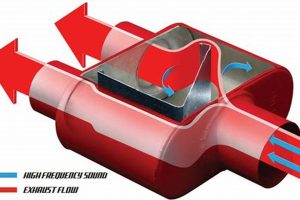
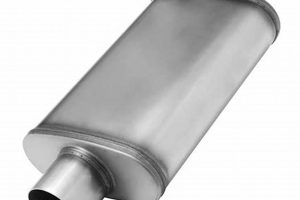
A tubular automotive component designed to modify exhaust sound is characterized by its simple construction. Typically featuring a steel casing packed with fiberglass, this device allows exhaust gases to pass through a central perforated core. This construction provides minimal restriction to airflow, which in turn alters the vehicle’s acoustic profile. An example would be the installation of such a component on a classic muscle car to achieve a louder, more aggressive exhaust note.
This component gained popularity for its affordability and perceived performance benefits. By reducing backpressure, it was often believed to increase horsepower, though results vary depending on the specific vehicle and engine configuration. Furthermore, its straightforward design made it relatively easy to install, contributing to its widespread adoption. Historically, it was favored by those seeking an inexpensive way to customize their vehicle’s sound.
The following sections will delve into the specifics of its construction materials, the impact on vehicle performance, legal and regulatory considerations, and the potential long-term effects of its use. These topics are essential for a thorough understanding of this exhaust modification device.
Tips Regarding Exhaust Modification Components
The following suggestions aim to provide guidance on the responsible selection, installation, and maintenance of aftermarket exhaust components, particularly those designed to alter exhaust sound characteristics. Proper consideration of these points can help ensure optimal performance, legality, and longevity.
Tip 1: Research Compatibility: Prior to purchase, verify the component’s compatibility with the specific vehicle make, model, and engine configuration. Incorrect fitment can lead to performance degradation or potential engine damage. Consult manufacturer specifications or a qualified mechanic to ensure proper selection. For example, a component designed for a V8 engine will not function correctly on a four-cylinder engine.
Tip 2: Assess Sound Level Regulations: Familiarize oneself with local and state noise regulations pertaining to vehicle exhaust systems. Exceeding permissible decibel levels can result in fines or legal action. Measure exhaust noise levels after installation to ensure compliance. Many jurisdictions have specific dB limits at certain distances from the vehicle.
Tip 3: Prioritize Material Quality: Opt for components constructed from durable materials such as stainless steel to resist corrosion and extend service life. Lower-grade materials can be susceptible to rust and premature failure, leading to costly repairs. Examine weld quality and material thickness before purchase.
Tip 4: Consider Professional Installation: While some installations are straightforward, complex exhaust modifications should be performed by a qualified mechanic. Proper installation ensures correct alignment, sealing, and prevents potential damage to other vehicle components. Improper welding can cause leaks and performance issues.
Tip 5: Inspect Regularly for Leaks: Periodically inspect the exhaust system for leaks or damage, particularly at joints and welds. Exhaust leaks can reduce fuel efficiency, compromise engine performance, and pose a safety hazard. Listen for unusual noises and visually inspect the system for signs of corrosion or damage.
Tip 6: Evaluate Performance Trade-offs: Understand that altering exhaust systems can affect vehicle performance. While some modifications may increase horsepower, others may reduce torque or fuel efficiency. Consider the desired performance characteristics and select components accordingly. Dyno testing can help assess the actual performance impact.
These tips highlight the importance of thorough research, adherence to regulations, and prioritizing quality and professional assistance. By carefully considering these factors, individuals can make informed decisions regarding exhaust modifications and ensure a positive outcome.
The subsequent sections will explore alternative exhaust modification options and discuss the environmental impact associated with these types of components.
1. Affordability

The affordability of a tubular automotive component serves as a primary driver in its market presence. This component’s relatively low cost is attributable to its simplified design, use of readily available materials (typically steel and fiberglass), and streamlined manufacturing processes. This affordability lowers the barrier to entry for consumers seeking exhaust modifications, particularly those operating within budget constraints. The economic factor directly contributes to the component’s popularity, especially among vehicle owners prioritizing cost-effectiveness over long-term durability or optimal performance gains.
The correlation between affordability and its design results in a trade-off. While the low price point makes it accessible, it can also influence material selection and manufacturing quality. Lower-grade steel and less robust fiberglass packing can shorten its lifespan, potentially necessitating more frequent replacements. Examples of this dynamic are frequently observed in the aftermarket auto parts industry, where lower-priced options often exhibit a shorter operational period compared to higher-end alternatives. Understanding this trade-off is crucial for consumers, enabling them to make informed decisions based on their individual needs and priorities.
In summary, affordability significantly impacts the adoption and market positioning of this exhaust modification component. While providing an accessible option for budget-conscious consumers, it necessitates a consideration of potential trade-offs in terms of durability and longevity. This understanding allows for a more informed evaluation of the component’s suitability for a specific vehicle and its intended usage, while also contextualizing its role within the broader spectrum of aftermarket exhaust systems.
2. Sound Modification

The primary characteristic of this automotive component is its alteration of a vehicle’s exhaust sound. The internal design, featuring a perforated core surrounded by fiberglass packing, directly causes a change in the acoustic properties of the exhaust flow. As exhaust gases pass through this modified path, the fiberglass absorbs and dissipates certain frequencies, resulting in a louder, more resonant tone. The significance of sound modification is central to the appeal of this device, as it caters to vehicle owners seeking a more aggressive or distinctive exhaust note. An illustrative example is the installation of this component on a pickup truck, intended to produce a deeper, more pronounced rumble, differentiating it audibly from stock vehicles. The practical effect of this understanding lies in predicting the approximate sound output based on the device’s dimensions and the vehicle’s engine characteristics.
Further elaborating on this acoustic impact, the extent of sound modification is directly related to the density and volume of the fiberglass packing within the component. Denser packing tends to dampen higher frequencies, resulting in a deeper, lower-pitched tone. Conversely, less dense packing allows a broader range of frequencies to pass through, creating a louder, more raspy sound. Real-world scenarios include instances where individuals repack the component with varying materials to fine-tune the exhaust note. For example, some may use steel wool in conjunction with fiberglass to achieve a specific sound profile, although such practices can affect the component’s longevity. Understanding these nuances allows for a more nuanced approach to sound customization.
In summary, sound modification represents the core function and defining attribute of this automotive component. The relationship between its internal design and the resulting acoustic changes is crucial to understanding its appeal and application. While achieving a desired sound is often the primary goal, it is essential to consider factors such as material composition and installation practices to optimize both the auditory outcome and the component’s performance. The challenges of predicting precise sound characteristics necessitates empirical testing, reinforcing the importance of realistic expectation when undertaking exhaust system modifications.
3. Simple Construction

The design of a tubular automotive component is a primary factor influencing its production cost, ease of installation, and overall durability. The straightforward engineering inherent in this component directly contributes to its widespread adoption within the aftermarket exhaust modification sector. This simplicity has both advantages and disadvantages that warrant careful consideration.
- Minimal Component Count
The component consists of a small number of parts: a cylindrical steel casing, a perforated inner core, and fiberglass packing. This minimal component count streamlines manufacturing processes, reduces assembly time, and lowers production costs. An example includes the comparative analysis of this system against more complex muffler designs. The latter typically involves baffles, resonators, and multiple chambers. This difference is directly reflected in the selling price and complexity of installation, favoring components for budget-conscious consumers.
- Straightforward Assembly Process
The assembly process entails inserting the perforated core into the steel casing and packing the space between the core and casing with fiberglass. This process requires minimal specialized equipment or highly skilled labor. A contrasting scenario exists when compared to catalytic converters which often involve precious metals and very technical ceramic matrixes. As a result, its assembly is simple enough that it can be replicated with limited capital investment.
- Reduced Manufacturing Costs
The combination of minimal component count and simplified assembly translates directly into reduced manufacturing costs. Lower material costs, reduced labor requirements, and streamlined production processes enable manufacturers to offer the component at a competitive price point. The resulting impact is a direct increase in market penetration as cost-conscious consumers seek modifications. Other complex performance modifications include expensive materials like titanium or inconel; The design does not require any exotic alloy that will further increase costs.
- Ease of Installation
The uncomplicated construction simplifies installation. The component typically features a cylindrical shape and standard inlet/outlet diameters, facilitating straightforward welding or clamping onto existing exhaust systems. The direct impact is reduced labor costs during installation as well as possible opportunities for “do it yourself” modifications. By contrast, complex exhaust systems may require professional welding and precise fitment.
In summation, the straightforward construction of this component serves as a key factor in its affordability and accessibility. The minimal component count, simplified assembly, and ease of installation contribute to its popularity among budget-conscious consumers seeking to modify their vehicle’s exhaust sound. However, the trade-off between simplicity and durability requires careful consideration, as the component may not offer the same level of longevity as more complex and robust exhaust systems. The practical consideration of the design must take both advantages and disadvantages into account.
4. Flow Restriction
The degree of flow restriction within a cherry bomb glasspack muffler directly influences vehicle performance and sound characteristics. The muffler’s internal design, specifically the perforated core and fiberglass packing, determines the extent to which exhaust gases are impeded as they traverse the system. Increased restriction generally leads to reduced engine efficiency and potentially diminished horsepower, while minimal restriction may result in a louder, more aggressive exhaust note. However, excessively free-flowing systems can also negatively impact low-end torque, causing a perceived loss of power at lower engine speeds. Understanding the balance between flow restriction and performance is crucial for selecting the appropriate muffler for a given vehicle and application. An example would be a performance sports car which typically favors decreased flow restriction to allow for optimal efficiency for maximum performance.
The perceived benefit of decreased restriction is typically paired with some degree of performance risk. The design of the glasspack, in comparison to more elaborate muffler systems, reduces backpressure. While beneficial for high-RPM power in certain engine configurations, this reduction can compromise low-end torque, particularly in smaller displacement engines. Furthermore, the minimal baffling within the glasspack contributes to a louder exhaust note, which may be undesirable in certain settings or illegal in areas with strict noise regulations. An analysis of the practical impact, therefore, involves a consideration of the vehicle’s intended usage and the prevailing legal framework. An example of an application would be racing situations that require high engine speeds at wide open throttle.
In summary, flow restriction within a cherry bomb glasspack muffler represents a compromise between performance, sound, and legal compliance. While the simplified design aims to minimize restriction, it is essential to consider the potential impact on low-end torque and noise levels. Selecting the correct muffler necessitates a thorough assessment of vehicle specifications, performance goals, and regulatory requirements. A balance must be reached to optimize both driver experience and engine performance, highlighting the need for informed decision-making in aftermarket exhaust modifications. Without the correct analysis, both the driver and vehicle are at risk for suboptimal performance.
5. Installation Ease
The simplicity of design in this automotive component directly contributes to its ease of installation, making it an accessible modification for both experienced mechanics and individuals with basic automotive knowledge. This ease of installation is a significant factor in its popularity, reducing labor costs and expanding the potential user base.
- Standardized Dimensions
This component typically adheres to standardized inlet and outlet diameters, facilitating direct compatibility with existing exhaust systems. This standardization reduces the need for custom fabrication or modifications, streamlining the installation process. An example includes its direct replacement of an existing muffler utilizing common pipe sizes, minimizing the complexity of the swap. Its impact minimizes the need for specialized tools or expert welding services.
- Simplified Mounting Options
The component’s cylindrical shape and lightweight construction allow for flexible mounting options, including welding, clamping, or bolting. This adaptability simplifies integration into various vehicle exhaust configurations. An example includes the use of universal exhaust clamps to secure the component without requiring welding, enabling temporary or reversible installations. The result is an increased compatibility with multiple vehicle types.
- Reduced Complexity Compared to Alternatives
Compared to more complex muffler designs, such as chambered or multi-stage systems, this component’s straightforward design eliminates intricate internal components and convoluted flow paths. This reduction in complexity simplifies the installation procedure and minimizes potential points of failure. An example contrasts its installation with that of a performance muffler requiring precise alignment and specialized welding, highlighting the relative simplicity of its attachment. It helps streamline the installation by novice modifiers and mechanics alike.
These facets of its design and standardized configuration collectively contribute to its ease of installation. This characteristic lowers the barrier to entry for vehicle owners seeking to modify their exhaust systems, expanding its appeal beyond experienced mechanics to include novice enthusiasts. While professional installation is always recommended, the inherent simplicity of the design makes it a more accessible and cost-effective modification option.
6. Durability Concerns

The service life of this specific aftermarket exhaust component is a significant consideration for vehicle owners. Due to its construction materials and design, this component is susceptible to various forms of degradation that can shorten its operational lifespan. Several factors contribute to these durability concerns, impacting its suitability for long-term use.
- Material Degradation
The steel casing and fiberglass packing used in this component are vulnerable to corrosion and breakdown due to exposure to heat, moisture, and road debris. Over time, the steel can rust, weakening the structure, while the fiberglass packing can disintegrate, reducing its sound-dampening effectiveness. An example is the premature failure of this component in regions with harsh winter climates where road salt accelerates corrosion. This degradation ultimately leads to the need for replacement.
- Internal Packing Displacement
The fiberglass packing within this component can shift or become compacted over time due to the constant flow of exhaust gases and vibrations. This displacement reduces the packing’s ability to absorb sound waves, leading to a change in the exhaust note and potentially increasing noise levels. An instance of this issue includes the development of a rattling sound caused by loose fiberglass particles within the casing. This packing failure diminishes the component’s primary function.
- Weld Point Fatigue
The welds connecting the component to the exhaust system are subject to stress from heat cycling, vibration, and physical impacts. These stresses can lead to weld cracking or failure, resulting in exhaust leaks and reduced performance. An example is the appearance of hairline cracks at the weld points after prolonged use, necessitating repair or replacement of the entire unit. Weld fatigue represents a structural weakness.
- Thin-Gauge Steel Usage
To maintain affordability, some manufacturers use thin-gauge steel in the construction of this component. While reducing costs, this choice also diminishes its resistance to physical damage from road debris and impacts. An instance is the denting or puncturing of the casing due to contact with road hazards, compromising its structural integrity. Thin-gauge steel contributes to premature failure of the component.
These durability concerns collectively impact the long-term value proposition of the component. While its initial affordability and ease of installation may be appealing, the potential for premature failure necessitates a careful consideration of its suitability for specific driving conditions and usage patterns. Owners should anticipate the need for more frequent replacements compared to more robust exhaust system alternatives, factoring this cost into their overall vehicle maintenance budget.
Frequently Asked Questions
The following questions address common inquiries regarding the application, performance, and legal considerations associated with a specific type of aftermarket exhaust component.
Question 1: What is the expected lifespan of this specific exhaust component?
The service life varies depending on environmental factors, driving conditions, and manufacturing quality. Typically, it may last from one to three years before requiring replacement due to corrosion or packing deterioration.
Question 2: Does installation of this exhaust component guarantee an increase in horsepower?
While it may contribute to a slight increase in horsepower in certain engine configurations, a guaranteed power increase is not assured. Performance gains depend on factors such as engine type, vehicle modifications, and proper installation.
Question 3: Is this exhaust component legal for use on public roads?
Legality varies by jurisdiction. Many areas have noise level restrictions, and exceeding these limits can result in fines. It is essential to verify local regulations before installation and operation.
Question 4: Does this exhaust component require specialized maintenance?
While minimal, regular inspection for corrosion, leaks, and packing integrity is recommended. Addressing these issues promptly can extend the component’s lifespan.
Question 5: Will installation of this component void the vehicle’s factory warranty?
Installation could potentially void portions of the vehicle’s warranty, particularly those related to the exhaust system. Consult the vehicle’s warranty documentation and a qualified mechanic for clarification.
Question 6: How does this exhaust component impact fuel efficiency?
Changes in fuel efficiency are typically minimal. However, driving habits and engine tuning can influence overall fuel consumption after installation.
In summary, this section addresses frequently asked questions pertaining to exhaust system modification. While offering an avenue to achieve a performance or acoustic experience, its prudent that users understand potential risks and constraints.
The subsequent section will delve into a summary and conclusions about the modification component. This section will summarize and provide final thoughts on the component that has been extensively described throughout the article.
Conclusion
This exploration has detailed the construction, attributes, and limitations of the cherry bomb glasspack muffler. Its affordability and capacity for sound modification have been identified as primary drivers of its market presence. However, the trade-offs between cost, durability, and legal compliance have been emphasized. Furthermore, potential impacts on vehicle performance and the necessity for responsible installation and maintenance have been discussed.
Therefore, comprehensive understanding of the cherry bomb glasspack muffler extends beyond its superficial appeal. Responsible evaluation requires consideration of its long-term implications and the potential for adverse effects. Individuals are encouraged to engage in informed decision-making, prioritizing safety, regulatory adherence, and realistic performance expectations in the realm of automotive modification. The final selection and implementation of the modification must be carefully performed and with the understanding that the risks and the performance of the final implementation must be carefully evaluated.