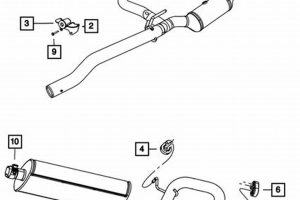
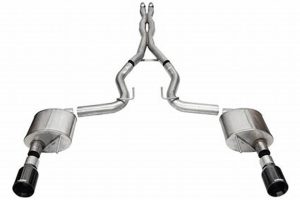
A high-performance exhaust system component optimizes engine output by reducing backpressure. Specifically designed for enhanced gas flow, it facilitates the efficient removal of exhaust gases from the engine’s cylinders. As an example, such a modification to a vehicle’s exhaust setup can lead to improved horsepower and torque, particularly at higher engine speeds.
The significance of optimizing exhaust flow lies in its contribution to overall engine efficiency. Benefits include not only increased power but also potentially improved fuel economy and a more responsive throttle. Historically, developments in exhaust technology have played a crucial role in advancements in automotive performance, from racing applications to everyday passenger vehicles. Understanding and implementing effective exhaust system designs are essential for maximizing an engine’s potential.
Subsequent sections will delve into specific design features, performance characteristics, and installation considerations related to such performance-enhancing components. Factors like pipe diameter, muffler design, and material selection will be examined to illustrate their impact on overall system effectiveness and potential performance gains.
Optimization Strategies for Exhaust System Performance
The following guidelines provide strategic insights into maximizing exhaust system performance through optimized components and designs. These recommendations focus on achieving enhanced engine output and overall operational efficiency.
Tip 1: Prioritize Pipe Diameter Selection. The exhaust pipe diameter must be carefully matched to the engine’s displacement and power output. An undersized pipe restricts exhaust flow, while an excessively large pipe can reduce exhaust gas velocity, negatively impacting scavenging efficiency.
Tip 2: Minimize Exhaust Backpressure. Reducing backpressure facilitates more efficient cylinder scavenging. This can be accomplished through the use of mandrel-bent tubing, which maintains a consistent diameter throughout the exhaust system, and by selecting low-restriction mufflers.
Tip 3: Employ Effective Exhaust Scavenging Techniques. Utilize tuned exhaust headers to create a vacuum effect that draws exhaust gases out of the cylinders. This is especially beneficial in multi-cylinder engines, where properly designed headers can significantly improve engine breathing.
Tip 4: Implement Proper Muffler Design. Select a muffler design that balances noise reduction with minimal flow restriction. Straight-through mufflers, perforated core mufflers, and chambered mufflers offer varying levels of performance and noise suppression; the optimal choice depends on the specific application and performance goals.
Tip 5: Consider Material Selection for Thermal Management. The choice of exhaust system materials impacts heat dissipation and durability. Stainless steel and titanium offer excellent corrosion resistance and high-temperature strength, contributing to longevity and consistent performance.
Tip 6: Optimize Exhaust System Routing. Minimize sharp bends and unnecessary restrictions in the exhaust system’s routing. A smooth, direct path for exhaust gases reduces turbulence and backpressure, promoting more efficient flow.
Tip 7: Utilize Exhaust Gas Temperature Monitoring. Install an exhaust gas temperature (EGT) gauge to monitor engine performance and identify potential issues. Elevated EGT readings can indicate excessive backpressure, lean fuel conditions, or other problems that can compromise engine health.
Implementing these strategies will contribute to a more efficient exhaust system, resulting in improved engine power, enhanced throttle response, and optimized fuel economy. A comprehensive approach to exhaust system design and maintenance is critical for achieving peak performance and long-term reliability.
The subsequent discussion will provide a detailed analysis of specific muffler types and their respective impact on overall exhaust system performance, offering further insights into optimizing exhaust flow and engine output.
1. Flow Maximization

Flow maximization, in the context of exhaust systems, is the principle of minimizing restrictions to the egress of exhaust gases from the engine. A performance-oriented muffler design significantly contributes to this principle by facilitating a smoother and more rapid exit of combustion byproducts. The effect of improved flow is a reduction in backpressure, which, in turn, allows the engine to operate more efficiently and produce greater power. A real-world example is seen in comparing a stock exhaust system to an aftermarket system designed for maximum flow. The aftermarket system typically employs larger diameter pipes and a less restrictive muffler, resulting in a noticeable increase in horsepower and torque. The practical significance lies in the engine’s ability to “breathe” more freely, leading to enhanced performance characteristics.
Further analysis reveals that the design of the internal components within the muffler is crucial. Straight-through designs, where exhaust gases flow directly through a perforated core, offer minimal resistance compared to baffled or chambered designs. The choice of materials also plays a role, with smoother internal surfaces promoting less turbulent flow. Consider the application in racing vehicles, where achieving maximum power output is paramount. Exhaust systems are meticulously designed and constructed to optimize flow, often employing lightweight materials and minimal sound-deadening to achieve the desired performance characteristics. The design will minimize restrictions and maximize flow.
In summary, flow maximization is a critical aspect of optimizing exhaust system performance, directly impacting engine power and efficiency. Achieving optimal flow requires careful consideration of pipe diameter, muffler design, and material selection. While challenges exist in balancing flow with noise reduction, understanding the principles of flow maximization remains essential for enhancing engine output and achieving desired performance gains. The practical significance of this understanding spans from everyday vehicle applications to high-performance racing environments. Maximizing flow is a key component of the ‘greedy muffler’ concept.
2. Backpressure Reduction

Backpressure reduction is a foundational principle in exhaust system design, particularly relevant when considering high-performance applications. In the context of exhaust modifications, the objective is to minimize the resistance encountered by exhaust gases as they exit the engine. The effectiveness of backpressure reduction directly correlates with improved engine efficiency and increased power output.
- Optimized Exhaust Flow
The primary mechanism through which backpressure is reduced involves optimizing the flow of exhaust gases. This requires a system design that minimizes obstructions and maximizes the velocity of the exhaust stream. Modifications include the use of larger diameter pipes, smoother bends, and less restrictive muffler designs. In practical applications, this translates to a more efficient scavenging of exhaust gases from the combustion chamber, resulting in a more complete combustion cycle.
- Muffler Design Considerations
Muffler design is a critical factor in managing backpressure. Conventional baffled mufflers, while effective at noise reduction, can introduce significant backpressure due to their restrictive internal structures. Straight-through mufflers, on the other hand, offer minimal restriction by allowing exhaust gases to flow directly through a perforated core. Selecting a muffler with a low-restriction design is essential for minimizing backpressure and maximizing exhaust flow, directly impacting engine performance.
- Impact on Engine Performance
Reducing backpressure has a direct and measurable impact on engine performance. By minimizing the resistance to exhaust flow, the engine expends less energy pushing exhaust gases out of the cylinders. This translates to an increase in usable power and torque, particularly at higher engine speeds. Furthermore, reduced backpressure can lead to improved fuel efficiency, as the engine operates more efficiently overall. Dyno testing often reveals significant horsepower gains when a low-backpressure exhaust system is installed.
- Material and Construction Quality
The materials and construction methods employed in the exhaust system also contribute to backpressure reduction. Mandrel bending, for example, ensures a consistent pipe diameter throughout the exhaust system, preventing constrictions that can increase backpressure. The use of high-quality materials, such as stainless steel, ensures smooth internal surfaces and resistance to corrosion, further minimizing resistance to exhaust flow. Precision welds and smooth transitions between components also contribute to a more efficient exhaust system.
The benefits of backpressure reduction extend beyond mere performance gains, encompassing improved engine efficiency and potentially enhanced fuel economy. The pursuit of minimal backpressure necessitates a comprehensive approach to exhaust system design, considering pipe diameter, muffler design, material selection, and construction quality. Systems optimized for reduced backpressure effectively maximize the engine’s potential for power and efficiency.
3. Engine Efficiency

Engine efficiency, defined as the ratio of useful work output to energy input, is significantly influenced by the exhaust system’s ability to effectively evacuate combustion gases. The design and functionality of a “greedy muffler,” an optimized component designed to maximize exhaust gas flow and minimize backpressure, directly impacts this crucial aspect of engine performance.
- Volumetric Efficiency Enhancement
Volumetric efficiency, the measure of how effectively an engine fills its cylinders with the air-fuel mixture, is directly affected by exhaust scavenging. A “greedy muffler” facilitates rapid and complete removal of exhaust gases, creating a lower pressure environment that assists in drawing more of the fresh charge into the cylinder during the intake stroke. This enhanced filling results in a more powerful combustion event. Examples include aftermarket exhaust systems on performance vehicles showing increased dyno-tested horsepower figures correlated to improved volumetric efficiency.
- Thermal Efficiency Improvement
Thermal efficiency relates to the engine’s ability to convert the chemical energy in the fuel into mechanical work. By reducing backpressure, a “greedy muffler” allows the engine to operate with less internal resistance. This reduces the energy wasted on pushing exhaust gases out of the cylinders, leading to a higher proportion of the fuel’s energy being used to generate power. This can manifest as improved fuel economy, particularly under conditions of high engine load. Reduced thermal stress on the engine components is also a beneficial side effect.
- Combustion Process Optimization
Efficient removal of exhaust gases creates a cleaner combustion chamber environment for subsequent combustion cycles. Reduced residual exhaust gas dilutes the incoming air-fuel mixture less, leading to a more complete and consistent combustion event. A “greedy muffler” contributes to this by preventing exhaust gas reversion, which is the backflow of exhaust gases into the cylinder. This can be demonstrated by analyzing exhaust gas composition, which reveals lower levels of unburnt hydrocarbons when a high-flow exhaust system is employed.
- Mechanical Efficiency Enhancement
Mechanical efficiency refers to the engine’s ability to convert the energy produced during combustion into usable power at the crankshaft. By reducing backpressure, a “greedy muffler” reduces the mechanical load on the engine’s moving parts. This translates to less energy being expended overcoming internal friction and resistance, leading to a higher percentage of the combustion energy being delivered as usable power. Examples include engines exhibiting reduced operating temperatures and extended component lifespan due to decreased mechanical stress.
The correlation between engine efficiency and the principles embodied by a “greedy muffler” underscores the significance of exhaust system design in optimizing overall engine performance. Improving volumetric, thermal, combustion, and mechanical efficiencies through effective exhaust gas evacuation directly contributes to increased power output, improved fuel economy, and enhanced engine longevity. The successful implementation of such strategies represents a key element in maximizing the potential of internal combustion engines.
4. Performance Enhancement

Performance enhancement, within the context of automotive engineering, is fundamentally linked to optimized exhaust systems. A “greedy muffler,” designed to maximize exhaust flow and minimize backpressure, directly contributes to quantifiable improvements in engine output. The cause-and-effect relationship is evident: reduced exhaust restriction allows the engine to expel combustion gases more efficiently, leading to increased power and torque. The importance of performance enhancement as a direct consequence of a “greedy muffler’s” design cannot be overstated. Real-world examples include dyno tests demonstrating horsepower and torque gains following the installation of such systems. These gains are particularly noticeable at higher engine speeds, where the benefits of reduced backpressure are most pronounced. The practical significance lies in providing a more responsive and powerful driving experience.
Further analysis reveals that the specific design elements of a “greedy muffler” significantly influence the degree of performance enhancement achieved. Pipe diameter, muffler core design, and material selection are all critical factors. A larger pipe diameter facilitates greater exhaust gas flow, while a straight-through muffler core minimizes restriction. The use of high-quality materials, such as stainless steel or titanium, ensures durability and resistance to corrosion, maintaining consistent performance over time. Practical applications extend from everyday passenger vehicles seeking improved fuel economy to high-performance sports cars and racing vehicles striving for maximum power output. Each application requires a tailored approach to exhaust system design, balancing performance gains with factors such as noise levels and emissions regulations.
In summary, the connection between performance enhancement and a “greedy muffler” is characterized by a direct and quantifiable relationship. By prioritizing exhaust gas flow and minimizing backpressure, a well-designed “greedy muffler” can significantly improve engine power, torque, and overall performance. Understanding the underlying principles of exhaust system design and the impact of specific design elements is crucial for achieving the desired performance gains. Challenges remain in balancing performance with other considerations, but the fundamental role of efficient exhaust gas evacuation in enhancing engine performance remains undisputed.
5. Noise Suppression

Effective exhaust design involves a complex balance between maximizing engine performance and mitigating unwanted noise. The “greedy muffler” concept, which prioritizes efficient exhaust gas flow, often presents inherent challenges in noise suppression. The fundamental trade-off arises from the direct relationship between flow restriction and sound attenuation: designs that minimize backpressure typically offer less noise reduction, and vice versa. The importance of noise suppression stems from legal requirements, driver comfort, and societal acceptance. Real-world examples illustrate this conflict, where performance-oriented vehicles with minimal exhaust restriction may exceed permissible noise levels, necessitating compromises in design or the addition of noise-canceling technologies. The practical significance of this understanding lies in the ability to engineer exhaust systems that meet both performance and acoustic standards.
Further analysis reveals that advanced muffler designs can partially mitigate the performance/noise trade-off. Straight-through mufflers with carefully engineered internal baffling can achieve a reasonable level of noise suppression without significantly impeding exhaust flow. Active noise cancellation systems, employing electronic signal processing to neutralize unwanted sound waves, represent another approach. Practical applications include high-performance vehicles equipped with electronically controlled exhaust valves that adjust exhaust flow and noise levels based on driving conditions. This dual-mode approach attempts to optimize both performance and noise suppression, delivering a compromise solution. Moreover, some vehicles have incorporated resonators into the exhaust system, which are specifically tuned chambers designed to cancel out certain frequencies, thereby reducing overall noise levels without significantly impacting flow.
In conclusion, noise suppression represents a critical consideration in the design and implementation of a “greedy muffler.” The inherent trade-off between performance and acoustics necessitates a balanced approach, employing advanced muffler designs and noise cancellation technologies to achieve acceptable noise levels without compromising engine output. Challenges persist in optimizing both aspects simultaneously, but the ongoing development of innovative exhaust technologies continues to push the boundaries of what is achievable. The successful integration of effective noise suppression strategies remains essential for the broad acceptance and viability of high-performance exhaust systems.
6. Heat Dissipation
Efficient heat dissipation is a critical factor in the design and performance of any exhaust system, including those incorporating a high-flow, “greedy muffler” design. The ability to effectively manage heat within the exhaust system directly impacts component longevity, engine efficiency, and overall vehicle performance.
- Material Selection and Thermal Conductivity
The choice of materials significantly affects heat dissipation. Stainless steel, commonly used in exhaust systems, offers a balance of durability and thermal conductivity. However, materials like titanium and Inconel, while offering superior strength and weight characteristics, possess different thermal properties that can impact heat management. A “greedy muffler” constructed from materials with efficient thermal conductivity will dissipate heat more readily, preventing localized overheating and potential component failure. Real-world examples include comparing stainless steel headers to ceramic-coated headers, where the ceramic coating reduces heat radiation and lowers engine bay temperatures.
- Exhaust Gas Temperature Management
Exhaust gas temperatures (EGT) directly influence the heat load on the exhaust system. A “greedy muffler” that promotes efficient exhaust scavenging can contribute to lower EGTs by ensuring complete combustion and minimizing residual heat buildup. Conversely, a poorly designed system can lead to elevated EGTs, placing increased stress on exhaust components. Monitoring EGTs is crucial for optimizing engine performance and preventing damage to the exhaust system and other engine components. The design of the exhaust system directly impacts the cooling strategies needed to manage EGT.
- Surface Area and Heat Radiation
The surface area of the exhaust system plays a role in heat dissipation through radiation. A “greedy muffler” with a larger surface area, or with design features that promote increased airflow around the muffler body, will radiate heat more effectively. This can be particularly important in enclosed engine bays where adequate ventilation is limited. Aftermarket exhaust systems sometimes incorporate heat shields or ceramic coatings to further manage heat radiation and protect surrounding components. The effective use of surface area to dissipate heat influences the overall heat load of the engine bay.
- Airflow and Convective Heat Transfer
The movement of air around the exhaust system facilitates convective heat transfer, drawing heat away from the components. The placement and orientation of a “greedy muffler” within the vehicle’s undercarriage can influence the amount of airflow it receives. Systems designed to maximize airflow around the muffler will dissipate heat more effectively, reducing the risk of overheating. This is especially critical in high-performance applications where the engine operates at elevated temperatures for extended periods. Efficient airflow management directly translates to enhanced heat dissipation.
The interplay between material selection, exhaust gas temperature management, surface area, and airflow underscores the importance of considering heat dissipation in the design and implementation of a “greedy muffler.” Optimizing these factors contributes to improved engine performance, extended component lifespan, and enhanced overall vehicle reliability. Balancing the performance benefits of high-flow exhaust with effective heat management strategies is essential for achieving a well-engineered and durable system.
Frequently Asked Questions
The following questions address common inquiries and misconceptions regarding exhaust systems designed for maximized flow, often described using the term “greedy muffler.” The intent is to provide clear and concise information concerning their performance characteristics and implications.
Question 1: What is the primary function of a “greedy muffler” system?
The primary function of a “greedy muffler” system is to minimize exhaust backpressure and maximize the flow of exhaust gases from the engine. This is achieved through design features that reduce restrictions in the exhaust path, resulting in improved engine power and responsiveness.
Question 2: Does a “greedy muffler” system invariably result in increased noise levels?
While systems designed for maximized flow can potentially increase noise levels, this is not an inevitable consequence. Advancements in muffler technology allow for the design of systems that balance flow optimization with effective noise suppression.
Question 3: Are there specific engine types that benefit most from a “greedy muffler” system?
Engines that are highly sensitive to exhaust backpressure, such as turbocharged engines and high-performance naturally aspirated engines, typically exhibit the most significant performance gains from the implementation of a “greedy muffler” system.
Question 4: How does the installation of a “greedy muffler” system affect fuel efficiency?
The impact on fuel efficiency can vary depending on driving conditions and engine characteristics. In some cases, reduced backpressure can lead to improved fuel economy, particularly at higher engine loads. However, aggressive driving habits may negate these potential benefits.
Question 5: What materials are commonly used in the construction of a “greedy muffler” system?
Materials such as stainless steel and titanium are frequently employed in the construction of these systems due to their durability, corrosion resistance, and ability to withstand high temperatures.
Question 6: Does the installation of a “greedy muffler” system require specialized tuning or modifications to the engine control unit (ECU)?
In certain instances, particularly with highly modified engines, ECU tuning may be necessary to fully realize the potential performance gains from a “greedy muffler” system and to ensure optimal engine operation.
In summary, “greedy muffler” systems offer the potential for significant performance improvements by prioritizing exhaust flow. However, careful consideration must be given to factors such as noise levels, material selection, and the potential need for ECU tuning to ensure optimal results.
The following section will address the legal and regulatory considerations surrounding modifications to exhaust systems, providing a framework for ensuring compliance and responsible performance enhancement.
Greedy Muffler
This discourse has presented an in-depth examination of the “greedy muffler” concept, dissecting its core principles of maximized exhaust flow and minimized backpressure. The analysis encompassed the direct influence on engine performance, efficiency gains, and the inherent trade-offs with noise suppression and heat management. Material selection, design intricacies, and the necessity for precise engine calibration were all identified as critical factors in achieving optimal results from such systems. The comprehensive exploration underscores that achieving genuine performance enhancement necessitates a holistic approach, balancing the pursuit of flow maximization with practical considerations.
The pursuit of enhanced engine performance through optimized exhaust systems demands a rigorous understanding of engineering principles and a commitment to responsible modification. Evaluating the potential benefits against the practical implications, including legal compliance and societal considerations, remains paramount. The future of exhaust technology will likely involve innovative solutions that address the inherent trade-offs between performance and environmental responsibility, pushing the boundaries of what is achievable while maintaining a commitment to sustainable automotive practices. The “greedy muffler” philosophy must evolve to encompass a broader perspective that prioritizes both performance and responsible stewardship.