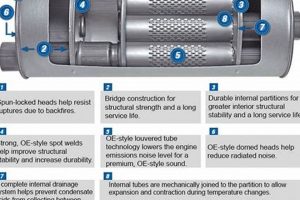
The presence of moisture within an exhaust system is a common phenomenon resulting from condensation of combustion byproducts. This accumulation can occur in vehicles that are driven for short distances, particularly in cooler climates, where the exhaust system does not reach optimal operating temperature. This incomplete heating prevents the effective vaporization and expulsion of water vapor.
Addressing this moisture accumulation is important to prevent potential corrosion and component degradation. Left unchecked, this can reduce the lifespan and performance of the exhaust system, leading to costly repairs. Understanding the conditions that lead to this phenomenon allows for preventative measures, such as ensuring complete engine warm-up during operation.
The following sections will delve into the sources of this moisture, potential problems it can cause, methods for diagnosis, and preventative or corrective actions to mitigate its adverse effects. This information will help provide a comprehensive understanding of this potentially damaging situation and how to manage it effectively.
Mitigating Moisture in Exhaust Systems
The following guidelines provide practical advice for minimizing the accumulation of condensation in vehicle exhaust systems, thereby promoting longevity and optimal performance.
Tip 1: Ensure Adequate Warm-Up: Allow the engine to reach its normal operating temperature during each use. This facilitates complete combustion and efficient vaporization of water vapor produced as a byproduct.
Tip 2: Take Longer Trips Periodically: Regular extended drives allow the exhaust system to fully heat up, effectively eliminating accumulated moisture through evaporation.
Tip 3: Inspect for Exhaust Leaks: Examine the exhaust system for any signs of damage or corrosion, which could allow moisture to enter or trap it within the system. Address any leaks promptly.
Tip 4: Consider Climate: In regions with high humidity or frequent temperature fluctuations, be particularly mindful of vehicle usage patterns. Short trips in these environments exacerbate moisture accumulation.
Tip 5: Use Fuel Stabilizers: During periods of infrequent use, fuel stabilizers can help prevent fuel degradation and maintain efficient combustion when the vehicle is next operated, reducing moisture formation.
Tip 6: Check the Drainage Hole: Some mufflers have a small drainage hole designed to allow moisture to escape. Ensure this hole is clear of debris to function effectively.
Adhering to these recommendations can significantly reduce the build-up of moisture within the exhaust system, mitigating the risk of corrosion and extending its lifespan.
The subsequent section will provide insights into troubleshooting potential issues related to excessive moisture and will offer advice on professional inspection and maintenance procedures.
1. Condensation Formation

Condensation formation is a primary contributor to the accumulation of water within a vehicle’s muffler and exhaust system. During the combustion process, hydrocarbons in fuel react with oxygen, producing carbon dioxide, water vapor, and other byproducts. When the exhaust system is cold, particularly during short trips or in cold weather, the hot exhaust gases cool rapidly as they travel through the pipes. This cooling causes the water vapor to condense into liquid water, which then collects in the lowest points of the system, notably the muffler. A real-world example is observed when a vehicle is started on a cold morning and emits a visible plume of water vapor from the exhaust pipe, which quickly diminishes as the exhaust system heats up and evaporates the accumulated water. Understanding this process is crucial for designing exhaust systems that can effectively manage and mitigate condensation.
The accumulation of water due to condensation is exacerbated by several factors. Short trips prevent the exhaust system from reaching its optimal operating temperature, which is necessary to fully evaporate the condensed water. Design features of the muffler, such as complex internal baffles and chambers, can trap water, preventing its natural drainage. Additionally, older vehicles with corroded exhaust systems may have small holes or cracks that allow additional moisture from the environment to enter, further contributing to the accumulation. In practical terms, this knowledge informs preventative maintenance strategies, such as taking longer drives to ensure full system warm-up and conducting regular inspections for signs of corrosion or damage.
In summary, condensation formation is a natural and unavoidable process in internal combustion engines. However, its impact on the longevity and performance of the exhaust system can be significantly mitigated through informed vehicle operation and proactive maintenance practices. Recognizing the causes and effects of condensation provides a basis for preventing excessive water accumulation, thereby minimizing the risk of corrosion, exhaust system failure, and related performance issues. Addressing condensation proactively is therefore essential for maintaining the integrity and efficiency of the vehicle’s exhaust system over its lifespan.
2. Corrosion Risk

The presence of moisture within an exhaust system, stemming from condensation of combustion byproducts, significantly elevates the risk of corrosion. This corrosive process can compromise the structural integrity and functionality of exhaust components, leading to costly repairs and reduced vehicle performance.
- Internal Component Degradation
Internal components, such as baffles and chambers within the muffler, are particularly susceptible to corrosion when exposed to accumulated moisture. The constant cycling between wet and dry conditions accelerates oxidation of the metal, weakening the structure and potentially leading to component failure. For example, rusted baffles can detach and obstruct the exhaust flow, increasing backpressure and reducing engine efficiency.
- Exhaust Pipe Perforation
Accumulated water can cause corrosion along the exhaust pipes, especially at joints and welds. Over time, this can result in perforation, leading to exhaust leaks. A common scenario involves pinhole leaks forming along the bottom of the exhaust pipe, allowing exhaust gases to escape and potentially creating safety hazards within the vehicle cabin.
- Accelerated Rust Formation
The combination of water and exhaust gases creates an acidic environment that promotes rust formation on both internal and external surfaces of the exhaust system. This rust weakens the metal, reducing its ability to withstand the high temperatures and pressures of exhaust flow. As an example, surface rust on the muffler’s exterior can progress to deep-seated corrosion, eventually requiring muffler replacement.
- Material Composition Influence
The type of metal used in the exhaust system influences its susceptibility to corrosion. While stainless steel exhibits greater resistance compared to mild steel, it is still vulnerable under prolonged exposure to moisture and corrosive byproducts. This difference underscores the importance of material selection in mitigating corrosion risk; however, even high-quality materials require proper maintenance to ensure longevity in environments prone to moisture accumulation.
The correlation between moisture accumulation and heightened corrosion risk is undeniable. Factors such as vehicle usage patterns, environmental conditions, and exhaust system design all contribute to the severity of corrosion. Proactive measures, including ensuring complete engine warm-up and regular inspections, are critical in mitigating these risks and extending the lifespan of the exhaust system.
3. Exhaust Backpressure

Exhaust backpressure, the resistance to the flow of exhaust gases, is intrinsically linked to the accumulation of water within a vehicle’s muffler. This relationship is crucial for understanding and maintaining optimal engine performance and fuel efficiency.
- Water Accumulation as Obstruction
The presence of standing water in the muffler directly impedes the free flow of exhaust gases, effectively creating an obstruction. This obstruction increases the pressure within the exhaust system, upstream of the muffler. For instance, a muffler partially filled with water requires the engine to expend additional energy to expel exhaust, leading to elevated backpressure.
- Corrosion-Induced Restrictions
Prolonged water exposure accelerates corrosion within the muffler. This corrosion can lead to the formation of rust and scale, which further restrict exhaust flow. Examples include the disintegration of internal baffles, creating debris that obstructs the exhaust path, consequently increasing backpressure.
- Performance and Efficiency Implications
Elevated backpressure reduces engine efficiency by increasing the work required to expel exhaust gases. This results in decreased power output and reduced fuel economy. A vehicle experiencing excessive backpressure due to moisture accumulation may exhibit sluggish acceleration and a noticeable drop in miles per gallon.
- Engine Stress and Wear
Increased exhaust backpressure places undue stress on engine components, potentially leading to premature wear. This is particularly true for exhaust valves and piston rings, which must work harder to expel exhaust against the increased resistance. Over time, this added stress can contribute to engine damage and reduced lifespan.
These factors demonstrate the interconnectedness of water accumulation and exhaust backpressure. Proper maintenance to minimize water accumulation and corrosion within the muffler is essential for maintaining optimal engine performance, efficiency, and longevity. Addressing these issues can prevent the adverse effects of increased backpressure, ensuring smooth and efficient vehicle operation.
4. Engine Misfires

Engine misfires, characterized by incomplete combustion within one or more cylinders, can be indirectly linked to the presence of moisture in the exhaust system, though the connection is not always direct or immediate. While the primary causes of misfires often involve ignition system malfunctions, fuel delivery issues, or compression problems, a severely compromised exhaust system, exacerbated by water accumulation, can contribute to conditions that promote misfires. Increased backpressure resulting from a heavily corroded or waterlogged muffler can disrupt the proper scavenging of exhaust gases from the cylinders. This incomplete removal can leave residual exhaust in the combustion chamber, diluting the fresh air-fuel mixture and leading to an unstable combustion process. An example includes a vehicle with a severely rusted muffler containing standing water. The resulting backpressure impedes exhaust flow, causing residual exhaust gas to remain in the cylinder, thereby disrupting the subsequent combustion cycle and triggering a misfire.
The likelihood of misfires related to the exhaust system is heightened in older vehicles with pre-OBD-II (On-Board Diagnostics II) systems or vehicles where underlying engine problems already exist. In such cases, the additional stress imposed by exhaust restrictions can exacerbate pre-existing conditions. For instance, a vehicle with worn spark plugs may be more prone to misfires if the exhaust system is simultaneously contributing to inefficient cylinder scavenging. Furthermore, while not a direct cause, significant exhaust leaks resulting from corrosion (a consequence of prolonged moisture exposure) can disrupt the proper operation of oxygen sensors, leading to inaccurate fuel trim adjustments, which can then indirectly trigger misfires. A leaking exhaust manifold, for example, can introduce ambient air into the exhaust stream, skewing oxygen sensor readings and prompting the engine control unit (ECU) to make incorrect fuel adjustments, potentially resulting in a lean or rich misfire.
In conclusion, while water accumulation in the muffler is not typically a primary or sole cause of engine misfires, it can contribute to conditions that increase the likelihood of their occurrence. The key mechanism involves increased backpressure and exhaust leaks that disrupt the engine’s combustion process or sensor readings. Addressing severe exhaust system corrosion and blockages resulting from prolonged moisture exposure is essential for ensuring proper engine function and preventing misfires, especially in vehicles with pre-existing engine performance issues.
5. Fuel Inefficiency

Fuel inefficiency can be a consequence, albeit indirect, of accumulated moisture within a vehicle’s muffler. The primary mechanism linking these two factors is the increase in exhaust backpressure. When water accumulates within the muffler, it restricts the free flow of exhaust gases. This obstruction forces the engine to work harder to expel the exhaust, leading to a decrease in overall engine efficiency. An engine operating under increased backpressure requires more fuel to maintain the same level of performance, directly resulting in reduced fuel economy. For instance, a vehicle experiencing significant water accumulation in its muffler may exhibit a noticeable decrease in miles per gallon (MPG) compared to its normal operating range.
The impact of moisture-induced fuel inefficiency is often compounded by other related issues. Prolonged exposure to moisture accelerates corrosion within the exhaust system. This corrosion can further restrict exhaust flow, exacerbating the backpressure problem. Additionally, corrosion-induced exhaust leaks can disrupt the proper functioning of oxygen sensors, leading to inaccurate air-fuel mixture adjustments by the engine control unit (ECU). An example of this is an exhaust leak upstream of the oxygen sensor, which can introduce ambient air into the exhaust stream, causing the sensor to register a lean condition. The ECU will then compensate by enriching the air-fuel mixture, resulting in increased fuel consumption. Therefore, the interplay between water accumulation, corrosion, and sensor malfunction can create a cascading effect, significantly impacting fuel economy.
In summary, the relationship between moisture in the muffler and fuel inefficiency is primarily driven by increased exhaust backpressure and its secondary effects on related engine components. While not always a direct or immediate cause, the accumulation of water and subsequent corrosion can contribute significantly to reduced fuel economy. Regular maintenance, including inspections for exhaust system integrity and measures to prevent water accumulation, are essential for preserving fuel efficiency and overall vehicle performance.
6. System Longevity
The lifespan of a vehicle’s exhaust system is directly influenced by the presence of moisture accumulation. Mitigating the effects of this moisture is essential for ensuring system longevity and preventing premature component failure.
- Corrosion Prevention
Corrosion, accelerated by trapped moisture, is a primary factor limiting exhaust system life. The oxidation of metallic components weakens structural integrity, leading to leaks and eventual failure. Implementing strategies to minimize water accumulation, such as ensuring proper engine warm-up and periodic long drives, directly contributes to corrosion prevention and extends the system’s lifespan.
- Material Degradation
The composition of exhaust system materials determines their resistance to corrosion. Prolonged exposure to moisture, particularly when combined with the acidic byproducts of combustion, accelerates material degradation. Regular inspection and maintenance can identify early signs of corrosion, allowing for timely intervention and preventing further deterioration, thus preserving system longevity.
- Component Failure
Mufflers, resonators, and exhaust pipes are susceptible to premature failure due to moisture-induced corrosion. The accumulation of water can lead to internal component disintegration, such as baffle failure within the muffler, resulting in increased backpressure and reduced engine performance. Addressing moisture accumulation prevents these component failures, ensuring the exhaust system functions optimally for a longer duration.
- Joint and Weld Integrity
The joints and welds of an exhaust system are particularly vulnerable to corrosion caused by moisture. Weakened welds can lead to exhaust leaks, compromising system efficiency and potentially creating hazardous conditions. Protecting these areas through preventative measures, such as applying protective coatings and ensuring proper drainage, is critical for maintaining overall system integrity and extending its lifespan.
The facets discussed converge to underscore that managing water within the exhaust system is crucial for preserving its longevity. By proactively addressing corrosion, material degradation, component failure, and joint integrity, vehicle owners can significantly extend the life of their exhaust systems and avoid costly repairs.
Frequently Asked Questions
This section addresses common inquiries regarding the presence of water within a vehicle’s exhaust system, offering clear and concise explanations to clarify misconceptions and provide actionable information.
Question 1: Is the presence of water exiting the tailpipe during vehicle startup normal?
Yes, this is typically normal, especially during cold starts. It results from condensation of water vapor, a byproduct of combustion, within the exhaust system. As the system heats up, the water evaporates, and the discharge diminishes.
Question 2: Does a vehicle’s make or model affect the amount of water accumulation in the muffler?
Yes, the design and materials used in the exhaust system can influence water accumulation. Vehicles with longer exhaust systems or those driven primarily on short trips tend to experience greater condensation and accumulation.
Question 3: What are the potential long-term effects of water remaining in the muffler?
Prolonged water retention can lead to corrosion, weakening the metal components of the exhaust system. This corrosion can result in leaks, increased backpressure, and ultimately, premature system failure.
Question 4: Can driving style influence the amount of water accumulation in the muffler?
Yes. Short trips prevent the exhaust system from reaching its optimal operating temperature, hindering the evaporation of accumulated water. Longer, continuous drives allow the system to heat up sufficiently, reducing water retention.
Question 5: Is there a way to prevent water from accumulating in the muffler?
While complete prevention is not feasible, measures can be taken to minimize accumulation. These include ensuring regular engine warm-up, taking periodic longer drives, and inspecting the exhaust system for drainage holes or signs of corrosion.
Question 6: When should a professional mechanic be consulted regarding water in the exhaust system?
A mechanic should be consulted if excessive water discharge persists even after extended driving, if there are signs of exhaust leaks, or if the vehicle exhibits unusual engine performance symptoms such as reduced power or increased fuel consumption.
In summary, water in the exhaust system is a common occurrence with potential long-term implications. Understanding the causes and implementing preventative measures can help maintain the health and longevity of the exhaust system.
The subsequent section will provide insights into troubleshooting potential issues related to excessive moisture and will offer advice on professional inspection and maintenance procedures.
Conclusion
The preceding discussion has elucidated various facets of the phenomenon commonly referred to as “water in muffler.” From the fundamental mechanisms of condensation to the potential consequences of corrosion, increased backpressure, and compromised engine performance, the significance of understanding and addressing this issue has been thoroughly examined. This comprehensive exploration has highlighted the interconnectedness of these factors and their potential impact on overall vehicle health and longevity.
Given the potential for long-term damage and reduced vehicle efficiency, prudent vehicle maintenance practices are essential. Routine inspections, adherence to recommended warm-up procedures, and proactive measures to mitigate moisture accumulation are crucial steps in safeguarding the integrity of the exhaust system and ensuring optimal vehicle performance. Neglecting these preventative actions may result in costly repairs and diminished vehicle lifespan.