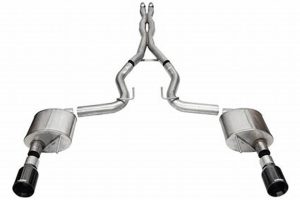
The measurement characteristics of exhaust silencing components manufactured by Walker are crucial specifications for ensuring proper fitment and optimal performance. These measurements encompass length, diameter, inlet/outlet size, and overall shape, defining the physical attributes of the component. As an example, a specific model might have a body length of 20 inches, an inlet diameter of 2.25 inches, and an oval cross-sectional shape.
Precise specifications are important for several reasons. They guarantee compatibility with the vehicle’s exhaust system, ensuring correct installation and preventing leaks. Furthermore, these measurements influence the components ability to effectively reduce noise levels and minimize backpressure, contributing to both a quieter ride and improved engine efficiency. The standardization of these specifications has evolved over time, driven by advancements in automotive engineering and a greater emphasis on emissions control.
The following sections will delve into specific aspects of these measurements, including how to accurately determine the correct specifications for a given vehicle, the impact of size on performance, and where to find reliable information regarding Walker product details.
Guidance on Exhaust Silencer Specifications
This section offers essential guidance regarding the selection and verification of exhaust silencing component specifications. Proper attention to these details ensures compatibility, performance, and longevity of the installed system.
Tip 1: Consult Vehicle-Specific Resources: Always refer to the vehicle manufacturer’s specifications or the Walker catalog to identify the correct part number and associated measurements for the intended application. This ensures accurate fitment and avoids potential installation issues.
Tip 2: Verify Inlet and Outlet Diameters: Accurate measurement of the exhaust pipe’s inlet and outlet diameters is critical. Using calipers or a precision measuring tool will guarantee a secure connection and prevent exhaust leaks.
Tip 3: Consider Overall Length Constraints: Ensure that the overall length of the replacement component does not exceed the available space within the vehicle’s undercarriage. Interference with other components can lead to premature wear or damage.
Tip 4: Confirm Body Shape and Configuration: The body shape (e.g., oval, round) and internal configuration of the exhaust silencer should align with the original equipment manufacturer’s design to maintain optimal noise reduction and exhaust flow characteristics.
Tip 5: Examine Mounting Points: Pay close attention to the location and type of mounting points (e.g., hangers, brackets) on the replacement part. These must correspond to the vehicle’s existing mounting hardware to ensure secure and stable installation.
Tip 6: Note Material Composition: While not directly a measurement, the material composition of the part (e.g., aluminized steel, stainless steel) impacts its durability and resistance to corrosion. Select a material grade appropriate for the vehicle’s operating environment.
This guidance underscores the importance of precision and attention to detail when dealing with exhaust silencing components. Adherence to these guidelines will facilitate a successful installation and ensure optimal performance.
The subsequent sections will address common issues encountered during installation and provide troubleshooting strategies for resolving fitment problems.
1. Overall Length

Overall Length is a primary attribute within the scope of walker muffler dimensions. It fundamentally dictates the physical space occupied by the component within a vehicle’s exhaust system, directly impacting fitment and, to a lesser extent, acoustic performance. This dimension is a critical factor when replacing or upgrading exhaust components.
- Fitment Constraints
The overall length must conform to the available space within the vehicle’s undercarriage. Insufficient clearance may lead to contact with other vehicle components, resulting in noise, vibration, and potential damage to both the muffler and surrounding parts. For example, a muffler that is too long might interfere with the driveshaft or suspension components.
- Acoustic Performance
While not the primary factor, overall length can influence the acoustic properties of the muffler. A longer body generally provides more internal volume for sound wave attenuation, potentially leading to a quieter exhaust note. However, internal design and baffling are more significant determinants of acoustic performance.
- Exhaust Flow Dynamics
The internal design relative to the external length impacts exhaust gas flow. A well-designed, compact muffler can offer efficient flow, while a poorly designed, overly long muffler might create excessive backpressure, potentially reducing engine performance. The relationship isn’t always directly proportional to length.
- Installation Considerations
Overall length dictates the ease of installation. A muffler with an awkward or excessive length can be difficult to maneuver into place, particularly in vehicles with limited undercarriage space. Proper measurement and matching of overall length to the original equipment specification are crucial for a straightforward installation.
In conclusion, the overall length is a critical and necessary component that is needed to properly connect the muffler. This needs to properly checked to avoid any further damage.
2. Body Diameter
Body diameter, as a critical aspect of exhaust silencing components, directly contributes to the overall “walker muffler dimensions.” It specifies the cross-sectional width of the main muffler casing, influencing both the internal volume available for sound attenuation and the external space required for installation. This measurement interacts with other dimensions to determine suitability for a particular vehicle application.
The body diameter affects the internal volume, which is a determinant of sound reduction capabilities. A larger diameter, assuming consistent internal design, generally allows for greater sound wave dissipation. However, increased diameter necessitates more physical space. For instance, a larger-diameter muffler, intended for a truck, cannot be installed in a compact car due to space constraints, regardless of matching inlet/outlet sizes. Incorrect body diameters may cause fitment problems, where it may be too big causing damage to other parts of the car.
The body diameter measurement serves as a defining element of its overall specifications. Precise measurement, attention to vehicle constraints, and acknowledgement of interdependencies with other dimensions are all vital for a suitable match. Understanding and considering this correlation, can ensure the integrity of the exhaust system.
3. Inlet Size

Inlet size is a crucial element within the context of exhaust silencing components. It specifies the diameter of the opening where exhaust gases enter the muffler, directly impacting its compatibility with the vehicle’s exhaust piping. The correct inlet size ensures a secure and leak-free connection, preventing exhaust leaks and maintaining optimal system performance. For example, if the inlet size is smaller than the exhaust pipe’s diameter, it will create a bottleneck, restricting exhaust flow and potentially increasing backpressure. Conversely, a larger inlet size may result in a loose connection, leading to exhaust leaks and reduced noise reduction efficiency.
The selection of the correct inlet size is not merely a matter of physical compatibility; it also influences engine performance. Restricting the flow of exhaust gases can reduce engine power and fuel efficiency. Walker manufacturers typically offer mufflers with various inlet sizes to accommodate different engine sizes and exhaust system configurations. Matching the inlet size to the vehicle’s specifications ensures the engine can breathe properly, maximizing power output and minimizing fuel consumption. Failing to adhere to the proper dimensions could have detrimental effects.
In summary, inlet size is an important measurement specification that influences fit, leak prevention, and engine performance. Accurate inlet size selection ensures a secure connection, prevents exhaust leaks, maintains optimal engine performance, and guarantees an effectively functioning exhaust system. Therefore, understanding and accurately verifying the proper inlet size for a specific vehicle is essential for correct muffler installation and overall vehicle performance.
4. Outlet Size
Outlet size is a critical element within the specified measurements. It defines the diameter of the opening through which exhaust gases exit the muffler, and its correspondence to the downstream exhaust piping is crucial for system performance. A mismatch in outlet size can lead to several adverse effects, including increased backpressure, exhaust leaks, and compromised noise reduction. For instance, an outlet size smaller than the downstream piping creates a restriction, impeding exhaust flow and potentially reducing engine efficiency. Conversely, an outlet size larger than the downstream piping may result in turbulence and exhaust leaks, diminishing the muffler’s effectiveness.
The correct outlet size also influences the acoustic properties of the exhaust system. The diameter of the outlet, in conjunction with the muffler’s internal design, contributes to the overall sound signature. Exhaust system designers carefully consider outlet size to achieve the desired balance between noise reduction and performance. Walker manufacturers offer mufflers with a range of outlet sizes and configurations to cater to different vehicle types and performance requirements. For example, performance vehicles may utilize larger outlet sizes to maximize exhaust flow, while vehicles prioritizing quiet operation may employ smaller outlets with more restrictive internal baffling. Outlet size, therefore, is intricately connected to the overall design and function of the exhaust system.
In summary, outlet size is an integral component within the specified measurements. Its proper selection and integration are paramount for ensuring optimal exhaust flow, preventing leaks, and achieving the desired acoustic characteristics. Matching the outlet size to the downstream exhaust piping is essential for maintaining engine performance and maximizing the effectiveness of the muffler’s noise reduction capabilities. A comprehensive understanding of the relationship between outlet size and the specified measurements is necessary for proper exhaust system design and maintenance.
5. Configuration (Shape)

Configuration, referring to the physical shape and form factor of the exhaust component, holds considerable relevance in the context of its specified measurements. The configuration dictates not only the physical space occupied but also influences internal acoustics and compatibility with vehicle chassis constraints. The shape of an exhaust component therefore is a vital attribute of its overall specifications.
- Form Factor and Vehicle Integration
The shape significantly influences how well the exhaust component integrates into the vehicle’s undercarriage. Oval, round, or custom shapes accommodate varying chassis designs and available space. For example, a low-profile oval configuration is often utilized in sports cars with limited ground clearance, while a round configuration might be suitable for trucks with more open chassis layouts. Shape directly impacts ease of installation and potential interference with other components.
- Internal Acoustics and Sound Attenuation
The shape contributes to the internal acoustic environment. Oval or irregularly shaped components can create complex sound wave reflections and diffractions, influencing sound attenuation characteristics. The internal baffling and chamber design work in conjunction with the external shape to achieve specific noise reduction goals. A cylindrical shape might promote more uniform sound wave propagation, while a flattened oval shape could enhance low-frequency sound absorption.
- Manufacturing Processes and Material Utilization
The shape informs the manufacturing process and material utilization. Complex shapes may require specialized forming techniques, such as hydroforming or mandrel bending. The choice of materials, such as aluminized steel or stainless steel, is influenced by the shape’s complexity and the component’s intended operating environment. The shape thus informs the fabrication methods and the structural integrity of the final product.
- Performance Characteristics and Exhaust Flow
While internal design dominates flow characteristics, the external shape plays a supporting role. Abrupt changes in shape can create turbulence and increase backpressure. Streamlined shapes, particularly in performance applications, promote smoother exhaust flow. The shape complements the internal baffling to achieve a balance between noise reduction and exhaust gas velocity.
The shape serves as an essential consideration in the specified measurements. Its influence spans vehicle integration, acoustics, manufacturing, and performance. Exhaust component selection and installation must consider the shape to achieve compatibility and function. Each parameter must be well-thought-out to maximize the muffler’s performance.
6. Mounting Points
Mounting points, the designated locations on an exhaust component where it attaches to the vehicle’s chassis, are integral to the dimensional considerations of the exhaust system. Their position, type, and quantity directly impact the component’s fitment, stability, and overall function within the vehicle. Meticulous attention to these mounting points ensures correct installation and prevents potential damage or performance degradation.
- Position and Alignment
The location of mounting points relative to the muffler body is critical. Misalignment can result in installation difficulties, stress on the exhaust system, and potential for premature failure. The mounting point’s position must correspond precisely to the vehicle’s chassis mounting locations.
- Type of Mounting Hardware
Mounting hardware can vary significantly, including rubber isolators, metal brackets, and direct bolt-on connections. The type of mounting hardware dictates the load-bearing capacity and vibration dampening characteristics of the installation. For instance, rubber isolators reduce vibration transmission to the chassis, while rigid brackets offer greater stability.
- Quantity and Load Distribution
The number of mounting points influences the distribution of weight and stress across the exhaust component. An insufficient number of mounting points can lead to excessive strain on individual points, increasing the risk of failure. Conversely, too many mounting points may restrict movement and create stress concentrations.
- Material Compatibility
The materials used in the mounting points and hardware must be compatible to prevent corrosion or galvanic reactions. Dissimilar metals can accelerate corrosion, weakening the mounting points and compromising the integrity of the exhaust system. The choice of materials must consider the operating environment and potential for exposure to road salts and other corrosive agents.
These facets highlight the interdependency of mounting points and the exhaust measurements. Accurate positioning, appropriate hardware selection, adequate quantity, and material compatibility are all necessary for a secure and functional exhaust system installation, underlining the critical role of mounting points in overall exhaust measurements.
Frequently Asked Questions
This section addresses common inquiries related to the measurements of Walker exhaust silencing components, providing authoritative information to aid in selection and installation.
Question 1: What is the significance of overall length in relation to Walker muffler dimensions?
Overall length dictates the physical space occupied by the muffler within the vehicle’s exhaust system. Inaccurate overall length can result in fitment issues, interference with other vehicle components, and potential damage.
Question 2: How does body diameter affect muffler performance and installation?
Body diameter influences the internal volume available for sound attenuation and the external space required for installation. Incorrect body diameter can lead to fitment problems and compromise noise reduction effectiveness.
Question 3: Why is inlet size a critical measurement when selecting a replacement muffler?
Inlet size directly impacts compatibility with the vehicle’s exhaust piping. An incorrect inlet size can lead to exhaust leaks, restricted exhaust flow, and reduced engine performance.
Question 4: What role does outlet size play in exhaust system performance and sound characteristics?
Outlet size, when properly matched, ensures optimal exhaust flow and contributes to the desired sound signature. An improperly sized outlet can create backpressure, exhaust leaks, and compromise noise reduction.
Question 5: How does the configuration (shape) of a Walker muffler influence its integration with the vehicle?
The shape impacts how well the exhaust component fits within the vehicle’s undercarriage, accommodating varying chassis designs. Shape also affects internal acoustics and manufacturing processes.
Question 6: What considerations are important when evaluating the mounting points of a Walker muffler?
Mounting points influence the muffler’s stability and proper fitment. Correct position, hardware type, quantity, and material compatibility are necessary for secure installation and preventing damage.
Understanding these factors is essential for selecting and installing Walker exhaust silencing components. Correct measurement comprehension is crucial for avoiding potential issues and ensuring vehicle performance.
The following section provides practical advice on troubleshooting common installation problems and how to resolve fitment discrepancies.
Conclusion
This exploration of walker muffler dimensions has emphasized their pivotal role in exhaust system functionality. Accurate specification and verification of these dimensionsincluding overall length, body diameter, inlet/outlet size, configuration, and mounting pointsare paramount for ensuring proper fitment, optimal performance, and system longevity. Disregard for these dimensional parameters can result in installation challenges, compromised noise reduction, and potential damage to vehicle components.
Understanding the interdependencies between these measurements, combined with diligent adherence to vehicle-specific requirements, is critical for all automotive professionals and vehicle owners. Continuous vigilance in verifying dimensional accuracy will remain essential as exhaust system designs evolve, ensuring both regulatory compliance and sustained vehicle performance. Prioritize precision in measurement and component selection to uphold the integrity of exhaust systems and maintain vehicle operational standards.