A faulty exhaust system component, specifically the rearmost device designed to reduce engine noise, is unlikely to be a direct cause of unstable engine operation at idle. The part in question is primarily responsible for sound attenuation, and its degradation typically manifests as increased noise levels.
The engine’s operational stability at rest, or low revolutions per minute, is critically important for fuel efficiency, emissions control, and overall driving comfort. Historically, issues like vacuum leaks, faulty sensors, or improper fuel delivery have been identified as primary contributors to erratic idling. Therefore, focusing diagnostic efforts on these areas often yields more effective results.
While a degraded or damaged component in the exhaust line rarely leads directly to unstable engine operation when stationary, other interconnected systems should still be considered. An obstructed exhaust system upstream could create backpressure, potentially indirectly impacting engine performance under load, but the idle quality issues are more likely to be related to the other factors mentioned earlier.
Troubleshooting Rough Idle
When an engine exhibits an unstable idle, it is crucial to approach the diagnostic process systematically. While the device responsible for sound reduction is rarely a direct cause, the following tips will help to narrow down the issue and avoid misdiagnosis, specifically if considering, “can a bad muffler cause rough idle”.
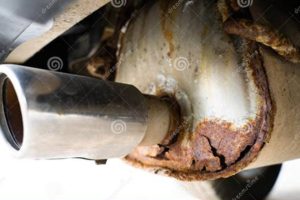
Tip 1: Assess Exhaust System Integrity: Begin with a thorough visual inspection of the entire exhaust system. Look for physical damage, such as holes, cracks, or significant corrosion. Note any unusual sounds emanating from the exhaust, which could indicate a leak.
Tip 2: Evaluate Oxygen Sensor Function: Although the sound reduction device itself is unlikely to be the cause, an exhaust leak upstream of the oxygen sensor(s) can introduce air into the system, leading to inaccurate sensor readings and potentially influencing the engine’s air-fuel mixture at idle. Test the functionality of the oxygen sensor(s).
Tip 3: Examine for Exhaust Restrictions: Though not directly causing a shaky idle, excessive backpressure from a clogged catalytic converter or severely damaged exhaust components upstream from the sound reduction device may indirectly influence engine performance, especially at higher RPMs. Perform a backpressure test.
Tip 4: Focus on Primary Idle Control Systems: Given that the device responsible for reducing sound is rarely the cause, prioritize diagnosing components that directly control idle speed, such as the idle air control (IAC) valve, throttle position sensor (TPS), and mass airflow (MAF) sensor.
Tip 5: Check for Vacuum Leaks: Vacuum leaks are a common cause of erratic idling. Inspect all vacuum hoses and connections for cracks, disconnections, or deterioration. Use a smoke machine to detect subtle leaks that may not be visible.
Tip 6: Review Engine Diagnostic Codes: Connect a diagnostic scan tool to the vehicle’s OBD-II port and retrieve any stored diagnostic trouble codes (DTCs). These codes can provide valuable clues about the source of the rough idle.
Tip 7: Evaluate Fuel System Performance: Problems with fuel delivery, such as clogged fuel injectors or a weak fuel pump, can also cause a rough idle. Perform a fuel pressure test and consider injector cleaning.
In summary, while the potential contribution of the rearmost part in the exhaust to unstable idling is low, a comprehensive evaluation of the exhaust system in conjunction with primary idle control components is vital for accurate diagnosis and resolution.
This information provides a foundational understanding of the diagnostic process, allowing for informed decisions when addressing rough idle concerns.
1. Sound Attenuation

Sound attenuation, the primary function of the rearmost device in the exhaust system, directly addresses noise pollution generated by the combustion process. While its role is critical for environmental compliance and driver comfort, its direct impact on unstable engine operation is minimal under most circumstances. Understanding how sound attenuation relates to engine function is essential when considering the question of whether a degraded device can cause rough idle.
- Mechanism of Sound Reduction
The rearmost part of the exhaust system reduces noise by employing a series of chambers and passages designed to reflect and cancel out sound waves. These internal structures disrupt the propagation of noise without significantly impeding the flow of exhaust gases under normal operating conditions. In the context of rough idle, an intact but inefficient device, due to age or internal degradation, primarily produces increased noise levels rather than directly influencing engine stability.
- Impact of Internal Damage
Internal collapse or blockage within the device responsible for sound attenuation can, in severe cases, contribute to increased exhaust backpressure. Excessive backpressure, especially if originating from a significantly restricted device, may negatively affect engine performance at higher RPMs. However, the impact on idle speed control is generally less pronounced than that caused by issues directly affecting the engine’s air-fuel mixture or timing.
- Leakage and Noise
External leaks in the rearmost device, or its connecting pipes, alter the sound profile and increase exhaust noise. Such leaks, while annoying, are unlikely to directly cause rough idle, unless the leak is substantial and located very close to an oxygen sensor. In that specific scenario, atmospheric air entering the exhaust stream near the sensor might skew the sensor’s readings, potentially leading to minor adjustments in the air-fuel ratio, but severe idling problems are still improbable.
- Material Degradation and Restriction
Over time, the materials used in the construction of the sound attenuation device can corrode or degrade, leading to a partial blockage of the exhaust flow. A gradual increase in exhaust restriction could manifest as reduced power and fuel economy, but the effect on idle is typically minimal, especially when compared to the more immediate effects of vacuum leaks or faulty idle air control systems.
In conclusion, while a compromised sound attenuation device can contribute to performance issues through increased backpressure or altered exhaust flow dynamics, its direct influence on rough idle is typically limited. When diagnosing unstable engine operation at idle, focus should be directed toward components that directly control air-fuel mixture, ignition timing, and idle speed, while acknowledging the potential for indirect effects from severely restricted exhaust components.
2. Exhaust Backpressure

Exhaust backpressure refers to the resistance to exhaust gas flow within an engine’s exhaust system. While the sound attenuation device itself is designed to minimize resistance, a failing component, especially one internally collapsed or significantly corroded, can contribute to increased backpressure. Excessive exhaust backpressure can hinder the efficient expulsion of combustion gases from the engine cylinders, potentially leading to reduced volumetric efficiency and altered combustion dynamics. Although a directly caused unstable idle is unlikely, severely increased backpressure can indirectly affect idle quality. For example, if the exhaust flow is significantly impeded, the engine may struggle to maintain a stable idle speed, especially under varying loads such as air conditioning compressor engagement. The importance of backpressure in this context lies in its potential to exacerbate existing idle control system deficiencies.
Consider a scenario where a vehicle already exhibits a marginal idle air control system. In this case, a partially blocked sound attenuation device could increase backpressure enough to push the engine beyond the idle control system’s capacity for compensation. The engine might then exhibit stalling, surging, or a generally rough idle. A real-world example would be a vehicle with a failing catalytic converter coupled with a partially blocked sound attenuation device; the combined restriction can create severe backpressure. In contrast, a vehicle with a perfectly functioning idle control system may compensate for a minor increase in backpressure without noticeable effect. Therefore, the presence of other pre-existing conditions plays a vital role in determining whether a faulty device indirectly causes unstable engine behavior.
In summary, while the rearmost exhaust component itself is unlikely to be the primary cause of an unstable idle, it should not be dismissed entirely. The potential contribution of a faulty part to increased exhaust backpressure must be evaluated in conjunction with the overall health and functionality of the engine’s idle control system and other exhaust components. A proper diagnosis involves assessing the entire system to identify the root cause and ensure effective repair.
3. Leak Location

The location of an exhaust leak relative to engine control sensors significantly influences whether a degraded sound attenuation device contributes to unstable engine operation at idle. Leaks downstream of the oxygen sensor(s) generally have a negligible impact on idle quality. These leaks primarily manifest as increased exhaust noise but do not directly interfere with the engine’s ability to maintain a stable air-fuel mixture. The critical consideration is whether the leak allows atmospheric air to be drawn into the exhaust stream before the oxygen sensor(s).
Leaks upstream of the oxygen sensor(s), particularly those close to the sensor’s location, pose a greater risk of affecting idle stability. Atmospheric air entering the exhaust stream near the sensor can skew the sensor’s readings, leading the engine control unit (ECU) to misinterpret the exhaust gas composition. This misinterpretation can cause the ECU to adjust the air-fuel mixture incorrectly, potentially resulting in a lean or rich condition that manifests as rough idle, stalling, or hesitation. As an illustrative case, consider an exhaust leak located immediately before the upstream oxygen sensor in a vehicle equipped with a modern engine management system. The incursion of atmospheric air causes the sensor to report a leaner-than-actual mixture. In response, the ECU enriches the mixture, potentially causing a rich idle and associated problems such as increased fuel consumption and elevated emissions. Thus, a seemingly minor leak in proximity to a critical sensor can exert a disproportionate influence on engine stability at idle.
In conclusion, while a degraded sound attenuation device is rarely the primary cause of rough idle, the location of any associated exhaust leaks is a key determinant in assessing its potential contribution. Leaks downstream of the oxygen sensors are unlikely to disrupt idle quality, whereas leaks upstream, especially near the sensors, have the potential to induce mixture imbalances that lead to unstable engine operation. Accurate diagnosis requires careful consideration of leak location and its proximity to sensitive engine control components.
4. Sensor Interference

The potential for sensor interference arises when a degraded sound attenuation device indirectly affects the readings of critical engine management sensors, primarily oxygen sensors. A compromised sound attenuation device, particularly if exhibiting exhaust leaks in proximity to an oxygen sensor, can introduce atmospheric air into the exhaust stream. This infiltration skews the sensor’s ability to accurately measure the oxygen content in the exhaust gases, leading to inaccurate feedback to the engine control unit (ECU). Consequently, the ECU may make incorrect adjustments to the air-fuel mixture, resulting in an imbalance that manifests as an unstable or rough idle. The extent of this interference depends on the size and location of the leak, as well as the sensitivity of the engine management system.
For example, a small exhaust leak just upstream of an oxygen sensor can cause the sensor to read a leaner-than-actual exhaust mixture. In response, the ECU may enrich the air-fuel mixture, leading to a rich idle characterized by increased fuel consumption and elevated emissions. Conversely, a larger leak could cause the sensor to fluctuate wildly, leading to erratic adjustments by the ECU and a highly unstable idle. This scenario underscores the importance of considering sensor placement and the potential for external factors, such as exhaust leaks, to compromise their accuracy. The practical significance of understanding sensor interference lies in the ability to correctly diagnose and address the root cause of a rough idle, avoiding unnecessary replacement of other components.
In summary, while a sound attenuation device in itself rarely directly causes sensor failure, the potential for leaks associated with its degradation to interfere with oxygen sensor readings presents a plausible indirect link to unstable engine operation at idle. Careful inspection of the exhaust system, with particular attention to leak location relative to sensor placement, is essential in accurately diagnosing rough idle conditions and implementing effective repair strategies.
5. System Integrity

The overall condition of a vehicle’s interconnected systems, referred to as “System Integrity,” directly influences the potential for a seemingly isolated component failure to manifest as drivability issues. While a degraded sound attenuation device is rarely a primary cause of unstable engine operation at idle, its impact can be amplified when existing deficiencies exist within other engine management or exhaust system components. Addressing “System Integrity” is crucial when considering, “can a bad muffler cause rough idle.”
- Exhaust System Interdependence
The exhaust system functions as a cohesive unit, with each component influencing the performance of others. A restriction in one area, such as a partially blocked catalytic converter, can increase backpressure throughout the system, potentially exacerbating the effects of a degraded device responsible for sound attenuation. This heightened backpressure may indirectly influence idle quality, particularly if the engine’s idle control system is already operating at its limits.
- Engine Management System Compensation
The engine management system continuously monitors and adjusts various engine parameters to maintain optimal performance. However, its ability to compensate for component failures is limited. If the engine management system is already struggling to maintain a stable idle due to issues such as vacuum leaks or faulty sensors, the added stress of a failing sound attenuation device may push the system beyond its compensation capabilities, leading to a noticeable rough idle.
- Sensor Health and Accuracy
The accuracy of engine management sensors, particularly oxygen sensors, is paramount for proper engine operation. Exhaust leaks near these sensors, often associated with a degraded part from the exhaust, can introduce atmospheric air into the exhaust stream, skewing sensor readings and causing the engine control unit to make incorrect air-fuel mixture adjustments. This scenario highlights the importance of ensuring sensor health and proper sealing of exhaust components to prevent false readings.
- Mechanical Engine Condition
The mechanical condition of the engine itself plays a significant role in idle quality. Factors such as worn piston rings, valve problems, or timing issues can contribute to an unstable idle. While a sound attenuation device itself would not cause these mechanical issues, its failure can expose existing problems, making the rough idle more pronounced. A comprehensive diagnosis should include an assessment of the engine’s mechanical health to rule out underlying issues.
The concept of “System Integrity” underscores the importance of considering the entire vehicle system when diagnosing drivability issues. While the isolated failure of the rearmost part of the exhaust system rarely causes unstable engine operation directly, its impact can be amplified by pre-existing deficiencies in other interconnected systems. A holistic diagnostic approach that considers exhaust system interdependence, engine management system compensation, sensor health, and mechanical engine condition is essential for accurate diagnosis and effective repair.
6. Indirect Influence

The degradation or failure of an exhaust system component, specifically the rearmost part, rarely serves as a direct causative factor for unstable engine idling. However, the principle of “Indirect Influence” dictates that the condition of this component can, under certain circumstances, contribute to the manifestation or exacerbation of rough idle symptoms. This contribution occurs not through a direct mechanical link, but rather through the alteration of other engine operating parameters or by compounding existing performance issues.
An example of this “Indirect Influence” involves increased exhaust backpressure resulting from a collapsed or internally damaged device. While the engine control unit (ECU) is designed to compensate for minor fluctuations in exhaust flow, excessive backpressure can strain the system’s ability to maintain proper air-fuel ratios and timing, particularly at low engine speeds. Furthermore, exhaust leaks near oxygen sensors, often associated with a failing rearmost device, can introduce atmospheric air, leading to skewed sensor readings and subsequent maladjustments by the ECU. This misinterpretation of exhaust gas composition can manifest as a rough idle due to fuel mixture imbalances. Consequently, while the faulty component is not the primary cause, it contributes to an environment that promotes unstable idling.
In summary, the likelihood of a rearmost exhaust device being the singular cause of a rough idle is minimal. However, recognizing its potential for “Indirect Influence” is critical for accurate diagnosis. The component’s degradation can exacerbate pre-existing issues or alter system parameters enough to trigger unstable idling. Therefore, a comprehensive evaluation of the entire engine management and exhaust system is necessary to identify the root cause of rough idle symptoms and implement effective remedies.
Frequently Asked Questions
The following questions address common concerns regarding the potential relationship between a degraded exhaust system component and unstable engine operation at idle.
Question 1: Is a faulty sound attenuation device a direct cause of unstable engine idling?
A degraded sound attenuation device, or the rearmost part of the exhaust, is rarely a direct cause of unstable engine operation. The primary function of this component is noise reduction, and its failure typically manifests as increased exhaust noise.
Question 2: Can exhaust leaks from a failing sound attenuation device contribute to rough idle?
Exhaust leaks, particularly those located upstream of the oxygen sensor(s), can indirectly contribute to unstable engine idling. Atmospheric air entering the exhaust stream near the sensor can skew sensor readings, leading to improper air-fuel mixture adjustments.
Question 3: How does exhaust backpressure relate to idle quality?
Excessive exhaust backpressure, potentially resulting from a collapsed or obstructed sound attenuation device, can hinder the efficient expulsion of exhaust gases. While not a direct cause, increased backpressure can exacerbate existing idle control system deficiencies, indirectly contributing to rough idle.
Question 4: Which engine components are more likely to cause rough idle?
Components directly involved in idle speed control, air-fuel mixture regulation, and ignition timing are more likely to be the primary cause of unstable engine idling. These include the idle air control valve, throttle position sensor, mass airflow sensor, and oxygen sensors.
Question 5: What diagnostic steps should be taken when addressing rough idle concerns?
A systematic diagnostic approach should include a thorough inspection of the exhaust system, testing of oxygen sensor functionality, evaluation of exhaust backpressure, and examination of primary idle control components. Vacuum leak testing and retrieval of diagnostic trouble codes are also essential.
Question 6: Can a failing sound attenuation device mask other underlying engine problems?
While not directly masking problems, a failing sound attenuation device can create conditions that make pre-existing engine issues more noticeable. Increased noise levels from an exhaust leak can make it harder to identify subtle engine noises associated with mechanical problems. A holistic diagnostic approach is crucial to identifying all contributing factors.
The key takeaway is that unstable idling is rarely solely attributable to the rearmost part of the exhaust. A comprehensive diagnostic process is necessary to pinpoint the root cause and ensure effective repair.
The next section will delve into troubleshooting strategies for addressing exhaust-related performance issues.
Conclusion
The exploration of whether a compromised sound attenuation device, or the rearmost part of the exhaust system, can precipitate unstable engine idling reveals a nuanced relationship. While the component’s primary function centers on noise reduction, and a direct causal link to rough idle is infrequent, the potential for indirect influence necessitates careful consideration. The presence of exhaust leaks, particularly those positioned upstream of oxygen sensors, introduces the possibility of skewed sensor readings and subsequent air-fuel mixture imbalances. Excessive exhaust backpressure, potentially stemming from an internally collapsed or obstructed device, can further compound existing idle control system deficiencies.
Given the limited capacity for a failing sound attenuation device to independently induce unstable idling, diagnostic efforts should primarily target components directly governing idle speed, air-fuel mixture, and ignition timing. However, a holistic approach encompassing a comprehensive exhaust system inspection, sensor evaluation, and consideration of pre-existing engine conditions remains paramount. The integration of these diagnostic strategies ensures a comprehensive understanding and more effective resolution of idling abnormalities.