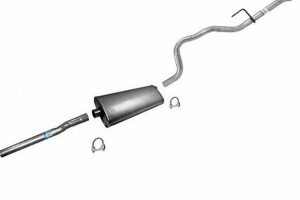
The process of affixing an exhaust noise reduction device to a motor vehicle is a common maintenance or repair task. This procedure generally involves attaching the component to the vehicle’s exhaust system, typically using clamps, brackets, or welding techniques. Correct execution ensures proper alignment and secure fastening to prevent leaks and ensure optimal performance.
The necessity of this procedure stems from legal requirements regarding noise emissions and the desire to minimize auditory pollution. Furthermore, a properly functioning component of this type contributes to improved engine efficiency and reduced backpressure, potentially enhancing vehicle performance and fuel economy. Historically, these components have evolved from simple baffles to sophisticated chambers designed to attenuate specific frequencies.
The subsequent sections will detail the specific tools and equipment required, a step-by-step guide to the procedure, safety precautions, and troubleshooting tips for addressing common issues that may arise during this undertaking. These insights will facilitate a successful and safe completion of the described task.
Tips for a Successful Exhaust Noise Reduction Device Installation
Proper technique and attention to detail are crucial for a successful exhaust noise reduction device installation. The following tips offer guidance on how to achieve optimal results and avoid common pitfalls.
Tip 1: Verify Component Compatibility: Prior to commencing, ensure the selected exhaust noise reduction device is specifically designed for the vehicle’s make, model, and year. Incompatible components can result in performance issues or damage to the exhaust system.
Tip 2: Thoroughly Inspect Exhaust System: Before initiating the installation, carefully examine the existing exhaust system for signs of corrosion, damage, or leaks. Address any pre-existing issues to ensure a proper seal and prevent future problems.
Tip 3: Employ Appropriate Tools: Utilize the correct tools for loosening and tightening fasteners, cutting pipes (if necessary), and welding (if applicable). Using improper tools can damage components and lead to improper installation.
Tip 4: Apply Anti-Seize Compound: When reassembling exhaust components, apply anti-seize compound to threaded fasteners. This facilitates future removal and prevents corrosion from seizing the bolts.
Tip 5: Secure All Fasteners to Specified Torque: Consult the vehicle’s service manual or the exhaust noise reduction device manufacturer’s specifications for the correct torque values for all fasteners. Over-tightening can damage components, while under-tightening can lead to leaks.
Tip 6: Check for Exhaust Leaks: After completing the procedure, start the engine and carefully listen for exhaust leaks around the connections. Address any leaks immediately to prevent performance degradation and potential safety hazards.
Tip 7: Proper Alignment: Ensure the exhaust noise reduction device and exhaust system are properly aligned to prevent stress and premature wear on the components and hangers.
Following these guidelines will significantly increase the likelihood of a successful and long-lasting exhaust noise reduction device installation. Attention to detail and adherence to manufacturer’s specifications are paramount.
The concluding section will summarize the key aspects of this procedure and offer final considerations for ensuring optimal performance and longevity.
1. Preparation and Inspection

The correlation between thorough preparation and inspection and the successful execution of attaching an exhaust noise reduction device is paramount. Pre-installation assessments directly influence the overall outcome and longevity of the modification. Failure to conduct adequate preparation and inspection can lead to complications during the procedure, compromised performance, and potential damage to the vehicle’s exhaust system.
The inspection phase involves a meticulous examination of the existing exhaust system. This includes identifying any signs of corrosion, damage, or leaks. For instance, a rusted exhaust pipe near the intended connection point could necessitate repair or replacement before affixing the new component. Ignoring such issues could lead to exhaust leaks, reduced engine efficiency, and increased noise levels. Furthermore, assessing the condition of existing hangers and mounting points is crucial to ensure secure attachment of the new component. Missing or damaged hangers can cause excessive stress on the exhaust system, leading to premature failure of the noise reduction device or other exhaust components.
In conclusion, adequate preparation and inspection are indispensable steps in the exhaust noise reduction device installation process. Overlooking these critical stages can lead to complications, reduced performance, and potential safety hazards. Therefore, a comprehensive assessment of the vehicle’s exhaust system is essential to ensure a successful and long-lasting installation.
2. Proper Alignment

Proper alignment is integral to the successful execution of exhaust noise reduction device installation and directly impacts the longevity and performance of the exhaust system. Misalignment introduces undue stress on the system, resulting in premature wear, potential leaks, and compromised noise reduction capabilities. The connection between proper alignment and the procedure is causal: incorrect positioning causes strain, and that strain causes failures.
A common example illustrates this connection. Imagine an exhaust system where the reduction device is installed but is slightly offset from the vehicle’s centerline. This offset forces the exhaust pipes to bend at unnatural angles. Over time, the stress from these bends can cause the pipes to crack, especially near welds or joints. Another consequence could be the loosening of exhaust hangers, leading to rattling noises and further misalignment. In practical applications, mechanics employ tools such as exhaust pipe expanders and alignment tools to ensure the reduction device sits flush with the existing exhaust system, minimizing stress points and ensuring a secure, vibration-free fit. Careful attention to the angle and position of each component is crucial.
In summary, proper alignment during the installation of an exhaust noise reduction device is not merely a cosmetic concern; it is a critical factor in ensuring the structural integrity and operational efficiency of the entire exhaust system. Failing to prioritize alignment can lead to costly repairs, reduced vehicle performance, and increased noise pollution. Prioritizing it promotes longevity and effectiveness.
3. Secure Fastening

The integrity of an exhaust noise reduction device installation hinges significantly on the security of its fastening. Adequate attachment ensures proper function, mitigates potential safety risks, and contributes to the overall longevity of the exhaust system. Compromised fastening leads to performance degradation, noise pollution, and potential component failure.
- Torque Specifications
Adherence to specified torque values for all fasteners is crucial. Over-tightening can damage threads or deform components, while under-tightening can result in leaks and eventual detachment. Manufacturers provide torque specifications to ensure optimal clamping force without compromising component integrity. For instance, a clamp securing the device to the exhaust pipe, if improperly torqued, will lead to leaks and exhaust fumes escaping.
- Use of Appropriate Hardware
Employing the correct type and size of fasteners is essential for secure attachment. Substituting generic hardware for specified bolts or clamps can compromise the strength and reliability of the connection. Using a clamp designed for a smaller pipe diameter will not create a seal, leading to failure. Corrosion-resistant hardware should also be utilized to withstand the harsh environment of the exhaust system, preventing premature failure.
- Inspection of Fasteners
Before and after the procedure, fasteners must be inspected for damage, wear, or corrosion. Damaged fasteners should be replaced immediately to ensure a secure connection. Threads should be clean and free of debris to allow for proper tightening. A rusty, damaged bolt can shear during tightening or loosen over time, leading to exhaust leaks and system instability. Regular inspections of the fastener connections are also crucial for preventative maintenance.
- Welding Integrity (If Applicable)
In instances where welding is employed to secure the component, the quality of the weld is paramount. A poorly executed weld can crack under stress, leading to detachment and exhaust leaks. Proper welding techniques, including appropriate heat settings and filler materials, are necessary to create a strong and durable bond. Visual inspection, and non-destructive testing techniques, ensure the welds meet the structural requirements for a secure and long-lasting connection.
In conclusion, secure fastening is not a mere afterthought in the installation of an exhaust noise reduction device; it is a fundamental element that ensures the system’s proper functioning, longevity, and safety. Neglecting this aspect can lead to a cascade of problems, ranging from reduced performance to potentially dangerous exhaust leaks. Diligence in selecting appropriate hardware, adhering to torque specifications, and ensuring the integrity of welded connections are crucial for a successful installation.
4. Leak Prevention
Leak prevention constitutes a critical aspect of exhaust noise reduction device installation, influencing both vehicle performance and environmental impact. The installation’s success is intrinsically tied to establishing and maintaining a leak-free seal within the exhaust system. An improperly sealed system compromises the device’s noise reduction capabilities, leading to increased noise pollution and reduced vehicle efficiency. The relationship is direct: inadequate sealing causes leaks; those leaks lead to performance deficiencies and environmental concerns. For example, a small gap between the device and the exhaust pipe permits exhaust gases to escape prematurely, altering the intended flow dynamics and increasing decibel levels beyond acceptable limits.
The implementation of preventative measures includes meticulous attention to detail during the installation process. This involves ensuring proper alignment of the device with the exhaust pipe, utilizing new gaskets or sealing compounds, and adhering to specified torque values for all fasteners. Practical applications often involve the use of specialized tools, such as exhaust pipe expanders, to create a tight, secure connection. Furthermore, after the installation is complete, thorough inspection procedures must be implemented to identify and rectify any potential leak points. Leak detection methods include visual inspection for soot deposits, auditory assessment for hissing sounds, and the use of specialized leak detection fluids.
In summary, the importance of leak prevention during the installation of an exhaust noise reduction device cannot be overstated. A leak-free system ensures optimal noise reduction, contributes to improved fuel efficiency, and minimizes the release of harmful exhaust gases into the atmosphere. Overlooking or neglecting this aspect of the installation can have significant negative consequences, both for the vehicle’s performance and for the environment. Continuous monitoring and adherence to best practices are, therefore, essential for achieving and maintaining a properly functioning exhaust system.
5. Component Compatibility

The process of affixing an exhaust noise reduction device mandates stringent adherence to component compatibility standards. This facet directly determines the effectiveness, safety, and longevity of the installation. Utilizing a device incompatible with the vehicle’s make, model, and year precipitates a cascade of potential issues, ranging from suboptimal performance to catastrophic system failure. The selection of a compatible device serves as a fundamental prerequisite, establishing the groundwork for a successful installation procedure.
Real-world examples underscore the criticality of this principle. Installing a reduction device designed for a four-cylinder engine onto a six-cylinder engine will likely result in restricted exhaust flow, leading to reduced engine power and fuel efficiency. Conversely, using a device intended for a larger engine on a smaller one could result in inadequate backpressure, also negatively impacting performance. Beyond performance considerations, physical incompatibility poses significant challenges. The device might not align with existing mounting points, necessitating modifications that compromise structural integrity and void warranties. An inappropriate device might also interfere with other vehicle components, such as the suspension or fuel lines, creating hazardous conditions. Vehicle emissions could increase significantly if the exhaust noise reduction device is not compatible as it is unable to properly filter out harmful chemicals. In cases of heavy modification, an exhaust system may not be compatible with an exhaust noise reduction device.
In conclusion, component compatibility forms the cornerstone of a successful exhaust noise reduction device installation. Prioritizing the selection of a device specifically engineered for the target vehicle is not merely a procedural formality but a critical determinant of the installation’s outcome. Understanding and respecting the nuances of component compatibility mitigate potential complications, ensure optimal performance, and uphold the safety and integrity of the vehicle’s exhaust system. Strict compliance with compatibility guidelines protects against performance degradation, structural damage, and potential safety hazards, solidifying the exhaust noise reduction device’s intended functionality.
Frequently Asked Questions About Exhaust Noise Reduction Device Installation
The following questions address common inquiries and concerns related to the process of installing exhaust noise reduction devices, providing detailed and objective answers based on established automotive practices.
Question 1: Does an aftermarket exhaust noise reduction device automatically enhance vehicle performance?
Aftermarket devices do not guarantee immediate performance gains. Performance improvements are contingent upon the device’s design and compatibility with the vehicle’s engine and exhaust system. A device not designed for the specific application may, in fact, reduce performance.
Question 2: How often should an exhaust noise reduction device be inspected?
Periodic inspections are recommended at intervals of 12 months or 12,000 miles, whichever occurs first. More frequent inspections may be necessary in environments with harsh weather conditions or frequent off-road driving.
Question 3: What are the primary signs of a failing exhaust noise reduction device?
Common indicators include increased exhaust noise levels, reduced fuel efficiency, visible corrosion or damage to the device, and unusual vibrations or rattling sounds emanating from the exhaust system. A persistent burning smell is another potential sign of degradation.
Question 4: Is it necessary to replace exhaust hangers when the existing device is exchanged?
A thorough inspection of the exhaust hangers is essential. Replacing hangers exhibiting signs of wear, damage, or corrosion is strongly advised to ensure secure and proper support of the exhaust system and installed noise reduction device.
Question 5: Can an exhaust noise reduction device intended for one vehicle be adapted for use on another?
Adapting a device designed for a different vehicle is generally discouraged. Such modifications can compromise performance, safety, and emissions compliance. Utilizing a device specifically designed for the vehicle is the recommended approach.
Question 6: What tools are essential for carrying out an exhaust noise reduction device installation?
Essential tools include a socket set, wrench set, torque wrench, exhaust pipe cutter (if necessary), penetrating oil, safety glasses, and gloves. A vehicle lift or jack stands are also necessary to provide safe and adequate access to the exhaust system.
The aforementioned questions and their respective answers offer a foundation for understanding key considerations during the procedure. A comprehensive approach that prioritizes safety and adherence to manufacturer specifications ensures the success of this task.
The subsequent discussion will delve into the potential troubleshooting steps involved in resolving common issues during the described procedure.
Conclusion
This document has provided a comprehensive examination of installing a muffler, emphasizing critical aspects such as component compatibility, leak prevention, secure fastening, proper alignment, and thorough preparation. Each element contributes to the overall efficacy and longevity of the device, ensuring optimal performance and adherence to regulatory standards. The outlined procedures underscore the necessity for precision and adherence to manufacturer specifications.
The proper completion of this procedure is paramount not only for vehicle performance but also for environmental responsibility and noise pollution control. Continued diligence in maintaining exhaust systems and adhering to best practices remains crucial. This commitment ensures public safety, minimizes environmental impact, and promotes responsible vehicle operation.