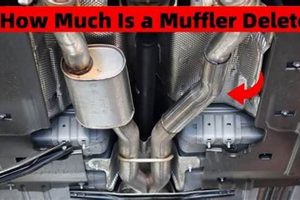
A combustion event occurring in the exhaust system, rather than the engine’s cylinders, can produce a loud report and potential damage. This phenomenon often arises from unburnt fuel igniting within the muffler or exhaust pipes. For example, a lean air-fuel mixture or improper ignition timing can contribute to its occurrence.
Understanding and addressing the underlying causes of this issue is crucial for maintaining vehicle performance and preventing potential damage to the exhaust system. Historically, this occurrence was more prevalent in carbureted engines, but modern fuel-injected systems are not immune. Addressing this effectively improves fuel efficiency and reduces the risk of costly repairs.
The following sections will delve deeper into the specific causes, diagnostic procedures, and potential solutions for this problem, offering practical guidance for both mechanics and vehicle owners. These will include a detailed look at common mechanical failures and software glitches that can cause this potentially dangerous problem.
Mitigating Exhaust System Combustion Events
The following guidelines outline preventative and corrective measures related to irregular combustion within the exhaust system. Adherence to these tips can minimize the risk of its occurrence and its associated consequences.
Tip 1: Routine Engine Tuning: Regular engine tune-ups, including spark plug replacement and timing adjustments, are essential. Properly tuned engines burn fuel more efficiently, reducing the amount of unburnt fuel entering the exhaust.
Tip 2: Fuel System Inspection: Periodically inspect the fuel system, including fuel injectors, fuel filters, and fuel pumps. Malfunctioning components can lead to an improper air-fuel mixture, increasing the likelihood of exhaust system combustion.
Tip 3: Exhaust System Integrity: Ensure the exhaust system is free of leaks. Leaks can introduce excess oxygen, potentially igniting unburnt fuel within the system. Regular inspections for rust, damage, and loose connections are crucial.
Tip 4: Mass Airflow Sensor Maintenance: Clean or replace the mass airflow (MAF) sensor as needed. A faulty MAF sensor can provide incorrect data to the engine control unit (ECU), resulting in an improper air-fuel mixture.
Tip 5: Oxygen Sensor Monitoring: Monitor the oxygen sensors’ performance. These sensors provide feedback to the ECU regarding the exhaust gas composition. Faulty oxygen sensors can lead to incorrect fuel trim adjustments.
Tip 6: Catalytic Converter Health: Ensure the catalytic converter is functioning correctly. A failing catalytic converter can contribute to increased backpressure and potentially exacerbate the problem of uncombusted fuel in the exhaust stream.
Tip 7: Proper Warm-Up Procedures: Avoid aggressive acceleration when the engine is cold. Cold engines often run richer, increasing the risk of unburnt fuel entering the exhaust. Allowing the engine to reach operating temperature gradually can help mitigate this.
Implementing these measures promotes optimal engine performance, minimizing the potential for irregular combustion events within the exhaust system. This proactive approach contributes to the vehicle’s longevity and reduces the risk of costly repairs.
The subsequent sections will explore the long-term effects of these events on vehicle components, providing a detailed understanding of the potential consequences.
1. Unburnt Fuel Ignition
Unburnt fuel ignition is a primary causal factor in exhaust system combustion events. This phenomenon occurs when fuel, which has not been completely combusted within the engine cylinders, enters the exhaust system. Upon encountering a source of ignition, such as hot exhaust gases or a malfunctioning catalytic converter, this unburnt fuel can ignite, resulting in a rapid expansion of gases and the characteristic sound associated with such events. The presence of excessive unburnt fuel in the exhaust stream is a direct precursor to the development of exhaust system combustion.
The significance of understanding this connection lies in the ability to diagnose and address the root causes of the issue. For example, a vehicle experiencing a consistent and regular incident of combustion in its exhaust system may have an issue with its fuel injectors that is not properly atomizing fuel. In this instance, a large amount of unburnt fuel will be sent to the exhaust system and cause loud noises upon ignition. Moreover, the failure of the catalytic converter to effectively catalyze exhaust gases creates conditions conducive to the ignition of unburnt fuel. Identifying and resolving these underlying mechanical or control system malfunctions is crucial to preventing recurrences.
In summary, unburnt fuel ignition is a fundamental component of the described issue within the exhaust system. Its occurrence is dictated by a confluence of factors, including engine tuning, fuel system integrity, and the condition of the catalytic converter. By understanding these interdependencies, technicians and vehicle owners can effectively mitigate the risk of this problem, ensuring optimal engine performance and minimizing potential damage to the exhaust system.
2. Exhaust System Damage

Exhaust system damage is both a cause and a consequence of irregular combustion events within the muffler. The rapid expansion of gases resulting from the ignition of unburnt fuel creates intense pressure waves that propagate through the exhaust system. Over time, these pressure waves can weaken or fracture exhaust components, particularly the muffler, catalytic converter, and exhaust pipes. For example, repeated pressure surges can cause the internal baffles of a muffler to break loose, resulting in reduced sound dampening and altered exhaust flow. In severe cases, the structural integrity of the exhaust pipes can be compromised, leading to cracks and leaks.
The condition of the exhaust system directly influences the likelihood of further irregular combustion events. A damaged exhaust system, characterized by leaks or internal obstructions, can disrupt exhaust gas flow, leading to an accumulation of unburnt fuel. These disruptions create favorable conditions for the ignition of unburnt fuel. For instance, a small exhaust leak near the engine manifold can introduce excess oxygen into the system, increasing the probability of combustion outside of the cylinder. The presence of damage exacerbates the underlying factors contributing to irregular combustion, creating a feedback loop of damage and occurrence. A malfunctioning catalytic converter might contribute to backpressure, further leading to the accumulation of unburnt fuel in the exhaust.
In summary, a cyclical relationship exists between exhaust system damage and irregular combustion events. Initial combustion events can initiate or accelerate damage to the exhaust system, and that damage, in turn, increases the likelihood of future combustion events. This interconnection underscores the need for regular exhaust system inspections and prompt repairs to prevent a cascade of further issues. Addressing damage early can mitigate the risk of recurrent combustion events and prolong the lifespan of the exhaust system components. Ignoring damage will ultimately lead to increased repair costs and potential performance degradation.
3. Lean Air-Fuel Mixture

A lean air-fuel mixture is a significant contributing factor to combustion irregularities occurring within the exhaust system. This condition arises when the engine receives an insufficient quantity of fuel relative to the amount of air. This imbalance leads to incomplete combustion within the engine cylinders, resulting in an increased concentration of unburnt fuel and oxygen in the exhaust gases. This unburnt fuel, upon reaching the hotter sections of the exhaust system, like the muffler or catalytic converter, can ignite, producing the phenomenon commonly referred to as an event in the exhaust system. The consequences of a lean mixture can range from decreased engine performance to potential damage to exhaust components.
The importance of a proper air-fuel ratio is often illustrated in vehicles with malfunctioning oxygen sensors. These sensors provide feedback to the engine control unit (ECU), allowing it to adjust the fuel injection rate to maintain the correct ratio. If an oxygen sensor fails or provides inaccurate readings, the ECU may erroneously lean out the fuel mixture, leading to increased unburnt hydrocarbons in the exhaust. Similarly, vacuum leaks, which introduce excess air into the intake manifold, can also create a lean condition, with a similar effect. The relationship between the lean mixture and exhaust system combustion events underscores the need for precise fuel delivery and accurate sensor data.
In summary, a lean air-fuel mixture creates an environment conducive to uncombusted fuel ignition within the exhaust system. Understanding this connection is crucial for diagnosing and resolving the root causes of these combustion events. Addressing issues such as faulty oxygen sensors, vacuum leaks, or malfunctioning fuel injectors can effectively mitigate the risk of a lean condition, ensuring optimal engine performance and minimizing the potential for damage to the exhaust system. By maintaining a proper air-fuel balance, vehicle owners and technicians can significantly reduce the occurrence of these unwanted and potentially harmful events.
4. Improper Timing

Improper timing, referring to the incorrect synchronization of the engine’s combustion cycle, is a critical factor contributing to combustion irregularities within the exhaust system. Precise timing ensures that the spark plugs ignite the air-fuel mixture at the optimal point in the piston’s stroke. Deviations from this optimal point can lead to incomplete combustion and the expulsion of unburnt fuel into the exhaust system, creating conditions ripe for combustion in the muffler.
- Late Ignition Timing
Late ignition timing occurs when the spark plug fires later than it should in the combustion cycle. This delays the combustion process, preventing the fuel-air mixture from burning completely within the cylinder. As a result, unburnt fuel is pushed into the exhaust system, where it can ignite upon encountering hot exhaust gases or a catalytic converter, leading to an event. For example, a worn distributor or a malfunctioning timing sensor can cause late ignition timing.
- Early Ignition Timing
Early ignition timing involves the spark plug firing sooner than it should in the cycle. While it might seem less directly related, excessively early timing can also contribute to incomplete combustion. The rapid pressure increase from premature ignition can disrupt the flame propagation, leading to unburnt fuel escaping into the exhaust. Furthermore, it can create conditions leading to increased engine temperatures and potentially damage exhaust components, making them more susceptible to combustion events.
- Distributor Malfunction
In older vehicles, the distributor plays a crucial role in coordinating spark timing. A malfunctioning distributor can deliver spark at the wrong time, consistently or intermittently, resulting in a fluctuating and unpredictable expulsion of unburnt fuel. This can create a repeating pattern of combustion in the muffler. Symptoms of a failing distributor include rough idling, decreased fuel efficiency, and noticeable occurrences.
- Timing Sensor Issues
Modern engines rely on various sensors, such as the crankshaft position sensor and camshaft position sensor, to determine engine timing. If these sensors provide inaccurate data, the engine control unit (ECU) will miscalculate the timing and deliver the spark at the wrong moment. A faulty timing sensor can lead to both late and early timing conditions, depending on the nature of the sensor malfunction. This leads to increased uncombusted fuel in the exhaust.
The multifaceted impact of improper timing on the engine’s combustion cycle directly influences the occurrence of combustion irregularities. Whether through late or early ignition, or malfunctions in the distributor or timing sensors, deviations from the optimal timing parameters create conditions that can result in unburnt fuel entering the exhaust and subsequent combustion. Addressing timing issues is crucial for resolving the root causes and preventing this potentially damaging problem. Failure to properly address this problem will quickly and drastically lead to reduced engine performance.
5. Exhaust Leaks

Exhaust leaks, characterized by breaches in the exhaust system’s integrity, significantly contribute to the occurrence of combustion irregularities in the muffler. These leaks compromise the controlled expulsion of exhaust gases, leading to imbalances that promote the unwanted combustion phenomenon.
- Oxygen Introduction
Exhaust leaks introduce atmospheric oxygen into the exhaust stream. This influx of oxygen alters the composition of the gases, providing an oxidizer for unburnt fuel present within the system. This heightened oxygen level promotes the ignition of residual fuel within the muffler. A rusted exhaust manifold, for instance, allows ambient air to be drawn into the system, increasing the likelihood of combustion events.
- Pressure Wave Disruption
Exhaust leaks disrupt the controlled flow of exhaust gases, creating pressure wave anomalies. These pressure waves can cause fuel accumulation in certain sections of the exhaust, particularly the muffler. The disruption of proper exhaust scavenging may contribute to a richer fuel mixture at specific points, enhancing the chances of an occurrence. A cracked exhaust pipe can lead to inconsistent pressure waves and create localized fuel accumulation.
- Temperature Variation
Leaks can alter the temperature profile within the exhaust system. Cooler ambient air drawn into the system can cause localized cooling, potentially hindering the complete combustion of fuel. Conversely, the turbulence created by a leak can create hot spots that ignite accumulated unburnt fuel. These temperature fluctuations exacerbate the chances of uncontrolled combustion within the muffler. A loose connection at the catalytic converter could alter heat distribution and lead to this issue.
- Catalytic Converter Efficiency Reduction
An exhaust leak located upstream from the catalytic converter can introduce excess oxygen, impairing the converter’s ability to effectively reduce harmful emissions. The unburnt fuel and elevated oxygen levels reaching the catalytic converter can lead to overheating and potential damage, further increasing the probability of an issue occurring in the muffler. A damaged oxygen sensor wire can cause the system to erroneously inject more fuel.
In summary, exhaust leaks undermine the carefully calibrated balance of the exhaust system, creating conditions conducive to uncombusted fuel ignition. The introduction of oxygen, disruption of pressure waves, alteration of temperature profiles, and reduction of catalytic converter efficiency all contribute to the heightened risk. Addressing exhaust leaks promptly is crucial for maintaining the integrity of the exhaust system and mitigating the potential for potentially damaging exhaust events.
6. Catalytic Converter Failure

Catalytic converter failure significantly impacts the probability of combustion irregularities occurring within the exhaust system. A malfunctioning or degraded catalytic converter disrupts the intended chemical processes, leading to an environment where unburnt fuel can accumulate and subsequently ignite within the muffler or other downstream exhaust components.
- Incomplete Combustion of Hydrocarbons
A functional catalytic converter facilitates the oxidation of unburnt hydrocarbons (fuel) into carbon dioxide and water. When the catalytic converter fails, this oxidation process becomes inefficient or ceases entirely, resulting in an increased concentration of unburnt fuel entering the downstream exhaust system. This elevated fuel concentration creates conditions conducive to its ignition, particularly in the muffler. For example, a converter plugged with carbon deposits loses surface area and becomes less effective at oxidizing the hydrocarbons.
- Increased Exhaust Backpressure
A failing catalytic converter often exhibits increased backpressure due to internal clogging or structural collapse. Elevated backpressure impedes the efficient removal of exhaust gases from the engine cylinders, resulting in residual exhaust gas recirculation and incomplete combustion. This further increases the amount of unburnt fuel reaching the exhaust, exacerbating the likelihood of an event. A converter that has internally melted due to overheating is a common cause of increased backpressure.
- Elevated Exhaust Temperatures
A malfunctioning catalytic converter can cause abnormal temperature fluctuations within the exhaust system. Excessive unburnt fuel entering the converter can lead to overheating, creating localized hot spots that promote the ignition of unburnt fuel. These elevated temperatures can propagate downstream to the muffler, increasing the probability of an exhaust event. This is commonly seen when a large amount of oil is being burnt due to the piston rings, because oil is also unburnt fuel to the system.
- Oxygen Sensor Interference
Catalytic converter failure can impact the performance of downstream oxygen sensors. The sensors rely on the converter to process exhaust gases effectively. An issue with the converter can result in inaccurate feedback to the engine control unit (ECU), leading to improper fuel trim adjustments. The faulty adjustments can create an imbalance where more fuel is injected into the engine, and in turn more is sent to the exhaust system, thus increasing the risk of the event in the muffler.
The interconnected consequences of catalytic converter failure significantly heighten the risk of combustion irregularities. The incomplete oxidation of hydrocarbons, increased backpressure, elevated exhaust temperatures, and oxygen sensor interference all contribute to the build-up of conditions conducive to these events. Addressing converter failures is crucial for resolving combustion-related issues and maintaining the integrity of the exhaust system.
7. Engine Performance Degradation

Engine performance degradation, characterized by a decline in power, fuel efficiency, and overall responsiveness, frequently accompanies irregularities within the exhaust system, particularly combustion events occurring in the muffler. The underlying causes of these events often directly contribute to a reduction in engine performance, creating a negative feedback loop where each issue exacerbates the other.
- Reduced Combustion Efficiency
Combustion irregularities in the muffler typically stem from incomplete combustion within the engine cylinders. When fuel is not burned efficiently in the cylinders, it exits into the exhaust system where it ignites, causing a loud noise. Incomplete combustion inherently translates to reduced engine power output and decreased fuel economy. For example, a vehicle experiencing this issue may exhibit sluggish acceleration and a noticeable increase in fuel consumption.
- Increased Exhaust Backpressure
Combustion in the muffler can lead to increased backpressure within the exhaust system. This elevated backpressure restricts the engine’s ability to expel exhaust gases effectively, hindering the intake of fresh air and fuel. The resulting reduction in airflow further contributes to incomplete combustion and a decline in engine performance. A clogged catalytic converter, often a consequence of repeated muffler combustion events, dramatically increases exhaust backpressure.
- Sensor Malfunctions
Repeated or severe combustion events in the muffler can damage or compromise the function of exhaust sensors, such as oxygen sensors. These sensors provide critical feedback to the engine control unit (ECU), which regulates fuel delivery and ignition timing. When the sensors provide inaccurate readings, the ECU can make incorrect adjustments, leading to suboptimal engine performance. For instance, a damaged oxygen sensor may cause the engine to run either too rich or too lean, further decreasing efficiency and power.
- Component Wear and Damage
The pressure waves generated by repeated combustion events within the muffler can accelerate wear and damage to other engine components. The vibrations and stress can loosen connections, crack exhaust manifolds, and damage internal engine parts over time. This gradual deterioration leads to a progressive decline in engine performance. For example, repeated exposure to the shock of combustion can fatigue exhaust hangers and other structural supports, leading to exhaust leaks.
These facets illustrate the interconnectedness of engine performance degradation and combustion occurrences within the muffler. The underlying causes of the events often contribute directly to a reduction in engine performance, while the resulting damage and sensor malfunctions further exacerbate the problem. Addressing the root causes of the irregular combustion is therefore essential to restore optimal engine function and prevent further damage to the vehicle.
Frequently Asked Questions
The following questions address common inquiries and misconceptions surrounding irregular combustion events occurring within the exhaust system, specifically those manifesting in the muffler. The information provided aims to clarify the nature, causes, and potential consequences of this phenomenon.
Question 1: What precisely constitutes an “exhaust system combustion event”?
An “exhaust system combustion event” refers to the ignition of unburnt fuel within the exhaust system, rather than the intended combustion within the engine cylinders. This event manifests as a loud report or popping sound emanating from the muffler or exhaust pipes.
Question 2: What are the primary causes that initiate irregular combustion?
Primary causes include a lean air-fuel mixture, improper ignition timing, exhaust leaks introducing excess oxygen, and catalytic converter failure resulting in incomplete combustion of hydrocarbons.
Question 3: Can this phenomenon cause damage to a vehicle?
Yes. Repeated or severe events can damage exhaust system components, including the muffler, catalytic converter, and exhaust pipes. It can also contribute to engine performance degradation over time.
Question 4: Is it only older vehicles that experience occurrences?
While more common in older, carbureted vehicles, modern fuel-injected systems are not immune. Factors such as sensor malfunctions or improper tuning can contribute to the problem in newer vehicles.
Question 5: What diagnostic steps are required to determine the cause?
Diagnosis typically involves checking the air-fuel mixture, ignition timing, exhaust system for leaks, oxygen sensor performance, and catalytic converter functionality.
Question 6: What are the recommended preventative measures?
Recommended measures include regular engine tune-ups, fuel system inspections, ensuring exhaust system integrity, maintaining the mass airflow sensor, and monitoring oxygen sensor performance.
In summary, irregular combustion within the exhaust system is a multifaceted issue stemming from various engine-related factors and potentially causing damage to the exhaust system. A comprehensive understanding of these factors is crucial for effective diagnosis and prevention.
The following section will explore the economic implications of addressing or neglecting this issue, providing a cost-benefit analysis of proactive maintenance versus reactive repairs.
Muffler Backfire
The preceding analysis has explored the multifaceted nature of muffler backfire, detailing its causes, consequences, and preventative measures. The ignition of unburnt fuel within the exhaust system, resulting in the characteristic percussive event, stems from a confluence of factors, including engine tuning, fuel delivery, exhaust system integrity, and sensor functionality. The resultant damage can range from minor performance degradation to significant structural compromise of exhaust components.
Effective management of this issue necessitates a proactive approach, emphasizing regular maintenance and diligent monitoring of engine performance. Ignoring the warning signs and underlying causes of muffler backfire can lead to escalating repair costs and potentially compromise vehicle safety. Therefore, a commitment to understanding and addressing the root causes is essential for ensuring optimal vehicle operation and long-term reliability.