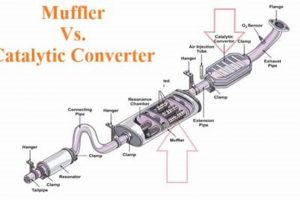
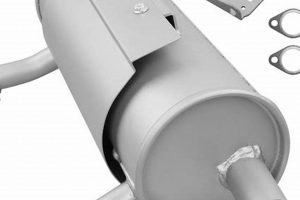
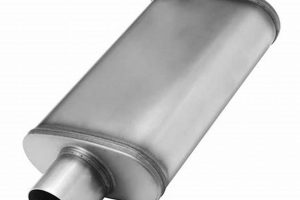
The appearance of liquid emanating from the exhaust system, specifically the muffler, is a common occurrence in internal combustion engines. This phenomenon primarily results from the normal operation of the engine and its emission control system. Combustion produces water vapor as a byproduct, and this vapor condenses into liquid form within the cooler exhaust system, especially during initial engine startup or in cold weather conditions. This condensation is then expelled from the exhaust system, often appearing as drips from the muffler.
The presence of this water discharge is generally not indicative of a major mechanical malfunction and is, in fact, a sign that the catalytic converter is functioning as designed. Catalytic converters are integral to reducing harmful emissions by converting hydrocarbons, carbon monoxide, and nitrogen oxides into less harmful substances, including carbon dioxide and water. The catalytic converter’s contribution to water production within the exhaust system further exacerbates the condensation process, leading to the observed dripping.
While a small amount of water emission is considered normal, an excessive or continuous discharge, particularly if accompanied by other symptoms like unusual engine noises or performance issues, warrants investigation. The following sections will delve into the factors influencing the amount of discharge, differentiate between normal condensation and potential problems, and outline troubleshooting steps to assess the health of the exhaust system.
Troubleshooting Exhaust System Water Discharge
The presence of liquid discharge from the muffler requires careful observation to differentiate between normal condensation and potential mechanical issues. These tips provide guidance in assessing the situation and determining appropriate action.
Tip 1: Monitor Discharge Volume: Observe the quantity of liquid being expelled. A small amount of intermittent dripping, particularly during cold starts, is typically normal. A continuous stream or unusually large volumes warrant further investigation.
Tip 2: Examine Liquid Composition: Check the color and smell of the liquid. Water should be clear and odorless. The presence of rust-colored water or a sweet smell could indicate coolant leakage into the exhaust system, a serious problem requiring immediate attention.
Tip 3: Assess Engine Performance: Note any changes in engine performance, such as rough idling, misfires, or reduced power. These symptoms, coupled with excessive water discharge, suggest potential engine problems like a blown head gasket or cracked cylinder head.
Tip 4: Inspect the Muffler and Exhaust System: Visually inspect the muffler and exhaust pipes for signs of corrosion, rust, or damage. Excessive rust can weaken the system and contribute to water accumulation and premature failure.
Tip 5: Check the Tailpipe Emissions: Observe the color and smell of the exhaust fumes. White smoke, especially after the engine has warmed up, can indicate water entering the combustion chambers. A strong, unusual odor could point to other engine issues.
Tip 6: Consider Driving Habits: Short trips often prevent the exhaust system from reaching optimal operating temperature, leading to increased condensation. Longer drives allow the system to heat up and evaporate accumulated moisture.
Proper identification of the source and severity of the liquid discharge is critical for maintaining the health of the vehicle’s engine and exhaust system. Consulting a qualified mechanic for a professional diagnosis is advisable when uncertainty exists or when other concerning symptoms are present.
The following sections will discuss preventative maintenance strategies to mitigate water accumulation within the exhaust system and prolong its lifespan.
1. Normal Combustion Byproduct

Water is an inherent byproduct of the combustion process within an internal combustion engine. The chemical reaction that converts fuel and air into energy also produces carbon dioxide and water vapor. This production of water vapor directly contributes to the phenomenon of liquid discharge from the muffler. During initial engine startup, or in colder ambient temperatures, the exhaust system remains relatively cool. This lower temperature causes the water vapor to condense from a gaseous state into a liquid, adhering to the internal surfaces of the exhaust pipes and muffler. As the engine continues to operate, the accumulated liquid water is then expelled from the system, often manifesting as drips from the muffler. The volume of water produced is directly related to the amount of fuel consumed and the efficiency of the combustion process.
The understanding of water production as a normal combustion byproduct is crucial for distinguishing between typical engine operation and potential mechanical failures. For instance, observing clear, odorless liquid dripping from the muffler, especially during cold starts, should generally be interpreted as normal condensation of combustion byproducts. In contrast, the presence of discolored water, an unusual odor, or excessive amounts of liquid might indicate a more serious issue, such as a coolant leak into the combustion chamber. Mechanics often use the presence and characteristics of exhaust system condensate as a diagnostic tool to assess the engine’s overall condition. Therefore, recognizing water as a standard combustion output allows for informed assessment of the vehicle’s health.
In summary, water discharge from the muffler is directly linked to the fundamental chemical processes occurring within the engine. A proper understanding of this normal byproduct is critical for accurate vehicle diagnostics, preventing unnecessary repairs, and allowing drivers to differentiate between typical engine behavior and potential mechanical concerns. Ignoring this relationship can lead to misinterpretations, potentially resulting in costly and unwarranted maintenance procedures. It is therefore vital to consider the ambient temperature, driving conditions, and the overall health of the engine to determine if any action is required.
2. Catalytic Converter Function

The catalytic converter plays a crucial role in exhaust emissions reduction, and its function directly impacts the presence of water discharge from the muffler. By converting harmful pollutants into less noxious substances, the catalytic converter contributes significantly to the water vapor content within the exhaust system.
- Oxidation of Hydrocarbons and Carbon Monoxide
The catalytic converter uses oxidation reactions to convert hydrocarbons (HC) and carbon monoxide (CO) into carbon dioxide (CO2) and water (H2O). This process introduces additional water molecules into the exhaust stream beyond what is produced during initial combustion. This conversion substantially increases the amount of water vapor present, especially during the warm-up phase of the converter. In colder ambient conditions, this elevated water vapor level readily condenses within the cooler exhaust system components, such as the muffler. The presence of this condensed water is then expelled from the exhaust outlet as liquid discharge.
- Reduction of Nitrogen Oxides
In addition to oxidation, some catalytic converters also facilitate the reduction of nitrogen oxides (NOx) into nitrogen (N2) and oxygen (O2). While this reduction process doesn’t directly create water, the overall efficiency of the converter in reducing pollutants indirectly influences the amount of other reactants available for oxidation. A highly efficient converter will maximize the oxidation of hydrocarbons and carbon monoxide, thereby maximizing water production. Conversely, a malfunctioning converter reduces its ability to process these emissions, lowering the overall water contribution.
- Temperature Dependency
The efficiency of the catalytic converter is highly temperature-dependent. It operates optimally within a specific temperature range. When the exhaust system is cold, especially during the initial engine start-up, the catalytic converter may not reach its optimal operating temperature. During this period, pollutant conversion is less efficient, resulting in fewer water molecules being produced. As the converter warms up, its efficiency increases, leading to increased water production. The temperature fluctuation directly affects the rate of water vapor formation and, consequently, the amount of water condensing in the muffler. This accounts for the observation that water discharge tends to be more prominent during initial engine operation and in colder conditions.
- Material Composition and Deterioration
The catalytic converter consists of a ceramic substrate coated with precious metals, such as platinum, palladium, and rhodium, which act as catalysts for the chemical reactions. Over time, these materials can degrade due to thermal stress, contamination, and physical damage. As the catalyst efficiency decreases, the converter’s ability to oxidize hydrocarbons and carbon monoxide diminishes, resulting in a reduced water vapor output. A failing converter can thus lead to less water accumulation in the exhaust system compared to a fully functioning one. This degradation can be further accelerated by engine malfunctions, such as oil leaks, which contaminate the catalytic converter and reduce its effectiveness. Regular vehicle maintenance is essential to ensure the longevity and proper function of the catalytic converter.
The catalytic converter’s contribution to the exhaust system’s water vapor content is significant. Its function as a crucial component in emissions reduction simultaneously enhances the condensation process within the exhaust system, thereby influencing the likelihood and volume of water discharge. The efficiency and operational temperature of this component are key determinants in the observed water expulsion from the muffler, highlighting the intricate relationship between emissions control and normal vehicle operation.
3. Condensation Process

The condensation process represents a fundamental mechanism directly contributing to liquid discharge from a vehicle’s muffler. Condensation, defined as the phase transition of water vapor into liquid water, occurs within the exhaust system due to temperature differentials. Water vapor, a product of both the engine’s combustion and the catalytic converter’s functionality, exists in gaseous form within the hot exhaust gases. As these gases travel through the exhaust system, they encounter cooler sections, particularly the muffler and tailpipe. When the temperature of the exhaust gases drops below the dew point, the water vapor undergoes condensation on the internal surfaces of these components. The accumulated liquid water then drips or flows towards the lowest point, typically the muffler’s drain hole or the tailpipe opening, before being expelled. This effect is more pronounced during cold weather or short trips when the exhaust system does not reach optimal operating temperatures, maximizing the temperature difference and subsequent condensation. Without the occurrence of this phase transition, the water would remain in a gaseous state and be expelled invisibly in the exhaust stream.
Understanding the condensation process clarifies several observed phenomena related to exhaust system water discharge. For instance, the observation of greater water discharge during cold starts or in colder climates is directly attributable to the enhanced condensation rate under those conditions. Similarly, vehicles used primarily for short trips tend to exhibit more water dripping due to the exhaust system’s persistent inability to achieve optimal operating temperature, preventing full evaporation of the condensed water. Conversely, longer highway trips, allowing the exhaust system to reach higher temperatures, result in the evaporation of most of the condensed water, thereby minimizing or eliminating the observed dripping. Moreover, the design of the exhaust system itself influences the condensation process. Exhaust systems with complex internal baffles or long sections of piping create larger surface areas for water vapor to condense upon, potentially increasing the amount of liquid accumulating within. Regular inspection and maintenance of the exhaust system, including ensuring proper drainage, can mitigate the negative effects of excessive water accumulation, such as corrosion and premature component failure.
In summary, the condensation process is an indispensable factor in understanding the presence of liquid emissions from a vehicle’s muffler. It underscores the relationship between engine operation, exhaust system temperature, and ambient environmental conditions. Recognizing the dynamics of this process enables vehicle owners and technicians to differentiate normal operational behavior from potential mechanical issues, make informed maintenance decisions, and proactively address potential problems related to exhaust system longevity. Proper knowledge of the condensation process is therefore vital in the holistic assessment and maintenance of a vehicle’s exhaust system.
4. Exhaust System Temperature

Exhaust system temperature exerts a direct and significant influence on the occurrence of liquid expulsion from the muffler. The temperature gradient within the exhaust system determines the rate and extent of water vapor condensation, a primary source of the observed water discharge. When the exhaust system operates at lower temperatures, a greater proportion of water vapor remains in a liquid state due to increased condensation. This condition is most prevalent during initial engine start-up, particularly in colder ambient temperatures, and during short-trip driving when the system lacks sufficient time to reach optimal operating temperatures. Conversely, when the exhaust system attains higher temperatures, water vapor is more likely to remain in a gaseous state and be expelled through the tailpipe without condensing. The efficiency of the catalytic converter is also affected by exhaust system temperature, further influencing water vapor generation.
The relationship between exhaust system temperature and water discharge has practical implications for vehicle maintenance. For instance, vehicles primarily used for short commutes often exhibit more water accumulation within the exhaust system, potentially accelerating corrosion and reducing component lifespan. Recognizing this correlation allows vehicle owners to adopt preventative measures, such as taking longer drives periodically to allow the exhaust system to reach operating temperature and evaporate accumulated moisture. Mechanics also utilize exhaust system temperature readings as a diagnostic tool to assess the functionality of the catalytic converter and identify potential engine inefficiencies that could contribute to excessive water vapor production. An underperforming catalytic converter operating below its optimal temperature range may indicate underlying engine problems that need to be addressed to prevent further damage and emissions issues.
In conclusion, exhaust system temperature is a critical factor determining the presence and amount of liquid emission from the muffler. Its influence extends to water vapor condensation, catalytic converter efficiency, and the overall longevity of the exhaust system components. Understanding this relationship allows for informed vehicle operation and maintenance, minimizing potential problems and ensuring optimal performance.
5. Short Trip Driving
Short trip driving, characterized by frequent engine starts and stops over brief distances, directly contributes to the observed liquid discharge from a vehicle’s muffler. These operational patterns prevent the exhaust system from reaching its optimal operating temperature. The extended period of suboptimal temperature exacerbates water vapor condensation within the system. The water vapor, a product of combustion and catalytic converter activity, transitions to a liquid state due to the cooler surfaces within the exhaust pipes and muffler. Since the exhaust system lacks sufficient time to heat up and evaporate this accumulated moisture, it collects and is subsequently expelled as water drips. This effect is more pronounced during colder months, further slowing the warm-up process and intensifying condensation. The frequent starts and stops associated with short trip driving compound the issue, as each start cycle introduces a new surge of water vapor into the already cool system, leading to a cyclical pattern of accumulation and discharge.
A common real-world example is the individual who uses their vehicle solely for commuting short distances within a city. Each journey, lasting only a few minutes, fails to allow the exhaust system to reach an efficient temperature. The driver may observe persistent water dripping from the muffler, even in relatively moderate weather. Conversely, the same vehicle, driven on a long highway trip, might exhibit minimal water discharge as the elevated exhaust system temperature facilitates evaporation. Another practical example involves delivery vehicles, which frequently experience short trip driving conditions. Delivery drivers who make numerous stops over short distances will likely observe increased water discharge from the exhaust, especially during cooler times of the year. Moreover, such persistent moisture accumulation contributes to premature corrosion of the exhaust system components, leading to costly repairs.
In summary, short trip driving is a significant factor in understanding the phenomenon of liquid emission from a muffler. Its impact stems from the inability of the exhaust system to attain and maintain optimal operating temperatures, resulting in increased water vapor condensation and subsequent discharge. Recognizing the effect of short trip driving allows for proactive maintenance practices, such as periodic longer drives, to mitigate moisture accumulation and prolong the lifespan of the exhaust system. Ignoring this connection can result in avoidable wear and tear, ultimately affecting vehicle performance and maintenance expenses.
6. Potential Internal Leak

While water dripping from the muffler commonly results from normal combustion byproducts, a potential internal leak represents a more serious cause requiring prompt attention. This deviation from normal operation occurs when coolant, typically a mixture of water and antifreeze, enters the engine’s combustion chambers or exhaust system due to a compromised engine component. Common causes include a blown head gasket, a cracked cylinder head, or a damaged intake manifold gasket. These failures allow coolant to seep into areas where it should not be present, leading to its expulsion through the exhaust system. The presence of coolant significantly alters the composition and volume of liquid discharged from the muffler, signaling a critical mechanical issue. This is distinct from normal condensation, where the expelled liquid is primarily water with no contaminants.
Differentiating a potential internal leak from normal condensation is paramount for accurate diagnosis. Coolant leaks often manifest as a larger volume of liquid expelled from the muffler, persisting even after the engine has reached operating temperature. The discharged liquid may exhibit a sweet odor, characteristic of antifreeze, and may also possess a greenish or yellowish tint, depending on the type of coolant used. Engine performance is frequently affected, with symptoms such as rough idling, misfires, overheating, and the presence of white smoke emanating from the exhaust pipe. For instance, a blown head gasket can allow coolant to enter one or more cylinders, disrupting the combustion process and leading to misfires. The coolant, upon entering the cylinder, mixes with the fuel and air mixture and is then expelled through the exhaust system, contributing to the increased water discharge. The practical significance of understanding this connection lies in the ability to identify a potentially catastrophic engine problem early, preventing further damage and costly repairs. Delaying diagnosis can lead to severe engine damage, including cylinder wall scoring and engine seizure.
In summary, a potential internal leak, specifically of coolant, represents a critical deviation from the norm regarding liquid discharge from the muffler. It is crucial to differentiate this from normal condensation. The presence of coolant alters the characteristics of the discharge and is often accompanied by noticeable engine performance issues. Prompt diagnosis and repair are essential to prevent significant engine damage and ensure vehicle reliability. Ignoring these signs can have severe financial and operational consequences.
Frequently Asked Questions
The following questions address common concerns regarding the presence of liquid emanating from a vehicle’s exhaust system.
Question 1: Is water dripping from the muffler always a sign of a problem?
No, the presence of liquid discharge, primarily water, is often a normal byproduct of combustion and the catalytic converter’s function. Condensation within the exhaust system leads to this phenomenon, particularly during cold starts or in colder weather.
Question 2: How can normal condensation be differentiated from a more serious issue, such as a coolant leak?
Normal condensation is typically clear and odorless. A coolant leak may exhibit a sweet smell, a greenish or yellowish tint, and is often accompanied by other symptoms such as rough idling or white smoke from the tailpipe.
Question 3: Does short-trip driving contribute to increased water discharge?
Yes, short trips prevent the exhaust system from reaching its optimal operating temperature. This promotes condensation and results in a greater amount of liquid accumulating within the system.
Question 4: Can a malfunctioning catalytic converter cause increased water discharge?
A properly functioning catalytic converter produces water vapor as it reduces harmful emissions. However, a failing converter may not reach optimal temperature or may be contaminated, impacting its efficiency and the amount of water produced.
Question 5: Is the amount of water dripping related to the vehicle’s fuel efficiency?
Indirectly, yes. A less fuel-efficient engine will consume more fuel, leading to a higher production of combustion byproducts, including water vapor. However, other factors like ambient temperature and driving conditions also play a significant role.
Question 6: Is it necessary to drill a drain hole in the muffler to prevent water accumulation?
Most mufflers are designed with a drain hole or weep hole to allow water to escape. Drilling additional holes is generally not recommended, as it can compromise the structural integrity of the muffler and potentially increase noise levels. Consult with a qualified mechanic for advice specific to the vehicle.
In summary, the presence of liquid discharge from the muffler is often a normal occurrence. However, careful observation and consideration of other symptoms are essential to differentiate between normal condensation and potential mechanical issues requiring professional attention.
The following sections will outline preventative maintenance strategies to mitigate water accumulation within the exhaust system and prolong its lifespan.
Conclusion
The phenomenon of water discharge from a muffler is a complex interplay of engine combustion, catalytic converter function, condensation, and operating conditions. While often indicative of normal engine operation, this occurrence also carries the potential to signal underlying mechanical issues. Accurate diagnosis relies on careful observation of the discharge’s characteristics, consideration of associated engine performance, and an understanding of the factors influencing water vapor production and condensation within the exhaust system. A failure to differentiate between benign condensation and symptoms of a larger problem can result in either unnecessary repairs or, conversely, a delay in addressing critical engine malfunctions.
Therefore, a proactive approach to vehicle maintenance, coupled with informed observation, is essential. Routine inspections of the exhaust system, awareness of engine performance indicators, and diligent attention to any deviations from normal operation can contribute to early detection of potential problems. This proactive stance not only ensures the longevity and reliability of the vehicle but also promotes safe and efficient operation. Consult qualified automotive professionals when uncertainty exists, ensuring a thorough assessment and appropriate remedial action.