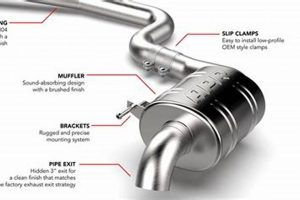
An alteration to the exhaust system of a Stihl chainsaw, typically involving the modification or replacement of the muffler, is a common practice among users seeking performance enhancements. This adjustment aims to reduce back pressure, facilitating a more efficient expulsion of exhaust gases from the engine’s combustion chamber. A practical example includes drilling additional holes in the existing muffler or installing an aftermarket component designed for increased flow.
The significance of this modification lies in its potential to improve the power output and overall efficiency of the chainsaw. By allowing the engine to breathe more freely, it can lead to increased horsepower and torque, especially at higher RPMs. Historically, such adjustments were often performed by experienced chainsaw users and mechanics to optimize the performance of their equipment for demanding tasks like felling large trees or professional logging operations. Furthermore, this tuning practice can affect engine temperature and fuel consumption.
The following sections will delve into specific techniques for performing this alteration, potential risks and benefits, safety considerations, and the tools and materials required for a successful implementation. The impact on noise levels and compliance with environmental regulations will also be addressed.
Tips for Stihl Chainsaw Exhaust System Modification
The following guidelines are intended to provide information regarding the practice of altering the exhaust system of Stihl chainsaws. These recommendations emphasize caution and adherence to safety protocols throughout the process.
Tip 1: Prioritize Safety Equipment. Before commencing any modification, ensure appropriate personal protective equipment is utilized. This includes, but is not limited to, eye protection, hearing protection, and gloves.
Tip 2: Assess Engine Condition. Verify the chainsaw engine is in good working order prior to alteration. Modifications to a poorly maintained engine may exacerbate existing problems or introduce new complications.
Tip 3: Research Specific Models. Exhaust system designs vary across different Stihl chainsaw models. Research the specific model to be modified to understand its unique characteristics and potential challenges.
Tip 4: Start with Small Adjustments. When modifying the muffler, begin with small, incremental changes. Overly aggressive modifications can negatively impact engine performance and longevity.
Tip 5: Monitor Engine Temperature. After modification, closely monitor the engine temperature during operation. Overheating can indicate an excessively lean fuel mixture or inadequate exhaust flow.
Tip 6: Recalibrate Carburetor Settings. Altering the exhaust flow often necessitates adjustments to the carburetor settings to maintain optimal air-fuel mixture. Consult the chainsaw’s manual or a qualified technician for guidance.
Tip 7: Understand Potential Warranty Implications. Be aware that modifications to the chainsaw’s exhaust system may void the manufacturer’s warranty. Consider this factor before proceeding.
These guidelines underscore the importance of careful planning and execution when considering modifications to a Stihl chainsaw’s exhaust system. Prioritizing safety, understanding the specific model, and making incremental adjustments are critical for achieving desired performance improvements while minimizing potential risks.
The next section will explore potential pitfalls and troubleshooting techniques related to chainsaw exhaust system alterations.
1. Performance Enhancement

Performance enhancement is a central motivation for undertaking alterations to a Stihl chainsaw’s muffler. This adjustment seeks to optimize engine output by modifying the exhaust flow characteristics. The effectiveness of such modifications is directly linked to the specific adjustments made and the overall condition of the engine.
- Reduced Back Pressure
Modification to the muffler, such as increasing outlet size or altering internal baffling, reduces back pressure on the piston. Lower back pressure allows the engine to expel exhaust gases more efficiently, potentially increasing power output, particularly at higher RPMs. For instance, a logger might modify a chainsaw used for felling large trees to gain increased cutting speed. However, excessively reducing back pressure can negatively affect torque at lower RPMs.
- Improved Cylinder Scavenging
Efficient exhaust expulsion contributes to better cylinder scavenging. Scavenging refers to the process of removing exhaust gases from the cylinder and replacing them with a fresh air-fuel mixture. A well-scavenged cylinder results in a more complete combustion cycle and improved engine performance. Poorly executed modifications can disrupt scavenging, leading to reduced power and increased fuel consumption. For example, badly shaped exhaust ports.
- Heat Dissipation Effects
Altering the muffler can influence heat dissipation from the engine. Some modifications may increase airflow around the cylinder and muffler, aiding in cooling. Conversely, other modifications may impede airflow, leading to elevated engine temperatures, potentially causing damage over time. A balanced approach is required to optimize both exhaust flow and thermal management.
- Carburetor Adjustment Necessity
Changes in exhaust flow caused by altering the muffler frequently necessitate adjustments to the carburetor. The carburetor regulates the air-fuel mixture entering the engine. When exhaust flow is modified, the optimal air-fuel ratio may shift. Failure to adjust the carburetor can lead to a lean or rich fuel mixture, resulting in reduced power, increased emissions, or even engine damage. A lean running condition would likely result in overheating, thus an increased risk of seized piston.
In summary, performance enhancement through muffler modification on a Stihl chainsaw is a multifaceted process involving careful consideration of exhaust flow dynamics, engine temperature, and fuel mixture calibration. While potential gains in power output are achievable, a thorough understanding of the engine’s operation and the potential consequences of modifications is crucial to avoid compromising engine reliability and longevity.
2. Engine Safety

Engine safety, in the context of Stihl chainsaw exhaust system modifications, is of paramount importance. Alterations intended to enhance performance must be approached with a comprehensive understanding of their potential impact on the engine’s operational parameters and longevity. Modifications conducted without adequate consideration for engine safety can lead to reduced lifespan, increased maintenance requirements, or even catastrophic failure.
- Overheating Risks
Muffler modifications can significantly alter the engine’s operating temperature. Restricting or excessively freeing exhaust flow can both lead to overheating. Restricted flow causes heat buildup within the engine, while excessively free flow may lead to a lean fuel mixture, resulting in higher combustion temperatures. For example, if a chainsaw is employed for prolonged cutting tasks, the sustained high temperatures can lead to piston scoring or cylinder damage. Accurate monitoring and adjustment are crucial.
- Lubrication Impairment
Improper carburetor adjustment following a muffler modification can disrupt the engine’s lubrication. A lean fuel mixture reduces the amount of oil delivered to critical engine components, such as the piston and bearings. This can result in increased friction and accelerated wear. For instance, a user who neglects to richen the carburetor setting after opening up the exhaust may experience premature engine failure due to inadequate lubrication.
- Detonation and Pre-Ignition
Significant alterations to exhaust characteristics can increase the risk of detonation or pre-ignition. These abnormal combustion events occur when the air-fuel mixture ignites prematurely or uncontrollably, generating excessive pressure and heat. Detonation can cause severe damage to the piston, connecting rod, and crankshaft. For example, using a fuel with a lower octane rating than recommended after modifying the muffler can exacerbate this risk.
- Structural Integrity
Modifications that compromise the structural integrity of the muffler can pose a safety hazard. Welding failures, cracks, or loose components can allow hot exhaust gases to escape, potentially causing burns or igniting flammable materials. For example, a poorly executed weld on an aftermarket muffler can fail under the stress of engine vibrations, leading to the release of hot gases and the potential for fire.
The connection between exhaust system modifications and engine safety highlights the necessity for a cautious and informed approach. While performance enhancements may be appealing, they must be balanced against the potential risks to engine health. Proper planning, careful execution, and diligent monitoring are essential to ensure that alterations do not compromise the reliability and longevity of the Stihl chainsaw.
3. Noise Amplification

The modification of a Stihl chainsaw muffler invariably leads to an increase in operational noise. This amplification is a direct consequence of altering the muffler’s design, which is originally engineered to attenuate exhaust sound waves. Modifications that reduce back pressure often simultaneously diminish the muffler’s sound-dampening capabilities, resulting in elevated noise levels.
- Direct Path Exhaust Emission
The primary function of a chainsaw muffler is to redirect and diffuse exhaust gases, reducing the intensity of sound waves emitted. Modifying the muffler, such as by drilling additional holes or removing internal baffles, creates a more direct path for exhaust gases to escape. This results in a less obstructed release of sound energy, contributing to a noticeable increase in noise levels. For example, a stock Stihl MS 271 may emit 103 dB, while a modified version could easily exceed 110 dB.
- Frequency Spectrum Shift
Changes to the muffler’s internal structure not only increase the overall sound level but can also alter the frequency spectrum of the noise produced. Certain modifications may accentuate high-frequency components, resulting in a sharper, more piercing sound that is perceived as more irritating than the lower frequencies typically attenuated by stock mufflers. This alteration in frequency can affect the perceived loudness and potentially increase the risk of hearing damage. As an example, removing internal baffles can cause a sharp, high frequency ringing noise.
- Resonance and Echo Effects
The interior design of a muffler is carefully calibrated to minimize resonance and echo. Modifications that alter the muffler’s internal volume or shape can introduce new resonant frequencies, amplifying certain sound waves and creating a more pronounced echoing effect. This can lead to an increase in perceived noise levels and a more unpleasant auditory experience. Specifically, empty muffler cans without internal baffling may resonate loudly.
- Environmental Impact and Regulations
Increased noise levels from modified chainsaws can have negative consequences for both the operator and the surrounding environment. Prolonged exposure to high noise levels can lead to hearing damage, and excessive noise can disturb wildlife and violate noise ordinances in residential or recreational areas. Many jurisdictions have regulations limiting chainsaw noise emissions, and modifications that exceed these limits may result in fines or restrictions on usage. For instance, forestry services typically demand stock or extremely quiet aftermarket muffler options.
The link between chainsaw muffler modifications and noise amplification necessitates a careful evaluation of the potential benefits and drawbacks. While performance enhancements may be desired, the increased noise levels can have significant implications for operator health, environmental impact, and regulatory compliance. Users should consider these factors before undertaking modifications and take appropriate measures to mitigate the negative consequences of increased noise, such as using hearing protection and adhering to noise regulations.
4. Warranty Voidance
Altering a Stihl chainsaw muffler directly impacts the validity of the manufacturer’s warranty. The warranty agreement typically stipulates that modifications or alterations to the original equipment, particularly those affecting engine performance or emissions, will void the coverage. The rationale is that such alterations introduce variables outside of the manufacturer’s control, making it impossible to guarantee the equipment’s continued reliable operation within specified parameters. As a direct consequence, any subsequent failure or damage attributable to the muffler modification, or any related engine component, will not be covered under the original warranty terms. A practical example includes a scenario where a chainsaw engine seizes due to overheating following muffler modification. Stihl, upon inspection, would likely deny a warranty claim due to the unauthorized alteration affecting engine temperature management.
The importance of understanding warranty implications is paramount before undertaking any muffler modification. While performance gains might be anticipated, the potential for incurring substantial repair costs should a failure occur needs careful consideration. The absence of warranty coverage transfers the financial burden of repairs entirely to the owner. Furthermore, the burden of proof rests on the owner to demonstrate that a failure was not caused by the modification, a challenging task. For instance, if a modified chainsaw develops a fuel system issue unrelated to the muffler itself, the manufacturer may still dispute the warranty claim, arguing that the alteration introduced unforeseen stresses on other components. Therefore, careful assessment of the risk-reward ratio is essential.
In summary, muffler modification on a Stihl chainsaw constitutes a significant deviation from the manufacturer’s specifications, rendering the original warranty null and void. This carries practical implications for repair costs and potential financial liabilities. Consequently, a thorough evaluation of the potential performance benefits against the risk of losing warranty coverage is imperative. Alternative options, such as using the chainsaw within its stock configuration or considering manufacturer-approved performance upgrades (if available), should be explored to mitigate the risk of voiding the warranty.
5. Carburetor Recalibration
Carburetor recalibration is a necessary consequence of altering the exhaust flow on a Stihl chainsaw. The stock carburetor settings are optimized for the original exhaust configuration, and any modification to the muffler necessitates adjustments to maintain the correct air-fuel ratio for efficient combustion and engine health.
- Air-Fuel Mixture Adjustment
The primary goal of carburetor recalibration is to restore the optimal air-fuel mixture. Modifying the muffler, generally increasing exhaust flow, leans out the mixture. This means there is a higher proportion of air relative to fuel. A lean mixture can cause overheating, reduced power, and engine damage. Recalibration involves adjusting the carburetor’s high and low speed jets to increase fuel delivery, thereby correcting the air-fuel ratio. For example, after opening the exhaust, the chainsaw may exhibit a high-pitched whine at full throttle, indicating a lean condition requiring fuel enrichment.
- Idle Speed Setting
Altering exhaust back pressure can also affect the engine’s idle speed. A modified muffler may cause the engine to idle too fast or too slow, potentially leading to stalling or clutch engagement at idle. Carburetor recalibration includes adjusting the idle speed screw to achieve the correct RPM setting. A correctly adjusted idle prevents the chain from moving when the throttle is released and allows for smooth transitions from idle to operating speeds.
- High-Speed Needle Optimization
The high-speed needle controls fuel flow at wide-open throttle. After a muffler modification, optimizing this setting is critical for maximizing power output and preventing engine damage. Running too lean at high speed can cause piston seizure, while running too rich can lead to reduced power and increased carbon buildup. Adjustment is typically performed incrementally, listening for the engine’s response and monitoring spark plug color for signs of lean or rich conditions. Achieving optimal high-speed needle adjustment allows the engine to reach its peak performance potential safely.
- Low-Speed Needle Adjustment
The low-speed needle regulates fuel flow at idle and during initial throttle application. Proper adjustment ensures smooth acceleration and prevents stalling when transitioning from idle to higher RPMs. A lean low-speed setting can cause hesitation or stumbling off-idle, while a rich setting may result in a sluggish response and excessive smoke. The optimal setting provides a seamless transition and responsive throttle control for efficient and precise cutting.
In conclusion, carburetor recalibration is inextricably linked to muffler modification on a Stihl chainsaw. While the muffler modification aims to enhance performance, carburetor recalibration ensures that the engine operates within safe and efficient parameters. Failure to recalibrate the carburetor after altering the exhaust system can negate any performance gains and, more importantly, compromise the engine’s long-term health.
Frequently Asked Questions
The following questions address common inquiries and concerns related to altering the exhaust system, specifically the muffler, on Stihl chainsaws. The information provided is intended for educational purposes and should not be interpreted as encouragement to violate safety guidelines or applicable regulations.
Question 1: What is the primary purpose of modifying a Stihl chainsaw muffler?
The primary purpose is to reduce exhaust back pressure, potentially enhancing engine performance by allowing for more efficient expulsion of exhaust gases. This can result in increased power output, particularly at higher engine speeds.
Question 2: Does altering the muffler affect engine temperature?
Yes, modifying the muffler can influence engine temperature. Depending on the type of modification, it can either increase or decrease heat dissipation, potentially leading to overheating or excessively lean running conditions if not properly managed.
Question 3: Is carburetor recalibration necessary after a muffler modification?
Carburetor recalibration is generally required after modifying the muffler. Altering exhaust flow necessitates adjustments to the air-fuel mixture to maintain optimal combustion and prevent engine damage from lean or rich running conditions.
Question 4: Does modifying the muffler void the chainsaw’s warranty?
Modifying the muffler typically voids the manufacturer’s warranty. Alterations to the original equipment, particularly those affecting engine performance, generally negate warranty coverage.
Question 5: Does modifying the muffler significantly increase noise levels?
Modifying the muffler will increase noise levels. The muffler is designed to attenuate exhaust sound, and altering its design reduces its sound-dampening capabilities. Increased noise can violate noise ordinances and contribute to hearing damage.
Question 6: What are the potential risks associated with this practice?
Potential risks include engine damage from overheating or improper air-fuel mixture, increased noise levels exceeding acceptable limits, voiding the manufacturer’s warranty, and potentially violating environmental regulations related to emissions and noise.
Understanding the ramifications of modifying a chainsaw’s muffler is paramount. The potential benefits of improved performance must be carefully weighed against the associated risks and legal considerations.
The following section will explore alternatives to muffler modification and best practices for maintaining a Stihl chainsaw’s performance and longevity.
Stihl Muffler Mod
This exploration of the “stihl muffler mod” has illuminated the complexities inherent in altering a Stihl chainsaw’s exhaust system. The endeavor, while promising potential performance gains, introduces a spectrum of considerations ranging from engine safety and noise amplification to warranty implications and regulatory compliance. The necessity for carburetor recalibration following the modification further underscores the intricacy of the process.
Given the potential risks and far-reaching consequences, a cautious and informed approach is essential. The decision to undertake a “stihl muffler mod” should be predicated on a thorough understanding of the associated trade-offs and a commitment to responsible implementation. Furthermore, adherence to safety protocols and relevant regulations is paramount to mitigating potential harm and ensuring legal compliance. Continued research and careful consideration are strongly advised before proceeding with any such modification.