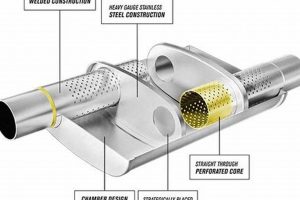
A do-it-yourself exhaust silencing device involves the construction or modification of a vehicle’s exhaust component using non-professional methods and often readily available materials. This approach provides an alternative to purchasing commercially manufactured units. Example implementations can range from basic repairs to complete custom fabrications.
The motivation behind constructing such a device often stems from economic considerations, the desire for customized performance characteristics (such as sound tuning or flow optimization), or the satisfaction derived from hands-on automotive work. Historically, resourcefulness and mechanical aptitude have driven individuals to create such solutions, particularly in situations where access to specialized parts or services is limited.
The subsequent sections will detail essential considerations, applicable techniques, and crucial safety precautions relevant to the fabrication of custom exhaust components. Further discussion will encompass material selection, design principles, and the legal ramifications associated with modifying vehicle exhaust systems.
Essential Considerations for DIY Exhaust Silencer Projects
This section provides crucial guidelines for individuals undertaking the construction or modification of vehicle exhaust silencing devices. Adherence to these points will improve project outcomes and safety.
Tip 1: Prioritize Safety Equipment. Welding, cutting, and grinding operations generate hazardous byproducts. Wear appropriate personal protective equipment, including a welding helmet, gloves, eye protection, and respiratory protection, without exception.
Tip 2: Material Selection is Critical. Use high-quality steel or aluminized steel tubing with a gauge appropriate for exhaust system applications. Inferior materials will corrode rapidly and compromise structural integrity.
Tip 3: Accurate Measurement and Fitment are Mandatory. Meticulously measure the existing exhaust system and plan the modifications accordingly. Inaccurate measurements lead to leaks and performance issues.
Tip 4: Employ Professional Welding Techniques. Utilize MIG or TIG welding for strong, leak-free joints. Novice welders should practice on scrap metal before working on the actual exhaust system.
Tip 5: Ensure Proper Exhaust Flow. Design the internal baffling or chambering to minimize backpressure while effectively attenuating sound. Excessively restrictive designs diminish engine performance.
Tip 6: Verify Compliance with Local Regulations. Understand and adhere to noise emission standards and exhaust modification laws in the relevant jurisdiction to avoid legal repercussions.
Tip 7: Test Thoroughly After Installation. After completing the installation, thoroughly inspect for leaks, proper mounting, and any potential interference with other vehicle components.
Careful planning, quality materials, and proficient execution are vital for a successful exhaust silencing device project. Neglecting any of these aspects can result in safety hazards, performance degradation, or legal issues.
The following section will address advanced design considerations and troubleshooting common issues encountered during such projects.
1. Safety Precautions

The fabrication or modification of vehicle exhaust silencing devices necessitates strict adherence to safety protocols. Failure to implement adequate safety measures can result in severe physical injury, property damage, and environmental contamination. The potential hazards include burns from hot metal, eye damage from welding sparks, respiratory issues from welding fumes, cuts from handling metal, and fire risks from flammable materials.
One illustrative scenario is the improper handling of welding equipment. Without appropriate eye and face protection, exposure to intense ultraviolet radiation can cause arc eye, a painful condition characterized by corneal inflammation. Insufficient ventilation during welding operations can lead to the inhalation of toxic fumes containing heavy metals, increasing the risk of respiratory illnesses. A real-world example involves a hobbyist who, neglecting to wear gloves, sustained severe burns while handling recently welded exhaust tubing. Securely supporting the vehicle on jack stands is paramount; reliance solely on a jack can lead to sudden vehicle collapse, causing crush injuries.
Consequently, integrating comprehensive safety precautions into every stage of the silencing device project is paramount. This includes utilizing personal protective equipment, ensuring proper ventilation, employing safe lifting techniques, and adhering to established welding safety procedures. The proactive adoption of these measures significantly mitigates the inherent risks and promotes a safe working environment.
2. Material Compatibility

Material compatibility is a central determinant in the success and longevity of any do-it-yourself exhaust silencing project. The operating environment of a vehicle exhaust system presents significant challenges due to high temperatures, corrosive gases, and constant vibration. Selecting incompatible materials inevitably leads to premature failure and potential safety hazards.
- Corrosion Resistance
The exhaust stream contains water vapor and acidic byproducts of combustion, creating a highly corrosive environment. Standard carbon steel will rapidly rust, leading to structural weakening and exhaust leaks. Aluminized steel offers enhanced corrosion resistance due to a protective aluminum coating. Stainless steel, particularly grades 304 and 409, provides superior corrosion resistance and is the preferred material for long-term durability in exhaust applications.
- Thermal Expansion
Exhaust systems experience extreme temperature fluctuations during operation. Different materials expand and contract at varying rates. Combining materials with significantly different thermal expansion coefficients can induce stress concentrations at joints, leading to cracks and leaks. For instance, welding stainless steel directly to mild steel without proper transition techniques can result in premature joint failure due to differential expansion.
- Welding Compatibility
The ease and strength of welding directly impacts the integrity of a home-fabricated exhaust silencing device. Not all materials are readily weldable to each other. Welding dissimilar metals often requires specialized filler metals and welding techniques to prevent the formation of brittle intermetallic compounds. Attempting to weld aluminum to steel, for example, presents significant challenges and typically requires specialized processes like friction stir welding or the use of transition adapters.
- Temperature Resistance
Exhaust gases can reach temperatures exceeding 1000 degrees Fahrenheit. Materials must maintain their structural integrity and mechanical properties at these elevated temperatures. Plastics and low-temperature alloys are entirely unsuitable for exhaust applications. High-temperature alloys like Inconel or titanium offer exceptional heat resistance but are typically cost-prohibitive for DIY projects. Selecting materials with appropriate temperature ratings is critical for preventing deformation, cracking, and premature failure.
Therefore, carefully considering these facets of material compatibility is crucial for any individual undertaking the fabrication or modification of a exhaust component. Proper material selection ensures structural integrity, extends the lifespan of the system, and minimizes the risk of hazardous exhaust leaks. Ignoring these factors can lead to costly repairs and potentially dangerous operating conditions.
3. Welding Proficiency

Welding proficiency is paramount in the successful construction of a do-it-yourself exhaust silencing device. The integrity of the entire system hinges on the strength and reliability of the welded joints. Inadequate welding technique invariably results in exhaust leaks, structural failures, and reduced performance, negating the potential benefits of a custom-built component. The causal relationship is direct: insufficient welding skills lead to a compromised, potentially hazardous final product. For example, porosity in a weld, caused by improper shielding gas coverage, weakens the joint and allows corrosive exhaust gases to escape, accelerating component degradation. The weld quality is not merely aesthetic; it is a critical functional element.
A practical example highlights the importance of welding proficiency. Consider a situation where an individual fabricates an exhaust silencing device with aesthetically pleasing welds but lacks proper penetration. Over time, the vibrations and thermal stresses inherent in exhaust systems cause these surface welds to crack, leading to exhaust leaks and a noticeable increase in noise levels. Proper welding involves careful preparation of the metal surfaces, precise control of welding parameters (current, voltage, travel speed), and the use of appropriate filler metals. Mastery of these techniques ensures a strong, durable, and leak-free joint capable of withstanding the harsh conditions of an exhaust system. Without this mastery, any attempt at a “diy muffler” is inherently flawed.
In summary, welding proficiency is not merely a desirable skill but an absolute necessity for constructing a functional and safe exhaust silencing device. The structural integrity, performance, and longevity of the fabricated component are directly correlated with the quality of the welds. Addressing this critical aspect ensures a successful project outcome and prevents potentially hazardous situations. The challenges involved in mastering welding techniques should not be underestimated, and proper training or guidance is strongly recommended before undertaking such a project.
4. Acoustic Principles

The effective design and construction of a do-it-yourself exhaust silencing device necessitates a foundational understanding of acoustic principles. The ability to attenuate undesirable engine noise while minimizing exhaust flow restriction is contingent upon applying these principles to the design process. Failing to account for these factors will inevitably result in an ineffective or even detrimental modification.
- Sound Absorption
Sound absorption involves the dissipation of acoustic energy as it passes through a material. Porous materials, such as fiberglass packing, are commonly used in exhaust silencing devices to absorb sound waves. The effectiveness of sound absorption depends on the material’s properties, thickness, and the frequency of the sound. For instance, high-frequency exhaust noise is more easily absorbed by fiberglass than low-frequency rumble. In a DIY setting, selecting an appropriate packing material and ensuring its proper density within the silencer are essential for achieving desired noise reduction.
- Sound Reflection and Interference
Sound reflection occurs when sound waves encounter a boundary and are redirected. Exhaust silencing devices often utilize chambers and baffles to strategically reflect sound waves, causing them to interfere destructively. Destructive interference happens when two waves with opposite phases combine, resulting in a reduction in amplitude (sound level). An example is the Helmholtz resonator, a tuned chamber that reflects sound waves at a specific frequency to cancel them out. Achieving effective sound cancellation in a DIY exhaust silencing device requires precise calculations and careful construction to ensure proper chamber dimensions and baffle placement.
- Frequency and Wavelength
The frequency of a sound wave determines its pitch, while the wavelength is the distance between successive crests or troughs of the wave. Different engine types produce exhaust noise with varying frequency spectra. Understanding the dominant frequencies in the exhaust noise is crucial for designing an effective silencing device. For example, a small, high-revving engine will typically generate higher frequency noise than a large, low-revving engine. In a DIY project, this understanding allows the builder to tailor the silencing device’s design to target the specific frequencies that need to be attenuated.
- Backpressure and Flow Dynamics
While attenuating sound, a silencing device must also minimize backpressure, the resistance to exhaust flow. Excessive backpressure reduces engine performance. Acoustic principles dictate that changes in cross-sectional area and sharp bends in the exhaust path create turbulence and increase backpressure. A well-designed silencing device balances the need for sound attenuation with the requirement for unrestricted exhaust flow. DIY builders must carefully consider the internal geometry of their silencing device to minimize flow restrictions while maximizing acoustic performance.
In summation, the successful application of acoustic principles is critical for fabricating an effective home-built exhaust silencing device. The interplay between sound absorption, reflection, frequency manipulation, and flow dynamics dictates the component’s ability to reduce noise without compromising engine performance. A thorough understanding of these concepts empowers individuals to design and construct silencing solutions tailored to their specific needs and vehicle characteristics.
5. Exhaust Flow

Exhaust flow constitutes a critical performance parameter in internal combustion engines, and its manipulation is a primary consideration in the design and construction of any exhaust system, including those fabricated via do-it-yourself methods. The efficiency with which exhaust gases are evacuated from the engine cylinders directly impacts power output, fuel economy, and emissions characteristics. Consequently, any “diy muffler” project must prioritize the optimization of exhaust flow to achieve desired performance gains without compromising essential operational parameters.
- Backpressure Mitigation
Backpressure, the resistance to exhaust gas flow, is an unavoidable consequence of any exhaust system. However, excessive backpressure impedes the engine’s ability to expel spent gases efficiently, leading to reduced volumetric efficiency and diminished power output. A well-designed “diy muffler” minimizes backpressure through strategic selection of pipe diameter, smooth bends, and optimized internal baffling. The cross-sectional area of the tubing and the design of any internal chambers should facilitate unobstructed gas movement. Failure to mitigate backpressure can negate any potential performance benefits derived from a custom-built exhaust system.
- Scavenging Enhancement
Exhaust scavenging refers to the process of using the negative pressure waves created by exiting exhaust pulses to help draw out remaining exhaust gases from the cylinder and even assist in drawing in the fresh intake charge. Properly designed exhaust systems, including components created through “diy muffler” projects, can capitalize on this phenomenon to improve cylinder filling and combustion efficiency. This is typically achieved through carefully calculated pipe lengths and collector designs that promote wave propagation and tuned resonance. Effective scavenging contributes to improved torque and horsepower, particularly at specific engine speeds.
- Turbulence Minimization
Turbulence within the exhaust system disrupts smooth airflow and increases backpressure. Sharp bends, abrupt changes in diameter, and poorly designed internal baffling all contribute to turbulence. A “diy muffler” design should prioritize smooth, gradual transitions in diameter and avoid sharp angles. The internal structure should be designed to guide exhaust gases along a streamlined path, minimizing eddies and flow separation. Reduction of turbulence enhances exhaust flow efficiency and improves engine performance.
- Velocity Optimization
Maintaining appropriate exhaust gas velocity is crucial for optimal performance. While larger diameter pipes reduce backpressure, excessively large diameters can decrease gas velocity, hindering scavenging and potentially leading to condensation of exhaust gases within the system. A “diy muffler” design should balance pipe diameter and internal volume to maintain an optimal gas velocity that promotes efficient scavenging and minimizes backpressure. Careful consideration of these factors ensures that the exhaust system complements the engine’s operating characteristics and enhances overall performance.
In conclusion, the optimization of exhaust flow is a critical consideration in any “diy muffler” project. Mitigation of backpressure, enhancement of scavenging, minimization of turbulence, and optimization of gas velocity are key design objectives. A well-executed “diy muffler” should not only reduce exhaust noise but also improve engine performance by facilitating efficient evacuation of exhaust gases and promoting effective cylinder filling. The careful application of fluid dynamics principles and meticulous fabrication techniques are essential for achieving these goals.
6. Legal Compliance
The fabrication or modification of vehicle exhaust systems, including the creation of a “diy muffler”, is subject to a complex array of legal and regulatory requirements that vary significantly by jurisdiction. Compliance with these mandates is not optional; failure to adhere to applicable laws can result in substantial fines, vehicle impoundment, mandatory repairs, and even legal action. Therefore, any individual undertaking a “diy muffler” project must prioritize understanding and satisfying all pertinent legal obligations.
- Noise Emission Standards
Virtually all jurisdictions impose noise emission limits on motor vehicles. These limits are typically expressed in decibels (dB) and are measured under specific operating conditions. A “diy muffler” that increases exhaust noise beyond legal limits is a clear violation. Enforcement can range from warnings to significant financial penalties. For instance, many states conduct roadside noise checks, and vehicles exceeding the permissible dB level are issued citations requiring correction and re-inspection. The designer of a “diy muffler” must possess the means to accurately measure the sound output of the completed system.
- Emissions Control Regulations
Federal and state laws mandate the use of specific emissions control devices, such as catalytic converters, on motor vehicles. Tampering with or removing these devices is strictly prohibited and carries severe penalties. A “diy muffler” project that eliminates or bypasses required emissions control components is illegal. Moreover, even modifications that alter the performance characteristics of emissions control devices may be deemed non-compliant. For example, altering the exhaust flow in a manner that reduces the efficiency of the catalytic converter can result in violations of emissions regulations.
- Safety Standards
Exhaust systems must adhere to certain safety standards to prevent hazards such as carbon monoxide leaks, fire risks, and structural failures. A “diy muffler” must be designed and constructed to withstand the operating conditions of the vehicle and to prevent the escape of exhaust gases into the passenger compartment. Furthermore, the system must be securely mounted to prevent detachment and potential damage to other vehicle components or the roadway. Non-compliance with safety standards can result in vehicle inspection failures and potential liability for accidents caused by system malfunction.
- Vehicle Modification Laws
Many jurisdictions have laws governing vehicle modifications, including alterations to the exhaust system. These laws may require inspections, certifications, or approvals for modified vehicles. A “diy muffler” project may need to be reviewed by a qualified technician or regulatory agency to ensure compliance with applicable vehicle modification laws. Failure to obtain necessary approvals can result in registration revocation and restrictions on vehicle operation. The specific requirements vary significantly depending on the location, making it crucial to research local regulations thoroughly before commencing any modification.
The construction of a “diy muffler” presents numerous legal considerations that cannot be overlooked. Adherence to noise emission standards, emissions control regulations, safety standards, and vehicle modification laws is essential for avoiding legal repercussions and ensuring responsible vehicle operation. Prior to undertaking any “diy muffler” project, individuals must conduct thorough research to understand the applicable legal requirements in their jurisdiction and ensure that their design and construction methods comply with all relevant regulations. The potential consequences of non-compliance far outweigh any perceived cost savings or performance gains.
7. Secure Mounting
The structural integrity and operational safety of a “diy muffler” system are inextricably linked to the security of its mounting. Inadequate attachment methods introduce stresses that accelerate material fatigue, increasing the risk of component failure and potential hazards. Vibration, thermal expansion, and road impacts subject the exhaust system to constant dynamic loads. Without robust and appropriately engineered mounting, these forces can lead to cracking, detachment, and consequential damage to the vehicle or surrounding environment. The “diy muffler”s effectiveness relies not only on its design for sound dampening and exhaust flow but also on its ability to remain firmly affixed to the vehicles chassis.
Effective secure mounting strategies involve the use of vibration-isolating hangers, properly sized brackets, and robust attachment hardware. Real-world examples of failed mounting reveal the potential consequences: an exhaust system detaching from the vehicle while in motion poses a significant hazard to other drivers; fractured hangers contribute to increased noise levels due to vibration transfer; and improperly tightened clamps allow exhaust leaks, exposing occupants to harmful gases. Furthermore, the material compatibility of mounting hardware with the “diy muffler” and vehicle chassis is crucial to prevent galvanic corrosion, which can weaken connections over time. Consideration must also be given to accessibility for future maintenance or adjustments, ensuring that mounting points do not obstruct essential service areas.
In summary, secure mounting is not a mere afterthought in the “diy muffler” construction process but rather an integral engineering consideration. It directly impacts the system’s durability, safety, and compliance with operational standards. Thorough planning, selection of appropriate materials, and meticulous installation are essential to mitigate the risks associated with inadequate mounting. The ultimate success of a custom-built exhaust system hinges on the ability to withstand the rigors of the road, a capability fundamentally dependent on the security of its attachment.
Frequently Asked Questions
This section addresses common inquiries and misconceptions surrounding the design, construction, and legal considerations of custom vehicle exhaust silencing components.
Question 1: Is the construction of a “diy muffler” system a cost-effective alternative to purchasing a commercially manufactured unit?
The economic viability of constructing a “diy muffler” depends heavily on the skills, resources, and objectives of the individual. While material costs may be lower than the purchase price of a brand-name muffler, the project necessitates specialized tools, welding expertise, and a significant time commitment. Furthermore, the long-term durability and performance of a “diy muffler” may not match that of a professionally engineered product. A thorough cost-benefit analysis, considering both direct expenses and opportunity costs, is advisable before undertaking such a project.
Question 2: What are the potential performance benefits of a “diy muffler” system compared to a stock exhaust?
A properly designed and constructed “diy muffler” system can potentially improve engine performance by reducing backpressure and optimizing exhaust flow. However, gains are not guaranteed and depend heavily on the specific design parameters and engine characteristics. Poorly designed systems can actually decrease performance. Any modifications must be implemented with a thorough understanding of exhaust tuning principles and a consideration of the vehicle’s overall engine management system.
Question 3: What materials are most suitable for constructing a durable and reliable “diy muffler”?
The selection of appropriate materials is crucial for the longevity of a “diy muffler”. Stainless steel, particularly grades 304 and 409, offers excellent corrosion resistance and high-temperature strength. Aluminized steel provides a more cost-effective alternative with reasonable corrosion protection. Mild steel is generally unsuitable due to its susceptibility to rust. Welding compatibility, thermal expansion coefficients, and budget constraints are all factors that influence material selection.
Question 4: What are the primary legal considerations when modifying a vehicle’s exhaust system with a “diy muffler”?
Modifying a vehicle’s exhaust system is subject to numerous legal regulations, including noise emission standards, emissions control requirements, and vehicle modification laws. A “diy muffler” must comply with all applicable laws to avoid fines, vehicle impoundment, and legal penalties. It is incumbent upon the individual undertaking the project to research and understand the specific regulations in their jurisdiction before commencing any modifications.
Question 5: How can one ensure the safe installation and operation of a “diy muffler” system?
The safe installation of a “diy muffler” requires meticulous attention to detail and adherence to established safety procedures. The vehicle must be securely supported on jack stands, and personal protective equipment, including eye protection, gloves, and respiratory protection, must be worn at all times. All connections must be properly sealed to prevent exhaust leaks, and the system must be securely mounted to the vehicle chassis. Post-installation inspection is essential to identify and rectify any potential hazards.
Question 6: What are the common challenges encountered during “diy muffler” construction, and how can they be addressed?
Common challenges include welding difficulties, achieving proper exhaust flow characteristics, and ensuring adequate sound attenuation. Welding challenges can be mitigated through practice and proper welding technique. Exhaust flow optimization requires an understanding of fluid dynamics principles. Sound attenuation can be enhanced through strategic design of internal baffling and the use of sound-absorbing materials. Careful planning, meticulous execution, and a willingness to learn from mistakes are essential for overcoming these challenges.
The information presented here is intended for informational purposes only and does not constitute professional advice. Individuals considering a “diy muffler” project should consult with qualified automotive professionals and legal experts to ensure compliance with all applicable regulations and safety standards.
The subsequent section will delve into advanced topics related to exhaust system design and performance optimization.
Conclusion
The preceding exploration of “diy muffler” construction underscores the multifaceted nature of such endeavors. It reveals the intricate interplay between acoustic principles, material science, welding techniques, legal compliance, and safety considerations. The successful fabrication of a functional and legally compliant exhaust component demands a thorough understanding of these domains and a commitment to meticulous execution. It is imperative to recognize that a “diy muffler” project is not merely a matter of assembling readily available parts; it is an exercise in engineering and craftsmanship.
The potential benefits of a custom-built exhaust component, including cost savings and performance enhancements, must be carefully weighed against the inherent risks and challenges. Individuals considering such projects should approach them with diligence, seeking guidance from qualified professionals when necessary, and prioritizing safety above all else. The responsible application of knowledge and skill is paramount in ensuring that a “diy muffler” contributes to vehicle performance and enjoyment without compromising public safety or environmental stewardship. Therefore, proceed with caution and awareness.
![Kenz Muffler Oxnard: [Year] Best Muffler Shop Near You | Best Mufflers for Cars & Trucks | Performance, Sound & Durability Upgrades](https://dnamufflers.com/wp-content/uploads/2026/09/th-82-300x200.jpg "Kenz Muffler Oxnard: [Year] Best Muffler Shop Near You Best Mufflers for Cars & Trucks | Performance, Sound & Durability Upgrades")