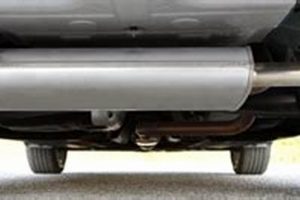
A device designed to reduce exhaust noise using electronic components, this technology contrasts with traditional mufflers that rely solely on passive sound absorption and reflection. An operational instance involves microphones capturing exhaust sounds, an electronic control unit (ECU) analyzing the signal, and speakers emitting opposing sound waves to cancel the original noise.
The incorporation of this technology offers potential advantages such as enhanced noise reduction, especially at lower frequencies, and the ability to tailor the exhaust sound profile. Historically, noise reduction in vehicles relied heavily on physical baffles and sound-absorbing materials. Modern advancements in electronics and acoustics have allowed for the development of more sophisticated and adaptable noise control systems.
The following sections will delve into the operational principles, advantages, limitations, and future trends related to electronically controlled exhaust noise reduction systems.
Optimizing Performance with Electronically Controlled Exhaust Noise Reduction
This section provides guidance on maximizing the effectiveness and longevity of systems utilizing electronic noise cancellation within exhaust systems.
Tip 1: Regular System Diagnostics: Employ diagnostic tools to routinely assess the functionality of the microphone(s), ECU, and speaker(s) within the system. Early detection of malfunctions prevents degraded noise cancellation performance.
Tip 2: Ensure Secure Wiring Connections: Vibration and heat can loosen electrical connections. Periodically inspect and secure all wiring to guarantee uninterrupted signal transmission between system components.
Tip 3: Monitor Speaker Condition: Speakers are susceptible to damage from extreme temperatures and exposure to exhaust gases. Examine speakers for signs of degradation, such as cracking or corrosion, and replace as needed.
Tip 4: Calibration After Exhaust Modifications: Alterations to the exhaust system upstream or downstream can affect the accuracy of the noise cancellation. Recalibrate the system’s ECU to account for changes in the exhaust sound profile.
Tip 5: Software Updates: Ensure the ECU has the latest software updates from the manufacturer. These updates often contain improvements to noise cancellation algorithms and overall system performance.
Tip 6: Address Exhaust Leaks Promptly: Exhaust leaks can introduce extraneous noise, potentially overwhelming the noise cancellation capabilities of the system. Repair any leaks immediately.
Adhering to these recommendations ensures consistent and optimized performance from the noise reduction system, contributing to a quieter and more refined driving experience.
The subsequent section will summarize the key aspects of electronically controlled exhaust noise reduction and provide a concluding perspective.
1. Noise Cancellation Effectiveness

Noise Cancellation Effectiveness forms a cornerstone in the evaluation and application of electronically controlled exhaust systems. Its relevance stems from the primary function of these systems: to mitigate unwanted exhaust noise. The degree to which a system achieves this goal directly influences its perceived value and practical utility.
- Frequency-Specific Attenuation
Effective systems exhibit varying degrees of attenuation across different frequencies. Lower frequencies, typically associated with drone and rumble, often prove more challenging to cancel due to longer wavelengths. High noise cancellation effectiveness requires tailored strategies that address specific frequency ranges effectively. Systems may employ different algorithms and speaker configurations optimized for particular frequency bands, and examples are the automotive vehicles which have different modes for noise and quite mode.
- Environmental Adaptation
The effectiveness is contingent upon its ability to adapt to varying operating conditions. Engine load, vehicle speed, and ambient temperature can all influence exhaust noise characteristics. Systems with advanced adaptive algorithms continuously monitor these parameters and adjust noise cancellation parameters accordingly, ensuring consistent performance across a wide range of driving scenarios. Advanced ECU has this capabilities.
- Signal Processing Accuracy
Precise signal processing is paramount. The system must accurately capture and analyze exhaust sounds in real-time to generate an appropriate anti-phase signal. Errors in signal processing can lead to incomplete cancellation or, in some cases, amplification of undesirable noise frequencies. The quality of microphones and the computational power of the ECU play crucial roles in ensuring signal processing accuracy. This processing requires fast computer like ECU.
- System Latency
The time delay between capturing the exhaust sound and generating the corresponding anti-phase signal impacts the overall effectiveness. Excessive latency can result in delayed noise cancellation, leading to audible artifacts. Systems strive to minimize latency through optimized signal processing algorithms and high-speed electronic components. Lower latency contributes to a more seamless and natural-sounding noise cancellation experience. Fast and powerful ECU can handle this workload and process.
These facets highlight the multifaceted nature of achieving high noise cancellation effectiveness. Successful implementation requires a holistic approach that considers frequency-specific attenuation, environmental adaptation, signal processing accuracy, and system latency. It ultimately represents the core performance metric defining the worth of the overall electronically controlled exhaust noise reduction system. When these noise cancelled effectively will define the active muffler performance.
2. Electronic Control Unit (ECU)

The Electronic Control Unit (ECU) serves as the central processing hub for electronically controlled exhaust noise reduction systems. It governs the functionality of the system by receiving, analyzing, and acting upon acoustic data obtained from microphone sensors. Without a properly functioning ECU, the active noise cancellation process would cease, rendering the active muffler ineffective.
The ECU’s primary role involves interpreting signals from microphones placed strategically within the exhaust system. These signals represent the acoustic characteristics of the exhaust noise. The ECU then employs algorithms to generate an anti-phase audio signal, which is subsequently amplified and transmitted through speakers integrated into the muffler assembly. The generated sound wave interferes destructively with the original exhaust noise, leading to a reduction in overall sound pressure levels. In contemporary high-performance vehicles, for example, the ECU enables drivers to select distinct exhaust sound profiles, altering the character and volume of the exhaust note based on driver preference or driving conditions. The precision and speed with which the ECU can execute these calculations directly influences the effectiveness of the noise cancellation and the responsiveness of the sound profile adjustments.
The ECU is a component of the active muffler. The Electronic Control Unit is vital for modern systems. Its processing power, memory capacity, and software sophistication determine the effectiveness and adaptability of the system. As automotive technology advances, the importance of the ECU in electronically controlled exhaust noise reduction will only increase, enabling more nuanced and personalized acoustic experiences.
3. Speaker Performance/Durability

Speaker performance and durability constitute critical considerations in the design and implementation of electronically controlled exhaust systems. The operational environment within a muffler subjects speakers to conditions that demand both robust construction and consistent acoustic output.
- Thermal Resistance
Speakers integrated into an electronically controlled exhaust system are exposed to high temperatures generated by exhaust gases. Prolonged exposure to elevated temperatures can degrade speaker components, leading to diminished performance or complete failure. Speakers designed for this application must incorporate materials and construction techniques that ensure thermal stability and resistance to heat-induced degradation. Without this resistance, the noise cancellation suffers.
- Vibration Endurance
The constant vibrations produced by the engine and exhaust flow create a mechanically challenging environment for speaker systems. These vibrations can cause component fatigue, leading to speaker cone damage, voice coil misalignment, and eventual failure. Robust speaker designs should incorporate features such as reinforced cones, durable suspensions, and secure mounting systems to withstand prolonged exposure to these vibrational forces. Vibration must be limited.
- Acoustic Output Fidelity
The effectiveness of an electronically controlled exhaust system hinges on the speaker’s ability to accurately reproduce the anti-phase sound wave generated by the ECU. Speakers must exhibit a flat frequency response and low distortion to ensure precise noise cancellation across the desired frequency range. Deviations from these performance characteristics can result in incomplete noise cancellation or the introduction of unwanted acoustic artifacts. Acoustic output must have high fidelity.
- Resistance to Corrosive Elements
Exhaust gases contain various corrosive compounds that can attack speaker components, particularly metallic parts and electrical connections. Over time, corrosion can compromise the speaker’s structural integrity and electrical conductivity, leading to diminished performance or failure. Protective coatings and corrosion-resistant materials are essential for ensuring long-term reliability in this environment. Corrosion must be minimized.
The interplay between these factors directly impacts the efficacy and longevity of active muffler systems. Speakers designed to withstand the rigors of the exhaust environment, while maintaining high fidelity acoustic output, are essential for achieving optimal noise cancellation and ensuring continued performance. The speaker performance dictates how the noise could be canceled.
4. Microphone Sensitivity

In electronically controlled exhaust systems, often referred to as active mufflers, microphone sensitivity is a critical performance parameter. It dictates the system’s ability to accurately capture and process the acoustic signature of exhaust noise. Insufficient sensitivity results in a weak or incomplete signal, leading to ineffective noise cancellation. Conversely, excessive sensitivity can amplify extraneous sounds, such as wind noise or road vibrations, potentially compromising the system’s overall performance. For example, a system designed for a high-performance sports car requires microphones capable of capturing a broad range of frequencies and sound pressure levels accurately. The effectiveness of the active noise cancellation is directly proportional to the accuracy of the initial acoustic data acquired by the microphones.
Real-world application demonstrates the practical significance of appropriate microphone sensitivity. In luxury vehicles equipped with active noise cancellation, precisely calibrated microphones positioned within the exhaust system sample the sound profile. This data informs the electronic control unit (ECU), which generates an opposing sound wave through speakers in the muffler. If the microphone sensitivity is not optimized for the vehicle’s specific exhaust characteristics, the resulting noise cancellation may be inadequate, diminishing the perceived quality of the vehicle. Furthermore, environmental factors, such as temperature variations and exposure to moisture, can affect microphone sensitivity over time, necessitating periodic recalibration or replacement to maintain optimal performance.
In summary, microphone sensitivity plays a pivotal role in the effective operation of electronically controlled exhaust noise reduction systems. The selection and calibration of microphones with appropriate sensitivity characteristics are crucial for achieving desired noise cancellation performance. Overcoming challenges related to environmental factors and maintaining long-term accuracy are essential for ensuring consistent and reliable operation of active mufflers. A direct connection between “Microphone Sensitivity” and “active muffler” is crucial for system performance.
5. Exhaust System Integration

The integration of an electronically controlled exhaust noise reduction system within a vehicle’s exhaust architecture is a multifaceted process with direct implications for system performance and overall vehicle dynamics. Seamless integration is paramount for maximizing the benefits of noise cancellation while minimizing potential drawbacks. This process extends beyond merely attaching components; it involves careful consideration of acoustic characteristics, thermal management, and structural integrity.
- Acoustic Matching
Optimal system performance hinges on matching the acoustic characteristics of the active muffler components to the existing exhaust system. This includes factors such as pipe diameter, resonator placement, and overall exhaust flow. Mismatches can lead to undesirable resonance, increased backpressure, and reduced noise cancellation effectiveness. In systems designed for gasoline engines, the active components are often positioned downstream of catalytic converters to minimize exposure to high temperatures and corrosive gases. Conversely, diesel applications may require placement closer to the engine to address low-frequency noise components more effectively. The location is key for both system setup and acoustic tuning.
- Thermal Management
Electronically controlled exhaust systems generate heat, particularly in the vicinity of the speakers and electronic control unit (ECU). Adequate thermal management is crucial for preventing component overheating and ensuring long-term reliability. This may involve incorporating heat shields, air cooling ducts, or liquid cooling systems to dissipate excess heat. In hybrid vehicles, where exhaust temperatures may fluctuate dramatically, sophisticated thermal management strategies are necessary to maintain consistent system performance. A lot of heat need to be controlled.
- Structural Integrity
The addition of active components increases the weight and complexity of the exhaust system. It is imperative to ensure that the integration process does not compromise the structural integrity of the existing exhaust architecture. Reinforcements, vibration dampers, and secure mounting systems are essential for preventing fatigue failures and maintaining long-term durability. In off-road vehicles, which are subjected to extreme stresses, particularly robust integration techniques are required. The structure needs to be strong.
- CAN Bus Communication
Modern active muffler systems are often integrated with the vehicle’s Controller Area Network (CAN) bus to receive real-time data on engine speed, throttle position, and other relevant parameters. This data enables the ECU to dynamically adjust noise cancellation settings based on driving conditions. Seamless communication with the CAN bus is crucial for achieving optimal performance and avoiding conflicts with other vehicle systems. For example, systems may automatically reduce noise cancellation at high speeds to enhance driver feedback and situational awareness. Without this seamless communication, issues could arise.
These integration aspects highlight the need for a holistic approach to electronically controlled exhaust noise reduction. Effective integration optimizes noise cancellation performance, ensures long-term reliability, and minimizes potential drawbacks. Successful execution requires a deep understanding of acoustic principles, thermal dynamics, and vehicle electrical systems.
6. Software Optimization
Software optimization is inextricably linked to the performance and effectiveness of electronically controlled exhaust systems. The algorithms and programming within the electronic control unit (ECU) dictate how the system interprets acoustic data, generates anti-phase sound waves, and adapts to changing operating conditions. Poorly optimized software can result in ineffective noise cancellation, undesirable sound artifacts, or increased power consumption, rendering the hardware components of the active muffler sub-optimal. Consider a scenario where the software’s frequency analysis is inaccurate. The resulting anti-phase signal will not precisely mirror the exhaust noise, leading to incomplete cancellation and the persistence of unwanted sound. Software optimization ensures that the systems hardware is working according to its capabilities.
Modern vehicles frequently employ active sound design to augment the engine’s natural sound or create a more pleasing auditory experience. Software optimization allows engineers to precisely control the characteristics of the synthesized sound, tailoring it to specific driving modes or driver preferences. For example, a sport mode might enhance the engine’s growl, while a comfort mode prioritizes quietness. Furthermore, diagnostic routines embedded within the software facilitate troubleshooting and maintenance. Real-time monitoring of microphone performance, speaker impedance, and ECU temperature provides valuable insights into the system’s health, enabling proactive detection and resolution of potential issues. The proper maintenance will keep the system up to date and perform better.
In conclusion, software optimization represents a critical element in the design and operation of electronically controlled exhaust systems. It transforms raw acoustic data into effective noise cancellation and enables sophisticated sound design capabilities. Challenges include the need for continuous adaptation to evolving engine technologies and the increasing complexity of vehicle electronic architectures. A focus on robust algorithms, efficient code, and thorough testing remains essential for maximizing the performance and reliability of active muffler systems. Therefore the software is the brain of the “active muffler” system.
7. Power Consumption
Power consumption represents a significant factor in the design and implementation of electronically controlled exhaust systems. As active components requiring electrical energy, these systems introduce an additional load on the vehicle’s electrical infrastructure. Careful consideration of power demands is essential to ensure compatibility with existing electrical systems and to minimize any negative impact on fuel efficiency.
- Amplifier Efficiency
The amplifiers driving the speakers within the active muffler system are responsible for a substantial portion of the overall power consumption. Amplifier efficiency, defined as the ratio of output power to input power, directly impacts the amount of energy drawn from the vehicle’s electrical system. Inefficient amplifiers dissipate a significant amount of energy as heat, increasing the load on the vehicle’s cooling system and reducing overall system efficiency. For instance, Class D amplifiers, known for their high efficiency, are frequently employed in active muffler applications to minimize power consumption and heat generation. Reducing the electrical waste is important.
- ECU Processing Load
The Electronic Control Unit (ECU) continuously processes acoustic data and generates anti-phase sound waves, requiring considerable computational resources. The processing load on the ECU directly correlates with its power consumption. More complex algorithms and faster sampling rates demand greater processing power, resulting in increased energy demands. Low-power microcontrollers and optimized software algorithms are employed to minimize the ECU’s power consumption while maintaining the necessary performance levels. The processor must do its job, efficiently.
- Speaker Impedance Matching
The electrical impedance of the speakers must be carefully matched to the amplifier to maximize power transfer and minimize losses. Impedance mismatches can lead to reduced output power, increased distortion, and elevated power consumption. In active muffler systems, impedance matching networks are frequently employed to ensure optimal power transfer between the amplifier and speakers. This guarantees that the amplifier is not wasting energy to send signals.
- Standby Power Draw
Even when the vehicle is not actively using the noise cancellation features, the active muffler system may consume a small amount of power in standby mode. This standby power draw can contribute to battery drain over extended periods, particularly if the vehicle is left unattended. Low-power sleep modes and intelligent power management strategies are implemented to minimize standby power consumption and prevent excessive battery discharge. When the car is not on, there is less power draw.
These facets underscore the importance of minimizing power consumption in electronically controlled exhaust noise reduction systems. Careful component selection, efficient circuit design, and intelligent power management strategies are essential for ensuring compatibility with vehicle electrical systems, optimizing fuel efficiency, and preventing battery drain. Therefore, the “active muffler” power efficiency is very important.
Frequently Asked Questions
The following questions address common inquiries regarding electronically controlled exhaust noise reduction technology, also known as active muffler systems. These answers are intended to provide accurate and concise information.
Question 1: What is the fundamental principle behind electronically controlled exhaust noise reduction?
This technology utilizes microphones to capture exhaust sounds. An electronic control unit (ECU) analyzes these signals and generates an opposing sound wave, which is then emitted through speakers within the exhaust system to cancel out the original noise.
Question 2: Are active mufflers compatible with all vehicle types?
Compatibility depends on several factors, including available space within the exhaust system, electrical system capacity, and ECU compatibility. Retrofitting existing vehicles may require modifications to accommodate the system.
Question 3: What are the potential drawbacks of using an active muffler?
Potential drawbacks include increased complexity, higher initial cost compared to passive mufflers, potential for electrical system strain due to power consumption, and the need for periodic maintenance of electronic components.
Question 4: How does temperature affect the performance of active muffler components?
Extreme temperatures can degrade the performance and lifespan of microphones, speakers, and the ECU. Systems designed for high-performance applications incorporate thermal management strategies to mitigate these effects.
Question 5: Can an active muffler alter the exhaust sound profile of a vehicle?
Yes, some systems allow for adjustable sound profiles, enabling the driver to customize the exhaust note based on driving conditions or personal preference. This is achieved through software control of the generated anti-phase sound wave.
Question 6: How does software affect the overall efficacy of electronically controlled exhaust noise reduction?
The software algorithms within the ECU are responsible for accurately analyzing exhaust sounds and generating the appropriate anti-phase signal. Optimized software is crucial for achieving effective noise cancellation and adapting to changing operating conditions.
Active muffler system can have performance and system configuration advantages. However, the technology also have the drawbacks.
The next section will present a concluding summary of key concepts.
Active Muffler
This exploration has detailed the function, components, and critical considerations associated with electronically controlled exhaust noise reduction systems. The effectiveness of these systems, contingent upon precise acoustic capture, sophisticated signal processing, and robust component durability, represents a significant advancement in vehicle noise management.
Continued refinement of active muffler technology holds the potential to significantly reduce noise pollution and enhance the driving experience. Further research into materials science, algorithm optimization, and system integration will be crucial in realizing the full capabilities of this technology and shaping the future of automotive sound engineering. The viability of the technology relies on continual improvement and adaptation.