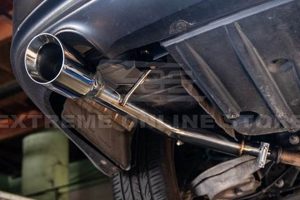
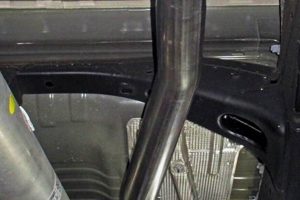
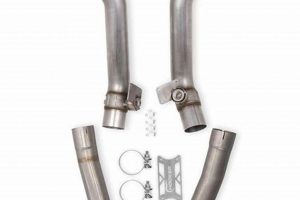
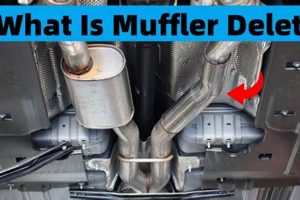
A common modification to the exhaust system of the sixth-generation Chevrolet Corvette involves removing the factory mufflers. This alteration fundamentally changes the vehicle’s auditory characteristics and exhaust flow dynamics. For instance, some owners choose this option to enhance the vehicle’s exhaust note.
The appeal of this modification lies primarily in the perceived improvement in exhaust sound and a potential increase in horsepower. Historically, performance enthusiasts have sought methods to reduce backpressure in exhaust systems, believing it enhances engine efficiency. This adjustment is a direct attempt to achieve that objective, often resulting in a louder and more aggressive sound profile.
The subsequent sections will delve into the potential advantages and disadvantages of this modification, along with considerations for legality, installation, and alternative exhaust system upgrades.
C6 Corvette Muffler Delete
Modifying the exhaust system of a C6 Corvette by eliminating the mufflers presents a specific set of factors that warrant careful evaluation. This modification impacts sound, performance, and regulatory compliance.
Tip 1: Research Local Regulations: Prior to undertaking this modification, confirm the legality within your jurisdiction. Many regions have noise ordinances that could result in fines or require restoration to the original exhaust configuration. Confirm noise level restrictions and potential inspection requirements.
Tip 2: Understand Sound Impact: Removing mufflers significantly amplifies exhaust volume. Consider the suitability of this change for daily driving and neighborhood considerations. Listen to sound clips of similar setups before committing to the modification.
Tip 3: Assess Performance Gains: While some claim increased horsepower, independent dyno testing is recommended to verify any measurable performance improvement. The impact on low-end torque should also be considered, as it may be negatively affected.
Tip 4: Evaluate Installation Options: Determine whether to perform the installation independently or engage a professional exhaust shop. Welding may be required, and proper fitment is essential to avoid leaks and potential damage.
Tip 5: Consider Alternative Exhaust Modifications: Investigate other exhaust system options, such as axle-back or cat-back systems. These may offer a balance between sound enhancement and performance gains while maintaining a degree of sound control.
Tip 6: Account for Potential Drone: “Drone,” a low-frequency resonance within the cabin, can be a common side effect. Research solutions such as resonators or strategically placed sound-deadening materials to mitigate this issue.
Tip 7: Preserve Original Components: Retain the factory mufflers to facilitate restoration to the original configuration if required for resale or compliance reasons.
Careful planning and awareness are paramount to making an informed decision regarding this type of exhaust modification. Evaluate the trade-offs between sound enhancement, potential performance gains, and adherence to legal requirements.
Subsequent sections will discuss specific product options and installation techniques in greater detail.
1. Exhaust note amplification

The direct consequence of eliminating mufflers from a C6 Corvette’s exhaust system is a significant increase in exhaust volume and a change in tonal characteristics. Mufflers are designed to attenuate sound waves generated by the engine’s combustion process. Their removal provides a less restrictive pathway for exhaust gases, resulting in a louder and often more aggressive sound. This amplification is a primary driver for individuals seeking this modification.
The magnitude and specific characteristics of the amplified exhaust note are influenced by various factors, including the engine’s inherent properties, the design of the remaining exhaust components (catalytic converters, resonators, and piping), and the overall length of the exhaust system. For example, a C6 Corvette equipped with aftermarket headers will exhibit a markedly different sound profile compared to a vehicle with stock manifolds after the muffler deletion. The subjective appeal of the amplified sound is highly variable; some perceive it as a desirable enhancement of the vehicle’s character, while others find it intrusive or socially unacceptable.
Understanding the relationship between muffler deletion and exhaust note amplification is crucial for owners considering this modification. It necessitates an assessment of individual preferences, local noise regulations, and the potential impact on daily driving enjoyment. Mitigation strategies, such as incorporating resonators, can be employed to manage the amplified sound and achieve a desired balance between volume and tonal quality. The increased volume is generally the main point for doing this modification.
2. Legality and Compliance

The modification of a C6 Corvette’s exhaust system through muffler deletion introduces significant considerations regarding legal compliance. Adherence to noise regulations and vehicle modification laws is paramount to avoid penalties and ensure responsible vehicle operation.
- State and Local Noise Ordinances
Many jurisdictions have established noise limits for vehicles operating on public roads. These ordinances often specify maximum permissible decibel levels at prescribed distances from the vehicle. Muffler deletion invariably increases exhaust noise, potentially exceeding these limits. Enforcement can range from warnings to fines, and in some cases, impoundment of the vehicle. It is imperative to research and understand the specific noise ordinances applicable to the intended area of operation.
- Vehicle Inspection Requirements
Several states mandate periodic vehicle inspections that include an assessment of the exhaust system. A vehicle with deleted mufflers may fail inspection if the exhaust system is deemed excessively loud or non-compliant with original equipment standards. Failure to pass inspection can result in restrictions on vehicle registration and operation. Confirming inspection criteria prior to modification is essential.
- Federal Emissions Standards
While muffler deletion primarily affects noise levels, it can indirectly impact emissions compliance. Altering the exhaust system may affect the performance of catalytic converters, which are crucial for reducing harmful emissions. Tampering with or removing catalytic converters is a federal offense, carrying substantial penalties. Ensure that muffler deletion does not compromise the functionality of emission control devices.
- Potential Legal Repercussions
Beyond fines and inspection failures, operating a vehicle with an illegal exhaust system can have broader legal implications. Repeated violations may lead to license suspension or revocation. Furthermore, excessively loud vehicles can be a nuisance to communities, potentially resulting in legal action from affected residents. Responsible modification requires considering the potential impact on others and adherence to all applicable laws.
The legal ramifications of muffler deletion on a C6 Corvette necessitate thorough investigation and informed decision-making. While the modification may offer perceived performance benefits or enhanced sound, the potential legal consequences outweigh these advantages in many cases. Alternatives, such as performance mufflers that comply with noise regulations, offer a more responsible approach to exhaust system modification. Legal compliance needs to be a priority consideration.
3. Potential performance impact

The modification of a C6 Corvette’s exhaust system through muffler deletion is often pursued with the expectation of enhanced engine performance. However, the actual impact on horsepower, torque, and overall drivability requires careful consideration and is not always a straightforward improvement.
- Exhaust Backpressure Dynamics
Mufflers contribute to exhaust backpressure, which, to a certain extent, can be beneficial for low-end torque production. Removing mufflers reduces backpressure, potentially improving high-RPM horsepower but possibly diminishing torque at lower engine speeds. The optimal balance between backpressure and exhaust flow depends on the engine’s specific design and operating characteristics. C6 corvettes have been known to slightly increase HP.
- Engine Management System Adaptation
Modern vehicles are equipped with sophisticated engine management systems (EMS) that adapt to changes in operating conditions. After muffler deletion, the EMS may attempt to compensate for the altered exhaust flow by adjusting fuel delivery and ignition timing. The extent of this adaptation and its impact on performance can vary. A dyno tune might be necessary to fully realize any potential performance gains.
- Resonance and Wave Tuning
Exhaust systems are designed to utilize resonance and wave tuning to optimize exhaust scavenging and cylinder filling. Muffler deletion disrupts these carefully engineered characteristics, potentially leading to unpredictable performance changes. A well-designed aftermarket exhaust system often incorporates specific resonance chambers to maximize these effects, which is lacking in a simple muffler delete.
- Impact on Fuel Efficiency
While performance is often the primary focus, changes to the exhaust system can also influence fuel efficiency. Removing mufflers may lead to a decrease in fuel economy, particularly during cruising conditions, due to the engine operating outside its optimal efficiency range. Monitoring fuel consumption after the modification is recommended to assess its real-world impact.
In summary, the potential performance impact of muffler deletion on a C6 Corvette is multifaceted and not guaranteed to produce positive results. While some owners may experience a perceived increase in horsepower, it is crucial to consider the trade-offs in terms of torque, engine management adaptation, resonance tuning, and fuel efficiency. A comprehensive evaluation, including dyno testing and professional tuning, is recommended to accurately assess the true performance impact of this modification. In most cases, the sound increase is more substantial than any actual performance enhancement.
4. Installation Complexities

The procedure of eliminating mufflers from a C6 Corvette’s exhaust system, while seemingly straightforward, presents potential complexities that necessitate careful planning and execution. The skill level required, the tools necessary, and potential unforeseen complications can impact the success and longevity of the modification.
- Cutting and Welding Requirements
Depending on the chosen method and the specific exhaust system configuration, the removal of mufflers may require cutting the existing exhaust pipes. Subsequently, welding is often necessary to either connect the remaining pipes directly or to install replacement sections. Welding necessitates specialized equipment and proficiency to ensure a secure and leak-free connection. Inadequate welding can lead to exhaust leaks, reduced performance, and potential safety hazards.
- Fitment and Alignment Issues
After the mufflers are removed, achieving proper fitment and alignment of the remaining exhaust components is critical. Misalignment can cause stress on exhaust hangers, leading to premature failure. It can also result in the exhaust system contacting the vehicle’s body, generating unwanted noise and vibration. Careful measurements and adjustments are essential to ensure proper alignment and prevent future issues.
- Sensor and Electrical Considerations
While muffler deletion itself does not directly involve sensors or electrical components, care must be taken to avoid damaging nearby wiring or sensors during the installation process. The exhaust system is located in close proximity to various electrical harnesses and sensors, particularly oxygen sensors. Accidental damage to these components can result in engine performance issues and diagnostic trouble codes.
- Potential for Corrosion and Rust
The exhaust system is exposed to harsh environmental conditions, including heat, moisture, and road salt. Cutting and welding the exhaust pipes can expose raw metal, making it susceptible to corrosion and rust. Applying protective coatings, such as high-temperature paint or rust inhibitors, to exposed metal surfaces is crucial to prevent premature degradation and extend the lifespan of the modified exhaust system.
These installation complexities highlight the importance of either possessing the necessary skills and equipment or engaging a qualified professional for muffler deletion on a C6 Corvette. A poorly executed installation can lead to various problems, negating any potential benefits and potentially causing further damage to the vehicle. Thorough planning and careful execution are paramount for a successful and trouble-free modification.
5. Drone resonance risk
The removal of mufflers from a C6 Corvette’s exhaust system frequently introduces the phenomenon of “drone,” characterized by a low-frequency resonance inside the vehicle’s cabin. This resonance, often perceived as an intrusive booming or humming sound, can significantly detract from the driving experience, particularly during sustained cruising speeds. Understanding the factors contributing to drone is crucial for mitigating its effects.
- Exhaust System Harmonics
Each exhaust system exhibits inherent resonant frequencies determined by its length, diameter, and configuration. Mufflers are designed to attenuate specific frequencies, effectively canceling out or reducing the amplitude of these resonant sounds. Removing the mufflers alters the system’s harmonics, allowing previously suppressed frequencies to become dominant, resulting in the perception of drone.
- Vehicle Body Resonance
The C6 Corvette’s body structure, including the chassis and interior panels, also possesses natural resonant frequencies. When the exhaust system’s resonant frequencies align with those of the vehicle body, sympathetic vibrations occur, amplifying the drone effect within the cabin. This amplification is often most pronounced at specific engine RPM ranges corresponding to cruising speeds.
- Interior Acoustics
The interior cabin’s acoustic properties, including the materials used for seats, carpets, and trim, influence the severity of drone. Hard, reflective surfaces tend to exacerbate the resonance, while sound-absorbing materials can help to dampen it. The C6 Corvette’s interior, while sporty, may not provide optimal sound absorption, contributing to the drone issue following muffler deletion.
- Mitigation Strategies
Various strategies can be employed to mitigate drone resonance. These include the installation of resonators, which are designed to cancel out specific frequencies, the addition of sound-deadening materials to the vehicle’s interior, and modifications to the exhaust system’s routing or length. The effectiveness of these strategies varies depending on the severity of the drone and the specific characteristics of the exhaust system.
The drone resonance risk associated with muffler deletion on a C6 Corvette is a significant consideration for owners contemplating this modification. While the enhanced exhaust sound may be appealing, the potential for intrusive drone can negatively impact the overall driving experience. Careful planning and the implementation of appropriate mitigation strategies are essential to minimize this undesirable side effect. Resonators are the most popular to fix this sound issue with C6 corvettes muffler delete modification.
6. Alternative exhaust options

When contemplating exhaust modifications for a C6 Corvette, the prospect of muffler deletion often arises. However, several alternative exhaust systems offer varying degrees of performance enhancement and sound modification, providing options for those seeking a balance between auditory impact and practical considerations.
- Axle-Back Systems
Axle-back systems replace the exhaust components from the rear axle to the exhaust tips, typically including mufflers. These systems offer a moderate increase in exhaust sound and may provide a slight performance improvement. They are generally easier to install than cat-back systems and represent a less drastic change compared to muffler deletion. Examples include systems from Borla, Magnaflow, and Corsa, each offering a unique sound profile. They are less extreme than C6 corvette muffler delete and will satisfy a balance of aggressive sound and normal driving.
- Cat-Back Systems
Cat-back systems replace the exhaust components from the catalytic converters to the exhaust tips. These systems typically offer a more significant performance gain than axle-back systems due to the larger diameter piping and less restrictive mufflers. They also provide a more aggressive exhaust sound. Installation is more involved than axle-back systems. Brands like American Racing Headers and Stainless Works offer cat-back systems designed for the C6 Corvette.
- Performance Mufflers
Instead of complete muffler deletion, replacing the factory mufflers with high-performance aftermarket mufflers is an alternative. These mufflers are designed to provide a louder and more aggressive exhaust sound while maintaining some degree of sound control and backpressure. They represent a middle ground between the stock system and a muffler delete, offering a balance between sound and performance. Flowmaster and SLP are manufacturers of performance mufflers suitable for the C6 Corvette.
- Exhaust Cutouts
Exhaust cutouts offer a unique alternative by allowing users to bypass the mufflers with the flip of a switch or valve. When closed, the exhaust flows through the mufflers, maintaining a quieter sound level. When open, the exhaust is routed directly from the exhaust pipes, mimicking the sound of muffler deletion. These systems offer flexibility but may not be legal in all areas. Electric or vacuum-operated cutouts are available from various manufacturers.
These alternative exhaust options present viable pathways for C6 Corvette owners seeking exhaust modifications. Each option offers a distinct compromise between sound, performance, cost, and installation complexity, serving as alternatives for c6 corvette muffler delete. The decision should be based on individual preferences, budget constraints, and adherence to local regulations.
Frequently Asked Questions
This section addresses common inquiries regarding the removal of mufflers from the exhaust system of a sixth-generation Chevrolet Corvette. The information provided aims to offer clarity and guidance for informed decision-making.
Question 1: Will deleting the mufflers increase my C6 Corvette’s horsepower?
The impact on horsepower is often minimal and may not be measurable without dyno testing. While reduced backpressure can theoretically improve high-RPM horsepower, the gains are typically modest. A proper dyno tune is often required to realize any potential performance increase.
Question 2: Is C6 Corvette muffler delete legal?
The legality depends on local noise ordinances. Many jurisdictions have restrictions on exhaust noise levels. Removing mufflers typically increases exhaust volume, potentially violating these regulations. Confirm local laws before proceeding with the modification.
Question 3: Will I experience drone after removing the mufflers on C6 Corvette?
Drone, a low-frequency resonance inside the cabin, is a common side effect. The severity varies depending on the specific exhaust system configuration and vehicle acoustics. Resonators or sound-deadening materials can help mitigate drone.
Question 4: Can I install the muffler delete myself on C6 Corvette, or do I need a professional?
Installation may require cutting and welding exhaust pipes. Unless possessing the necessary skills and equipment, professional installation is recommended to ensure proper fitment and prevent leaks.
Question 5: Does C6 Corvette muffler delete void my car’s warranty?
Modifying the exhaust system may void the warranty on related components. Consult the vehicle’s warranty documentation and clarify with the manufacturer regarding potential warranty implications.
Question 6: What are some alternatives to muffler delete for my C6 Corvette?
Axle-back systems, cat-back systems, and performance mufflers offer varying degrees of sound enhancement and performance gains while maintaining some level of sound control. Exhaust cutouts provide the option to bypass the mufflers on demand.
In summary, muffler deletion on a C6 Corvette involves trade-offs between sound, performance, legality, and potential drawbacks like drone. Careful consideration of these factors is crucial for making an informed decision.
The subsequent section will provide information on troubleshooting common issues related to C6 Corvette exhaust systems.
C6 Corvette Muffler Delete
This exploration of the C6 Corvette muffler delete modification has highlighted several critical aspects. The alteration significantly impacts exhaust sound, potentially increases performance marginally, and introduces considerations related to legality, drone resonance, and installation complexity. While the enhanced auditory experience is a primary motivator, potential drawbacks and regulatory compliance demand careful deliberation.
Ultimately, the decision to undertake a C6 Corvette muffler delete rests on a comprehensive evaluation of individual priorities, legal constraints, and a realistic understanding of the modification’s potential consequences. Further research and consultation with automotive professionals are encouraged to ensure a responsible and informed decision aligned with personal preferences and regional regulations.