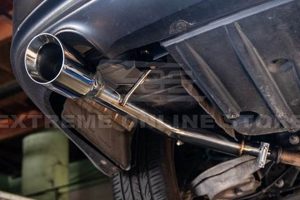
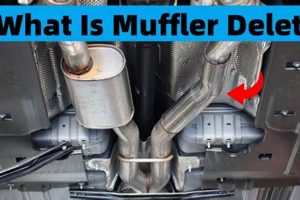
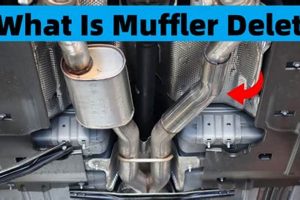
The act of removing the factory-installed mufflers on a seventh-generation (C7) Chevrolet Corvette is a modification commonly undertaken by automotive enthusiasts. This alteration directly impacts the vehicle’s exhaust system, altering the sound characteristics produced by the engine. As an example, some owners choose this to achieve a louder, more aggressive exhaust note.
This modification is favored primarily for the enhanced auditory experience it provides. The elimination of mufflers often results in a deeper, more resonant sound, appealing to drivers seeking a more visceral connection with their vehicle’s performance. Historically, modifying exhaust systems has been a method to personalize vehicle sound and potentially increase exhaust flow, though the latter effect from simply removing mufflers may be minimal on modern vehicles. Understanding local noise regulations is critical prior to making such alterations to ensure compliance.
The following sections will delve into the specific impacts on sound, performance considerations, potential drawbacks, and alternative exhaust modifications available for the C7 Corvette.
Considerations for Muffler Removal on a C7 Corvette
Before proceeding with the removal of mufflers on a C7 Corvette, careful consideration of the potential consequences is advised. The following points highlight key factors to evaluate prior to undertaking this modification.
Tip 1: Noise Level Assessment: Understand local noise ordinances and regulations. Removing mufflers invariably increases exhaust volume, potentially leading to legal repercussions in areas with strict noise limits. Utilize a sound meter application on a smartphone to gauge the existing exhaust volume as a baseline for comparison.
Tip 2: Drone Evaluation: Be aware of the potential for increased drone, a low-frequency resonance experienced within the vehicle cabin, particularly at cruising speeds. Research online forums and Corvette communities to understand the drone characteristics reported by other owners who have performed this modification.
Tip 3: Potential Performance Impact: While often perceived as performance enhancing, the sole act of removing mufflers may not yield significant horsepower gains on a modern vehicle like the C7 Corvette. Backpressure changes can, in certain scenarios, negatively affect engine performance. Dyno testing before and after the modification is the only way to definitively assess any performance alterations.
Tip 4: Alternative Exhaust Options: Explore alternative exhaust systems that offer a balance of increased sound and performance without the potential drawbacks of a complete muffler removal. Cat-back systems, axle-back systems, and aftermarket mufflers provide varying degrees of sound enhancement while maintaining some level of backpressure management.
Tip 5: Reversibility: Consider the reversibility of the modification. Cutting and welding exhaust pipes can make returning to the stock configuration more challenging. Options such as bolt-on muffler deletes or exhaust cutouts offer greater flexibility to revert to the original exhaust system.
Tip 6: Professional Installation: Employ a qualified and experienced exhaust technician for any cutting, welding, or fabrication work. Improper welding can lead to exhaust leaks and compromised structural integrity.
Thorough consideration of these aspects will enable a more informed decision regarding the appropriateness of removing mufflers from a C7 Corvette.
The subsequent sections will address the legal aspects, sound characteristics, and the potential benefits versus disadvantages of this modification in greater detail.
1. Aggressive exhaust note
The desire for an aggressive exhaust note is frequently the primary motivation behind the removal of mufflers on a C7 Corvette. This modification directly alters the sound characteristics of the vehicle, leading to a more pronounced and assertive auditory experience.
- Increased Sound Volume
Removal of mufflers eliminates a significant barrier to exhaust flow, resulting in a substantial increase in the overall volume of the exhaust. This louder sound is often perceived as more aggressive and sporty, appealing to enthusiasts seeking a heightened sensory experience.
- Deeper Tone and Resonance
The absence of mufflers allows the engine’s natural exhaust note to become more prominent. This often translates into a deeper, more resonant sound, particularly at lower engine speeds. The resulting tone is frequently described as more muscular and commanding.
- Enhanced Auditory Feedback
The enhanced exhaust note provides increased auditory feedback to the driver regarding engine performance and throttle response. This can contribute to a more engaging and visceral driving experience, allowing the driver to better perceive the vehicle’s behavior.
- Potential for Annoyance
While an aggressive exhaust note may be desirable to some, it can also be perceived as excessive or annoying by others. The increased volume and potentially harsh tones can lead to complaints from neighbors, passengers, or law enforcement, depending on local regulations and individual tolerances.
The pursuit of an aggressive exhaust note through muffler removal is a trade-off. While it delivers a more pronounced and engaging sound, it also introduces potential drawbacks related to noise levels and social acceptance. Careful consideration of these factors is essential before proceeding with this modification.
2. Potential legality issues
The removal of mufflers from a C7 Corvette, while often pursued for enhanced auditory experience, introduces several potential legal challenges that must be carefully considered. Failure to comply with relevant regulations can result in fines, vehicle impoundment, or other penalties.
- Noise Ordinances and Regulations
Municipalities and states frequently have noise ordinances that regulate the permissible sound levels emitted by vehicles. These laws establish decibel limits that vehicles must adhere to. Removing mufflers invariably increases exhaust volume, potentially exceeding these limits. Enforcement of noise ordinances can range from warnings to citations, depending on the severity and frequency of the violation.
- Federal Emissions Standards
While removing only the mufflers typically does not directly affect catalytic converters or other federally mandated emissions control devices, some interpretations of the Clean Air Act could classify any alteration to the exhaust system as a violation if it increases emissions, even if marginally. Though not always the primary focus of enforcement for muffler deletes, this remains a potential legal consideration.
- State and Local Vehicle Inspections
Many states and local jurisdictions require periodic vehicle inspections to ensure compliance with safety and emissions standards. During these inspections, the absence of mufflers may be grounds for failing the inspection, preventing the vehicle from being legally operated on public roads. Inspection criteria vary widely, so local requirements should be thoroughly investigated.
- Subjective Interpretation by Law Enforcement
Even in the absence of specific decibel limits, law enforcement officers often possess the discretion to cite vehicles for excessive noise based on subjective assessment. A C7 Corvette without mufflers is more likely to attract attention and scrutiny from law enforcement, increasing the risk of receiving a citation even if the sound level is technically within legal limits.
The “c7 corvette muffler delete” modification necessitates thorough research into local and federal regulations pertaining to vehicle noise and emissions. The absence of due diligence can lead to significant legal repercussions, ultimately undermining the enjoyment derived from the enhanced exhaust note. It is imperative to balance the desire for auditory enhancement with the responsibility to operate a legally compliant vehicle.
3. Drone resonance potential
The “c7 corvette muffler delete” modification carries a significant risk of introducing or amplifying drone resonance within the vehicle cabin. Drone, characterized as a low-frequency, sustained humming or booming sound, typically manifests at cruising speeds or during periods of light throttle application. The removal of mufflers, which are designed to attenuate specific sound frequencies, alters the exhaust system’s acoustic properties, potentially creating conditions that exacerbate drone. This phenomenon arises from the interaction of exhaust pulses and the resonance frequencies of the exhaust system and vehicle chassis. When these frequencies align, they can amplify each other, resulting in the unpleasant and often fatiguing in-cabin drone effect. For example, a C7 Corvette traveling at a constant 70 mph on the highway after a muffler delete might experience a noticeable drone around the 1800-2200 RPM range, negatively impacting the comfort of the driving experience. The intensity and frequency range of drone are influenced by factors such as exhaust pipe diameter, length, and the presence or absence of resonators.
Mitigating drone resonance after a muffler delete often requires the implementation of supplementary modifications. These may include the installation of resonators, which are specifically designed to cancel out certain frequencies, or the application of sound-deadening materials to the vehicle’s floorboards and cabin. Helmholtz resonators, tuned to a specific frequency, are commonly employed to counteract drone by creating destructive interference. Furthermore, adjustments to exhaust pipe routing or the addition of crossover pipes can also alter the exhaust system’s resonant characteristics and reduce drone. Addressing drone effectively necessitates a comprehensive understanding of exhaust system acoustics and the specific frequencies that contribute to the resonance within the vehicle. Ignoring drone can lead to driver fatigue, passenger discomfort, and an overall diminished driving experience.
In summary, the “c7 corvette muffler delete” modification frequently introduces or amplifies drone resonance, a significant drawback that can negatively affect the driving experience. Understanding the causes and potential remedies for drone is crucial for those considering this modification. While the allure of an enhanced exhaust note is strong, the potential for unwanted drone should be thoroughly evaluated, and appropriate mitigation strategies should be considered to maintain a comfortable and enjoyable driving environment. Balancing the desired sound with the potential for drone remains a key challenge in this modification.
4. Minimal power gains
The widely held perception that removing mufflers from a C7 Corvette yields significant horsepower increases is often inaccurate. Modern vehicle exhaust systems, including those on the C7 Corvette, are engineered for optimal performance, taking into account factors such as backpressure and exhaust velocity. The simple act of removing mufflers, without making other complementary modifications, typically results in negligible gains in horsepower or torque. This is because the factory exhaust system, including the catalytic converters and exhaust manifold, constitutes a significant portion of the overall exhaust restriction. Removing only the mufflers addresses a relatively small part of this system.
Furthermore, altering the exhaust system without recalibrating the engine’s computer can sometimes lead to a decrease in performance. Modern engine control units (ECUs) rely on sensor data, including exhaust backpressure, to optimize fuel delivery and ignition timing. Changes to the exhaust system that are not accounted for by the ECU can disrupt this optimization process, potentially resulting in a loss of power, particularly at certain engine speeds. For example, some owners who have performed a muffler delete have reported a slight decrease in low-end torque, even if they perceive an increase in overall responsiveness due to the louder exhaust note. Dyno testing, performed before and after the modification, is the only reliable method to determine the actual impact on horsepower and torque.
In summary, while a “c7 corvette muffler delete” may provide an enhanced auditory experience, expectations regarding performance gains should be tempered. The modification typically yields minimal, if any, measurable increase in horsepower or torque. Significant power increases necessitate more comprehensive modifications, such as upgraded exhaust manifolds, high-flow catalytic converters, and a professional ECU tune. Therefore, focusing solely on muffler removal as a means of boosting performance is often a misguided approach. The primary benefit of a “c7 corvette muffler delete” remains the alteration of the vehicle’s exhaust note, not a substantial improvement in power output.
5. Reversibility challenges
The “c7 corvette muffler delete” modification presents distinct challenges concerning reversibility, particularly depending on the methods employed during the process. If the original mufflers are removed via cutting the existing exhaust pipes and welding in straight pipes or simply leaving the pipes open, returning the vehicle to its original factory configuration can become a complex undertaking. This requires either sourcing a replacement set of factory mufflers and having them professionally welded back into place, or replacing the entire section of the exhaust system that was altered. The welding process itself can introduce further complications, potentially affecting the structural integrity of the exhaust system and creating areas susceptible to leaks.
The method of removal significantly impacts the difficulty of reversing the “c7 corvette muffler delete”. Alternatives exist that simplify the reversibility process. For example, some aftermarket kits offer “axle-back” systems that bolt directly onto the existing exhaust flanges, allowing for relatively straightforward installation and removal of the new components without cutting or welding. Exhaust cutouts, which are electrically or manually operated valves that can bypass the mufflers when open, offer another approach to modifying the exhaust sound while maintaining the option to revert to the stock configuration by simply closing the valves. However, these cutouts can still require some degree of modification for installation, potentially affecting the ease of complete reversal.
In conclusion, the “c7 corvette muffler delete” modification can pose considerable reversibility challenges if traditional cutting and welding techniques are used. The ability to easily revert to the factory exhaust system is a factor to consider, as it can impact the vehicle’s resale value and ensure compliance with noise regulations when necessary. Choosing methods that minimize permanent alterations to the exhaust system, such as bolt-on systems or exhaust cutouts, can mitigate these reversibility challenges, providing greater flexibility and control over the vehicle’s exhaust sound profile.
Frequently Asked Questions Regarding C7 Corvette Muffler Delete
The following questions address common concerns and misconceptions associated with removing the mufflers from a C7 Corvette’s exhaust system. These answers aim to provide clarity and informed perspectives.
Question 1: Will removing the mufflers void the vehicle’s warranty?
Potentially. While removing the mufflers alone may not automatically void the entire warranty, any damage to the engine or related systems directly attributable to the modification may not be covered. Consult the vehicle’s warranty documentation and a dealership representative for clarification.
Question 2: Does a muffler delete increase the risk of attracting unwanted attention from law enforcement?
Yes. The increased exhaust volume resulting from a muffler delete significantly elevates the risk of violating local noise ordinances and attracting the attention of law enforcement officials. Compliance with local regulations is the owner’s responsibility.
Question 3: Can a muffler delete negatively impact fuel economy?
While a muffler delete itself may not dramatically affect fuel economy, alterations to exhaust backpressure can potentially influence engine efficiency. Any significant changes in fuel economy should be monitored closely after the modification.
Question 4: Is specialized equipment required to perform a muffler delete on a C7 Corvette?
Performing a muffler delete typically requires specialized tools for cutting, welding, and exhaust system fabrication. Access to a lift is highly recommended. Professional installation is advised to ensure proper fitment and prevent exhaust leaks.
Question 5: What are the alternative exhaust modification options for the C7 Corvette besides a complete muffler delete?
Alternative options include axle-back exhaust systems, cat-back exhaust systems, and aftermarket mufflers, which provide varying degrees of sound enhancement while potentially minimizing the negative impacts associated with a complete muffler delete.
Question 6: How can the potential for drone resonance be minimized after performing a muffler delete?
Drone resonance can be mitigated through the installation of resonators, Helmholtz resonators, or the application of sound-deadening materials to the vehicle’s cabin. Experimentation and professional consultation may be required to achieve optimal results.
The information provided serves as a general guide and should not be considered exhaustive legal or technical advice. Consulting with qualified professionals is recommended before making any modifications to the vehicle’s exhaust system.
The subsequent section will discuss alternative exhaust modifications offering varied levels of sound enhancement while potentially mitigating some of the drawbacks associated with a full muffler removal.
Concluding Remarks on C7 Corvette Muffler Deletion
This exploration of the “c7 corvette muffler delete” modification has highlighted the various aspects requiring careful consideration. The allure of an enhanced exhaust note must be balanced against potential legal ramifications, the introduction of undesirable drone resonance, and the limited potential for significant performance gains. The complexity of reversing the modification, depending on the chosen method, further contributes to the decision-making process. This modification, while seemingly straightforward, necessitates a thorough understanding of its implications.
Ultimately, the decision to proceed with a “c7 corvette muffler delete” should be predicated on a comprehensive assessment of individual priorities and local regulations. Owners are encouraged to weigh the potential benefits against the possible drawbacks, ensuring that the modification aligns with their driving habits, aesthetic preferences, and legal obligations. Prioritizing responsible modification practices ensures the preservation of driving enjoyment while minimizing negative consequences. Further research and professional consultation are encouraged before undertaking this, or any other significant vehicle modification.