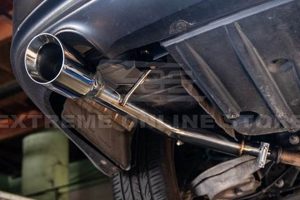
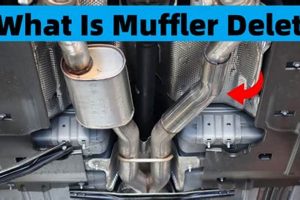
The legality of removing a vehicle’s muffler within the state of Texas is a frequently discussed topic among automotive enthusiasts. A muffler delete involves removing the vehicle’s muffler, a component designed to reduce exhaust noise. The consequence of this modification is a noticeable increase in the vehicle’s sound output, often resulting in a louder, more aggressive exhaust note.
Regulations concerning vehicle noise emissions exist to maintain public peace and order. Excessive noise can negatively impact the quality of life in residential areas and contribute to noise pollution. Historically, laws targeting disruptive noises have been enacted to address these concerns, extending to the operation of motor vehicles. Therefore, adherence to these standards is paramount for vehicle operators.
This article explores the specific Texas statutes regarding vehicle exhaust systems, analyzes relevant case law, and provides guidance on how to remain compliant with noise regulations while modifying a vehicle’s exhaust. It clarifies permissible modifications and potential penalties for non-compliance.
Guidance on Exhaust Modification Legality in Texas
This section provides essential information regarding exhaust modifications to ensure compliance with Texas law.
Tip 1: Familiarize Yourself with Texas Transportation Code 547.604. This statute addresses exhaust systems and mandates that vehicles be equipped with a muffler in good working condition to prevent excessive or unusual noise. Understand the specific wording to gauge permissible modifications.
Tip 2: Avoid Exceeding Local Noise Ordinances. Many Texas cities and counties have specific decibel limits for vehicle noise. Contact local authorities to determine these limits and ensure that exhaust modifications do not violate them.
Tip 3: Consider the Location of Operation. Even if modifications technically comply with state law, operation in residential areas, near schools, or hospitals could still lead to complaints and potential enforcement actions based on disturbing the peace.
Tip 4: Maintain Documentation of Modifications. Keep records of any exhaust system alterations, including receipts for parts and labor. This documentation can prove valuable if questions arise regarding compliance.
Tip 5: Be Prepared for Inspections. During vehicle inspections, exhaust systems are often assessed for compliance. Ensure modifications appear professional and conform to state standards to avoid failing inspection.
Tip 6: Consult with Automotive Professionals. Before undertaking any exhaust modifications, seek advice from reputable mechanics or exhaust specialists familiar with Texas regulations. Their expertise can help ensure compliance and prevent costly mistakes.
Adhering to these recommendations promotes responsible vehicle modification and reduces the risk of legal repercussions. Understanding and respecting state and local noise regulations are crucial.
The next section presents further discussion on enforcement and potential consequences of non-compliance.
1. Texas Transportation Code
The Texas Transportation Code serves as the primary legal framework governing vehicle operation and equipment standards, including exhaust systems. Regarding the legality of a muffler removal, the code stipulates that a vehicle must be equipped with a muffler in good working condition to prevent excessive or unusual noise. A direct removal of the muffler raises immediate concerns, as it inherently increases exhaust noise levels and potentially violates this core tenet of the Texas Transportation Code. A vehicle operating without a muffler is at a significantly higher risk of being deemed in violation of the noise pollution prevention clauses. This direct cause-and-effect relationship underscores the importance of the code when considering modifications.
The absence of a muffler also affects a vehicle’s ability to pass inspection. State-mandated vehicle inspections include an assessment of the exhaust system, ensuring it adheres to both safety and noise regulations. Removing a muffler generally leads to automatic inspection failure, because it is readily identified as a deviation from the required equipment. Consider, for example, a driver who removes the muffler from their truck, resulting in a significantly louder exhaust. A police officer could issue a citation for violating the noise pollution clause of the transportation code, and the vehicle would subsequently fail inspection. The code forms the baseline for compliance. Even if the noise doesn’t violate local ordinances, removal violates the transportation code requirement.
In summary, the Texas Transportation Code acts as the foundational legal constraint influencing the permissibility of muffler deletions. The primary challenges associated with this modification revolve around compliance with noise regulations, the potential for enforcement actions, and the certainty of inspection failure. Therefore, anyone contemplating such a modification must carefully weigh the consequences against the code’s requirements. This underscores the central role of this code in determining the legal status of muffler removals in Texas.
2. Excessive, Unusual Noise
The term “excessive, unusual noise” forms a crucial component in determining the legality of a muffler removal in Texas. While the Texas Transportation Code mandates a muffler to prevent such noise, the subjective nature of these terms necessitates careful consideration. A muffler deletion invariably increases the vehicle’s sound output; however, whether this increase constitutes “excessive” or “unusual” becomes the central legal question. The absence of a precise decibel threshold in the state statute grants law enforcement and the judiciary some latitude in interpreting these terms. Therefore, even if a modified vehicle operates below local noise ordinance limits, a peace officer may still issue a citation if the exhaust note is subjectively deemed to be too loud or atypical for the vehicle type.
Consider, for example, a classic car enthusiast who removes the factory muffler and installs straight pipes. While the resulting sound may be considered desirable within certain automotive circles, it may also attract unwanted attention from law enforcement in a quiet suburban neighborhood late at night. The subjective nature of the sound experience means it is judged not merely on volume, but also on tone, pitch, and perceived offensiveness. The absence of the muffler fundamentally alters the vehicle’s sound signature, potentially making it stand out more, even when compared to other loud vehicles. The legal test revolves around whether this alteration qualifies as an unreasonable disturbance to others.
In summary, the ambiguity surrounding “excessive, unusual noise” significantly impacts the practical legality of a muffler modification in Texas. Although specific decibel standards offer a quantitative measure of sound, the qualitative assessment of the exhaust note remains a factor. Prudent vehicle owners should carefully evaluate the potential for their modified exhaust to be interpreted as excessive or unusual, mitigating the risk of legal repercussions and maintaining community harmony. The subjective element underscores the importance of exercising discretion and prioritizing responsible vehicle modification practices.
3. Local Noise Ordinances
Local noise ordinances represent a crucial element in determining the legality of a muffler removal within Texas. While the state’s Transportation Code establishes a general prohibition against “excessive or unusual noise,” municipalities often enact specific noise regulations that impose stricter standards. These local ordinances typically set decibel limits for vehicle noise, particularly during certain hours or in designated areas such as residential zones. A muffler delete, which invariably increases a vehicle’s sound output, directly impacts compliance with these localized rules. Even if a modification technically adheres to state law, a violation of a local noise ordinance can still result in fines or other penalties. The cause-and-effect relationship is direct: a muffler delete increases noise levels, potentially exceeding the limit set by the local authority.
For example, the City of Austin has a noise ordinance that restricts vehicle noise levels in residential areas after 10:00 PM. A vehicle with a muffler delete, operating in Austin after this hour, risks violating this ordinance, regardless of whether it complies with the broader state law. This underscores the importance of understanding the specific regulations of the locality in which the vehicle is operated. Moreover, enforcement of these ordinances varies, with some cities prioritizing noise complaints and actively monitoring vehicle sound levels. Understanding the practical significance of local noise ordinances requires vehicle owners to research the specific rules of their municipality or any area where they frequently operate their vehicle.
In conclusion, local noise ordinances act as a significant constraint on the legality of muffler deletions in Texas, often imposing stricter standards than state law. Awareness of these ordinances is essential for avoiding legal repercussions, as even modifications that technically comply with state statutes may still result in violations. The interconnectedness of state and local regulations highlights the need for comprehensive understanding and responsible vehicle modification practices to ensure adherence to the applicable laws and maintain community tranquility.
4. Residential Area Impacts
The impact of vehicle noise in residential areas is a critical determinant in the legality of a muffler removal in Texas. While the state’s Transportation Code prohibits excessive noise, the practical application of this law is often dictated by the degree of disturbance caused to residents. A muffler deletion inherently increases vehicle noise, and the proximity of residential areas amplifies the potential for disruption. This directly influences the likelihood of complaints and subsequent enforcement actions. In essence, a louder vehicle in a quiet neighborhood is far more likely to attract attention and be deemed in violation of noise regulations than the same vehicle operating in an industrial zone. The cause-and-effect relationship is undeniable: muffler removal increases noise, and residential proximity increases the impact of that noise on the community.
Consider a scenario where a vehicle with a modified exhaust system is driven regularly through a residential neighborhood during early morning hours. The amplified engine noise could disrupt sleep patterns, violate local noise ordinances related to nighttime disturbances, and generate complaints from residents. These complaints can then trigger police intervention and potential citations for violating noise pollution laws. Conversely, if the same vehicle is operated primarily on highways and away from residential areas, the probability of generating such complaints and legal actions diminishes significantly. The “Residential Area Impacts” thus represents a tangible, real-world element in evaluating the acceptability, and therefore the legality, of muffler removal. The community disturbance shifts the vehicle modification from potentially legal, if unnoticed, to illegal, if disruptive.
In conclusion, the residential area impact forms a significant, if often implicit, consideration in assessing the legality of muffler removal in Texas. While state and local laws provide the framework, the actual enforcement and interpretation are heavily influenced by the extent to which the increased noise disturbs residential peace. Understanding this principle is essential for vehicle owners contemplating exhaust modifications. It highlights the need for responsible vehicle operation and a consideration of the community, as these factors often determine the practical consequences of altering a vehicle’s exhaust system. This element introduces a geographic sensitivity into the legal equation; what might be permissible in one location is clearly impermissible in another.
5. Vehicle Inspection Standards
Vehicle inspection standards within Texas directly influence the legality of a muffler removal. These standards, mandated by the state, assess various vehicle components to ensure compliance with safety and environmental regulations. The exhaust system, including the muffler, is a key element of this assessment, and modifications that deviate from the established standards can lead to inspection failure. The connection between inspection standards and the permissibility of a muffler delete is clear: modifications that result in a vehicle failing inspection are deemed illegal for operation on public roads.
- Exhaust System Integrity
Texas vehicle inspections include a visual examination of the exhaust system to verify its proper installation and condition. A vehicle with a muffler delete will fail this portion of the inspection, as the absence of a required component constitutes a violation of the inspection standards. The inspection ensures the exhaust system is free of leaks, properly mounted, and functioning as designed, preventing excessive noise and emissions. For instance, if an inspector observes that the muffler has been removed and replaced with a straight pipe, the vehicle will automatically fail, irrespective of subjective noise level assessments.
- Noise Level Compliance
Although Texas inspections do not typically involve a precise decibel reading, the inspection process still assesses the exhaust system for excessive or unusual noise. If a vehicle with a muffler delete produces a significantly louder exhaust note than a comparable vehicle with a functioning muffler, it may be flagged for non-compliance. While there is a degree of subjectivity in this assessment, a blatantly loud or disruptive exhaust note increases the likelihood of inspection failure. This subjectivity ensures that a vehicle deemed unreasonably loud will be identified during inspection, even absent precise decibel measurements.
- Emission Control Equipment
While the muffler itself does not directly control emissions, its removal can affect the overall performance of the exhaust system, potentially impacting emissions control devices such as catalytic converters. An improperly modified exhaust system can alter exhaust gas flow and temperatures, reducing the efficiency of these devices and leading to increased emissions. During inspection, a visible alteration to the system related to emissions can create cause for greater scrutiny. A vehicle with a failed emissions test would therefore not pass inspection and would be in violation of state standards.
The intersection of vehicle inspection standards and the legality of a muffler deletion centers on the core principle of compliance. Modifications that result in inspection failure are prohibited under Texas law. These standards are designed to ensure vehicle safety, minimize noise pollution, and control emissions. The vehicle inspection is a critical tool used to uphold these goals. While some vehicle owners may seek to alter their exhaust systems for aesthetic or performance reasons, it is crucial to understand that adhering to inspection requirements is paramount for legal vehicle operation. The strict regulations in place are intended to ensure the safety of both drivers and communities. Compliance with these standards is an important aspect of ownership and responsibility on Texas roads.
6. Potential Legal Penalties
The possibility of incurring legal penalties is a significant consequence directly linked to the issue of muffler removal in Texas. The legal framework, including the Texas Transportation Code and local noise ordinances, establishes the grounds for these penalties. Non-compliance with these regulations, which arises from the act of removing a muffler, leads to a cascade of potential legal ramifications. The severity of penalties can range from monetary fines to vehicle impoundment, highlighting the importance of understanding and adhering to exhaust system regulations. The cause-and-effect relationship is straightforward: removing a muffler increases the likelihood of violating noise regulations, which, in turn, triggers legal penalties. Understanding the potential penalties is paramount for any vehicle owner considering such modification.
Examples of legal penalties connected to illegal vehicle modifications, including muffler deletes, are widely documented in Texas. Fines for violating noise ordinances can range from a few hundred dollars for initial offenses to significantly higher amounts for repeat violations. Moreover, certain jurisdictions may classify repeated or egregious violations as misdemeanors, potentially leading to criminal charges and a permanent record. Beyond fines, non-compliant vehicles may be required to undergo corrective repairs to restore them to legal operating condition, adding further expense and inconvenience. A documented instance in Austin, Texas, involved multiple citations issued to a vehicle owner for repeated violations of the city’s noise ordinance due to a modified exhaust system, eventually leading to a court appearance and mandated repairs. These examples illustrate the real-world consequences of failing to adhere to exhaust system regulations.
In conclusion, the potential for incurring legal penalties serves as a crucial deterrent against unlawful muffler removal in Texas. This consequence underscores the need for careful consideration of state and local regulations before modifying a vehicle’s exhaust system. The financial burden, potential criminal charges, and required corrective actions highlight the importance of prioritizing compliance and responsible vehicle modification practices. Understanding these consequences allows individuals to make informed decisions and mitigate the risk of legal repercussions, contributing to community safety and reducing noise pollution. The penalties act as the “teeth” behind the regulations, ensuring that noise pollution is addressed and communities maintain a reasonable quality of life.
7. Disturbing the Peace
The concept of “disturbing the peace” holds significant relevance when examining the legal implications of muffler removal in Texas. While the Texas Transportation Code addresses vehicle noise, the determination of whether a specific sound level constitutes a disturbance often relies on its impact on the surrounding environment. A muffler delete, by inherently increasing a vehicle’s sound output, elevates the potential for this sound to be classified as a breach of peace. The cause-and-effect is direct: the modification leads to increased noise, which then may lead to disturbing the peace. The importance lies in that even if a muffler removal technically complies with specific decibel limits, it may still be deemed illegal if it disrupts public tranquility.
Consider the scenario of a vehicle with a modified exhaust system operating in a residential neighborhood during late-night hours. Even if the vehicle’s noise level falls within established local ordinance limits, the amplified sound could still be construed as “disturbing the peace” if it disrupts sleep or causes other forms of annoyance to residents. Law enforcement officers, responding to complaints, may issue citations based on the subjective assessment of the sound’s impact. A real-life example involves neighborhoods near popular roadways where residents file noise complaints about vehicles that are clearly audible above ambient sound. Such vehicles, often equipped with modified exhaust systems, can be targeted for enforcement even if they are not technically exceeding legal noise limits. Disturbing the peace creates an important layer between the exhaust note and legality.
In conclusion, the potential to “disturb the peace” serves as a practical limitation on the legality of muffler removal in Texas, even in the absence of clear violations of specific noise ordinances. The subjective element of disturbance allows for enforcement actions based on community impact, necessitating responsible vehicle operation and a consideration of the surrounding environment. While laws provide the framework, consideration of community noise expectations also plays a significant role. The practical significance lies in reminding vehicle owners that compliance extends beyond measurable thresholds to encompass respect for community well-being.
Frequently Asked Questions
This section addresses common inquiries and clarifies legal aspects related to muffler removal and modification in Texas.
Question 1: Is it legal to operate a vehicle without a muffler in Texas?
Texas law requires all vehicles to be equipped with a muffler in good working condition to prevent excessive or unusual noise. Removing the muffler typically results in non-compliance with this regulation.
Question 2: Does Texas have specific decibel limits for vehicle exhaust noise?
The state Transportation Code does not establish specific decibel limits. However, local municipalities may have noise ordinances that define permissible decibel levels. Compliance with local regulations is mandatory.
Question 3: Can a vehicle fail inspection due to a muffler delete?
Yes. Texas vehicle inspections include an assessment of the exhaust system. A vehicle without a muffler will fail inspection due to non-compliance with state equipment standards.
Question 4: What are the penalties for violating Texas exhaust noise laws?
Penalties can include monetary fines, requirements to correct the violation, and, in some cases, vehicle impoundment. Repeat offenses may result in more severe legal consequences.
Question 5: Can a vehicle be cited for disturbing the peace even if it meets decibel limits?
Yes. Even if a vehicle complies with specific decibel limits, law enforcement can issue citations for disturbing the peace if the sound is deemed excessive or disruptive to the surrounding environment.
Question 6: Where can information on local noise ordinances be found?
Local noise ordinance information is available through city or county government websites, or by contacting local law enforcement or municipal offices directly.
Understanding the legal parameters surrounding vehicle modifications is crucial to avoid potential penalties. Prior research and awareness of both state and local regulations are advised.
The next section summarizes the critical legal considerations regarding exhaust modifications in Texas.
Muffler Delete Legal in Texas
This article has thoroughly examined the multifaceted issue of whether a muffler deletion is permissible under Texas law. The analysis revealed that, while not explicitly prohibited in all circumstances, such a modification faces significant legal challenges. Texas Transportation Code stipulations regarding “excessive or unusual noise,” coupled with the subjectivity of local noise ordinances and the potential for disturbing the peace, create a regulatory environment where a muffler removal is generally ill-advised. Furthermore, the certainty of failing vehicle inspection due to non-compliance with equipment standards presents a practical barrier to legal operation.
Therefore, before considering exhaust modifications, vehicle owners should meticulously evaluate the potential legal ramifications and community impact. Prudence dictates prioritizing compliance with all applicable regulations to avoid incurring penalties and maintaining responsible vehicle operation. A comprehensive understanding of the interplay between state law, local ordinances, and societal expectations is essential for making informed decisions regarding exhaust system modifications within Texas.