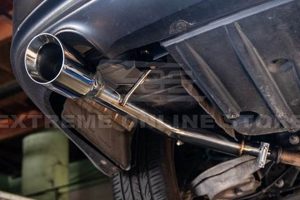
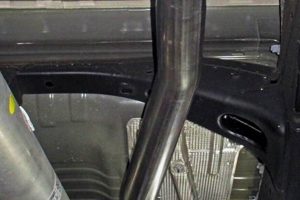
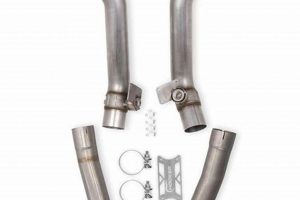
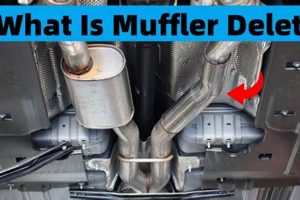
Removing the muffler from a vehicle’s exhaust system alters the flow of exhaust gases. Mufflers are designed to reduce noise created by the engine’s combustion process; their absence results in a louder exhaust note. The question often arises whether this modification has any impact on fuel efficiency.
The presumed benefits of such a modification often involve potential weight reduction and a less restrictive exhaust path, theoretically allowing the engine to breathe more freely. Some proponents believe that reduced backpressure can lead to increased power output and, consequently, improved fuel economy. However, any alterations in fuel usage are usually subtle and often overshadowed by other variables like driving habits and vehicle maintenance.
The subsequent sections will examine the technical aspects of exhaust systems, delve into the effects of backpressure on engine performance, and ultimately determine whether eliminating the muffler has any significant or measurable effect on a vehicle’s fuel consumption.
Considerations Regarding Exhaust System Modification and Fuel Efficiency
Modifying a vehicle’s exhaust system, specifically by eliminating the muffler, requires careful consideration. Several factors influence whether such a modification will affect fuel consumption.
Tip 1: Understand Backpressure Dynamics: Exhaust backpressure plays a critical role in engine performance. Completely removing the muffler can reduce backpressure to a point where it negatively affects low-end torque and overall engine efficiency, potentially increasing fuel consumption in stop-and-go driving.
Tip 2: Monitor Fuel Consumption After Modification: Following any alteration to the exhaust system, it is essential to meticulously track fuel consumption over several driving cycles. Precise data collection provides a factual basis for assessing the impact on fuel efficiency.
Tip 3: Consult Vehicle Specifications: Engine design and vehicle specifications often dictate optimal exhaust flow characteristics. Modifying the exhaust system without considering these specifications may lead to unintended consequences, including decreased fuel economy.
Tip 4: Assess Driving Conditions: The effect of exhaust modifications on fuel efficiency can vary based on driving conditions. Highway driving may exhibit different results compared to city driving due to variations in engine load and speed.
Tip 5: Consider the Impact on Engine Tuning: An exhaust modification may necessitate adjustments to the engine’s tuning parameters. A professional tune can optimize the engine’s performance to compensate for changes in exhaust flow, potentially mitigating any negative impact on fuel economy.
Tip 6: Weight Reduction Benefits: While the effect of muffler removal on fuel efficiency is often minimal, the slight weight reduction might lead to a marginal improvement in overall vehicle performance, which could indirectly affect fuel usage.
The effects of removing the muffler on fuel usage is not always directly evident, and results can vary greatly. Meticulous evaluation and professional advice are recommended when making such modifications.
The subsequent sections will present a concluding overview of the overall topic.
1. Exhaust Backpressure

Exhaust backpressure, a critical factor in engine performance, directly relates to the question of whether removing a muffler influences fuel efficiency. Understanding this relationship is essential for evaluating the consequences of such modification.
- Definition and Measurement of Backpressure
Backpressure is the resistance to exhaust flow within the exhaust system. It is typically measured in pounds per square inch (PSI) or kilopascals (kPa). Excessive backpressure hinders the engine’s ability to expel exhaust gases efficiently, while insufficient backpressure can disrupt the proper scavenging of the cylinders. Altering the muffler affects backpressure levels, thereby influencing engine performance and potentially gas mileage.
- Optimal Backpressure and Engine Design
Engine design dictates the optimal level of backpressure for efficient operation. Manufacturers carefully engineer exhaust systems to provide this optimal level. Removing the muffler can reduce backpressure beyond the designed optimum, altering the engine’s volumetric efficiency and combustion characteristics. This change may affect fuel consumption, although the direction of this effect depends on the specific engine and its tuning.
- Impact on Low-End Torque
Reduced backpressure, resulting from the elimination of a muffler, can adversely affect low-end torque, which is the engine’s pulling power at lower RPMs. A decrease in low-end torque can lead to a need for increased throttle input to achieve desired acceleration, potentially increasing fuel consumption in urban driving conditions. Conversely, it might improve high-RPM power, which could have a different effect on fuel efficiency during highway driving.
- Effect on Scavenging
Exhaust scavenging is the process by which exhaust gases are drawn out of the combustion chamber, facilitating the intake of fresh air and fuel. Proper backpressure aids in this scavenging process by creating a vacuum effect. Altering the muffler can disrupt the timing and efficiency of scavenging, which may impact fuel combustion and overall engine efficiency, thus affecting mileage.
The interrelation between backpressure and engine efficiency is multifaceted. While removing the muffler might seem like a simple way to enhance performance, its effect on fuel efficiency depends significantly on engine design, driving habits, and the overall exhaust system configuration. Meticulous monitoring and, if necessary, engine tuning are crucial steps in evaluating the outcome of a muffler delete.
2. Engine Efficiency

Engine efficiency, the measure of how effectively an engine converts fuel into useful work, is directly related to the question of whether removing a muffler has any impact on fuel consumption. The exhaust system, including the muffler, plays a role in this efficiency, and altering it can have consequences that warrant examination.
- Volumetric Efficiency
Volumetric efficiency refers to how well an engine fills its cylinders with fresh air and fuel during the intake stroke. A muffler delete can alter exhaust backpressure, which in turn influences volumetric efficiency. If backpressure is significantly reduced, it can disrupt the intake and exhaust dynamics, leading to less complete cylinder filling and, potentially, decreased combustion efficiency, which can reduce gas mileage. For instance, an engine designed with a specific backpressure profile may experience a drop in volumetric efficiency if a muffler is removed, negatively impacting the engines ability to efficiently convert fuel into power.
- Combustion Efficiency
Combustion efficiency describes how completely fuel is burned in the cylinders. Proper exhaust backpressure is essential for promoting complete combustion. Removing the muffler can alter the speed and temperature of exhaust gases, affecting combustion efficiency. Incomplete combustion results in wasted fuel and increased emissions. For example, an engine with optimized combustion characteristics might experience less efficient burning of fuel due to the altered exhaust flow after a muffler delete, directly reducing fuel economy.
- Thermal Efficiency
Thermal efficiency relates to the proportion of heat energy from combustion that is converted into mechanical work, rather than being lost as heat through the exhaust. Exhaust systems are designed to manage heat and maintain optimal operating temperatures. A muffler delete changes the exhaust flow and heat dissipation, which can impact engine temperature and thermal efficiency. For example, excessively rapid cooling of exhaust gases after a muffler delete can negatively affect the efficiency of catalytic converters, indirectly increasing fuel consumption due to higher emissions.
- Friction Losses
Engine efficiency is also affected by internal friction. While removing a muffler doesn’t directly impact friction within the engine, altered engine operation due to changes in backpressure can indirectly influence friction losses. For example, if removing the muffler requires the engine to work harder to maintain performance, internal stresses and friction can increase, leading to a marginal reduction in overall efficiency. The link is indirect, but highlights the holistic nature of engine efficiency.
These facets of engine efficiency demonstrate the complex relationship between exhaust system modifications and fuel usage. Removing a muffler may alter volumetric efficiency, combustion efficiency, thermal efficiency, and, indirectly, friction losses. While the extent of the effect varies based on engine design and driving conditions, modifying the exhaust system necessitates a thorough understanding of these variables to assess any measurable impact on fuel economy.
3. Fuel Consumption Monitoring
Fuel consumption monitoring is an essential process in determining the actual impact of a muffler delete on a vehicle’s fuel economy. Accurately measuring fuel usage before and after such a modification is critical for drawing meaningful conclusions about its effect.
- Establishing a Baseline
Before making any modifications, it is crucial to establish a baseline for fuel consumption. This involves tracking fuel usage over a defined period under typical driving conditions. A detailed record, including mileage, driving style, and environmental conditions, provides a benchmark for comparison. For example, if a vehicle averages 25 miles per gallon (MPG) under normal conditions, this becomes the reference point for assessing the impact of a muffler delete.
- Methods of Monitoring
Several methods exist for monitoring fuel consumption, ranging from manual calculations to advanced electronic systems. Manual methods involve tracking mileage and fuel purchases, then calculating MPG. Onboard diagnostic (OBD) systems provide real-time data on fuel usage, offering greater accuracy. Using a combination of methods can validate the results. For example, regularly comparing manual MPG calculations with data from an OBD scanner can reveal inconsistencies or confirm trends in fuel consumption.
- Control Variables
Accurate monitoring requires controlling variables that can influence fuel consumption. These include driving style, tire pressure, vehicle load, and environmental factors such as temperature and wind resistance. Maintaining consistent driving habits and ensuring the vehicle is properly maintained minimizes external influences. For example, consistently inflating tires to the recommended pressure and avoiding aggressive acceleration during monitoring periods reduces the impact of these variables on the data.
- Data Analysis and Interpretation
After collecting sufficient data, analysis is essential to identify trends and quantify the effect of the muffler delete. Comparing fuel consumption before and after the modification provides insight into any changes. Statistical methods can determine whether observed differences are statistically significant, rather than simply due to random variation. For example, a statistically significant decrease in MPG after a muffler delete suggests a genuine reduction in fuel efficiency, rather than just a random fluctuation.
In summary, fuel consumption monitoring provides the empirical evidence necessary to assess the impact of a muffler delete on a vehicle’s fuel economy. Establishing a baseline, employing accurate monitoring methods, controlling for external variables, and rigorously analyzing the data are all essential steps in determining whether such a modification has a positive, negative, or negligible effect on fuel efficiency.
4. Driving Conditions

Driving conditions exert a significant influence on the effects of a muffler delete on fuel efficiency. The impact of this exhaust modification is not uniform across all driving scenarios; rather, it varies according to factors such as speed, traffic density, and terrain. Specifically, the benefits or drawbacks of reduced backpressure resulting from a muffler removal become more or less pronounced depending on how the vehicle is operated. For instance, in stop-and-go city driving, where frequent acceleration and deceleration occur, the reduced low-end torque associated with a muffler delete may necessitate greater throttle input to maintain momentum. This increased throttle application directly leads to increased fuel consumption, thus negating any potential gains from a less restrictive exhaust.
Conversely, highway driving, characterized by constant speeds and minimal acceleration, presents a different scenario. At higher RPMs, the reduced backpressure could potentially improve engine breathing, leading to a slight increase in fuel efficiency. However, this improvement remains contingent on the specific engine design and its sensitivity to backpressure changes. Moreover, mountainous terrain, which requires constant adjustments in throttle and gear selection, introduces further complexity. Under these conditions, the inconsistencies in engine load and speed make it difficult to ascertain a clear and predictable effect of the muffler delete on fuel economy. Furthermore, ambient temperature and weather conditions also influence fuel consumption, adding another layer of variability.
In conclusion, the correlation between a muffler delete and fuel consumption is inextricably linked to driving conditions. The complex interplay of factors such as traffic patterns, speed variations, and terrain makes it imperative to consider the typical use case of the vehicle when evaluating the potential benefits or drawbacks of this modification. While a muffler delete might theoretically enhance fuel efficiency under specific circumstances, the practical reality often involves a more nuanced outcome, where the actual impact is heavily influenced by the conditions in which the vehicle is driven. Therefore, drivers should cautiously evaluate their individual driving patterns before implementing such a modification with the expectation of improved fuel economy.
5. Engine Tuning

Engine tuning, defined as the process of adjusting an engine’s control parameters to optimize performance, plays a crucial role in determining the effect of a muffler delete on fuel consumption. Removing the muffler alters exhaust flow dynamics, which, if left unaddressed, can disrupt the engine’s intended operating parameters. Specifically, the engine control unit (ECU), which manages fuel delivery, ignition timing, and other critical functions, relies on certain exhaust backpressure characteristics to operate efficiently. A muffler delete changes these characteristics, potentially leading to suboptimal performance and fuel economy.
For example, consider an engine designed to operate with a specific level of exhaust backpressure to facilitate proper cylinder scavenging. When a muffler is removed, the resulting decrease in backpressure can disrupt this scavenging process, leading to incomplete combustion. The ECU, unaware of this altered condition, may continue to deliver fuel based on the original, designed parameters. This mismatch can result in wasted fuel and increased emissions. Therefore, engine tuning, specifically recalibrating the ECU to account for the altered exhaust flow, becomes essential to regain optimal combustion and fuel efficiency. This recalibration may involve adjusting fuel maps, ignition timing, and other settings to match the new exhaust configuration.
In conclusion, engine tuning is not merely an optional add-on, but rather a necessary step when implementing a muffler delete, if the objective is to maintain or improve fuel economy. Ignoring the need for recalibration can negate any potential benefits of the modification and may even lead to increased fuel consumption and reduced engine performance. Understanding the intricate connection between exhaust flow dynamics, ECU operation, and combustion efficiency highlights the importance of considering engine tuning as an integral component of any muffler delete modification, with the aim of mitigating potential adverse effects on gas mileage.
6. Vehicle Weight

Vehicle weight is a fundamental factor influencing fuel consumption. While a muffler delete primarily modifies exhaust flow, the slight reduction in mass associated with removing the muffler assembly can theoretically contribute to marginal improvements in fuel economy. However, the degree to which this occurs depends on various factors, including the overall vehicle weight and driving conditions.
- Inertia and Acceleration
Heavier vehicles require more energy to accelerate. Reducing weight, even by a small amount, decreases the force needed for acceleration. This effect is most noticeable during stop-and-go driving, where frequent acceleration occurs. A muffler delete, by slightly reducing weight, may marginally improve fuel economy in such conditions. For example, a large SUV might exhibit a more discernible improvement in fuel economy from a weight reduction than a compact car, as the percentage of weight reduction relative to the total vehicle mass is greater.
- Rolling Resistance
Rolling resistance, the force resisting motion when a body rolls on a surface, is directly proportional to vehicle weight. Lowering vehicle weight reduces rolling resistance, decreasing the energy required to maintain speed. This effect becomes more significant at higher speeds. While a muffler delete contributes only a minor weight reduction, it nonetheless slightly decreases rolling resistance, leading to potentially improved fuel efficiency on highways. For example, a vehicle traveling at 60 mph will experience less rolling resistance after a muffler delete, albeit marginally, compared to its original state.
- Weight Distribution
Weight distribution impacts handling and overall vehicle dynamics. Removing the muffler can slightly alter weight distribution, though typically not significantly. A more balanced weight distribution can improve tire grip and reduce energy loss, potentially enhancing fuel economy. The effect, however, is often negligible unless accompanied by other weight reduction measures. For example, if the muffler’s location previously contributed to an imbalance, its removal could yield a minor improvement in handling and fuel consumption, but this is unlikely.
- Overall Vehicle Mass
The proportional impact of a muffler delete on fuel efficiency is inversely related to the vehicle’s total mass. Removing a 10-pound muffler from a 5,000-pound vehicle has a smaller percentage effect than removing the same muffler from a 2,500-pound vehicle. Therefore, the potential fuel economy benefits of a muffler delete are more pronounced in lighter vehicles. For example, a small hatchback may experience a slightly more noticeable improvement in fuel economy compared to a heavy pickup truck.
In conclusion, vehicle weight and its impact on inertia, rolling resistance, and weight distribution are connected to the question of whether a muffler delete affects fuel economy. While the weight reduction from removing a muffler is typically minimal, its effect on fuel efficiency is more prominent in lighter vehicles and during driving conditions that involve frequent acceleration. The marginal gains in fuel economy, however, must be weighed against other potential consequences, such as increased noise levels and potential changes in engine performance.
7. Exhaust Flow

Exhaust flow, the movement of combustion byproducts from the engine through the exhaust system, is intrinsically linked to the question of whether removing a muffler influences fuel efficiency. The design and characteristics of the exhaust system directly impact this flow, and altering components like the muffler can have multifaceted consequences.
- Backpressure and Scavenging Efficiency
Backpressure, the resistance to exhaust flow, significantly affects scavenging efficiencythe process of clearing spent gases from the cylinders. Optimal backpressure promotes effective scavenging, leading to more complete combustion. A muffler delete reduces backpressure, which can either enhance or hinder scavenging depending on engine design. For instance, an engine designed to operate with a certain backpressure level may experience reduced scavenging efficiency after a muffler removal, leading to incomplete combustion and decreased fuel economy. Conversely, some engines might benefit from the less restrictive flow, improving scavenging and potentially increasing fuel efficiency. The key determinant is whether the alteration aligns with the engine’s intended operating parameters.
- Velocity and Turbulence
The velocity and turbulence of exhaust gases affect the efficiency of the exhaust system. Mufflers, designed to reduce noise, can create turbulence and restrict flow. Removing the muffler reduces turbulence but may also decrease exhaust velocity, particularly at lower engine speeds. Reduced velocity can hinder the momentum of exhaust gases, leading to less efficient clearing of the cylinders. Conversely, decreased turbulence can lower resistance, potentially improving overall flow. The net effect on fuel consumption depends on which factor dominates. A real-world example is a modified vehicle experiencing improved high-end power due to less restricted exhaust flow, but reduced low-end torque because of insufficient exhaust velocity.
- Exhaust Gas Temperature
Exhaust gas temperature (EGT) is influenced by exhaust flow characteristics. Mufflers can retain heat, while their removal allows for more rapid cooling of exhaust gases. Rapid cooling can negatively impact the catalytic converter’s efficiency, as it requires a certain temperature to function optimally. A less efficient catalytic converter results in increased emissions and can indirectly affect fuel economy, as the engine may need to compensate for the higher emission levels. For instance, if a vehicle’s catalytic converter operates below its optimal temperature range after a muffler delete, the ECU may enrich the fuel mixture to reduce emissions, leading to decreased fuel efficiency.
- Resonance and Wave Propagation
Exhaust systems are designed to manage resonance and wave propagation of exhaust gases. Mufflers are tuned to dampen specific frequencies, reducing noise. Altering the muffler changes the way these waves propagate, which can affect the overall efficiency of the exhaust system. In some cases, a muffler delete may create undesirable resonance patterns that impede exhaust flow, leading to reduced performance and fuel economy. Conversely, a carefully designed exhaust system without a muffler could potentially optimize wave propagation for improved flow. A racing engine, for example, often utilizes tuned exhaust systems to maximize exhaust flow through precise management of wave propagation, resulting in increased power and efficiency.
In summary, the connection between exhaust flow and the impact of a muffler delete on fuel consumption is intricate and multifaceted. Factors such as backpressure, velocity, temperature, and wave propagation interact in complex ways, and the net effect on fuel efficiency depends on the specific engine design, driving conditions, and overall exhaust system configuration. Therefore, assessing the impact of a muffler delete requires a comprehensive understanding of these variables and their interplay.
Frequently Asked Questions
This section addresses common inquiries regarding the effect of muffler deletion on fuel efficiency, providing factual and technically sound answers.
Question 1: What is a muffler delete, and what is its primary purpose?
A muffler delete involves removing the muffler from a vehicle’s exhaust system. The primary purpose of the muffler is to reduce exhaust noise. Its deletion results in a louder exhaust note.
Question 2: Does removing the muffler directly increase fuel efficiency?
The direct impact of removing the muffler on fuel efficiency is generally minimal and often negligible. Any changes in fuel consumption are usually subtle and can be overshadowed by other factors like driving habits and vehicle maintenance.
Question 3: How does exhaust backpressure relate to this modification?
Mufflers are designed to create a specific amount of exhaust backpressure. Removing the muffler alters backpressure, which can affect engine performance. Excessive reduction in backpressure may negatively impact low-end torque and overall engine efficiency.
Question 4: Is engine tuning required after performing a muffler delete?
Engine tuning may be necessary to optimize performance after a muffler delete. Recalibrating the engine control unit (ECU) can help compensate for changes in exhaust flow and maintain or improve fuel efficiency.
Question 5: Will a muffler delete void the vehicle’s warranty?
Modifying the exhaust system by deleting the muffler could potentially void parts of the vehicle’s warranty, particularly those related to the exhaust system and emissions control. It is important to consult the vehicle’s warranty documentation and seek advice from a qualified mechanic.
Question 6: What are the potential drawbacks of removing the muffler?
Potential drawbacks include increased exhaust noise, possible reductions in low-end torque, and potential legal implications depending on local noise regulations. Reduced backpressure could also negatively affect engine efficiency in certain driving conditions.
In summary, while removing the muffler may offer slight performance benefits or aesthetic appeal, it rarely leads to significant improvements in fuel efficiency and may introduce other issues. Careful consideration and professional consultation are advised.
The following section presents a concluding overview, summarizing the key points and offering final insights on the topic.
Conclusion
The preceding analysis explored whether a muffler delete affects gas mileage, carefully examining the interplay between exhaust dynamics, engine performance, and fuel consumption. Key considerations included the nuanced effects of backpressure, the importance of engine tuning to compensate for alterations in exhaust flow, and the influence of driving conditions on the overall outcome. The investigation revealed that any alteration to fuel economy is likely subtle, influenced by a range of variables, and often overshadowed by other factors.
The decision to modify a vehicle’s exhaust system, particularly by removing the muffler, should be undertaken with a comprehensive understanding of its potential consequences. Prudent vehicle owners should consider consulting with qualified automotive professionals to ensure compatibility with their specific engine design and driving needs. Furthermore, adherence to local noise regulations and awareness of potential warranty implications are essential considerations before proceeding with such a modification.