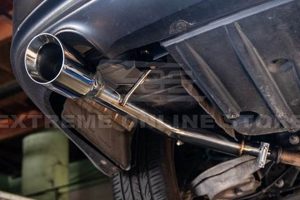
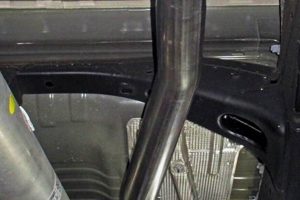
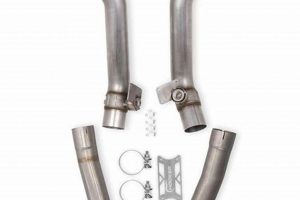
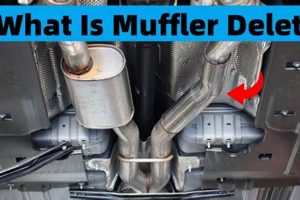
The removal of the factory-installed muffler from a sixth-generation Volkswagen GTI is an aftermarket modification that alters the vehicle’s exhaust system. This procedure, often referred to as a muffler removal, involves detaching the existing muffler and typically replacing it with a straight pipe or a less restrictive alternative. The resulting alteration impacts the exhaust tone and can potentially affect vehicle performance.
This modification is primarily undertaken to achieve a more aggressive exhaust note, often perceived as louder and sportier. Historically, such alterations were popular among automotive enthusiasts seeking to enhance the auditory experience of their vehicles. Potential benefits cited include a perceived increase in horsepower and improved fuel economy, although these claims are often debated and can vary depending on other vehicle modifications and driving conditions.
The following sections will delve into the specific ramifications of modifying the exhaust system on a MK6 GTI, covering topics such as sound characteristics, potential performance impacts, legal considerations, and alternative exhaust system upgrades.
Tips on Exhaust Modification for the MK6 GTI
Before undertaking any modifications to the exhaust system of a sixth-generation Volkswagen GTI, careful consideration of several factors is paramount to ensure optimal results and avoid potential complications.
Tip 1: Research Local Regulations: Prior to removing the muffler, verify compliance with local noise ordinances and vehicle modification laws. Many jurisdictions have specific regulations regarding exhaust noise levels, and non-compliance can result in fines or required remediation.
Tip 2: Consider Potential Performance Impacts: While a muffler removal may alter the exhaust note, any significant performance gains are unlikely without accompanying modifications to the intake or engine management system. Evaluate whether the desired sound improvement justifies the potential for negligible performance enhancement.
Tip 3: Evaluate Alternative Exhaust Options: Explore aftermarket exhaust systems designed specifically for the MK6 GTI. These systems are engineered to optimize exhaust flow while maintaining acceptable noise levels and ensuring proper fitment. They may offer a more refined solution than a simple muffler removal.
Tip 4: Ensure Proper Installation: If proceeding with a muffler removal, ensure that the replacement pipe is properly welded or clamped to prevent exhaust leaks. Exhaust leaks can lead to reduced fuel efficiency, decreased performance, and potential safety hazards.
Tip 5: Monitor Engine Performance: After the modification, monitor engine performance for any signs of issues, such as decreased fuel economy, unusual noises, or check engine lights. Address any problems promptly to prevent further damage.
Tip 6: Document the Modification: Maintain records of the modification, including the date of installation, the materials used, and any associated costs. This documentation can be valuable for future maintenance or resale purposes.
These tips emphasize responsible modification practices to ensure that any changes made to the exhaust system of a MK6 GTI are performed safely and legally, while maximizing the desired sound enhancement. Careful planning and execution are crucial for achieving a satisfactory outcome.
The following section will provide a detailed comparison of different exhaust system options for the MK6 GTI, including full exhaust systems, cat-back systems, and axle-back systems.
1. Audible Alteration

The modification of a sixth-generation Volkswagen GTI through muffler removal invariably results in an audible alteration of the vehicle’s exhaust note. This change in sound is a primary motivation for many individuals undertaking this modification.
- Increased Volume
The absence of the muffler, a device specifically designed to attenuate sound, leads to a significant increase in exhaust volume. The resultant noise is often perceived as sportier and more aggressive. This is directly attributable to the reduced restriction in the exhaust flow.
- Frequency Shift
Muffler removal can alter the frequencies present in the exhaust sound. The lower frequencies, typically dampened by the muffler, become more prominent, contributing to a deeper and more resonant tone. This shift can be perceived as a more throaty or rumbling sound.
- Potential for Drone
Without the muffling effect, certain engine speeds can produce a droning sound inside the vehicle cabin. This resonance, often occurring at highway cruising speeds, can become a source of discomfort for occupants. This is particularly prevalent in vehicles without additional sound dampening.
- Environmental Impact
The amplified exhaust volume resulting from muffler removal directly impacts the surrounding environment. Elevated noise levels can contribute to noise pollution, potentially disturbing residential areas and violating local noise ordinances. This necessitates consideration of legal ramifications.
These audible alterations represent a core consequence of modifying the exhaust system. The increased volume, frequency shifts, potential for drone, and environmental impact all coalesce to define the aural experience following muffler removal from a MK6 GTI. Understanding these factors is crucial in evaluating the suitability of this modification.
2. Performance Variation

The removal of the muffler from a sixth-generation Volkswagen GTI can induce subtle variations in the vehicle’s performance characteristics. These variations stem from alterations in exhaust gas flow and backpressure, potentially impacting engine efficiency and power output.
- Reduced Backpressure
Removing the muffler reduces the backpressure in the exhaust system. While some backpressure is necessary for optimal engine function, excessive backpressure can hinder exhaust gas expulsion, reducing power. A muffler removal can alleviate this, potentially improving top-end horsepower in some scenarios. However, this effect is often minimal on a stock engine without accompanying modifications.
- Torque Curve Alteration
The alteration of exhaust backpressure can shift the torque curve, potentially sacrificing low-end torque for gains in the higher RPM range. This occurs because the exhaust scavenging effect, optimized by the stock exhaust system at lower engine speeds, is disrupted. The vehicle may feel less responsive at lower RPMs.
- Potential for Power Loss
In certain configurations, particularly on unmodified engines, muffler removal can actually lead to a slight decrease in overall power. The engine management system is calibrated to the stock exhaust configuration, and altering this configuration without recalibration can disrupt the air-fuel ratio and timing, resulting in suboptimal performance.
- Impact on Turbocharger Spool
For turbocharged vehicles like the MK6 GTI, the exhaust system plays a role in turbocharger spool-up time. A less restrictive exhaust can theoretically allow the turbocharger to spool more quickly, leading to improved throttle response. However, the impact of a simple muffler removal on turbocharger spool is often marginal compared to larger exhaust system modifications.
These facets of performance variation highlight the complexity of modifying an exhaust system. While a muffler removal might seem like a straightforward path to increased performance, the actual results can be nuanced and depend heavily on the specific vehicle configuration and engine tuning. A comprehensive understanding of these factors is essential before undertaking such modifications to a MK6 GTI.
3. Legal Ramifications

The modification of a sixth-generation Volkswagen GTI, specifically through the removal of the muffler, carries distinct legal ramifications that must be considered. These ramifications stem primarily from noise pollution regulations implemented by various jurisdictions. Removing the muffler typically results in an exhaust system that exceeds permissible noise levels, constituting a violation of local, state, or even federal laws. Penalties can range from monetary fines to mandated vehicle remediation, requiring the reinstallation of a compliant muffler system. For example, many municipalities enforce decibel limits for vehicle exhaust, and a modified vehicle exceeding this limit is subject to citation.
Furthermore, certain regions may have specific laws addressing the alteration of factory-installed emissions control equipment. While a muffler itself isn’t directly related to emissions control, modifications that impact the overall exhaust system can trigger scrutiny. A poorly executed muffler removal might inadvertently affect catalytic converter performance, leading to increased emissions and subsequent legal penalties. Regular vehicle inspections, common in many jurisdictions, often include noise level testing and visual inspections for unauthorized modifications. Failure to pass these inspections can result in restrictions on vehicle registration and operation.
In summary, the legal ramifications associated with muffler removal on a MK6 GTI are significant and should not be overlooked. Prudent vehicle owners must research and adhere to local regulations to avoid potential fines, legal action, and restrictions on vehicle use. The potential cost and inconvenience associated with legal non-compliance often outweigh any perceived benefits of the modification, highlighting the importance of considering these factors prior to altering the exhaust system.
4. Resonance Amplification

Resonance amplification, in the context of a muffler removal on a sixth-generation Volkswagen GTI, refers to the increased intensity and audibility of specific sound frequencies within the exhaust system. The original muffler is designed to attenuate sound waves across a broad spectrum, minimizing noise pollution and optimizing sound quality within the vehicle cabin. Removing this component eliminates the dampening effect, allowing certain frequencies to resonate more freely within the exhaust piping. This phenomenon is particularly noticeable at specific engine speeds, leading to a pronounced droning sound, especially during steady-state cruising.
The degree of resonance amplification is influenced by several factors, including the length and diameter of the exhaust piping, the presence of other exhaust components such as catalytic converters and resonators, and the overall design of the exhaust system. For instance, a straight pipe replacing the muffler provides minimal resistance to sound wave propagation, maximizing resonance. Conversely, the addition of a performance resonator downstream of the muffler replacement can help to dampen certain frequencies, mitigating the severity of the drone. Understanding these variables is crucial for predicting and managing the acoustic consequences of a muffler removal.
The practical significance of understanding resonance amplification lies in the ability to proactively address potential noise-related issues. By anticipating the frequencies most likely to resonate and implementing strategies to dampen those frequencies, vehicle owners can mitigate the discomfort associated with excessive exhaust drone. This may involve installing resonators, modifying exhaust routing, or adding sound-deadening materials to the vehicle’s interior. Addressing these factors allows for modification that strikes a balance between an enhanced exhaust note and acceptable levels of in-cabin noise. Ignoring resonance amplification can lead to a driving experience characterized by excessive noise and discomfort.
5. Installation Integrity

Installation integrity is a critical component of any successful muffler removal from a sixth-generation Volkswagen GTI. A properly executed installation ensures the longevity, performance, and safety of the modified exhaust system. Conversely, a compromised installation can lead to exhaust leaks, reduced performance, increased noise pollution, and potential damage to other vehicle components. The connection between installation integrity and muffler removal is a direct cause-and-effect relationship: poor installation inevitably leads to adverse consequences, while meticulous installation maximizes the benefits and minimizes risks. For instance, improper welding of replacement piping can result in exhaust leaks, characterized by hissing sounds and a decrease in fuel efficiency. Similarly, incorrect alignment of exhaust components can induce stress on mounting points, leading to premature failure of exhaust hangers and potential damage to the undercarriage.
Neglecting installation integrity also impacts the effectiveness of any intended performance enhancements. An exhaust leak, even a minor one, disrupts the carefully calculated exhaust flow, negating any potential power gains from reduced backpressure. Furthermore, improper clamping or welding can introduce turbulence into the exhaust stream, further hindering performance. Consider a situation where the replacement pipe is not properly sized to match the existing exhaust diameter: this creates a restriction point, effectively negating any benefits from the muffler removal. From a practical perspective, ensuring installation integrity requires skilled welding or clamping techniques, precise measurement and cutting of replacement piping, and careful attention to detail in aligning and securing all components.
In conclusion, installation integrity is not merely a secondary consideration but a foundational element of a successful muffler removal on a MK6 GTI. The potential consequences of a compromised installation are far-reaching, affecting performance, safety, and regulatory compliance. Achieving optimal results requires adherence to best practices in exhaust system installation, emphasizing precision, skill, and a thorough understanding of exhaust system dynamics. Addressing this facet allows for effective and safe vehicle modification.
6. Alternative Upgrades

Instead of solely removing the muffler from a sixth-generation Volkswagen GTI, alternative exhaust system upgrades offer a spectrum of solutions that aim to balance sound enhancement, performance improvement, and regulatory compliance. These options provide a more nuanced approach than a simple muffler removal.
- Cat-Back Systems
Cat-back systems replace the exhaust components from the catalytic converter back, typically including a resonator, muffler, and exhaust tips. These systems are designed to improve exhaust flow while maintaining acceptable noise levels. They offer a noticeable increase in sound without being excessively loud, and they often provide modest performance gains. An example would be a cat-back system that utilizes a high-flow muffler to reduce backpressure while still attenuating undesirable frequencies.
- Axle-Back Systems
Axle-back systems replace the components from the rear axle back, primarily focusing on the muffler and exhaust tips. These systems are primarily designed to alter the exhaust sound, offering a sportier tone without significantly impacting performance. Axle-back systems are typically easier to install than cat-back systems and are a cost-effective option for those seeking a more aggressive exhaust note. A performance axle-back system may incorporate larger diameter piping and a less restrictive muffler to achieve the desired sound profile.
- Full Exhaust Systems
Full exhaust systems replace the entire exhaust system from the turbocharger (or exhaust manifold) back, including the downpipe, catalytic converter (if applicable), resonator, and muffler. These systems offer the most significant potential for performance gains, as they are designed to optimize exhaust flow throughout the entire system. However, full exhaust systems are also the most expensive and complex to install, and they may require engine tuning to achieve optimal results. Examples include systems that use a high-flow catalytic converter and larger diameter piping to maximize exhaust flow and minimize backpressure.
- Performance Mufflers
Instead of removing the muffler entirely, a performance muffler can be installed as a direct replacement. Performance mufflers are designed to provide a sportier exhaust note while still attenuating noise to acceptable levels. These mufflers typically utilize a less restrictive design than the stock muffler, allowing for improved exhaust flow and a more aggressive sound. A performance muffler is a compromise between the sound of a muffler delete and the quietness of a stock system, offering a balance between sound and compliance.
The selection of an alternative exhaust system upgrade hinges on individual preferences, budget considerations, and desired performance outcomes. Unlike a muffler removal, these options offer a more controlled and refined approach to modifying the exhaust system of a MK6 GTI, allowing for a more balanced outcome.
Frequently Asked Questions
The following addresses common inquiries regarding the removal of the muffler from the exhaust system of a sixth-generation Volkswagen GTI. The information presented is intended to provide clarity and inform decision-making.
Question 1: What is the primary impact of a muffler removal on a MK6 GTI?
The foremost consequence is a significant alteration in the exhaust sound profile, typically characterized by increased volume and a more aggressive tone. This change stems from the elimination of the muffler’s sound-dampening function.
Question 2: Does a muffler removal guarantee a performance increase?
Performance gains are not guaranteed. While reduced backpressure can theoretically improve top-end horsepower, any increase is often marginal on a stock engine and may even result in a decrease in low-end torque.
Question 3: Are there legal implications associated with muffler removal?
Yes. Many jurisdictions have noise ordinances that prohibit excessively loud exhaust systems. A muffler removal is likely to violate these regulations, potentially leading to fines or required vehicle remediation.
Question 4: What is the likelihood of experiencing exhaust drone after removing the muffler?
The probability of experiencing exhaust drone is high. Without the muffler’s sound-dampening effect, certain engine speeds can induce resonant frequencies within the exhaust system, resulting in a pronounced droning sound inside the vehicle cabin.
Question 5: Is professional installation necessary for a muffler removal?
Professional installation is highly recommended. Proper welding or clamping techniques are essential to prevent exhaust leaks and ensure the structural integrity of the modified exhaust system.
Question 6: What are some alternatives to a muffler removal for enhancing exhaust sound?
Alternatives include cat-back systems, axle-back systems, and performance mufflers. These options offer a more controlled and refined approach to modifying the exhaust sound while minimizing the risk of excessive noise and potential legal issues.
In summary, the removal of a muffler from a MK6 GTI involves both potential benefits and significant drawbacks. A thorough understanding of these factors is crucial for making an informed decision that aligns with individual preferences, legal requirements, and performance goals.
The subsequent section will provide a comparative analysis of various aftermarket exhaust system components for the MK6 GTI.
Conclusion
The preceding analysis of the muffler delete MK6 GTI modification reveals a complex interplay of acoustic, performance, legal, and practical considerations. While the alteration undeniably enhances the exhaust’s auditory presence, potential performance gains are often marginal and counterbalanced by the risk of increased resonance. Legal repercussions related to noise pollution further necessitate careful evaluation. The importance of proper installation cannot be overstated, as compromised integrity undermines any potential benefit.
Ultimately, the decision to proceed with a muffler delete on a MK6 GTI should be informed by a comprehensive understanding of its ramifications. Responsible modification necessitates a thorough assessment of local regulations, a realistic appraisal of performance expectations, and a commitment to ensuring proper installation. Alternative exhaust upgrades provide options for achieving a balance between enhanced sound, improved performance, and adherence to legal standards. Future development for exhaust-modification may come to reduce negative impact to the environment and the vehicle.