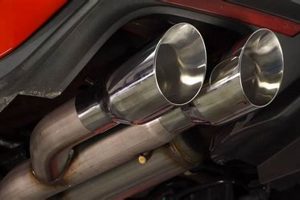
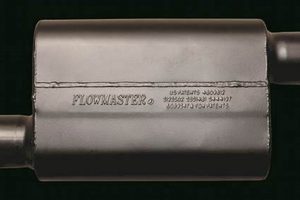
The auditory indication of a detached or poorly secured exhaust component manifests as a rattling, clanking, or roaring noise emanating from the undercarriage of a vehicle, particularly during acceleration or when traversing uneven surfaces. For example, a vehicle exhibiting an unusually loud and discordant exhaust note, coupled with the observation of a vibrating or visibly displaced exhaust system element, would be symptomatic of this condition.
The consequence of such a mechanical issue extends beyond mere auditory annoyance. It can compromise the vehicle’s exhaust system efficiency, leading to diminished fuel economy and potentially elevated emissions levels. Historically, the absence of robust exhaust system attachment mechanisms, coupled with exposure to corrosive road salts and thermal stress, has contributed to the prevalence of this issue in automotive maintenance.
The subsequent discussion will delve into the diagnostic procedures for identifying the precise source of the anomaly, exploring common causes, and outlining effective repair strategies to restore optimal exhaust system functionality and mitigate associated operational inefficiencies.
Remediation Strategies for Exhaust System Dislodgement
The following recommendations provide a framework for addressing conditions resulting in aberrant exhaust system noises, focusing on diagnostic precision and effective corrective actions.
Tip 1: Auditory Assessment: Prior to initiating physical inspection, conduct a thorough auditory examination. Note the specific characteristics of the sound: rattling, roaring, hissing, or knocking. The nature of the sound can provide valuable clues regarding the source of the detachment.
Tip 2: Visual Inspection: Carefully examine the entire exhaust system, from the exhaust manifold connection to the tailpipe. Pay close attention to the condition of the hangers, brackets, and clamps. Corrosion, breakage, or displacement of these components are common indicators.
Tip 3: Physical Manipulation: With the engine off and the exhaust system cooled, gently manipulate the components. Excessive movement or play in the system is indicative of a compromised mounting point or damaged component.
Tip 4: Component Assessment: Evaluate the muffler, catalytic converter, and exhaust pipes for signs of physical damage, such as rust, dents, or holes. These imperfections can contribute to system instability and the manifestation of atypical noises.
Tip 5: Connection Verification: Inspect all exhaust system connections, including flanges and slip joints, for leaks or looseness. Exhaust leaks can create distinctive hissing or roaring sounds, particularly during engine operation.
Tip 6: Hanger Integrity: Evaluate the condition of the exhaust hangers, ensuring they are securely attached to both the exhaust system and the vehicle’s undercarriage. Replace any worn or damaged hangers with appropriately rated replacements.
Tip 7: Torque Specifications: When reassembling or tightening exhaust system components, adhere strictly to the manufacturer’s recommended torque specifications. Over-tightening can damage components, while under-tightening can lead to future loosening.
Implementing these strategies facilitates accurate problem identification and ensures the application of appropriate corrective measures, minimizing the recurrence of exhaust system anomalies.
The subsequent section will address the long-term preventative maintenance practices to mitigate the risk of future exhaust system malfunctions.
1. Noise characteristics

The acoustic properties emanating from a vehicle’s exhaust system provide critical insights into its structural integrity and operational state. Deviations from the expected sound profile often serve as the initial indicators of mechanical issues, including those associated with detached or insecure exhaust components.
- Rattling Frequencies
Rattling noises typically manifest when a muffler or other exhaust component becomes partially detached and makes contact with the vehicle’s chassis or other undercarriage elements. The frequency and intensity of the rattling are directly related to the degree of detachment, the speed of the vehicle, and the surface conditions encountered. For example, a severely corroded hanger may cause the muffler to swing freely, resulting in a loud and consistent rattle, especially when traversing uneven terrain. The presence of rattling warrants immediate investigation to prevent further damage and potential separation of the exhaust system.
- Roaring Amplitudes
An amplified or unusually deep roaring sound often signifies a breach in the exhaust system, either through a hole in the muffler or a compromised connection. The increased amplitude arises from the unmitigated expulsion of exhaust gases, bypassing the sound-dampening mechanisms within the muffler. A failing weld or gasket can create a localized escape point, generating a distinct roar, particularly noticeable during acceleration. Such an event results not only in excessive noise pollution but also a potential reduction in engine performance and fuel efficiency.
- Hissing Tones
Hissing noises typically indicate the presence of exhaust leaks at joints or connections. These leaks occur when the sealing integrity of gaskets, flanges, or clamps is compromised, allowing high-pressure exhaust gases to escape through narrow openings. The resulting hissing tone is often more pronounced at idle or low engine speeds. Untreated hissing can erode the surrounding components, exacerbate the leak, and potentially introduce hazardous exhaust fumes into the vehicle’s cabin.
- Knocking Sounds
Knocking sounds may emerge when the exhaust system components become loose and impact against the vehicle frame or suspension elements. It usually occurs when an exhaust hanger or rubber insulator fails, allowing excessive movement of the muffler. The noise is typically more audible on rough roads or during periods of acceleration. Prolonged neglect to this issue can ultimately lead to more extensive damage to the exhaust system and adjacent vehicle structures.
These distinct acoustic signatures, each reflective of specific exhaust system vulnerabilities, underscore the significance of attentive listening for early detection of mechanical anomalies. Accurate identification of noise characteristics is paramount to initiating targeted inspection and repair procedures, mitigating the long-term ramifications of exhaust system failures. The careful recognition of these acoustic fingerprints serves as the initial step in resolving potential safety hazards and ensuring optimal vehicle performance.
2. Vibration analysis

Vibration analysis constitutes a pivotal diagnostic technique in assessing exhaust system integrity, particularly in relation to aberrant acoustic emissions. The phenomenon of a displaced or unsecured muffler induces atypical vibrational patterns throughout the exhaust system, directly correlating with the severity of the dislodgement and engine operating conditions. Through the application of accelerometers strategically positioned along the exhaust line, quantifiable data regarding vibration frequencies and amplitudes can be acquired. These data points deviate significantly from the baseline measurements of a properly secured system, providing unambiguous evidence of a structural anomaly. For instance, a loose muffler will exhibit heightened vibration amplitudes at frequencies corresponding to engine idle speed or resonant frequencies of the exhaust piping. The analysis of these vibrational characteristics is not merely qualitative; it allows for the precise identification of the compromised component and the nature of the failure, such as a fractured hanger or a corroded mounting point.
Consider the scenario of a vehicle exhibiting a rattling sound primarily during acceleration. Vibration analysis, in this case, would reveal increased vibrational energy at the muffler location during acceleration events. This energy increase, exceeding established thresholds for a secure system, would indicate a probable detachment. Further analysis can differentiate between a simple hanger failure, characterized by broad frequency responses, and a partial separation of the muffler body, identifiable by distinct resonant peaks. The practical application of vibration analysis extends to preventative maintenance protocols, enabling the detection of nascent structural weaknesses before they manifest as audible symptoms. By monitoring vibrational signatures over time, automotive technicians can proactively address potential failures, mitigating the risk of complete system breakdowns and associated safety hazards.
In summary, vibration analysis provides an objective and quantifiable means of diagnosing and monitoring exhaust system integrity. Its ability to discern subtle deviations from normal operating parameters allows for targeted interventions, minimizing repair costs and maximizing vehicle safety. The challenges associated with vibration analysis lie primarily in the proper placement of sensors and the accurate interpretation of complex vibrational data, underscoring the need for skilled technicians and sophisticated analytical tools. Ultimately, integrating vibration analysis into routine maintenance procedures offers a proactive approach to exhaust system management, enhancing vehicle reliability and minimizing the occurrence of disruptive and potentially hazardous failures.
3. Component integrity

Component integrity within an exhaust system directly influences its structural stability and acoustic performance. Degradation or failure of individual components invariably contributes to audible anomalies, including the manifestation of sounds indicative of detachment or loosening.
- Muffler Shell Degradation
The muffler, responsible for sound attenuation, is susceptible to corrosion from within due to acidic condensate formation and externally from road salts. Progressive corrosion weakens the shell, leading to internal baffle detachment. Such degradation alters the muffler’s acoustic properties, often resulting in a louder, raspier exhaust note, and eventually a loose, rattling sound as internal components shift within the corroded shell.
- Exhaust Pipe Perforation
Exhaust pipes, frequently constructed from steel or aluminum, are vulnerable to corrosion, particularly in regions with high salt usage. Perforations compromise the pipe’s structural integrity, weakening its ability to support the muffler. This reduced support can induce stress on connecting hangers, accelerating their failure and culminating in increased movement and associated audible indicators of a loosening system.
- Catalytic Converter Casing Failure
The catalytic converter housing, typically metallic, faces exposure to extreme temperatures and corrosive elements. Cracks or breaches in the casing can alter the converter’s acoustic properties, generating hissing sounds due to exhaust gas leakage. Furthermore, casing degradation weakens the support structure for downstream components, increasing the likelihood of a detached or loose muffler.
- Hanger and Bracket Deterioration
Exhaust hangers and brackets, responsible for securing the exhaust system to the vehicle’s undercarriage, are subject to constant stress and environmental exposure. Corrosion, fatigue, and mechanical damage weaken these components, reducing their ability to effectively dampen vibrations and maintain the exhaust system’s position. Failure of these mounting elements directly precipitates excessive movement and consequential sounds, ultimately leading to a perceived “loose muffler sound.”
The interdependency between component integrity and exhaust system stability is evident. Degradation in any single component, be it the muffler shell, exhaust pipe, catalytic converter casing, or supporting hangers, undermines the overall system’s structural integrity. The audible consequence of this degradation invariably presents as a distinct and diagnostically valuable indicator of impending or existing exhaust system failures.
4. Attachment security

Adequate exhaust system attachment is paramount to maintaining structural integrity and preventing the occurrence of anomalous sounds. Compromised security in exhaust component mounting invariably contributes to auditory indications of system instability, most notably the perception of a detached or poorly secured muffler.
- Hanger Integrity and Positioning
Exhaust hangers, typically constructed from rubber or reinforced polymers, serve as the primary means of suspending the exhaust system from the vehicle’s chassis. These hangers absorb vibrations and accommodate thermal expansion. Deterioration of hanger material, improper positioning, or complete failure compromises the system’s stability, allowing excessive movement of the muffler and pipes, leading to contact with the vehicle’s undercarriage and generating rattling or knocking sounds.
- Clamp Tightness and Corrosion Resistance
Clamps are utilized to secure joints between exhaust pipes and components such as the muffler and catalytic converter. Insufficient clamp tightness allows for exhaust gas leakage, producing hissing sounds, and permits component shifting, contributing to rattling. Corrosion of clamp materials weakens their clamping force, exacerbating these issues. Properly torqued, corrosion-resistant clamps are essential for maintaining a secure and leak-free exhaust system.
- Flange Integrity and Gasket Condition
Flanges, utilized at connections between the exhaust manifold, catalytic converter, and exhaust pipes, provide rigid attachment points. Damage to flange surfaces, such as warping or corrosion, prevents a secure seal. Degraded or missing gaskets between flanges allow exhaust gas escape, resulting in hissing sounds, and introduce vibrational instability. Regular inspection and replacement of gaskets are crucial for maintaining flange integrity.
- Welding Quality at Joints
Welded joints within the exhaust system, particularly at the muffler and pipe connections, represent critical attachment points. Poor welding quality, characterized by incomplete penetration or porosity, weakens these joints, predisposing them to fracture under stress. Fractured welds allow components to shift, generating rattling noises, and compromise the structural integrity of the system, potentially leading to complete component separation.
In conclusion, maintaining secure attachments throughout the exhaust system is essential for preventing the manifestation of unusual sounds. Regular inspection and maintenance of hangers, clamps, flanges, and welded joints mitigate the risk of component displacement and ensure the system’s acoustic integrity and overall performance.
5. Exhaust Leaks and Associated Auditory Manifestations
Exhaust leaks and the perception of a detached or unsecured muffler are frequently intertwined, representing distinct yet interconnected manifestations of exhaust system degradation. A leak, fundamentally a breach in the system’s sealed structure, allows pressurized exhaust gases to escape prematurely. This escape can initiate a cascade of events leading to, or exacerbating, the auditory characteristics associated with a “loose muffler sound.” For instance, a small leak near a muffler hanger can erode the hanger material over time due to concentrated exposure to hot, corrosive gases. This erosion weakens the hanger, leading to increased muffler movement and the subsequent rattling or knocking indicative of component displacement. Conversely, an existing “loose muffler sound,” resulting from damaged hangers or supports, can precipitate exhaust leaks. The increased stress and vibration imposed on exhaust joints and connections by the unsecure muffler accelerates wear and tear, leading to gasket failure and the development of leaks.
The auditory manifestation of an exhaust leak is often distinct. A hissing or roaring sound, particularly prominent during engine acceleration, typically indicates a compromised seal at a joint or a perforation in a pipe or muffler. However, the presence of an exhaust leak can also indirectly contribute to the perception of a “loose muffler sound.” The escaping gases can create turbulence and vibrations within the exhaust system, amplifying existing resonances and making any existing component instability more audibly noticeable. Furthermore, the loss of backpressure resulting from a significant exhaust leak can alter engine performance, leading to increased vibrations that further exacerbate a “loose muffler sound.” A practical example would be a rusted-through exhaust pipe section located upstream of the muffler. The resulting exhaust leak not only generates its own distinct sound but also weakens the pipe’s structural integrity, reducing its ability to support the muffler, ultimately contributing to a “loose muffler sound” as the muffler moves excessively.
Understanding the relationship between exhaust leaks and the perception of a detached or unsecured muffler is crucial for accurate diagnosis and effective repair. Addressing only the audible manifestation of a “loose muffler sound” without identifying and repairing underlying exhaust leaks can lead to recurrent issues and premature component failure. Comprehensive inspection of the entire exhaust system, including leak detection techniques and assessment of hanger and support integrity, is essential for ensuring long-term system reliability and minimizing the potential for repeat repairs. The interconnected nature of these issues necessitates a holistic approach to exhaust system maintenance, prioritizing the identification and remediation of all contributing factors.
6. System performance
Exhaust system performance is intrinsically linked to overall vehicle efficiency and operational effectiveness. A compromised exhaust system, particularly one exhibiting characteristics of component loosening, directly impacts critical performance parameters.
- Engine Backpressure Regulation
Engine backpressure, controlled by the exhaust system’s design and condition, plays a crucial role in combustion efficiency. A “loose muffler sound” often indicates a breach or obstruction in the exhaust flow path. This disruption alters the designed backpressure, potentially leading to incomplete combustion, reduced power output, and increased fuel consumption. An improperly functioning exhaust system, signaled by abnormal noise, negatively impacts engine performance by disrupting the carefully engineered balance of backpressure.
- Emissions Control Efficacy
The catalytic converter, a critical component of the exhaust system, reduces harmful emissions. A “loose muffler sound,” particularly when stemming from a leak upstream of the converter, indicates that exhaust gases are bypassing the converter. This bypass results in increased levels of pollutants, such as hydrocarbons, carbon monoxide, and nitrogen oxides, being released into the atmosphere. Reduced emissions control efficacy not only violates environmental regulations but also contributes to reduced air quality.
- Fuel Efficiency Degradation
A properly functioning exhaust system optimizes engine performance, contributing to efficient fuel utilization. A “loose muffler sound,” indicative of exhaust leaks or flow restrictions, disrupts this optimization. Leaks lead to a loss of exhaust gas velocity, reducing the scavenging effect within the cylinders. Restrictions increase backpressure, hindering the expulsion of exhaust gases. Both scenarios result in decreased fuel efficiency, requiring more fuel to achieve the same level of performance.
- Sensor Accuracy and Feedback
Oxygen sensors, positioned within the exhaust system, provide critical feedback to the engine control unit (ECU) for fuel mixture adjustments. Exhaust leaks, often associated with a “loose muffler sound,” introduce ambient air into the exhaust stream, skewing oxygen sensor readings. These inaccurate readings lead the ECU to make incorrect fuel mixture adjustments, resulting in reduced engine performance, increased emissions, and potential damage to the catalytic converter.
The cumulative effect of these performance degradations highlights the importance of addressing the underlying causes of a “loose muffler sound.” Ignoring these auditory indicators leads to a cascade of negative consequences, impacting vehicle efficiency, environmental responsibility, and long-term reliability. Prompt diagnosis and repair are essential to restore optimal system performance and mitigate the associated risks.
7. Safety implications
The auditory indication of a detached or unsecured exhaust component, often described as a “loose muffler sound,” extends beyond mere mechanical inconvenience, presenting tangible safety risks to both vehicle occupants and the surrounding environment. Recognizing and addressing these implications is paramount to ensuring safe vehicle operation.
- Carbon Monoxide Intrusion
A compromised exhaust system, particularly one exhibiting leaks due to loose or detached components, poses a significant risk of carbon monoxide (CO) intrusion into the vehicle cabin. CO, an odorless and colorless gas, is a byproduct of incomplete combustion. Even low concentrations can cause drowsiness, headaches, and nausea, impairing driver alertness and reaction time. Prolonged exposure can lead to unconsciousness and death. A “loose muffler sound” coupled with unusual odors or physical symptoms within the vehicle warrants immediate investigation to prevent CO poisoning.
- Thermal Hazards and Fire Risk
Displaced or damaged exhaust components, as indicated by a “loose muffler sound,” can present thermal hazards. Misdirected exhaust gases can overheat adjacent components, such as fuel lines, brake lines, or wiring harnesses. Elevated temperatures can degrade these components, increasing the risk of fuel leaks, brake failure, or electrical shorts. In extreme cases, the heat generated by the exhaust system can ignite combustible materials near the vehicle, resulting in a fire. Proper exhaust system support and maintenance are crucial to prevent these thermal hazards.
- Road Debris and Environmental Hazards
A severely compromised exhaust system, characterized by dangling or detached components, poses a risk of road debris. Components that separate from the vehicle can create hazards for other drivers, particularly motorcyclists or cyclists. Furthermore, damaged exhaust systems can release particulate matter and pollutants directly onto the road surface, contributing to environmental contamination. Timely repair or replacement of damaged exhaust components is necessary to mitigate these environmental and safety risks.
- Compromised Vehicle Handling and Control
In extreme cases, a severely detached or dragging exhaust system can affect vehicle handling and control. A dragging muffler can catch on road imperfections, altering the vehicle’s trajectory or causing sudden deceleration. A displaced exhaust pipe can interfere with suspension components, limiting their range of motion and impairing the vehicle’s ability to respond to steering inputs. Such scenarios can increase the risk of accidents, particularly at higher speeds. A “loose muffler sound” accompanied by noticeable changes in vehicle handling requires immediate attention to prevent loss of control.
The safety ramifications associated with a “loose muffler sound” are far-reaching, encompassing both immediate and long-term risks. Proactive maintenance and prompt repair of exhaust system defects are essential for safeguarding vehicle occupants, other road users, and the environment. Ignoring these auditory warnings can lead to severe consequences, underscoring the critical importance of addressing exhaust system issues without delay.
Frequently Asked Questions
The following questions address common concerns and misconceptions regarding exhaust system noises, particularly those indicative of component loosening or detachment.
Question 1: What constitutes a “loose muffler sound,” and how does it differ from other exhaust noises?
The descriptor “loose muffler sound” generally refers to rattling, clanging, or knocking noises emanating from the vehicle’s undercarriage, specifically associated with the exhaust system. These noises differ from typical exhaust sounds, such as hissing (indicative of leaks) or roaring (often associated with muffler damage). The key characteristic is the perception of a physically detached or unsecured component rattling against the vehicle chassis or other exhaust elements.
Question 2: Is a “loose muffler sound” solely indicative of a problem with the muffler itself?
No. While the muffler may be the most prominent source of the noise, a “loose muffler sound” can stem from various factors, including broken or corroded exhaust hangers, damaged exhaust pipes, or loose connections between exhaust components. The sound is indicative of a broader issue of exhaust system instability, not necessarily a specific problem confined to the muffler.
Question 3: What are the potential consequences of ignoring a “loose muffler sound”?
Ignoring a “loose muffler sound” can lead to a range of negative consequences, including reduced fuel efficiency, increased emissions, potential carbon monoxide intrusion into the vehicle cabin, damage to other vehicle components, and an increased risk of exhaust system component separation, posing a hazard to other drivers.
Question 4: Can a “loose muffler sound” be temporarily resolved with DIY solutions, or does it always require professional repair?
While temporary DIY solutions, such as wire or makeshift hangers, might temporarily mitigate the noise, these are not recommended as permanent fixes. A “loose muffler sound” often indicates underlying structural issues within the exhaust system, and proper repair typically requires welding, component replacement, and adherence to torque specifications, best performed by a qualified mechanic.
Question 5: How frequently should the exhaust system be inspected to prevent the occurrence of a “loose muffler sound”?
A visual inspection of the exhaust system should be performed at least annually, or more frequently in regions with harsh winter conditions where road salts accelerate corrosion. Additionally, any unusual noises emanating from the exhaust system should prompt an immediate inspection, regardless of the scheduled maintenance interval.
Question 6: Are there specific driving conditions that exacerbate a “loose muffler sound”?
Yes. Driving on rough roads, traversing speed bumps, or carrying heavy loads can exacerbate a “loose muffler sound” due to increased stress and vibration on the exhaust system. These conditions highlight existing weaknesses in the system’s mounting and support structures, making the noise more pronounced.
Early identification and appropriate remediation of the underlying cause are crucial in addressing aberrant exhaust system sounds to ensure vehicle safety and optimal performance.
The subsequent section will address the economic considerations associated with exhaust system maintenance and repair.
The Significance of Addressing Loose Muffler Sound
The preceding exploration has illuminated the multifaceted implications of a “loose muffler sound,” extending beyond a mere auditory annoyance to encompass safety hazards, environmental concerns, and compromised vehicle performance. The analysis underscored the importance of recognizing this auditory cue as a symptom of underlying structural deficiencies within the exhaust system, necessitating prompt and comprehensive evaluation.
The persistence of a “loose muffler sound” should not be dismissed as a trivial matter. It demands immediate attention, not only for the sake of regulatory compliance and environmental stewardship but also for the preservation of vehicle integrity and the mitigation of potential safety risks. Prioritizing preventative maintenance and timely repair of exhaust system anomalies remains paramount in ensuring safe and responsible vehicle operation.