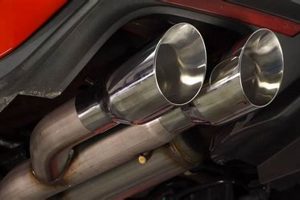
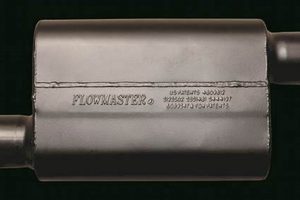
The phenomenon of increased acoustic output from a vehicle’s exhaust system, specifically related to the muffler’s function, indicates a potential compromise in its sound dampening capabilities. This manifestation can be observed as a noticeable escalation in decibel levels emanating from the rear of a vehicle during operation, often characterized by a deeper or more resonant tone than typically present. For instance, a vehicle previously exhibiting a subdued exhaust note might, over time, produce a more pronounced rumble, particularly during acceleration or at higher engine speeds.
The significance of maintaining a functional exhaust system lies in its direct impact on both environmental regulation compliance and the overall driving experience. A properly functioning system effectively reduces noise pollution, contributing to quieter roadways and residential areas. Furthermore, the original equipment manufacturer (OEM) design specifications are often tailored to optimize engine performance and fuel efficiency. Compromised sound suppression can, therefore, indirectly suggest potential issues impacting these carefully calibrated parameters. Historically, advancements in muffler technology have been driven by increasing legislative pressure to reduce vehicle noise and enhance comfort levels for vehicle occupants.
The subsequent sections will address common causes leading to reduced muffler effectiveness, diagnostic procedures to identify the underlying problem, and various repair or replacement options aimed at restoring the original acoustic profile of the vehicle’s exhaust system. It will also consider the implications of altered exhaust systems on vehicle emissions and compliance with local ordinances.
Addressing Increased Exhaust Noise
The following provides actionable strategies to address the issue of increased exhaust system noise, often signaled by a perceived compromised muffler.
Tip 1: Perform a Visual Inspection: Conduct a thorough examination of the muffler body and surrounding exhaust pipes. Look for signs of physical damage, such as rust, corrosion, holes, or cracks. Even minor imperfections can contribute to elevated noise levels.
Tip 2: Check Exhaust System Mounts and Hangers: Inspect the rubber mounts and hangers that secure the exhaust system to the vehicle’s undercarriage. Deteriorated or broken mounts can cause the exhaust system to vibrate excessively, generating unwanted noise. Replacement of damaged mounts is often a straightforward repair.
Tip 3: Examine Pipe Connections: Verify that all connections between exhaust pipes, including those at the manifold and catalytic converter, are secure and free from leaks. Exhaust gas leaks disrupt the intended flow and contribute to increased noise. Tighten clamps or replace gaskets as necessary.
Tip 4: Evaluate Muffler Internals (If Possible): While not always feasible without specialized equipment, listen closely for rattling or clanging sounds emanating from within the muffler. These sounds can indicate internal baffle damage, which compromises the muffler’s sound-dampening capabilities.
Tip 5: Consider a Professional Exhaust System Inspection: If the source of the noise remains unclear after visual inspection, seek the expertise of a qualified mechanic. A professional inspection can identify subtle issues, such as hidden corrosion or internal muffler damage, that may be difficult to detect otherwise.
Tip 6: Evaluate the Vehicle’s Age and Mileage: Exhaust systems, including mufflers, have a finite lifespan. As vehicles age and accumulate mileage, the internal components of the muffler may deteriorate due to heat, corrosion, and vibration. Replacement may be the most cost-effective solution.
Tip 7: Compare Exhaust Note to a Baseline: If feasible, compare the current exhaust note to the sound when the vehicle was newer or when the exhaust system was known to be in good condition. This comparison can provide a qualitative assessment of the noise increase.
Addressing the factors contributing to increased exhaust noise contributes to a quieter vehicle operation, regulatory compliance, and the preservation of overall vehicle performance.
The subsequent sections delve into advanced diagnostic techniques and repair strategies associated with increased exhaust system noise.
1. Degradation of internal baffling

Degradation of internal baffling within a muffler directly contributes to the perception of increased exhaust noise. Mufflers are engineered with a series of internal chambers and passages designed to attenuate sound waves generated by the engine’s combustion process. These baffles strategically redirect and reflect sound waves, causing them to interact destructively and thereby reducing the overall sound intensity emitted from the exhaust outlet. As these internal components corrode, rust, or physically break down, their ability to effectively manage sound waves diminishes. This compromise results in a less muffled exhaust note, which is readily perceived as an increase in the loudness of the exhaust system.
The importance of internal baffling is paramount to the muffler’s function. Without these components, exhaust gases would flow directly through the system with minimal impedance, creating a significantly louder and more aggressive exhaust sound. A real-life example of baffle degradation manifesting as increased noise can be observed in older vehicles, particularly those operating in environments with high humidity or exposure to road salts. Over time, these conditions accelerate corrosion within the muffler, leading to the deterioration of the internal baffles. The result is a gradual increase in exhaust noise, often accompanied by a change in the tonal quality of the exhaust note.
The practical significance of understanding the link between baffle degradation and increased exhaust noise lies in effective vehicle maintenance. Recognizing this connection allows for timely identification of potential exhaust system issues, enabling proactive repair or replacement of the muffler. Early intervention can prevent further damage to the exhaust system and help ensure compliance with noise regulations. Furthermore, it highlights the need for periodic inspections of the exhaust system, especially in vehicles operating in harsh environments, to mitigate the effects of corrosion and prolong the lifespan of the muffler’s internal components.
2. Corrosion of muffler housing

The deterioration of a muffler’s external structure through corrosion is a primary contributor to an escalation in exhaust noise levels. This process, often a consequence of environmental exposure and material degradation, compromises the integrity of the muffler and directly impacts its sound-dampening capabilities.
- Formation of Perforations and Weakened Structure
Corrosion progressively weakens the metal of the muffler housing, leading to the formation of small holes and structural weaknesses. These perforations act as unintended exhaust outlets, allowing high-pressure gases to escape without undergoing the intended sound attenuation process within the muffler’s internal chambers. This premature release of exhaust gases results in a noticeable increase in exhaust noise, often characterized by hissing or rattling sounds.
- Alteration of Acoustic Properties
The design of a muffler is meticulously calibrated to achieve specific acoustic properties. Corrosion disrupts this calibration by altering the shape and dimensions of the muffler’s external structure. This, in turn, affects the way sound waves propagate within the muffler, reducing its effectiveness in dampening noise. The altered acoustic properties can lead to a change in the tonal quality of the exhaust note, making it sound louder and more aggressive.
- Compromised Sealing and Joint Integrity
Corrosion frequently occurs at the seams and joints of the muffler housing, where different metal components are joined together. This leads to a loss of sealing integrity, allowing exhaust gases to leak out at these junctions. These leaks introduce additional sources of noise, contributing to the overall increase in exhaust volume. The compromised seals can also accelerate the corrosion process, creating a feedback loop that further degrades the muffler’s performance.
- Propagation of Vibrations and Resonance
A corroded muffler housing is more susceptible to vibrations induced by the engine’s exhaust pulses. These vibrations can amplify the sound of the exhaust, creating a resonant effect that contributes to increased noise levels. The weakened structure of the corroded housing is less effective at damping these vibrations, resulting in a louder and more pronounced exhaust note, especially at certain engine speeds.
In summary, the corrosion of a muffler housing initiates a cascade of effects that directly lead to increased exhaust noise. From the formation of perforations and the alteration of acoustic properties to the compromised sealing and propagation of vibrations, corrosion undermines the muffler’s intended function, resulting in a noticeable escalation in the volume of exhaust emissions. This underscores the importance of regular exhaust system inspections and timely muffler replacements to maintain acceptable noise levels and ensure vehicle compliance with regulations.
3. Exhaust system leaks present
The presence of leaks within a vehicle’s exhaust system is a significant factor contributing to the perception of increased exhaust noise, often described as “muffler sounds louder.” These leaks disrupt the engineered flow of exhaust gases, directly impacting the sound attenuation capabilities of the muffler and other noise-reducing components.
- Disruption of Exhaust Gas Flow
Exhaust leaks introduce unintended escape routes for high-pressure exhaust gases. This disruption bypasses the designed path through the muffler’s internal chambers, where sound waves are meant to be dampened. The escaping gases, no longer subjected to the muffler’s noise reduction mechanisms, directly contribute to a louder and more aggressive exhaust note. For example, a cracked exhaust manifold or a loose connection between the catalytic converter and the muffler can create significant leaks, resulting in a noticeable increase in exhaust noise.
- Alteration of Acoustic Frequencies
Exhaust leaks can alter the frequency characteristics of the exhaust sound. Leaks often generate higher-frequency noises, such as hissing or whistling sounds, which are superimposed on the lower-frequency rumble of the engine. This combination of frequencies can make the overall exhaust sound more noticeable and perceived as louder. A small pinhole leak in an exhaust pipe, for instance, can produce a high-pitched whistle that is easily audible above the normal exhaust sound.
- Creation of Secondary Noise Sources
The escaping exhaust gases from a leak can impinge upon nearby vehicle components, such as the chassis or heat shields, creating secondary sources of noise. This impact can cause these components to vibrate or resonate, further amplifying the overall exhaust noise. A leak near the undercarriage of the vehicle, for example, can cause the floorboards to vibrate, contributing to a droning sound within the cabin.
- Compromised Engine Performance
While primarily affecting noise, significant exhaust leaks can indirectly impact engine performance. These leaks can alter the backpressure within the exhaust system, which can affect engine efficiency and power output. While not directly making the “muffler sounds louder,” the altered engine operation due to the leak can create different exhaust pulses, subjectively changing the exhaust sound and potentially making it seem louder or more irregular. In severe cases, exhaust leaks can also lead to increased fuel consumption and reduced engine lifespan.
The presence of exhaust system leaks, therefore, creates a multifaceted problem that not only elevates exhaust noise levels but can also affect vehicle performance and longevity. Identifying and repairing these leaks is crucial for maintaining a quiet and efficient vehicle operation. The increase of audible sound is created by leaks that allows a louder sound due to pressure release bypassing the muffler.
4. Improper exhaust installation

Improper exhaust installation significantly impacts the sound profile of a vehicle, often resulting in an elevated noise level characterized by the perception of a louder muffler. Deviations from specified installation procedures compromise the intended acoustic dampening characteristics of the exhaust system.
- Inadequate Sealing at Joints
Incorrect installation frequently involves inadequate sealing at exhaust pipe connections, flanges, and the muffler inlet/outlet. Gaps or misaligned gaskets permit exhaust gases to escape prematurely, bypassing the full sound attenuation capacity of the muffler. This results in a noticeable increase in exhaust volume and often introduces hissing or popping sounds. The absence of proper torque on flange bolts, for instance, creates pathways for exhaust leakage.
- Incorrect Component Alignment
Misalignment of exhaust components can induce stress on joints and hangers, leading to premature failure and the development of leaks. If the exhaust system is not properly aligned, it may contact other vehicle components, such as the frame or suspension, creating vibrations and additional noise. For instance, a catalytic converter installed at an incorrect angle can strain the adjoining pipes and introduce stress points, eventually leading to cracks and exhaust leaks.
- Use of Incompatible or Damaged Components
Employing incorrect or damaged hardware during installation, such as using the wrong size clamps or reusing deteriorated gaskets, compromises the system’s integrity. Damaged hangers may fail to properly support the exhaust system, leading to excessive movement and potential component damage. Substituting a smaller-diameter exhaust pipe, for example, disrupts the carefully calibrated backpressure designed for optimal engine performance and sound control, resulting in an altered and potentially louder exhaust note.
- Insufficient Support and Isolation
An improperly supported exhaust system is prone to excessive movement and vibration, leading to accelerated wear and the potential for leaks to develop. The omission or incorrect placement of rubber isolators allows vibrations to transmit to the vehicle’s chassis, amplifying the exhaust noise within the cabin. Without adequate support, the weight of the exhaust system can strain joints and connections, resulting in the formation of cracks and leaks that contribute to increased noise levels.
These facets of improper exhaust installation collectively contribute to a diminished ability of the exhaust system, including the muffler, to effectively reduce noise. This consequently results in a noticeable increase in exhaust volume and a potentially altered tonal quality, often perceived as the muffler sounding louder than intended. Correct installation practices are therefore crucial for maintaining the designed acoustic profile of a vehicle and ensuring compliance with noise regulations.
5. Engine performance degradation

Engine performance degradation, while not directly altering the muffler’s structural integrity, influences the characteristics of exhaust gases entering the muffler, thereby contributing to the perception of increased exhaust noise. Reduced combustion efficiency, misfires, or valve train issues generate atypical pressure waves and unburnt fuel within the exhaust stream. These anomalies create distinct sound signatures that differ from the designed operating parameters of the exhaust system, including the muffler. For instance, a worn-out spark plug causing intermittent misfires results in irregular combustion events, producing sharp, popping sounds emanating from the exhaust, making the muffler sound louder or more pronounced than its intended tone. This altered sound profile is a direct consequence of the engine’s degraded performance.
The practical significance of recognizing this connection lies in the ability to diagnose engine problems based on exhaust sound. Mechanics often use exhaust noise as an initial indicator of underlying engine issues. A trained ear can distinguish between normal engine sounds and those indicative of problems like valve leaks, timing issues, or cylinder misfires. Addressing the root cause of the engine performance degradation is crucial not only for restoring optimal engine operation but also for mitigating the abnormal exhaust noise. Neglecting engine maintenance leads to a sustained influx of aberrant exhaust gases, potentially accelerating the wear and tear on the muffler itself, as unburnt fuel can cause corrosion.
In summary, engine performance degradation does not directly damage the muffler but modifies the exhaust gases in ways that alter the perceived sound. Atypical combustion byproducts and pressure waves result in louder, irregular, or otherwise anomalous exhaust noises. Diagnosing and rectifying engine-related issues is, therefore, a critical step in addressing elevated exhaust noise and ensuring the longevity of the entire exhaust system. Recognizing the relationship between engine health and exhaust sound provides a valuable tool for vehicle maintenance and troubleshooting.
Frequently Asked Questions
This section addresses common inquiries concerning the phenomenon of elevated exhaust system noise, often described using the term “muffler sounds louder.” The aim is to provide clarity and understanding regarding this issue.
Question 1: What are the primary indicators of a compromised muffler leading to increased exhaust noise?
Key indicators include a noticeable escalation in exhaust volume, a change in the tonal quality of the exhaust note (e.g., deeper rumble, hissing sound), and the presence of unusual vibrations or rattling noises emanating from the exhaust system.
Question 2: Can a simple exhaust leak contribute to the perception that a muffler is excessively loud?
Yes, an exhaust leak, even a small one, can disrupt the designed flow of exhaust gases and allow them to escape before being properly muffled. This bypasses the muffler’s sound attenuation mechanisms, resulting in a louder exhaust note.
Question 3: Does the age of a vehicle directly influence the likelihood of increased exhaust noise?
Vehicle age is a contributing factor. Over time, exposure to environmental elements and the continuous cycling of heat and pressure can degrade the components of the exhaust system, including the muffler’s internal baffling and housing. This degradation reduces the muffler’s effectiveness.
Question 4: Are there performance implications associated with an excessively loud exhaust system?
While an increase in exhaust noise itself does not directly cause performance issues, the underlying problems that lead to increased noise (e.g., leaks, engine misfires) can negatively impact engine efficiency, fuel economy, and overall vehicle performance.
Question 5: What is the typical lifespan of a muffler under normal operating conditions?
Muffler lifespan varies depending on driving conditions, environmental factors, and the quality of the original equipment. However, a muffler typically lasts between 5 to 7 years or 50,000 to 80,000 miles.
Question 6: Is it possible to repair a muffler that is contributing to increased exhaust noise, or is replacement always necessary?
The feasibility of repair depends on the nature and extent of the damage. Minor leaks can sometimes be patched, but significant corrosion or internal baffle damage typically necessitates muffler replacement.
In conclusion, the perception of a “muffler sounds louder” can stem from a variety of factors, ranging from component degradation to engine performance issues. Thorough inspection and accurate diagnosis are crucial for effective resolution.
The following section will explore potential strategies for sound dampening.
Conclusion
This exploration has established that the perception of “muffler sounds louder” often serves as an indicator of underlying issues within the vehicle’s exhaust system or, more broadly, its engine. Factors ranging from corrosion and physical damage to improper installation and engine performance degradation directly contribute to this phenomenon. The increase in audible sound signals a deviation from the exhaust system’s designed acoustic profile and can signify potential problems impacting vehicle performance, emissions compliance, and overall operational efficiency.
Therefore, a discernible increase in exhaust noise warrants prompt investigation. Addressing the root cause, whether it be repairing leaks, replacing deteriorated components, or rectifying engine malfunctions, not only restores the vehicle’s designed sound level but also mitigates potential long-term damage and ensures adherence to regulatory standards. Prioritizing proactive maintenance and diligent diagnostics remains paramount in preserving vehicle integrity and minimizing the adverse effects associated with compromised exhaust systems.