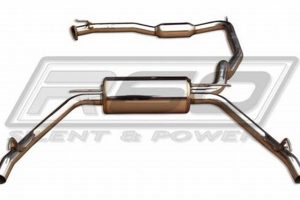
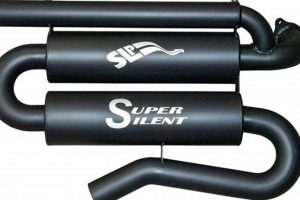
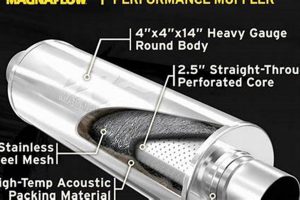
An automotive component designed to reduce engine noise output falls within the category of exhaust system parts. These parts, often found on motor vehicles, serve the primary function of dampening the sounds produced by combustion processes. As an illustration, consider a vehicle operating in a residential area; the integration of such a device minimizes disturbance to the surrounding environment.
The importance of this component stems from its contribution to noise pollution reduction and compliance with local ordinances regarding vehicle noise levels. Historically, these components have evolved from simple baffles to complex resonating chambers, enhancing their sound-dampening capabilities. This evolution has led to quieter vehicles and improved quality of life in urban settings. Modern versions also play a role in optimizing engine performance and fuel efficiency.
Therefore, a detailed exploration of the construction, types, maintenance, and troubleshooting aspects of these vehicle components will provide a comprehensive understanding of their function and significance. Understanding the factors influencing lifespan and performance contributes to responsible vehicle ownership and environmental stewardship.
Essential Guidelines for Exhaust Noise Reduction Systems
The following guidelines offer practical advice for maintaining and optimizing exhaust noise reduction systems, ensuring their effectiveness and longevity.
Tip 1: Routine Inspection: Regular visual inspection for signs of corrosion, physical damage, or leaks is crucial. Early detection of these issues can prevent costly repairs or replacements.
Tip 2: Prompt Repair of Leaks: Exhaust leaks not only increase noise levels but can also lead to dangerous carbon monoxide exposure. Any detected leak should be addressed immediately by a qualified mechanic.
Tip 3: Proper Installation: Ensure correct installation, adhering to manufacturer specifications, is essential for optimal performance and longevity. Improper installation can significantly reduce the device’s effectiveness.
Tip 4: Avoid Harsh Chemicals: When cleaning the vehicle, avoid applying harsh chemicals or abrasive materials to the exhaust system components, as these can degrade the materials and shorten their lifespan.
Tip 5: Monitor Unusual Noises: Pay attention to any changes in exhaust noise. Unusual rattling, hissing, or booming sounds can indicate problems requiring professional attention.
Tip 6: Consider Material Quality: When replacement becomes necessary, consider components constructed from durable, corrosion-resistant materials to extend their operational lifespan.
Tip 7: Check Mounting Points: Verify that all mounting points are secure and free from excessive vibration. Loose mountings can lead to premature wear and potential damage.
Adherence to these guidelines promotes efficient operation, reduces noise pollution, and extends the lifespan of exhaust noise reduction systems. Consistent maintenance contributes to both vehicle performance and environmental responsibility.
The next section will address common troubleshooting scenarios and diagnostic procedures related to these systems.
1. Noise Reduction Efficiency

Noise reduction efficiency, as it pertains to exhaust systems, is a critical performance metric. It dictates the effectiveness with which an exhaust noise reduction component diminishes the acoustic energy generated by an internal combustion engine. This efficiency directly impacts regulatory compliance, environmental impact, and overall driver and community comfort.
- Frequency Attenuation Spectrum
The frequency attenuation spectrum defines the range of sound frequencies that an exhaust noise reduction component effectively reduces. Different designs, incorporating resonators or baffles, target specific frequency ranges. For instance, a design prioritizing low-frequency attenuation might be deployed in heavy-duty applications to mitigate engine rumble. This spectrum is vital for tailoring an exhaust system to comply with targeted noise regulations.
- Insertion Loss Measurement
Insertion loss quantifies the decibel reduction achieved by installing an exhaust noise reduction component within the exhaust stream. Measured in controlled environments, this metric objectively indicates the component’s silencing capability. High insertion loss values are correlated with superior noise reduction performance. However, the test conditions and measurement methodologies need to be strictly controlled to get a reliable result.
- Backpressure Impact Assessment
While prioritizing noise reduction, exhaust noise reduction components also impact exhaust backpressure. Excessive backpressure compromises engine performance and fuel efficiency. Consequently, component design seeks a balance between noise attenuation and exhaust flow optimization. Computational fluid dynamics (CFD) simulations are employed to model and mitigate backpressure effects in order to achieve high silencing without affecting the engine operating parameters.
- Material Resonance Damping
The inherent material properties of the component influence its ability to damp vibrations and reduce radiated noise. Materials with high internal damping coefficients effectively dissipate vibrational energy. The selection of materials with damping capability can significantly reduce noise emissions beyond the intended silencing effect. The vibration response needs to be considered in combination with temperature exposure and mechanical stress.
In summary, noise reduction efficiency is a multifaceted attribute determined by spectral attenuation, insertion loss, backpressure characteristics, and material properties. Achieving optimal performance necessitates a holistic design approach that considers these interrelated factors. These attributes collectively determine its suitability for various applications and its contribution to overall noise abatement goals.
2. Material Durability

Material durability is a critical factor in the performance and longevity of an exhaust noise reduction component. The operating environment, characterized by high temperatures, corrosive gases, and mechanical stresses, demands robust material selection to ensure reliable operation and minimize premature failure.
- Corrosion Resistance
Exhaust gases contain corrosive byproducts of combustion, including water vapor, sulfur oxides, and nitrogen oxides. Components constructed from materials susceptible to corrosion experience degradation, leading to structural weakening, leaks, and diminished noise reduction capabilities. Alloys with high chromium or nickel content, such as stainless steel, offer enhanced corrosion resistance and extend component lifespan. Premature failure due to corrosion results in increased noise emissions and necessitates costly repairs or replacements.
- Thermal Fatigue Resistance
Exhaust systems undergo rapid temperature fluctuations during vehicle operation, inducing thermal stresses within the component material. Repeated thermal cycling can lead to fatigue cracking and eventual failure, particularly in areas with high stress concentrations. Materials with high thermal fatigue resistance, characterized by low thermal expansion coefficients and high yield strengths, mitigate the risk of cracking and ensure long-term structural integrity. Thermal fatigue failures compromise noise reduction performance and can lead to catastrophic component breakdown.
- Mechanical Strength and Vibration Resistance
Exhaust systems are subjected to significant mechanical stresses from engine vibrations, road impacts, and exhaust gas pulsations. Materials with adequate tensile strength, yield strength, and fatigue strength resist deformation, cracking, and eventual failure under these loads. Robust mounting designs and vibration isolation measures further contribute to component longevity. Failure to withstand mechanical stresses can result in noise generation due to rattling or separation of components, undermining the system’s primary function.
- Resistance to Erosion and Abrasion
Exhaust gases often contain particulate matter, such as carbon particles and catalyst fines, which can erode the internal surfaces of exhaust components over time. Abrasive wear from these particles reduces material thickness, compromises structural integrity, and can lead to perforations. Materials with high hardness and wear resistance minimize the effects of erosion and abrasion, ensuring continued noise reduction performance and prolonging component lifespan. The use of coatings or surface treatments further enhances resistance to wear.
In conclusion, material durability dictates the long-term reliability and effectiveness of an exhaust noise reduction component. The selection of materials with superior corrosion resistance, thermal fatigue resistance, mechanical strength, and erosion resistance is essential for minimizing maintenance requirements, extending component lifespan, and ensuring sustained noise reduction performance throughout the vehicle’s operational life. Furthermore, material selection influences the overall environmental impact of the component, as durable materials reduce the need for frequent replacements and minimize waste generation.
3. Exhaust Flow Optimization

Exhaust flow optimization is intrinsically linked to the performance characteristics of exhaust noise reduction components. Achieving efficient exhaust flow is crucial for maximizing engine performance, minimizing backpressure, and ensuring effective sound attenuation. The design and implementation of specific features within the exhaust system significantly influence these parameters.
- Backpressure Reduction Strategies
The primary goal of exhaust flow optimization is to minimize backpressure, which is the resistance to exhaust gas flow within the system. Excessive backpressure impedes engine performance, reducing power output and fuel efficiency. Techniques to reduce backpressure include using larger diameter piping, smooth mandrel bends, and strategically placed resonators. The internal design of an exhaust noise reduction component must minimize restrictions to exhaust flow while effectively attenuating sound waves. This often involves complex internal geometries that balance acoustic performance with flow efficiency.
- Scavenging Enhancement
Optimized exhaust flow can improve engine scavenging, the process of removing exhaust gases from the combustion chamber. Efficient scavenging promotes better cylinder filling with fresh air/fuel mixture, leading to increased engine power and reduced emissions. Exhaust noise reduction components must be designed to avoid disrupting the scavenging process. This often involves careful consideration of the component’s internal volume and flow path to minimize flow disturbances and maximize exhaust gas velocity.
- Acoustic Wave Tuning
Exhaust systems utilize acoustic wave tuning to improve engine performance and reduce noise. Properly tuned systems can create pressure waves that assist in scavenging exhaust gases and enhancing cylinder filling. An exhaust noise reduction component can be integrated into the acoustic tuning strategy by carefully designing its internal geometry to reflect or absorb sound waves in a manner that enhances overall system performance. This requires a detailed understanding of exhaust gas dynamics and acoustic principles.
- Catalytic Converter Integration
In modern vehicles, the catalytic converter is an integral part of the exhaust system, responsible for reducing harmful emissions. The integration of the catalytic converter with the exhaust noise reduction component must be carefully managed to avoid compromising exhaust flow. The catalytic converter’s internal structure inherently creates some backpressure, and the overall exhaust system design must account for this. Optimizing the placement and design of the exhaust noise reduction component relative to the catalytic converter can minimize the impact on exhaust flow and ensure optimal emissions control.
The interplay between exhaust flow optimization and the design of exhaust noise reduction components is essential for achieving a balance between performance, emissions control, and noise reduction. Careful consideration of backpressure, scavenging, acoustic wave tuning, and catalytic converter integration is necessary to create an exhaust system that maximizes engine efficiency and minimizes environmental impact. Furthermore, optimizing exhaust flow also extends the lifespan of the system by reducing stress on components.
4. Vehicle Compatibility

Vehicle compatibility represents a foundational prerequisite for the proper functioning and longevity of exhaust noise reduction components. A mismatch between a vehicle’s specifications and the exhaust component can precipitate performance degradation, potential engine damage, and nullification of the component’s intended noise reduction capabilities. The selection of an exhaust component must align with factors such as engine displacement, exhaust system configuration, and vehicle emission control standards. Failure to adhere to these considerations introduces the risk of increased backpressure, compromised fuel efficiency, and elevated noise levels, effectively negating the benefits expected from the component. As an example, installing an exhaust component designed for a four-cylinder engine on a V8 engine can create excessive backpressure, leading to reduced power output and potential engine overheating. Conversely, an exhaust system designed for a large displacement engine might not provide adequate noise reduction on a smaller vehicle due to insufficient acoustic dampening.
The implications of vehicle incompatibility extend beyond performance metrics. Emission control systems are intricately linked to exhaust system design. The introduction of an incompatible exhaust component can disrupt the functionality of catalytic converters and other emissions control devices, leading to increased pollutant output and potential violations of emission regulations. Furthermore, incorrect installation or incompatibility can induce mechanical stress on other exhaust system components, accelerating wear and tear and potentially leading to premature failure. Real-world examples include instances where improperly fitted aftermarket exhaust systems have caused damage to oxygen sensors or induced leaks due to misaligned flanges.
In summary, achieving optimal exhaust noise reduction and maintaining vehicle performance necessitates a rigorous assessment of vehicle compatibility. Selecting components tailored to the vehicle’s specific requirements ensures proper functionality, prevents potential engine damage, and upholds emission control standards. A thorough understanding of vehicle specifications and exhaust system design is therefore crucial for responsible vehicle maintenance and environmental stewardship.
5. System Integration

System integration, concerning exhaust noise reduction components, dictates the harmonious interaction of the component with other vehicular systems. Effective integration ensures optimal performance, minimizes adverse effects on other vehicle functions, and prolongs the lifespan of all related components. This integration extends beyond simple physical installation; it encompasses mechanical, thermal, and acoustic compatibility.
Consider the effects of an improperly integrated exhaust noise reduction component on engine control systems. Many modern vehicles employ sophisticated sensors to monitor exhaust gas composition and regulate fuel injection. A component that significantly alters exhaust flow characteristics can disrupt sensor readings, leading to incorrect fuel-air mixture adjustments, reduced fuel efficiency, and increased emissions. For instance, installing a high-flow exhaust noise reduction device without proper recalibration of the engine control unit can cause a lean fuel condition, potentially damaging the engine. Similarly, the physical dimensions and mounting points of the component must align with the vehicle’s chassis to avoid interference with other undercarriage components, such as suspension elements or fuel lines. Failure to address these mechanical considerations can result in vibrations, noise, and eventual component failure.
In summation, seamless system integration is paramount to realize the intended benefits of exhaust noise reduction. Proper integration minimizes disruptions to engine management, emission control, and overall vehicle dynamics. A comprehensive approach considering mechanical, thermal, acoustic, and electronic compatibility is essential for long-term performance and reliability.
Frequently Asked Questions Regarding Exhaust Noise Reduction
The subsequent queries and corresponding responses address common concerns and misconceptions related to exhaust noise reduction components and their effective application.
Question 1: What constitutes an acceptable noise level for a vehicle exhaust system?
Acceptable noise levels are governed by local and national regulations, varying depending on vehicle type and location. Consult relevant transportation authorities for specific decibel limits enforceable in a given jurisdiction. These limits are usually based on testing standards and may vary with vehicle speed and operating conditions.
Question 2: How does an exhaust noise reduction component affect vehicle performance?
The installation of an exhaust noise reduction component can influence engine performance by altering exhaust backpressure. Systems designed to minimize backpressure typically result in improved engine efficiency and power output. Conversely, restrictive designs may reduce performance. The overall impact depends on the component’s design and its compatibility with the vehicle’s engine management system.
Question 3: What materials offer the greatest durability in exhaust noise reduction components?
Stainless steel alloys offer superior resistance to corrosion, high temperatures, and mechanical stresses, making them suitable for exhaust noise reduction applications. Titanium and Inconel represent premium material choices offering enhanced durability but typically involve a higher cost. The selection of a material considers the vehicle’s operating environment and budget constraints.
Question 4: How often should an exhaust noise reduction component be inspected?
Regular visual inspections are recommended at least annually, or more frequently under severe operating conditions. Examine the component for signs of corrosion, leaks, or physical damage. Promptly address any detected issues to prevent further degradation and maintain optimal noise reduction effectiveness.
Question 5: Can an aftermarket exhaust noise reduction component void a vehicle’s warranty?
The impact on warranty coverage depends on the specific terms outlined in the warranty agreement and the nature of the component modification. Installation of an aftermarket part generally does not automatically void a warranty unless the component directly causes a failure covered by the warranty. Consult the vehicle manufacturer or warranty provider for clarification.
Question 6: What factors influence the lifespan of an exhaust noise reduction component?
The lifespan of the component is influenced by factors such as material quality, operating conditions, exposure to corrosive elements, and driving habits. Proper maintenance, including regular inspections and prompt repairs, can extend the component’s operational lifespan. Geographic location, particularly exposure to road salt in colder climates, also significantly impacts longevity.
A clear understanding of these frequently asked questions contributes to informed decision-making concerning exhaust noise reduction and promotes responsible vehicle maintenance practices.
The following section will address real-world case studies involving the application of exhaust noise reduction strategies.
Concluding Remarks on Exhaust Noise Reduction
This exploration of exhaust noise reduction components, often referred to by the keyword term “busy bee muffler,” has underscored the significance of material durability, exhaust flow optimization, vehicle compatibility, and system integration in achieving effective sound attenuation. The operational lifespan, acoustic performance, and potential impact on engine function are directly influenced by adherence to these principles. Regular inspection, prompt maintenance, and informed selection of components are paramount.
Continued advancements in materials science and acoustic engineering promise further improvements in exhaust noise reduction technologies. Prioritizing these advancements, coupled with stringent adherence to regulatory standards, is crucial for mitigating noise pollution and promoting environmental responsibility within the automotive sector. Vehicle owners and maintenance professionals should remain vigilant in their commitment to these principles, ensuring the sustained effectiveness of exhaust noise reduction systems and their contribution to a quieter, more sustainable environment.