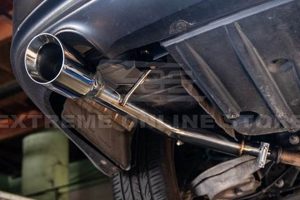
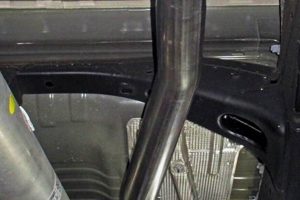
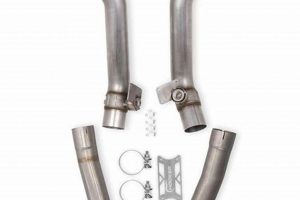
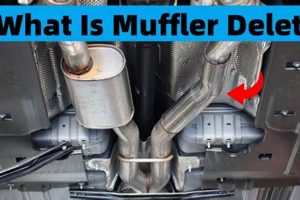
The practice of removing a vehicle’s muffler, a component designed to reduce exhaust noise, raises questions about its impact on the pollutants released into the atmosphere. Mufflers primarily address sound reduction and are not, generally, integral parts of the systems responsible for controlling exhaust emissions.
The concern regarding the removal or absence of a muffler lies primarily with noise pollution. Regulations regarding vehicle emissions are typically focused on components like catalytic converters and oxygen sensors, designed to manage the chemical composition of exhaust gases. Historically, emissions controls have been a central focus of environmental regulation, with various technologies developed to mitigate the harmful effects of vehicle exhaust. Mufflers, while important for noise control, are considered separate from this primary emissions control focus.
This article will examine the relationship between altering the exhaust system by removing the muffler and the potential consequences for regulated exhaust emissions. It will delve into the operation of the key emissions control components within a vehicle and explore whether a muffler’s presence or absence can directly influence their functionality and compliance with existing environmental standards.
Considerations Regarding Exhaust Modification
Modifying a vehicle’s exhaust system, specifically the removal of the muffler, requires careful consideration due to potential implications for regulatory compliance and vehicle performance.
Tip 1: Understand Local Regulations: Before modifying the exhaust system, research and understand local and state regulations regarding vehicle noise and emissions. Some jurisdictions have strict laws regarding exhaust modifications, including muffler removal.
Tip 2: Evaluate Potential Performance Impacts: While muffler removal may alter exhaust flow, its impact on overall engine performance can be minimal or even negative. Changes in backpressure could affect torque and horsepower, depending on the vehicle’s engine and existing exhaust system.
Tip 3: Assess Noise Levels: Removing the muffler will significantly increase exhaust noise. This elevated noise level may be considered a nuisance and can lead to legal repercussions in areas with noise ordinances.
Tip 4: Examine Potential Impact on Resale Value: Modifications like muffler removal can negatively affect a vehicle’s resale value. Potential buyers may be wary of altered vehicles, particularly if the modifications are perceived as detrimental or non-compliant with regulations.
Tip 5: Consider Professional Consultation: Before proceeding with exhaust modifications, consult with a qualified mechanic or automotive specialist. They can provide insights into the potential benefits and drawbacks of muffler removal specific to the vehicle in question.
Tip 6: Be Aware of Potential Emissions Issues: While mufflers themselves do not directly impact emissions control, alterations to the exhaust system could, in certain circumstances, affect the performance of catalytic converters or other emissions-related components. Such alterations could lead to failure in emissions testing.
In summary, muffler removal presents a trade-off between potential performance alterations and potential legal, environmental, and economic consequences. Careful evaluation is crucial before proceeding with such modifications.
The subsequent sections of this document will delve deeper into specific legal and performance aspects related to exhaust system modifications.
1. Noise vs. Emissions

The distinction between noise and emissions centers on the type of pollution generated by a vehicle. A muffler’s primary role is to mitigate noise pollution; it reduces the sound intensity produced by exhaust gases exiting the engine. Conversely, emissions refer to the chemical compounds released into the atmosphere, which are regulated to protect air quality. Muffler removal results in increased noise levels, but its direct impact on the volume or composition of exhaust emissions is often minimal, depending on the vehicle’s overall system configuration. For example, older vehicles without sophisticated emissions controls might experience a negligible change in emissions following muffler removal, while newer vehicles with computer-controlled systems may see more complex interactions.
However, the relationship between noise and emissions can become indirect. Excessive exhaust noise, indicative of a modified or damaged exhaust system, may trigger regulatory scrutiny. Vehicles exceeding established noise limits could be subject to inspections, potentially revealing emission control system deficiencies. For example, a vehicle cited for excessive noise due to muffler removal might subsequently fail an emissions test if the modified exhaust system has inadvertently damaged the catalytic converter, or changed backpressure that the O2 sensors no longer are working effectively.
In summary, while muffler removal directly affects noise levels, its impact on emissions is often indirect. Increased noise can draw attention to potential emissions non-compliance. Vehicles with modified exhaust systems should undergo thorough inspection to ensure continued compliance with environmental regulations. Failure to do so risks penalties and contributes to environmental pollution, albeit indirectly through the initial action of increasing noise output.
2. Catalytic Converter Function

The catalytic converter plays a critical role in reducing harmful emissions from an internal combustion engine. Its functionality is directly related to converting pollutants into less harmful substances before they exit the vehicle’s exhaust system. Understanding the potential impact of exhaust modifications, such as muffler removal, on converter operation is essential.
- Role in Emission Reduction
The primary role of the catalytic converter is to catalyze chemical reactions that convert harmful pollutants into less harmful substances. These pollutants include hydrocarbons (HC), carbon monoxide (CO), and nitrogen oxides (NOx). The converter uses precious metals, such as platinum, palladium, and rhodium, to facilitate these reactions. For example, carbon monoxide is converted into carbon dioxide, and nitrogen oxides are converted into nitrogen and oxygen. Removing or altering components upstream or downstream from the converter could affect its operating temperature and efficiency.
- Operating Temperature
Catalytic converters operate within a specific temperature range for optimal performance, typically between 400 and 800 degrees Celsius. Exhaust gas temperature is influenced by several factors, including engine load, air-fuel ratio, and exhaust system design. A muffler delete could alter exhaust gas velocity and temperature, potentially affecting the converter’s warm-up time and overall efficiency. For instance, if exhaust gases cool too rapidly due to the absence of a muffler, the converter may not reach its optimal operating temperature, leading to increased emissions.
- Backpressure Influence
Exhaust backpressure is the resistance to exhaust flow within the exhaust system. While a muffler does contribute to backpressure, its removal typically results in only a modest reduction. However, significant alterations to the exhaust system, including changes to pipe diameter or the removal of other components, can substantially alter backpressure. Extreme reductions in backpressure could affect engine performance and air-fuel ratio, potentially leading to increased emissions and potentially damaging the catalytic converter over time.
- Potential for Damage
Although a muffler removal alone may not immediately damage the catalytic converter, it can contribute to conditions that shorten its lifespan. For example, altered exhaust flow dynamics or changes in engine operating parameters resulting from the modification could lead to increased carbon deposits or overheating within the converter. These conditions can reduce the converter’s efficiency and eventually lead to its failure, resulting in increased emissions. Therefore, careful consideration of the overall exhaust system design is crucial when contemplating modifications.
While the absence of a muffler may not directly destroy a catalytic converter, exhaust modifications can indirectly affect its function and lifespan. Alterations to exhaust flow dynamics, temperature, and backpressure can influence the converter’s efficiency and long-term reliability. Any modifications should be evaluated in the context of their potential impact on the entire emissions control system, including the catalytic converter, to ensure continued compliance with emissions standards.
3. Backpressure Alteration
Backpressure, the resistance to exhaust flow in an engine’s exhaust system, plays a role in engine performance and emissions characteristics. Altering this backpressure, through means such as muffler removal, can influence how the engine operates and consequently, its emission output.
- Optimal Backpressure Range
Engines are designed to operate within a specific backpressure range. This range is determined by the engine’s design, including factors like camshaft timing, intake manifold design, and intended operating conditions. Optimal backpressure ensures efficient cylinder scavenging and proper air-fuel mixture combustion. Deviations from this range, whether increases or decreases, can negatively affect engine performance. For example, insufficient backpressure can lead to reduced low-end torque and increased fuel consumption.
- Muffler’s Role in Backpressure
A muffler contributes to the overall backpressure of the exhaust system. Its internal baffling creates resistance to the flow of exhaust gases, reducing noise levels. Removing the muffler generally decreases backpressure. The extent of this decrease depends on the muffler’s design and the overall configuration of the exhaust system. For instance, a highly restrictive muffler will cause a more significant backpressure drop upon removal compared to a less restrictive performance muffler.
- Air-Fuel Ratio and Combustion
Changes in backpressure can influence the air-fuel ratio and combustion process within the engine. Reduced backpressure can alter the volumetric efficiency of the engine, potentially affecting the amount of air and fuel entering the cylinders. This change can lead to a leaner or richer air-fuel mixture, impacting combustion efficiency and emissions output. For example, a leaner mixture can result in increased NOx emissions, while a richer mixture can increase HC and CO emissions.
- Catalytic Converter Efficiency
The catalytic converter’s efficiency is sensitive to exhaust gas temperature and composition. Alterations in backpressure, and subsequent changes in air-fuel ratio and combustion, can affect the exhaust gas temperature and the concentration of pollutants entering the converter. These changes can reduce the converter’s ability to effectively catalyze harmful pollutants, leading to increased tailpipe emissions. For instance, lower exhaust gas temperatures due to a leaner air-fuel mixture can reduce the converter’s light-off temperature, decreasing its overall efficiency.
In conclusion, muffler removal, by altering exhaust backpressure, can indirectly affect vehicle emissions. While the muffler itself does not directly control emissions, its removal can influence engine performance, air-fuel ratio, combustion efficiency, and catalytic converter function, all of which ultimately impact the composition and quantity of pollutants released into the atmosphere. The extent of this impact depends on the specific vehicle, the degree of backpressure change, and the sensitivity of the engine management system to exhaust modifications.
4. Sensor Interference

Exhaust system modifications, such as muffler removal, can potentially influence the operation of sensors integral to the engine management system. This interference, whether direct or indirect, raises concerns regarding compliance with emissions regulations.
- Oxygen Sensor Readings
Oxygen sensors (O2 sensors), positioned upstream and downstream of the catalytic converter, monitor the oxygen content in the exhaust gas. These sensors provide feedback to the engine control unit (ECU), enabling adjustments to the air-fuel ratio for optimal combustion and emissions control. Changes to exhaust flow dynamics resulting from muffler removal can alter the temperature and pressure surrounding the O2 sensors. This alteration can, in turn, affect their accuracy. For example, if exhaust gases cool excessively before reaching the downstream O2 sensor, it may provide inaccurate readings, leading to incorrect air-fuel ratio adjustments and potentially increased emissions.
- Air-Fuel Ratio Imbalance
The ECU relies on accurate sensor data to maintain the stoichiometric air-fuel ratio of 14.7:1, crucial for efficient catalytic converter operation. If sensor readings are skewed due to exhaust modifications, the ECU may miscalculate the required fuel injection, leading to either a lean or rich mixture. A lean mixture (excess oxygen) can increase NOx emissions, while a rich mixture (excess fuel) can increase HC and CO emissions. For instance, if a muffler delete creates a situation where the upstream O2 sensor reports a lower than actual oxygen level, the ECU might compensate by injecting more fuel than necessary, leading to a richer mixture and elevated HC emissions.
- Catalytic Converter Monitoring
The downstream O2 sensor plays a vital role in monitoring the efficiency of the catalytic converter. By comparing the oxygen content before and after the converter, the ECU can assess the converter’s ability to reduce pollutants. Inaccurate readings from the downstream sensor, caused by altered exhaust flow after muffler removal, can lead to a misdiagnosis of the catalytic converter’s condition. This misdiagnosis may prevent the ECU from detecting a failing converter, allowing emissions to increase unchecked. A decrease in pressure after the catalytic converter, influenced by a muffler delete, will result in O2 sensor data fluctuation.
- Mass Airflow Sensor Correlation
While less direct, changes in exhaust backpressure resulting from muffler removal can influence the mass airflow (MAF) sensor readings. The MAF sensor measures the amount of air entering the engine, and this information is correlated with the O2 sensor data for optimal engine control. Significant alterations to the exhaust system can create inconsistencies between the MAF sensor and O2 sensor readings, potentially triggering diagnostic trouble codes (DTCs) and affecting overall engine performance and emissions. For example, an extreme reduction in exhaust backpressure might cause the MAF sensor to underestimate the amount of air entering the engine, leading to a richer mixture and increased emissions.
Sensor interference stemming from exhaust modifications can disrupt the delicate balance of the engine management system, compromising its ability to control emissions effectively. Altered exhaust flow dynamics, temperature fluctuations, and pressure changes can all contribute to inaccurate sensor readings, leading to incorrect air-fuel ratio adjustments and impaired catalytic converter monitoring. Consequently, while muffler removal may seem like a simple modification, its potential to induce sensor interference necessitates careful consideration of its impact on overall emissions compliance.
5. Legal Compliance

Legal compliance regarding vehicle modifications, specifically the removal of a muffler, is intrinsically linked to noise regulations and emissions standards. Many jurisdictions have laws that establish permissible noise levels for vehicles operating on public roads. Muffler removal invariably increases exhaust noise, potentially exceeding these legal limits and resulting in fines or requirements for vehicle remediation.
Separately, emissions standards dictate the allowable levels of specific pollutants that a vehicle can release. While the muffler itself is not typically a direct emissions control device, alterations to the exhaust system, including its removal, can indirectly impact emissions performance. If the altered exhaust flow compromises the efficiency of the catalytic converter or other emissions-related components, the vehicle could fail emissions testing, leading to legal penalties. For instance, tampering with or removing emissions control devices, even if the muffler is not the primary target, is a federal offense in some regions.
Therefore, the decision to remove a muffler necessitates a careful understanding of both noise and emissions regulations within the relevant jurisdiction. The removals effect, whether directly on sound or indirectly on emissions, can bring a vehicle out of compliance with established legal standards. The practical significance lies in the potential for fines, mandatory repairs, and the vehicle’s inability to pass inspection, all stemming from a modification that appears, on the surface, to only impact sound. Ensuring modifications do not breach legal thresholds protects individuals from penalties and contributes to broader environmental protection efforts.
6. Testing Implications

Exhaust system modifications, such as the removal of a muffler, introduce distinct challenges during vehicle emissions testing. Standardized emissions tests are designed based on the factory configuration of a vehicle, encompassing specific exhaust flow characteristics and backpressure. A muffler delete alters these parameters, potentially affecting the accuracy and validity of test results. Even if the engine’s actual emissions output remains within legal limits, modified exhaust systems may trigger a test failure due to deviations from expected operating parameters. For instance, some testing equipment relies on specific exhaust backpressure readings to ensure proper sensor calibration. Altering this backpressure can lead to erroneous readings, even if the catalytic converter is functioning correctly.
Furthermore, visual inspections during emissions testing often flag modified exhaust systems, regardless of actual emissions levels. If a vehicle is found to have a non-compliant exhaust configuration, it may automatically fail the inspection, regardless of the quantitative emissions test results. Many jurisdictions have specific regulations prohibiting alterations to the exhaust system, and muffler removal falls squarely within these prohibited modifications. As a real world example, a vehicle subjected to a dynamometer test might display elevated hydrocarbon readings immediately after a muffler delete due to incomplete combustion. The presence of a muffler, even if not directly influencing those readings, could have assisted the engine’s capability for the air/fuel ratio to create more complete combustion.
In conclusion, muffler removal presents considerable implications for vehicle emissions testing. Beyond potential direct effects on emissions output, the presence of a modified exhaust system can lead to test failures due to altered operating parameters or non-compliance with visual inspection criteria. This creates a practical barrier, even if the vehicle theoretically meets emissions standards, undermining the broader goal of verifying and maintaining air quality compliance. Understanding these testing implications is critical for vehicle owners contemplating such modifications, as it underscores the potential for legal and practical repercussions regardless of the actual impact on emissions.
Frequently Asked Questions Regarding Muffler Deletion and Emissions
This section addresses common queries surrounding the impact of muffler removal on vehicle exhaust emissions.
Question 1: Does the physical presence or absence of a muffler directly influence the chemical composition of exhaust gases?
The muffler primarily functions as a sound-dampening device. While it can affect exhaust flow dynamics, it typically does not directly alter the chemical composition of exhaust gases. The catalytic converter is the primary component responsible for reducing pollutants.
Question 2: Can removing a muffler indirectly affect emissions performance?
Yes. Altering the exhaust system, including muffler removal, can influence engine backpressure and exhaust gas temperature. These changes can affect the efficiency of the catalytic converter and the accuracy of oxygen sensor readings, potentially leading to increased emissions.
Question 3: Will removing a muffler cause a vehicle to automatically fail an emissions test?
Not necessarily. However, a vehicle with a modified exhaust system may fail an emissions test due to visual inspection criteria or altered exhaust flow characteristics affecting sensor readings. The actual emissions output will determine ultimate compliance.
Question 4: Are there legal ramifications for removing a muffler, even if emissions levels remain within legal limits?
Yes. Many jurisdictions have noise regulations that prohibit excessive vehicle noise. Muffler removal typically increases exhaust noise, potentially violating these regulations and resulting in fines or legal penalties.
Question 5: Can muffler removal damage other emissions control components, such as the catalytic converter?
While a muffler delete itself might not immediately damage the catalytic converter, altered exhaust flow and temperature dynamics can shorten its lifespan. Changes can cause an effect on the catalyst. Inefficient combustion increases harmful gas output, which harms its core structure.
Question 6: Is it possible to accurately assess the impact of a muffler delete on emissions without professional testing?
Accurate assessment of emissions requires specialized equipment and expertise. Visual observation or subjective assessments are insufficient to determine whether a modified vehicle complies with emissions standards. Professional testing is necessary to quantify the impact on exhaust pollutants.
In summary, muffler removal presents a complex scenario concerning emissions. While the muffler does not directly control emissions, its absence can indirectly influence emissions performance and create legal complications. Professional testing is recommended to ensure compliance.
The subsequent section offers concluding remarks on the implications of exhaust modifications.
Conclusion
The inquiry into whether a muffler delete affects emissions reveals a nuanced relationship. While the muffler itself is not a primary emissions control device, its removal can indirectly influence emissions performance. Altered exhaust flow, temperature variations, and changes in backpressure resulting from muffler removal can impact the efficiency of the catalytic converter and the accuracy of oxygen sensors, potentially leading to increased pollutant output. The extent of this impact depends on the vehicle’s specific design and the sensitivity of its engine management system.
Given the potential for adverse effects on emissions and the risk of violating noise regulations, careful consideration is warranted before undertaking muffler removal. Responsible vehicle modification requires a thorough understanding of the potential consequences and adherence to applicable legal standards. The pursuit of performance enhancements should not compromise environmental responsibility. Therefore, any individual considering such modifications should consult with qualified professionals and prioritize compliance with established emissions standards to ensure responsible vehicle operation and minimize environmental impact.