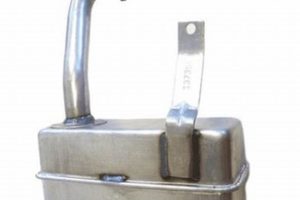
These components are specifically engineered supports designed to secure the exhaust silencing device on Peterbilt trucks. They provide a stable mounting point, ensuring the muffler remains firmly in place despite the vibrations and stresses encountered during operation. An example would be a U-bolt style clamp attaching the muffler to the truck’s frame or a hanger bracket suspending the muffler from the chassis.
The securement of the exhaust system is critical for several reasons. Adequate support prevents premature failure of the muffler and associated exhaust components due to excessive vibration and stress. This contributes to reduced maintenance costs and downtime for the vehicle. Furthermore, proper mounting helps to maintain exhaust system integrity, ensuring compliance with noise regulations and preventing potentially dangerous leaks. The design and materials have evolved over time to provide increased durability and resistance to corrosion, reflecting advancements in vehicle engineering.
The following sections will delve into the various types of these supports, common materials used in their construction, installation procedures, and factors to consider when selecting replacements.
Maintenance and Selection Guidance
The longevity and reliability of the exhaust system are directly influenced by the condition and suitability of its support hardware. Adherence to the following guidelines will contribute to optimized performance and reduced maintenance costs.
Tip 1: Regular Inspection: Conduct routine visual inspections of all mounting points for signs of corrosion, cracks, or deformation. Early detection of these issues can prevent more significant damage to the exhaust system.
Tip 2: Torque Specifications: When installing or replacing the securing hardware, adhere strictly to the manufacturer-specified torque values. Over-tightening can damage the components, while under-tightening can lead to loosening and failure.
Tip 3: Material Compatibility: Ensure that replacement supports are constructed from materials compatible with the operating environment. Stainless steel offers superior corrosion resistance in harsh conditions.
Tip 4: Vibration Dampening: Consider using brackets incorporating vibration-dampening materials or designs to minimize stress on the muffler and associated components. This extends the lifespan of the entire exhaust system.
Tip 5: Proper Alignment: Before tightening the securing hardware, ensure that the muffler and exhaust system are properly aligned. Misalignment can introduce undue stress on the brackets, leading to premature failure.
Tip 6: Consider the Load: Account for the muffler’s size and weight when choosing replacement supports. Selecting undersized or improperly rated hardware can result in failure.
Tip 7: Check for Wear on Contact Points: Inspect areas where the support makes contact with the muffler and truck frame. Worn surfaces may require shimming or replacement to ensure a secure fit.
By implementing these maintenance and selection practices, operators can significantly extend the service life and reliability of Peterbilt exhaust systems.
The next section will address common issues associated with these components and provide troubleshooting strategies.
1. Material Durability and Peterbilt Muffler Brackets

The longevity and functionality of Peterbilt exhaust systems are intrinsically linked to the material durability of their muffler supports. These components endure constant exposure to extreme conditions, necessitating robust construction to prevent premature failure and maintain operational integrity.
- Corrosion Resistance
The selection of materials resistant to corrosion is paramount. Road salts, moisture, and exhaust gases contribute to the degradation of metals. Brackets fabricated from stainless steel or coated with protective finishes significantly mitigate corrosion, extending the component’s lifespan. For example, stainless steel brackets are favored in regions with heavy winter salting practices.
- Mechanical Strength and Fatigue Resistance
Exhaust systems experience substantial vibration and stress during vehicle operation. Materials with high tensile strength and fatigue resistance are essential to withstand these forces without cracking or deforming. Heavy-gauge steel alloys are commonly employed to ensure the structural integrity of the supports. An example would be brackets engineered to withstand repeated stress cycles exceeding established industry standards.
- Heat Resistance
The proximity of the exhaust system to the engine generates high temperatures. Materials must retain their mechanical properties at elevated temperatures to prevent weakening or distortion. High-temperature alloys and specialized coatings are utilized to provide adequate heat resistance. For instance, some brackets incorporate ceramic coatings to further enhance their thermal stability.
- Weld Integrity
The integrity of welds is a critical aspect of material durability in fabricated supports. Welds must be robust and free from defects to withstand the stresses encountered during operation. Welding processes such as MIG or TIG are employed to ensure high-quality joints. Dye penetrant testing is often used to verify the absence of cracks or porosity in welded seams.
In summary, material durability is a critical determinant of the overall performance and reliability of Peterbilt muffler supports. Proper material selection, manufacturing processes, and quality control measures are essential to ensure that these components can withstand the harsh operating conditions and maintain the integrity of the exhaust system.
2. Vibration Resistance

Vibration resistance is a crucial attribute for Peterbilt exhaust system support hardware. The constant oscillations and shocks experienced during vehicle operation place significant stress on these components, potentially leading to fatigue, cracking, and eventual failure. Therefore, designs and materials must effectively mitigate the effects of vibration.
- Material Selection and Damping Properties
The inherent damping properties of the materials used in the brackets play a key role in vibration mitigation. Certain steel alloys, combined with rubber isolators or dampening compounds, can absorb and dissipate vibrational energy. An example is the use of neoprene bushings at mounting points, which cushion the bracket and reduce the transmission of vibrations from the frame to the muffler. This reduces stress on the support structure.
- Bracket Design and Structural Integrity
The physical design of the supports significantly affects their ability to withstand vibration. Reinforcements, gussets, and strategically placed bends can increase the structural rigidity of the bracket and prevent resonant frequencies from developing. A common example is a U-shaped hanger bracket with reinforced edges, which is less prone to flexing and fatigue compared to a simple flat strap. Minimizing sharp corners and stress concentration points is also crucial.
- Mounting Hardware and Securement Techniques
The type and quality of mounting hardware also contribute to vibration resistance. Using lock washers, self-locking nuts, and properly torqued bolts helps prevent loosening due to vibration. Furthermore, employing resilient mounting systems, such as those using rubber or polyurethane bushings, can isolate the bracket from direct frame vibrations. An improperly secured support can amplify vibrations and accelerate component failure.
- Weld Quality and Stress Relief
For fabricated supports, the quality of the welds is paramount in ensuring resistance to vibrational fatigue. Properly executed welds, free from porosity and inclusions, provide a strong and durable connection. Stress-relieving processes, such as heat treatment, can further improve weld integrity and reduce the likelihood of cracking under cyclic loading. Substandard welding practices can create weak points that are susceptible to failure under prolonged vibration.
These facets highlight the interconnected nature of vibration resistance in Peterbilt muffler supports. Effective vibration mitigation relies on a combination of appropriate material selection, robust design, secure mounting techniques, and high-quality manufacturing processes. Failure to address any of these aspects can compromise the long-term reliability and performance of the exhaust system.
3. Proper Fitment

Proper fitment is a foundational requirement for effective utilization of Peterbilt muffler supports. Deviations from specified dimensions and mounting configurations can compromise exhaust system integrity and lead to premature component failure.
- Dimensional Accuracy and Compatibility
Dimensional accuracy ensures that the support aligns correctly with the muffler and the vehicle frame. Incompatible dimensions can induce stress on mounting points, leading to cracking or loosening of fasteners. For instance, a bracket designed for a specific muffler diameter will not provide adequate support if used with a different-sized muffler, resulting in increased vibration and potential system damage.
- Mounting Point Alignment
Precise alignment of mounting holes and surfaces is critical for secure attachment. Misalignment can necessitate forced installation, which introduces stress on the bracket and surrounding components. An example would be attempting to bolt a support to a frame rail when the holes are offset, potentially causing the bracket to bend or the bolt threads to strip, reducing the clamping force.
- Load Distribution and Support Capacity
Proper fitment ensures that the load is distributed evenly across the bracket and its mounting points. Uneven load distribution can concentrate stress on specific areas, increasing the risk of failure. Using a bracket intended for lighter-duty applications on a heavier muffler can lead to premature fatigue and cracking. Conversely, an overly robust bracket may be unnecessarily heavy and costly.
- Clearance and Interference Mitigation
Adequate clearance between the support, the muffler, and surrounding chassis components is necessary to prevent interference and chafing. Interference can generate noise, accelerate wear, and potentially damage the exhaust system or other vehicle components. For example, a bracket positioned too close to a fuel line could cause the fuel line to rub and eventually leak. Similarly, a lack of clearance around the muffler itself can trap heat and reduce the muffler’s service life.
Achieving proper fitment requires careful attention to detail during installation and selection of replacement hardware. Verifying compatibility with the specific Peterbilt model and muffler type is essential. Failure to ensure proper fitment can negate the benefits of even the highest-quality support materials and designs.
4. Load capacity

The load capacity of supports for Peterbilt exhaust systems directly determines their ability to withstand the weight and dynamic forces exerted by the muffler and associated components. Insufficient load capacity can lead to bracket deformation, cracking, or complete failure, resulting in exhaust system damage, increased noise levels, and potential safety hazards. For example, a bracket rated for a 10-pound load used to support a 20-pound muffler will likely experience premature failure due to exceeding its designed limits. This component of the support hardware is therefore essential to the overall integrity and longevity of the exhaust system.
The selection of supports with appropriate load capacity requires consideration of the muffler’s weight, the expected operating conditions, and any additional stress imposed by vibration or road impacts. Over-engineering, while adding to the cost, can provide a safety margin and extend the service life of the hardware, particularly in demanding applications such as off-road or heavy-haul operations. An instance of this would be utilizing brackets manufactured from thicker gauge steel or incorporating additional reinforcement to handle the stresses associated with rough terrain. Conversely, neglecting to account for increased load capacity during component replacement may result in a recurring cycle of failures.
Understanding and adhering to load capacity specifications are critical aspects of exhaust system maintenance and repair. Neglecting this factor can compromise vehicle safety, increase operational costs, and result in regulatory non-compliance. Therefore, proper assessment of load requirements and selection of appropriately rated supports are essential for ensuring the reliable and safe operation of Peterbilt vehicles.
5. Corrosion Protection

Corrosion protection is an indispensable aspect of ensuring the longevity and reliability of Peterbilt muffler supports. These components are constantly exposed to harsh environmental conditions, making them vulnerable to corrosion-related degradation. Effective corrosion protection strategies are vital to maintaining the structural integrity and functionality of the exhaust system.
- Material Selection
The choice of materials constitutes the first line of defense against corrosion. Stainless steel alloys, known for their inherent resistance to oxidation and chemical attack, are frequently employed in the manufacture of supports. Alternatively, carbon steel brackets may undergo surface treatments, such as galvanizing or powder coating, to provide a protective barrier against corrosive elements. For example, a stainless steel support exhibits superior corrosion resistance in regions with heavy winter salting, while a galvanized carbon steel support offers a cost-effective solution in less corrosive environments.
- Protective Coatings
Protective coatings, applied to the support surface, create a barrier that inhibits the ingress of moisture, salts, and other corrosive agents. These coatings may include zinc-rich primers, epoxy resins, or ceramic-based materials. The effectiveness of the coating depends on its adhesion to the substrate, its impermeability, and its resistance to abrasion and impact. Powder coating, for instance, provides a durable and aesthetically pleasing finish while also offering significant corrosion protection, especially when applied over a properly prepared surface.
- Design Considerations
Design features that minimize the accumulation of moisture and debris can also contribute to corrosion protection. Incorporating drain holes or channels in the support structure prevents the pooling of water, which can accelerate the corrosion process. Similarly, avoiding sharp corners and crevices reduces the risk of crevice corrosion, a localized form of attack that occurs in confined spaces. For example, a support designed with rounded edges and ample drainage will be less susceptible to corrosion than a support with sharp corners and poor drainage.
- Maintenance Practices
Regular cleaning and inspection of the supports are essential for maintaining their corrosion protection. Removing accumulated dirt, salt, and other contaminants prevents them from acting as electrolytes that accelerate corrosion. Additionally, prompt repair of any damage to the protective coatings is crucial to prevent corrosion from spreading beneath the surface. An example of this would be applying touch-up paint to scratched or chipped areas of a coated support to restore its protective barrier.
The integration of these corrosion protection strategies is paramount for ensuring the long-term performance and safety of Peterbilt vehicles. Neglecting corrosion protection can lead to premature failure of the supports, compromising the integrity of the exhaust system and potentially resulting in costly repairs and downtime.
6. Secure attachment

Secure attachment constitutes a fundamental requirement for the reliable operation of exhaust systems on Peterbilt vehicles. The integrity of the mounting system, primarily achieved through properly installed and maintained muffler supports, directly influences the system’s ability to withstand operational stresses and environmental factors.
- Fastener Integrity and Torque Specifications
The use of appropriate fasteners, coupled with adherence to specified torque values, is paramount for maintaining secure attachment. Under-torqued fasteners can loosen due to vibration, leading to bracket instability and eventual failure. Over-torquing, conversely, can damage the fastener threads or the bracket material, compromising the joint’s strength. For example, failing to use hardened steel bolts and lock washers according to the manufacturer’s specifications can result in premature loosening and subsequent exhaust system instability. Correct fastener selection and proper tightening procedures are therefore critical.
- Bracket Design and Mounting Point Compatibility
The bracket design must complement the mounting points on both the muffler and the vehicle frame. Misalignment or incompatibility can create stress concentrations, weakening the attachment and increasing the risk of failure. An instance would be using a bracket designed for a different frame rail profile, leading to a non-flush fit and uneven load distribution. The design should also account for thermal expansion and contraction to prevent loosening or over-stressing the connection. Accurate design and proper fitment ensure a stable and secure connection.
- Vibration Dampening and Isolation
Vibration-induced loosening is a common challenge in exhaust system attachment. Incorporating vibration-dampening materials, such as rubber isolators or specialized bushings, can mitigate the transmission of vibrations from the vehicle frame to the supports and muffler. For example, installing rubber isolators between the bracket and the frame rail can significantly reduce vibration-induced stress on the fasteners, preventing them from loosening over time. Effective vibration management is crucial for maintaining secure attachment under dynamic operating conditions.
- Regular Inspection and Maintenance
Periodic inspection of the mounting hardware and brackets is essential for detecting and addressing potential attachment issues. Visual inspections can identify signs of corrosion, cracking, or loosening. Regular tightening of fasteners and replacement of worn or damaged components can prevent more significant problems from developing. For example, checking the torque on the mounting bolts every 50,000 miles and replacing corroded supports proactively can significantly extend the life of the exhaust system. Proactive maintenance is key to ensuring continued secure attachment.
These elements collectively contribute to the overall secure attachment of exhaust systems on Peterbilt vehicles. Proper fastener selection, compatible bracket design, effective vibration management, and diligent maintenance practices are all essential for ensuring the long-term reliability and safety of the exhaust system.
7. Regulatory compliance

Regulatory compliance pertaining to Peterbilt exhaust systems necessitates adherence to a complex framework of noise emission standards and safety regulations. The integrity and proper functioning of the muffler support structure are integral to maintaining compliance with these mandates.
- Noise Emission Standards
Federal and state regulations impose strict limits on vehicle noise emissions. A compromised support can lead to exhaust leaks, resulting in increased noise levels and potential violations. For instance, a loose or broken bracket allowing the muffler to vibrate excessively can generate noise exceeding permissible limits, resulting in fines and required repairs. Maintaining secure muffler attachment through properly functioning hardware is thus essential for noise compliance.
- Safety Regulations
Safety regulations mandate that exhaust systems be securely mounted to prevent detachment or damage that could pose a hazard to other vehicles or pedestrians. A failing support increases the risk of the muffler detaching from the vehicle, potentially causing an accident. For example, a rusted-through bracket could fail during transit, allowing the muffler to fall onto the roadway, creating a significant safety hazard. Compliance with safety standards therefore necessitates the use of robust and well-maintained mounting hardware.
- Environmental Protection Agency (EPA) Requirements
The EPA sets standards for exhaust system integrity to prevent the release of harmful pollutants. A damaged or poorly supported exhaust system can develop leaks, allowing unburned hydrocarbons and other pollutants to escape into the atmosphere. For instance, a cracked or broken bracket can lead to misalignment of exhaust components, creating leak points and reducing the effectiveness of emissions control devices. Maintaining a properly sealed and supported exhaust system is thus crucial for meeting EPA requirements.
- Inspection and Maintenance Protocols
Regular inspections are often mandated to ensure that exhaust systems are in good working order and meet regulatory standards. During these inspections, the condition of the support hardware is typically assessed. Failing an inspection due to a damaged or improperly functioning support can result in the vehicle being taken out of service until the necessary repairs are completed. Proactive maintenance and timely replacement of worn components are essential for avoiding inspection failures and ensuring continuous regulatory compliance.
These considerations underscore the critical role of Peterbilt exhaust system supports in maintaining regulatory compliance. Adherence to these standards not only ensures the vehicle’s legality but also contributes to enhanced safety and environmental protection.
Frequently Asked Questions
The following addresses common inquiries regarding the selection, maintenance, and functionality of Peterbilt exhaust system supports.
Question 1: What constitutes a typical lifespan for these supports?
The service life varies significantly depending on operating conditions, material composition, and maintenance practices. Factors such as exposure to road salts, vibration intensity, and load stresses all influence longevity. Regular inspections and proactive replacement of worn components are crucial for maximizing lifespan.
Question 2: What are the primary indicators of support failure?
Common indicators include visible corrosion, cracking, deformation, and loosening of fasteners. Unusual exhaust system noises, such as rattling or excessive vibration, may also suggest support failure. A thorough visual inspection is essential for identifying these warning signs.
Question 3: Are aftermarket supports equivalent in quality to original equipment manufacturer (OEM) parts?
The quality of aftermarket supports can vary widely. While some aftermarket options offer comparable performance and durability to OEM parts, others may compromise on material quality or design specifications. Selecting reputable brands and verifying compliance with industry standards is essential.
Question 4: What factors influence the selection of appropriate replacement supports?
Key selection factors include the specific Peterbilt model, muffler dimensions, operating environment, and load requirements. Choosing supports with appropriate material composition, load capacity, and corrosion resistance is crucial for ensuring optimal performance and longevity.
Question 5: What are the consequences of neglecting support maintenance?
Neglecting maintenance can lead to exhaust system damage, increased noise levels, reduced fuel efficiency, and potential safety hazards. In severe cases, support failure can result in muffler detachment, posing a significant risk to other vehicles and pedestrians. Proactive maintenance is vital for preventing these adverse consequences.
Question 6: Can supports be repaired, or is replacement always necessary?
Minor corrosion or damage may be repairable through welding or surface treatment. However, severely corroded, cracked, or deformed supports should always be replaced. Attempting to repair significantly damaged supports can compromise their structural integrity and lead to premature failure.
Proper understanding and attention to these frequently asked questions is important for long term cost savings.
The next section will delve into case studies illustrating common support failures and their preventative measures.
Peterbilt Muffler Brackets
The preceding examination has explored the critical role of these components in maintaining the integrity and functionality of Peterbilt exhaust systems. This analysis underscores the importance of material durability, vibration resistance, proper fitment, adequate load capacity, effective corrosion protection, secure attachment, and regulatory compliance. Each aspect contributes significantly to the overall performance and safety of the vehicle.
Given the demanding operating conditions and the potential consequences of failure, careful consideration must be given to the selection, installation, and maintenance of these supports. Prioritizing quality, adherence to specifications, and diligent inspections are essential for ensuring long-term reliability and preventing costly repairs. Continued vigilance in this area remains paramount for responsible fleet management and operational safety.