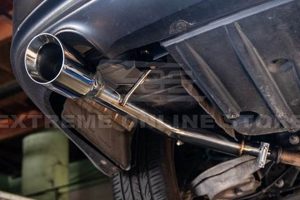
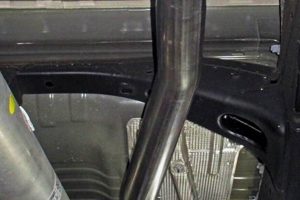
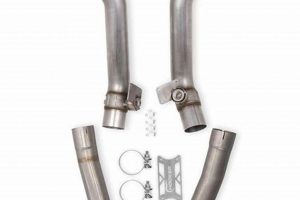
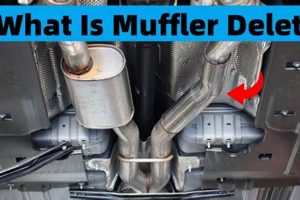
The removal of a vehicle’s muffler, a component designed to reduce exhaust noise, is a modification often considered for its potential impact on engine performance and fuel consumption. The premise behind such alterations is that reduced backpressure in the exhaust system might allow the engine to expel exhaust gases more efficiently, potentially leading to increased horsepower. However, the relationship between exhaust modifications and fuel efficiency is complex and not always straightforward.
Historically, modifications to exhaust systems have been a common practice in pursuit of enhanced performance. The belief that a less restrictive exhaust system improves engine breathing and thus power output has driven this trend. However, modern vehicles are engineered with carefully calibrated exhaust systems designed to optimize both performance and fuel economy. Altering these systems without considering the broader engine management system can lead to unintended consequences, potentially negating any perceived benefits.
The subsequent discussion will delve into the specific factors influencing how exhaust modifications, specifically the absence of a muffler, can interact with engine performance and fuel efficiency, examining the interplay between backpressure, engine tuning, and real-world driving conditions.
Considerations Regarding Muffler Removal and Fuel Economy
Modifying a vehicle’s exhaust system by eliminating the muffler is a decision that warrants careful consideration. While anecdotal evidence may suggest benefits, empirical data often paints a more nuanced picture. The following points outline key factors to evaluate before undertaking such a modification.
Tip 1: Evaluate Existing System Backpressure: Before modification, measure the existing backpressure in the exhaust system. A significantly restricted system may benefit from changes, but modern vehicles are often designed with optimized flow.
Tip 2: Understand Engine Management System (EMS) Calibration: The EMS controls fuel delivery and ignition timing. Removing the muffler can alter exhaust gas velocity, potentially requiring recalibration of the EMS to maintain optimal air-fuel ratios. Failure to do so can degrade fuel efficiency.
Tip 3: Analyze Driving Conditions: Fuel economy is affected by driving habits. In city driving, the effect of exhaust modifications may be minimal. However, sustained high-speed driving might reveal more pronounced changes, either positive or negative, depending on engine tuning.
Tip 4: Consider Aftermarket Tuning Options: If the muffler is removed, explore options for aftermarket engine tuning. This may involve using a programmable EMS or adjusting existing parameters to optimize performance for the modified exhaust system.
Tip 5: Monitor Fuel Consumption: After any modification, diligently track fuel consumption over an extended period. Use precise measurements, not just the vehicle’s onboard computer, to assess the actual impact on fuel economy.
Tip 6: Assess Noise Level Regulations: Muffler removal significantly increases exhaust noise. Ensure the modification complies with local noise regulations to avoid legal repercussions.
Tip 7: Investigate Potential for Increased Emissions: While not always the case, alterations to the exhaust system can impact emissions. A proper assessment of emission levels post-modification is advisable to ensure environmental compliance.
In summary, the decision to remove a muffler should be based on a thorough understanding of the vehicle’s engine management system, driving conditions, and the potential impact on both performance and fuel economy. Empirical measurement and, if necessary, professional tuning are critical to achieving the desired results without unintended consequences.
The following sections will delve into the long-term implications and legal ramifications associated with exhaust system modifications.
1. Backpressure Modification
The alteration of exhaust backpressure is a primary consequence of muffler removal and a key factor influencing the relationship between such modifications and fuel economy. Backpressure, in this context, refers to the resistance encountered by exhaust gases as they exit the engine. Modifying this parameter can have multifaceted effects on engine performance and efficiency.
- Role of Backpressure in Engine Operation
Backpressure plays a crucial role in maintaining proper cylinder scavenging during the exhaust stroke. It aids in preventing the backflow of exhaust gases into the combustion chamber, ensuring that the cylinder is filled with a fresh air-fuel mixture for the subsequent combustion cycle. Excessive reduction of backpressure can disrupt this process, leading to incomplete combustion and reduced efficiency.
- Impact of Muffler Removal on Exhaust Flow
Removing the muffler typically reduces backpressure by providing a less restrictive path for exhaust gases. While this can enhance high-end horsepower, it can also diminish low-end torque, affecting drivability and potentially increasing fuel consumption during normal driving conditions. The engine may need to work harder to achieve the same level of acceleration, offsetting any theoretical fuel savings.
- The Trade-off Between Power and Efficiency
Modifications to the exhaust system, including muffler removal, often involve a trade-off between power and fuel efficiency. While reducing backpressure may increase power at higher RPMs, it can negatively impact fuel economy at lower, more commonly used engine speeds. This is due to alterations in the engine’s volumetric efficiency and combustion dynamics.
- Importance of Engine Tuning After Modification
Following a muffler delete, proper engine tuning is critical for optimizing fuel economy. Adjustments to the engine’s air-fuel ratio and ignition timing can compensate for the altered exhaust characteristics, mitigating potential decreases in fuel efficiency. Without these adjustments, the engine may operate less efficiently, resulting in increased fuel consumption.
In summary, backpressure modification resulting from muffler removal creates a complex interplay between engine performance and fuel economy. While the potential for increased power exists, it often comes at the expense of reduced efficiency unless accompanied by careful engine tuning and a driving style that capitalizes on the modified system’s characteristics. Therefore, the question of whether a muffler delete affects MPG hinges on a holistic understanding of these interrelated factors.
2. Engine management calibration
The removal of a muffler fundamentally alters the dynamics of an engine’s exhaust system. This change necessitates a corresponding adjustment of the engine management system (EMS) to maintain optimal fuel efficiency and performance. The EMS is responsible for regulating various engine parameters, including air-fuel ratio, ignition timing, and idle speed. When the muffler is removed, exhaust backpressure is typically reduced, leading to potential alterations in cylinder scavenging and volumetric efficiency. If the EMS is not recalibrated to account for these changes, the engine may operate inefficiently, resulting in a reduction in miles per gallon (MPG). For example, an engine calibrated for a specific backpressure level may deliver excess fuel when that backpressure is reduced, leading to a richer air-fuel mixture than required for optimal combustion. This condition diminishes fuel economy and can increase emissions. A properly calibrated EMS, on the other hand, can optimize fuel delivery and ignition timing to match the altered exhaust characteristics, potentially mitigating or even reversing the negative effects on MPG.
The importance of engine management calibration extends beyond simply maintaining fuel efficiency. An improperly tuned engine, following a muffler delete, can experience drivability issues, such as hesitation during acceleration or rough idling. Furthermore, prolonged operation with a mismatched air-fuel ratio can lead to long-term engine damage, including increased carbon buildup on valves and pistons, as well as potential damage to catalytic converters (if equipped). Several aftermarket tuning solutions are available to address these challenges. These range from simple piggyback devices that modify sensor signals to fully programmable engine management systems that allow for complete control over all engine parameters. The specific tuning solution should be selected based on the extent of the exhaust modification and the desired level of engine optimization. It is also essential to consider the expertise required to properly install and configure these systems, as incorrect tuning can be detrimental to engine performance and longevity.
In conclusion, the connection between engine management calibration and the impact of a muffler delete on MPG is undeniable. Proper calibration is not merely an optional step but a critical requirement for maintaining optimal fuel economy and preventing potential engine damage. While a muffler delete may offer perceived benefits in terms of exhaust sound or engine performance, these benefits can be offset by a reduction in fuel efficiency if the engine management system is not appropriately adjusted. Therefore, a comprehensive understanding of engine tuning principles and the available aftermarket solutions is crucial for anyone considering such an exhaust modification. Failure to address this critical aspect can lead to diminished fuel economy and potential engine damage, negating any intended benefits of the modification.
3. Driving Style Influence
Driving style significantly mediates the impact of a muffler delete on fuel efficiency. The manner in which a vehicle is operated directly influences the engine’s load and operating parameters, thereby affecting fuel consumption. An altered exhaust system introduces a further layer of complexity, potentially magnifying or mitigating the effects of driving habits.
- Aggressive Acceleration and Deceleration
Rapid acceleration and hard braking inherently reduce fuel efficiency. With a modified exhaust system, the engine may operate outside its optimal efficiency range more frequently during such maneuvers. The altered backpressure, combined with aggressive driving, can lead to increased fuel consumption due to richer air-fuel mixtures and less efficient combustion, particularly in the absence of corresponding engine tuning adjustments.
- Highway vs. City Driving
Highway driving, characterized by consistent speeds and lower engine loads, tends to be more fuel-efficient. A muffler delete might have a minimal impact, or even a slightly positive effect, if the engine spends a significant portion of its time in this state, provided that the engine management system is properly calibrated. Conversely, city driving, with its frequent stops and starts, places a greater demand on the engine and can exacerbate any inefficiencies introduced by the exhaust modification. The engine may struggle to maintain optimal performance during transient conditions, leading to increased fuel consumption.
- Consistent Speed and Throttle Control
Maintaining a consistent speed and employing smooth throttle control promotes fuel efficiency. In vehicles with modified exhaust systems, this driving style can help to minimize the impact of altered backpressure on fuel consumption. By avoiding abrupt changes in engine load, the engine can operate more consistently within its optimal efficiency range, potentially offsetting any negative effects introduced by the muffler delete.
- Gear Selection and RPM Management
Proper gear selection and maintaining optimal engine RPMs are crucial for fuel efficiency. Operating the engine in too low or too high a gear can reduce fuel economy. A muffler delete may alter the engine’s torque curve, shifting the peak torque to a different RPM range. Adjusting gear selection to keep the engine operating near its peak torque can help to mitigate any negative impacts on fuel consumption, allowing for more efficient power delivery.
In summary, driving style acts as a pivotal moderator in the relationship between muffler removal and fuel economy. The characteristics of a given driving pattern, including the frequency of aggressive maneuvers, the proportion of highway versus city driving, and the consistency of speed and throttle control, significantly influence the overall fuel consumption. The presence of a modified exhaust system, coupled with suboptimal driving habits, can exacerbate inefficiencies, leading to a decline in MPG. Conversely, adopting a more fuel-conscious driving style can help to mitigate these effects, potentially minimizing or even negating the negative impact on fuel economy.
4. Fuel mixture alteration
Muffler removal directly influences exhaust gas flow, which, in turn, can alter the air-fuel ratio within the engine’s cylinders. The engine control unit (ECU) typically adjusts fuel delivery based on sensor readings related to airflow and exhaust composition. A less restrictive exhaust system, resulting from muffler deletion, can cause the ECU to misinterpret these signals, leading to either a richer or leaner fuel mixture than optimal. For example, decreased backpressure may cause the ECU to underestimate the volume of air entering the engine, resulting in excessive fuel injection and a richer mixture. This can decrease fuel efficiency as the engine burns more fuel than is necessary for combustion. Conversely, in certain engine configurations, the altered exhaust dynamics could result in a leaner mixture, potentially causing detonation or pre-ignition, which also reduces efficiency and can damage engine components.
The practical significance of understanding this connection lies in the ability to mitigate potential fuel economy losses. Without proper adjustments to the fuel mixture, the intended performance gains from a muffler delete may be offset by increased fuel consumption. This is particularly important for vehicles equipped with sophisticated emission control systems, as an improperly tuned fuel mixture can compromise the effectiveness of catalytic converters and other emission control devices. A real-world example involves vehicles equipped with oxygen sensors located downstream of the muffler. Removing the muffler can change the temperature and composition of exhaust gases reaching these sensors, leading to inaccurate readings and subsequent fuel mixture adjustments that negatively impact MPG. Therefore, retuning the ECU or installing aftermarket fuel management systems becomes crucial for optimizing fuel efficiency following muffler removal.
In summary, the fuel mixture alteration that can occur following a muffler delete is a critical factor in determining its effect on MPG. The potential for either a richer or leaner mixture necessitates careful consideration of engine management and tuning. Addressing this aspect is crucial for maintaining or improving fuel efficiency after such modifications. The challenges associated with fuel mixture alteration highlight the importance of a comprehensive understanding of engine dynamics and the need for professional tuning to optimize performance and fuel economy in modified vehicles.
5. Emissions system impact
The removal of a muffler can significantly alter the performance of a vehicle’s emissions control system, indirectly affecting fuel economy. Mufflers are designed to manage exhaust gas flow and temperature, which are critical parameters for the proper functioning of catalytic converters. These converters require specific operating temperatures to efficiently reduce harmful pollutants, such as hydrocarbons, carbon monoxide, and nitrogen oxides, into less harmful substances. Altering exhaust flow dynamics by deleting the muffler can disrupt these temperature profiles, reducing the converter’s effectiveness. This decrease in catalytic converter efficiency often prompts the engine control unit (ECU) to compensate by adjusting the air-fuel mixture, typically enriching it to prevent engine damage. A richer air-fuel mixture, while protecting the engine, reduces fuel efficiency, directly impacting miles per gallon (MPG).
A practical example of this phenomenon can be observed in vehicles equipped with oxygen sensors located downstream of the catalytic converter. These sensors monitor the converter’s performance. If the sensor detects elevated levels of pollutants, indicative of a malfunctioning or less efficient converter, the ECU may initiate corrective actions, such as increasing fuel delivery to ensure complete combustion. Although complete combustion minimizes certain pollutants, the increased fuel consumption ultimately lowers MPG. Furthermore, the long-term degradation of the catalytic converter due to improper operating conditions can lead to its eventual failure, necessitating costly repairs and further exacerbating fuel inefficiency.
In summary, the impact on the emissions system from muffler removal represents a critical, though often overlooked, factor affecting fuel economy. The disruption of exhaust gas temperature and flow dynamics can impair catalytic converter function, prompting compensatory measures by the ECU that decrease MPG. Ensuring the emissions system operates optimally after any exhaust modification requires careful monitoring and potential recalibration of the engine management system, highlighting the interconnectedness of emissions control and fuel efficiency. Addressing these challenges is essential for achieving the intended performance gains from muffler removal without compromising environmental compliance or fuel economy.
Frequently Asked Questions
The following questions and answers address common concerns regarding the effect of muffler deletion on vehicle fuel economy. Each response provides an objective assessment based on current understanding of engine dynamics and exhaust system functionality.
Question 1: What is the primary mechanism by which muffler deletion might affect fuel efficiency?
The primary mechanism involves alteration of exhaust backpressure. Muffler removal typically reduces backpressure, potentially influencing cylinder scavenging efficiency and, consequently, air-fuel ratios. These changes, if unmanaged, can negatively impact fuel economy.
Question 2: Will a muffler delete always result in decreased MPG?
Not necessarily. The effect on MPG is contingent on several factors, including engine management calibration, driving style, and the specific characteristics of the vehicle. In some cases, with appropriate tuning, the impact may be negligible or even slightly positive under certain driving conditions.
Question 3: How does engine tuning relate to the impact of muffler deletion on MPG?
Engine tuning is crucial for optimizing fuel economy following a muffler delete. Recalibrating the engine management system can compensate for altered exhaust dynamics, ensuring the engine operates within its optimal efficiency range. Without tuning, the engine may run with an imbalanced air-fuel ratio, reducing MPG.
Question 4: Does driving style influence the effect of muffler deletion on fuel economy?
Yes, driving style plays a significant role. Aggressive acceleration and deceleration, as well as frequent stop-and-go driving, can exacerbate any inefficiencies introduced by the exhaust modification. Conversely, a more conservative driving style can help mitigate negative impacts on MPG.
Question 5: Are there potential long-term consequences of muffler deletion on fuel efficiency?
Long-term consequences can arise if the engine is not properly tuned after muffler removal. An improperly adjusted air-fuel ratio can lead to carbon buildup, catalytic converter damage, and other issues that ultimately degrade fuel economy over time.
Question 6: Does muffler deletion have implications for vehicle emissions, and how might this relate to MPG?
Muffler deletion can compromise the effectiveness of the catalytic converter, leading to increased emissions. The engine control unit may compensate by adjusting the air-fuel mixture, often enriching it, which reduces fuel efficiency and therefore decreases MPG.
In conclusion, the question of whether muffler deletion affects MPG does not lend itself to a simple “yes” or “no” answer. The outcome depends on a complex interplay of factors, highlighting the importance of considering all aspects before undertaking such a modification.
The subsequent sections will address potential legal considerations related to muffler deletion.
Conclusion
The preceding analysis confirms that the removal of a muffler has the potential to significantly influence a vehicle’s fuel economy. This influence, however, is not uniformly negative. The ultimate impact of this modification depends upon a complex interplay of factors, including the vehicle’s engine management system, driving habits, and the presence of any aftermarket tuning. Reduction in backpressure, a direct consequence of muffler removal, necessitates careful recalibration of the engine to ensure optimal air-fuel ratios. Without such recalibration, detrimental effects on fuel efficiency are probable. Furthermore, driving styles characterized by aggressive acceleration or high speeds can amplify any negative impact, while conservative driving may mitigate it.
Therefore, any decision to remove a muffler requires careful consideration of the potential consequences and a commitment to appropriate engine tuning. While some perceive a muffler delete as a simple performance enhancement, its impact on fuel economy and emissions necessitates a more nuanced understanding. Responsible modification requires thorough research, professional consultation, and a willingness to adapt driving habits. In the absence of these precautions, the modification may result in diminished fuel efficiency and potential environmental non-compliance.