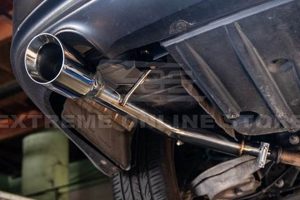
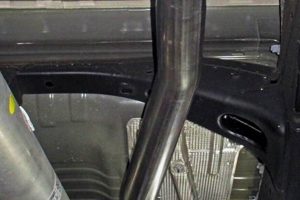
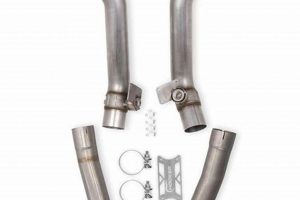
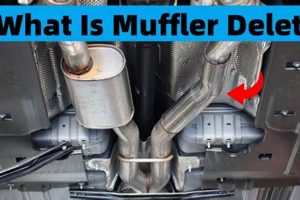
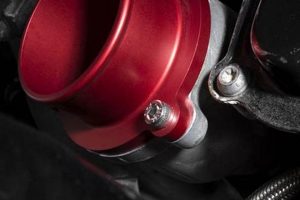
The removal of the factory-installed sound dampening device from the exhaust system of a Chevrolet Camaro alters its acoustic properties. This modification typically results in a louder, more aggressive exhaust note. As an example, after this alteration, a V8-powered Camaro will generally produce a noticeably deeper and more pronounced rumble.
This adjustment is pursued for several reasons. Some vehicle owners seek enhanced auditory feedback from their engine. Others desire a perceived increase in performance, although the actual performance gains from this modification are often minimal and may vary depending on the specific vehicle and engine configuration. Historically, modifying exhaust systems for increased sound and perceived power has been a common practice in automotive culture.
The following sections will delve into the specifics of this exhaust modification, including potential performance impacts, sound characteristics, installation considerations, and legal implications. This examination aims to provide a complete understanding of this alteration and its effects on a Chevrolet Camaro.
Considerations for Exhaust Modification
Modifying a vehicle’s exhaust system requires careful consideration. The following tips provide guidance regarding the implications of altering the exhaust system of a Chevrolet Camaro by removing its muffler.
Tip 1: Assess Local Regulations: Before initiating the removal of the original muffler, research and understand local noise ordinances and vehicle modification laws. Non-compliance can result in fines or required vehicle inspections.
Tip 2: Evaluate Performance Impact: Understand that removing the original muffler typically results in minimal, if any, demonstrable performance gains. Emphasis should be placed on the alteration of exhaust sound rather than expecting significant horsepower increases.
Tip 3: Consider Acoustic Ramifications: The result of this modification is a substantially louder exhaust note. Assess whether this increased volume is suitable for the vehicle’s intended use and the driver’s tolerance for amplified sound.
Tip 4: Plan for Potential Drone: Removal of the original muffler can introduce “drone,” an undesirable low-frequency resonance within the vehicle’s cabin, particularly at certain engine speeds. Research strategies for mitigating drone if it arises.
Tip 5: Evaluate Installation Options: Determine whether the modification will be performed professionally or independently. If undertaking the modification independently, ensure access to appropriate tools and a safe working environment.
Tip 6: Document Existing Conditions: Before performing any work, document the current state of the exhaust system with photographs. This documentation can be beneficial for reinstallation or future modifications.
Tip 7: Retain Original Components: Keep the original muffler in a safe and accessible location. This allows for future reinstallation if desired or required for resale or legal compliance.
In summary, responsible modification necessitates a thorough understanding of potential legal ramifications, performance expectations, and auditory outcomes. Preparation and planning are paramount.
The subsequent sections will address specific aspects of installation, sound management, and alternatives to consider when modifying the exhaust system of a Chevrolet Camaro.
1. Altered Acoustics

The principal and most immediately noticeable consequence of a Chevrolet Camaro muffler removal is the altered acoustic profile of the vehicle. The muffler’s function is to attenuate exhaust noise, therefore its removal directly results in a significant increase in the sound pressure level emanating from the exhaust system. This change is not simply a matter of increased volume; it also affects the character of the sound. The elimination of the muffler allows a greater range of frequencies to be audible, often resulting in a deeper, more resonant, and potentially more aggressive exhaust note. For instance, a stock Camaro SS might produce a relatively subdued rumble, whereas, following a muffler removal, it will exhibit a substantially louder and more pronounced roar, particularly under acceleration.
The altered acoustics have implications beyond mere subjective appeal. The increased sound levels can impact the driving experience, potentially causing fatigue on longer journeys. Furthermore, the specific acoustic signature produced can influence the perception of the vehicle’s performance. While the actual power output may not dramatically increase, the louder and more aggressive sound can create the impression of enhanced acceleration and responsiveness. Moreover, the changed acoustic profile can have social and legal consequences, depending on local noise regulations. A vehicle exceeding permitted sound levels may be subject to fines or restrictions on usage. The subjective assessment of the sound whether it is perceived as a pleasant roar or an intrusive disturbance is also relevant in residential contexts.
Understanding the relationship between muffler removal and altered acoustics is crucial for any Camaro owner considering this modification. The decision should be based not only on a desire for a specific sound but also on a thorough evaluation of the potential drawbacks, including legal considerations, the impact on daily driving comfort, and the vehicle’s overall suitability for its intended environment. In summary, altered acoustics is the defining feature of this modification, a feature that warrants careful assessment before implementation.
2. Legality Concerns

The act of removing the original muffler from a Chevrolet Camaro directly intersects with legality concerns due to noise regulations enforced at various jurisdictional levels. Mufflers are integral components of a vehicle’s exhaust system, designed to attenuate noise produced by the engine. Their removal, therefore, typically results in exhaust sound levels that exceed legal limits defined by local, state, or federal ordinances. The causal relationship is straightforward: eliminating the muffler directly causes an increase in decibel output, potentially violating noise pollution laws. Instances abound where vehicle owners have received citations and fines for operating vehicles with modified exhaust systems that contravene established noise standards. This underscores the importance of legality concerns as a critical component when contemplating muffler removal. For instance, some municipalities impose strict decibel limits, requiring vehicles to pass sound level tests. A Camaro with a removed muffler is highly likely to fail such tests, leading to legal repercussions.
Further complicating the matter is the variation in noise regulations across different regions. What is permissible in one state or county may be strictly prohibited in another. Some jurisdictions utilize objective measurements, such as decibel meters, to assess compliance, while others rely on subjective assessments by law enforcement officers. Furthermore, certain regions may explicitly prohibit any modifications to the exhaust system that increase noise levels beyond the manufacturer’s original specifications. These varying standards necessitate thorough research into local regulations prior to undertaking any exhaust modifications. Ignoring these regulations can result in not only fines, but also requirements to restore the exhaust system to its original, compliant configuration, as well as potential restrictions on vehicle registration or operation.
In conclusion, the legality surrounding the modification is a primary concern that should not be dismissed. The decision to remove or alter a Camaro’s muffler has direct implications for its compliance with applicable noise laws. Thorough investigation into local, state, and federal regulations, coupled with a realistic assessment of the resulting sound levels, is essential to avoid potential legal and financial penalties. Understanding and adhering to these legal frameworks is critical for responsible vehicle modification and operation.
3. Performance Impact
The removal of the factory-installed muffler from a Chevrolet Camaro is often associated with potential performance enhancements. However, the actual impact on engine output is frequently less substantial than perceived or advertised. This section examines the various facets of performance impact resulting from such a modification.
- Exhaust Backpressure Alteration
The removal of the muffler significantly reduces exhaust backpressure. While some level of backpressure is necessary for optimal engine operation in certain scenarios, excessive backpressure can hinder exhaust gas flow and reduce engine efficiency. In naturally aspirated engines, the marginal reduction in backpressure from muffler removal typically yields minimal horsepower gains, often within a range undetectable without dyno testing. Forced induction engines may benefit slightly more, but proper tuning is essential to realize any measurable improvement. The removal of components can have an adverse impact upon performance.
- Torque Curve Modification
Altering the exhaust system can shift the engine’s torque curve. The original muffler is designed to optimize torque production across a specific RPM range. Removing this component can, in some cases, slightly increase torque at higher RPMs, but often at the expense of low-end torque. This trade-off can make the vehicle feel less responsive during normal driving conditions and more suited to high-performance applications where high-RPM power is prioritized.
- Engine Tuning Requirements
To fully realize any potential performance benefits from muffler removal, recalibrating the engine control unit (ECU) is often necessary. The ECU manages fuel delivery and ignition timing based on sensor inputs, including exhaust backpressure. When the muffler is removed, these inputs change, and the ECU may not be optimized for the new exhaust configuration. Professional tuning can adjust fuel maps and timing parameters to maximize power output and ensure proper engine operation. Without proper tuning, the vehicle may experience suboptimal performance or even potential engine damage.
- Potential for Power Loss
In certain engine configurations, muffler removal can actually lead to a decrease in overall performance. If the engine is not properly tuned or if the exhaust system is not designed to function optimally without a muffler, the reduced backpressure can disrupt exhaust gas scavenging and reduce cylinder filling efficiency. This can result in a loss of horsepower and torque, particularly at lower RPMs. Therefore, it is crucial to carefully consider the specific engine characteristics and exhaust system design before removing the muffler.
In summary, while muffler removal on a Chevrolet Camaro can potentially offer slight performance gains under certain circumstances, these gains are often marginal and require careful consideration of factors such as engine tuning, exhaust system design, and torque curve characteristics. The modification’s primary impact is typically a change in exhaust sound rather than a substantial increase in power output. Furthermore, without appropriate tuning and system evaluation, there is a risk of reduced performance or potential engine damage, rather than the perceived power increases.
4. Installation Complexity
The degree of effort required to perform a Chevrolet Camaro muffler removal, denoted here as “installation complexity,” varies considerably depending on several factors related to the vehicle’s configuration, the tools available, and the skill level of the individual performing the work. The perceived simplicity of removing a single component belies the potential challenges encountered during the process.
- Vehicle Model Year and Trim
Older Camaro models may exhibit simpler exhaust system designs, utilizing bolted connections that facilitate relatively straightforward removal. Newer models, conversely, may employ more complex exhaust configurations with welded joints, requiring cutting and fabrication for modification. Specific trim levels can also influence complexity; models with active exhaust systems present additional challenges due to electronic components and vacuum lines that must be addressed.
- Accessibility and Workspace Constraints
The undercarriage of a vehicle provides limited space for maneuvering and accessing exhaust components. Working on a lowered Camaro or without the aid of a lift significantly increases the difficulty of the installation. Restricted access makes it challenging to use power tools and accurately align replacement parts. The presence of heat shields, bracing, or other underbody components can further impede access and complicate the removal process.
- Fastener Condition and Corrosion
Exposure to environmental elements causes corrosion of exhaust system fasteners, rendering them difficult to remove. Severely corroded bolts may shear upon application of force, requiring specialized extraction tools or techniques. The use of penetrating oil and heat can aid in loosening corroded fasteners, but the potential for damage remains a significant concern.
- Required Tools and Equipment
While basic muffler removal might be accomplished with hand tools, a comprehensive approach necessitates specialized equipment. A reciprocating saw or exhaust cutter is essential for severing welded joints. A torque wrench is required for properly tightening replacement hardware. Safety equipment, including eye protection and gloves, is paramount to prevent injury. Access to a vehicle lift or jack stands significantly enhances safety and accessibility during the installation process.
In summary, while the concept of a muffler removal appears uncomplicated, the installation complexity can range from minimal to substantial based on the factors outlined above. A thorough assessment of vehicle-specific conditions, available resources, and personal skill level is essential before undertaking this modification. Neglecting these considerations can lead to complications, delays, and potential damage to the vehicle.
5. Potential Resonance

The removal of a muffler from a Chevrolet Camaro’s exhaust system introduces the potential for increased resonance, commonly referred to as “drone,” within the vehicle’s cabin. This phenomenon arises from the alteration of exhaust gas flow and the elimination of the muffler’s sound-dampening properties.
- Frequency Amplification
The muffler is designed to attenuate specific frequencies in the exhaust stream. Its removal allows these frequencies to propagate more freely through the exhaust system and into the vehicle’s structure. Certain engine speeds, particularly those encountered during steady-state cruising, may coincide with resonant frequencies of the vehicle’s chassis or exhaust components, resulting in amplified sound levels within the cabin. For example, a Camaro with a removed muffler might exhibit noticeable drone at 2000-2500 RPM, a common cruising speed.
- Exhaust System Geometry
The design and length of the exhaust tubing following the point of muffler removal significantly influence the characteristics of resonance. Changes in pipe diameter, bends, or the addition of resonators can alter the frequencies at which resonance occurs. In some instances, altering the exhaust system geometry can shift the resonant frequency outside of the typical cruising RPM range, thereby mitigating the drone effect. Conversely, poorly designed modifications can exacerbate resonance issues.
- Cabin Acoustics
The acoustic properties of the vehicle’s interior contribute to the overall perception of resonance. The materials used in the cabin, such as carpeting, upholstery, and sound deadening, affect how sound waves are reflected and absorbed. Vehicles with minimal sound deadening may experience more pronounced drone compared to those with more extensive sound insulation. Aftermarket sound-deadening materials can be applied to the cabin to reduce resonance.
- Mitigation Strategies
Several strategies exist to mitigate resonance following muffler removal. The installation of aftermarket resonators can selectively attenuate specific frequencies, reducing the drone effect. Helmholtz resonators, specifically tuned to the problematic frequency, can be particularly effective. Adjustments to exhaust system routing or the addition of sound-deadening materials within the cabin represent additional options for managing resonance.
The occurrence and severity of potential resonance following this modification are highly dependent on the specific vehicle configuration, engine characteristics, and exhaust system design. While the altered exhaust note may be desirable to some owners, the potential for increased resonance should be carefully considered and addressed through appropriate mitigation strategies to maintain a comfortable driving experience.
6. Resale Implications

The removal of the original muffler from a Chevrolet Camaro directly affects its potential resale value. Modifications that deviate from the vehicle’s original factory specifications can impact buyer perception and willingness to pay. This is especially true for alterations affecting the exhaust system, which is a critical component in both performance and emissions compliance. The presence of a modified exhaust, lacking the factory muffler, may suggest to prospective buyers that the vehicle has been subjected to aggressive driving or modifications that could compromise its long-term reliability. Consequently, the altered exhaust can serve as a negative signal, reducing the vehicle’s appeal to a broader market segment seeking a well-maintained and original vehicle. For example, a prospective buyer comparing two otherwise identical Camaros may prefer the unmodified one, assuming it has been treated more cautiously.
Conversely, the impact on resale value is not uniformly negative. A segment of the market exists for modified vehicles, where buyers actively seek performance enhancements and aesthetic alterations. If the modification is professionally executed, using high-quality components, and complements the vehicle’s overall aesthetics, it could potentially attract buyers willing to pay a premium. However, this requires careful documentation of the work performed, clear evidence of quality parts, and a marketing approach targeting enthusiasts who appreciate such modifications. Furthermore, disclosing the modification transparently is crucial for maintaining trust with potential buyers. Concealing the modification could lead to legal issues or diminished buyer confidence upon discovery. If the owner still has the factory part for them to reinstall, the effects of the camaro muffler delete can be negated.
Ultimately, the impact on a Camaro’s resale value from muffler removal hinges on a complex interplay of factors including the quality of the modification, the target market, transparency of disclosure, and the overall condition of the vehicle. While the change might appeal to a limited set of enthusiasts, it may deter buyers prioritizing originality and reliability. Documenting the modification, maintaining the original components for potential reinstallation, and carefully considering the target buyer pool are crucial steps to mitigating potential negative effects on resale value.
Frequently Asked Questions
The following addresses common inquiries regarding the effects, legality, and implications of removing the factory-installed muffler from a Chevrolet Camaro.
Question 1: What is the primary impact of a Chevrolet Camaro muffler removal?
The principal consequence is a significant increase in exhaust noise volume and a change in the exhaust note’s characteristics, typically resulting in a deeper and more aggressive sound.
Question 2: Is removing the original muffler on a Camaro legal?
Legality varies significantly by jurisdiction. Many areas have noise ordinances that restrict vehicle exhaust volume. Compliance with local regulations should be verified before undertaking this modification.
Question 3: Will this Modification increase my Camaros Performance?
Performance gains are often minimal and may not be measurable without specialized equipment. The perceived increase in performance is largely due to the altered sound.
Question 4: How difficult is the removal process?
The complexity depends on the specific Camaro model, the condition of the exhaust system fasteners, and the availability of proper tools. Welded systems require cutting, adding to the complexity.
Question 5: What is exhaust “drone,” and how is it related to the muffler removal?
Drone refers to undesirable low-frequency resonance within the vehicle’s cabin, particularly at certain engine speeds. Muffler removal can exacerbate this issue.
Question 6: Will removing the muffler affect the resale value of a Camaro?
The impact on resale value is mixed. While it may appeal to some enthusiasts, it may deter buyers seeking an original, unmodified vehicle.
In summary, removing the factory muffler from a Chevrolet Camaro is a modification with significant consequences related to noise, legality, performance, and value. Careful evaluation of these factors is essential.
The succeeding sections will offer an in-depth look at potential alternatives to complete muffler removal, providing options for those seeking to alter their Camaro’s exhaust note without incurring all of the associated drawbacks.
Conclusion
This examination has provided a detailed analysis of the implications associated with the act of camaro muffler delete. Key aspects reviewed include alterations in acoustic properties, potential legal ramifications, nuanced performance impacts, installation complexities, the risk of introducing unwanted resonance, and subsequent effects on the vehicle’s resale value. The decision to proceed with this modification warrants careful consideration of each of these factors, ensuring that any changes align with individual priorities, local regulations, and long-term ownership goals.
Ultimately, responsible vehicle modification requires a thorough understanding of both intended benefits and potential drawbacks. Owners considering a camaro muffler delete should prioritize informed decision-making, prioritizing compliance and understanding the broader implications for their vehicle’s operation and value. Further research and professional consultation are recommended before undertaking any alterations to the exhaust system.