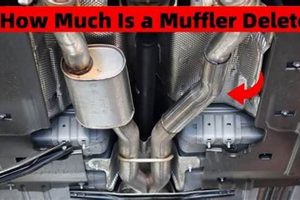
These components are critical parts of a vehicle’s exhaust system, responsible for reducing engine noise and channeling exhaust gases away from the passenger compartment. The former accomplishes noise reduction through a series of chambers and baffles that dampen sound waves generated by the engine’s combustion process. The latter then directs these treated gases out from under the vehicle, minimizing the risk of them entering the cabin.
Properly functioning units enhance driving comfort by significantly decreasing noise pollution, which can contribute to driver fatigue. Furthermore, efficient exhaust removal helps maintain air quality within the vehicle and reduce environmental impact by facilitating the effective operation of catalytic converters. Historically, basic versions have existed since the early days of automobiles, with design improvements focusing on increased efficiency and reduced backpressure.
Subsequent sections will delve into common issues affecting these parts, diagnostic procedures for identifying problems, and guidelines for selecting replacements. Additionally, the material will cover preventive maintenance techniques aimed at extending their lifespan and optimizing vehicle performance.
Maintenance and Longevity Strategies
The following provides practical advice to maximize the service life and performance of exhaust system components.
Tip 1: Routine Inspection: Regularly examine the condition for signs of corrosion, rust, or physical damage. Early detection of these issues can prevent more extensive and costly repairs.
Tip 2: Address Leaks Promptly: Exhaust leaks not only diminish efficiency but can also introduce hazardous fumes into the passenger cabin. Any suspected leaks should be assessed and repaired by a qualified technician without delay.
Tip 3: Avoid Short Trips: Frequent short journeys can lead to moisture buildup within the system, accelerating corrosion. Longer trips allow the exhaust system to reach optimal operating temperature, facilitating the evaporation of accumulated moisture.
Tip 4: Use Quality Replacement Parts: When replacements become necessary, opt for components manufactured to original equipment specifications or higher. Inferior parts often have shorter lifespans and may compromise performance.
Tip 5: Monitor Exhaust System Noises: Changes in the sound emanating from the exhaust system can indicate underlying problems. Unusual noises, such as rattling or hissing, should prompt a professional inspection.
Tip 6: Ensure Proper Mounting: Check the condition of mounting brackets and hangers. Deteriorated or broken mounts can cause excessive vibration, leading to premature failure of the exhaust system.
Adherence to these guidelines can significantly extend the operational life, optimize engine efficiency, and ensure the safety of the vehicle’s occupants.
The concluding section will provide a summary of the core concepts discussed and outline the implications of neglected maintenance.
1. Noise Reduction

Noise reduction is a primary function of the muffler and, to a lesser extent, the tailpipe in a vehicle’s exhaust system. The goal is to minimize the auditory impact of the engine’s combustion process, creating a more comfortable driving experience and complying with noise regulations.
- Internal Baffle Design
The muffler’s internal structure, typically employing a series of baffles and chambers, is engineered to attenuate sound waves. These components reflect and redirect sound energy, causing destructive interference and reducing the overall noise level. The effectiveness of this design directly impacts the extent of noise reduction achieved.
- Resonance Chamber Tuning
Certain mufflers utilize resonance chambers tuned to specific frequencies prevalent in engine exhaust noise. These chambers capture and dampen these frequencies, further contributing to noise reduction. The accuracy of the chamber tuning is crucial for targeting the most disruptive sound components.
- Sound Absorption Materials
Some advanced mufflers incorporate sound-absorbing materials, such as fiberglass packing or mineral wool, to enhance noise attenuation. These materials convert sound energy into heat, further reducing the amount of sound transmitted. The choice and density of these materials influence the muffler’s overall performance and lifespan.
- Tailpipe Extension and Direction
While the muffler is the primary noise reduction device, the tailpipe’s length and direction also play a role. Extending the tailpipe beyond the vehicle’s body helps to dissipate exhaust gases and associated noise away from the passenger compartment. The angle of the tailpipe can also be designed to direct sound away from sensitive areas, such as sidewalks or residential zones.
These interconnected facets of design contribute to the overall noise-reducing capabilities of the exhaust system. The muffler’s internal complexity, coupled with the tailpipe’s directional influence, are essential for achieving acceptable noise levels while maintaining engine performance. Inadequate design or degradation of these components can lead to increased noise pollution and potential regulatory non-compliance.
2. Exhaust Routing

Exhaust routing, the carefully planned path for combustion byproducts to exit a vehicle, is inextricably linked to both the muffler and the tailpipe. These components are not merely endpoints; they are integral to the controlled expulsion of gases, ensuring safety and environmental compliance.
- Underbody Clearance and Obstacle Avoidance
The routing path must navigate the undercarriage of the vehicle, avoiding critical components like the fuel tank, brake lines, and suspension elements. Improper routing can lead to thermal damage or physical interference. For example, a tailpipe positioned too close to a fuel tank could pose a significant fire hazard. This is mitigated by precise design and heat shielding.
- Minimizing Exhaust Gas Leakage
Effective routing minimizes the number of joints and connections, reducing the potential for exhaust gas leaks. Leaks can lead to the inhalation of carbon monoxide, a colorless and odorless gas, posing a serious health risk to vehicle occupants. Sealing integrity at all connections is paramount to ensure gases reach the tailpipe for safe dispersion.
- Controlling Exhaust Temperature
The exhaust system’s routing influences heat dissipation. In confined spaces, excessive heat buildup can damage nearby components. Strategies such as increased pipe diameter or strategic placement of heat shields are employed to manage temperature effectively. The tailpipe, as the final segment, allows for cooling before gases are released.
- Acoustic Considerations
The length and curvature of the exhaust piping impact the overall sound characteristics of the vehicle. Bends and resonators can be strategically placed to cancel out specific frequencies, contributing to noise reduction in conjunction with the muffler. An improperly routed system can amplify undesirable engine noises.
In summation, exhaust routing is not a simple matter of connecting the engine to the tailpipe. It’s a complex engineering challenge that considers safety, performance, and environmental factors. The muffler and tailpipe serve as critical endpoints, ensuring that the controlled expulsion of exhaust gases is both safe and efficient.
3. Corrosion Resistance
Corrosion resistance is a critical performance parameter for vehicle exhaust systems, particularly the muffler and tailpipe. These components are subjected to a harsh operating environment, characterized by high temperatures, exposure to water, road salts, and acidic combustion byproducts. The material’s ability to withstand these conditions directly dictates the lifespan and reliability of the exhaust system. For instance, systems constructed from mild steel typically exhibit significant corrosion within a few years, especially in regions with frequent salting of roads during winter. This degradation compromises structural integrity, leading to leaks and reduced noise attenuation.
The selection of corrosion-resistant materials, such as stainless steel or aluminized steel, represents a significant engineering trade-off between cost and longevity. Stainless steel offers superior corrosion resistance but carries a higher manufacturing cost. Aluminized steel provides a more economical alternative, offering enhanced protection compared to mild steel through a sacrificial aluminum coating. The effectiveness of this coating, however, diminishes over time as the aluminum layer is consumed. Real-world examples demonstrate the economic benefits of investing in more corrosion-resistant systems. While the initial cost may be higher, the extended lifespan and reduced maintenance frequency often result in lower overall ownership costs.
Understanding the factors contributing to corrosion and the properties of different materials is essential for informed decision-making regarding exhaust system maintenance and replacement. Neglecting corrosion resistance considerations can lead to premature failure, increased repair expenses, and potential safety hazards. Regular inspection and proactive maintenance, such as rust inhibitors application on vulnerable spots, can mitigate the effects of corrosion and prolong the life of the muffler and tailpipe. The choice of replacement components should always prioritize corrosion resistance appropriate for the vehicle’s operating environment.
4. Backpressure Effects

Backpressure, the resistance to exhaust flow within the system, is a critical performance factor intimately linked to the design and condition of the muffler and tailpipe. Excess backpressure can negatively impact engine efficiency and overall performance. Conversely, insufficient backpressure, while seemingly beneficial, can also lead to undesirable consequences.
- Engine Performance and Fuel Efficiency
Increased backpressure impedes the expulsion of exhaust gases, forcing the engine to work harder during the exhaust stroke. This reduces power output, particularly at higher RPMs, and negatively impacts fuel efficiency. An excessively restrictive muffler, or a tailpipe with a crimped or obstructed outlet, exemplifies this effect. Performance vehicles often utilize aftermarket exhaust systems designed to minimize backpressure, albeit sometimes at the expense of increased noise levels.
- Valve Overlap and Scavenging Efficiency
Backpressure influences the scavenging process, where the outgoing exhaust gases help draw in the fresh air-fuel mixture during valve overlap. Insufficient backpressure can disrupt this process, leading to a loss of cylinder pressure and reduced combustion efficiency. A poorly designed or excessively large diameter tailpipe, for instance, might diminish scavenging efficiency. Conversely, excessive backpressure can prevent complete cylinder emptying, hindering intake charge volume.
- Exhaust Gas Recirculation (EGR) System Function
In vehicles equipped with EGR systems, backpressure plays a role in the flow of recirculated exhaust gases back into the intake manifold. Changes in backpressure, due to a modified or damaged muffler and tailpipe, can affect the EGR system’s operation, potentially leading to increased emissions or engine performance issues. For instance, excessive backpressure can reduce EGR flow, increasing NOx emissions.
- Catalytic Converter Performance and Longevity
High backpressure can cause excessive heat buildup in the exhaust system, potentially damaging the catalytic converter. Over time, this can reduce the converter’s efficiency in reducing harmful emissions and ultimately shorten its lifespan. A clogged muffler can significantly increase backpressure, leading to premature catalytic converter failure and costly repairs.
Therefore, maintaining an optimal balance of backpressure is essential for maximizing engine performance, fuel efficiency, and emissions control. The selection of appropriate muffler and tailpipe designs, coupled with regular inspections to ensure unrestricted exhaust flow, contributes significantly to achieving this balance. Alterations to the exhaust system should be carefully considered to avoid unintended consequences related to backpressure effects.
5. Material Composition

Material composition significantly impacts the performance, durability, and cost of vehicle exhaust systems, particularly the muffler and tailpipe. The selection of appropriate materials is a critical engineering decision that balances functional requirements with economic constraints.
- Steel Alloys and Corrosion Resistance
Various steel alloys are employed in exhaust system construction, each offering different levels of corrosion resistance. Mild steel, while inexpensive, is highly susceptible to rust and offers limited lifespan. Aluminized steel provides improved corrosion resistance due to a protective aluminum coating, making it a common choice for original equipment manufacturers. Stainless steel, with its high chromium content, offers superior corrosion resistance and is often used in aftermarket performance systems. The choice of alloy dictates the system’s ability to withstand exposure to moisture, road salts, and acidic exhaust gases.
- Thickness and Gauge
The thickness or gauge of the material also influences durability and structural integrity. Thicker gauge materials offer greater resistance to physical damage and corrosion penetration. However, increased thickness also adds weight and cost. The optimal gauge selection balances structural requirements with weight considerations and budgetary constraints. For example, off-road vehicles operating in harsh environments often benefit from thicker gauge exhaust components.
- Coatings and Surface Treatments
In addition to the base material, coatings and surface treatments can further enhance corrosion resistance. Ceramic coatings provide a durable barrier against heat and corrosion, while specialized paints can offer additional protection against rust. These treatments can extend the lifespan of exhaust components, particularly in regions with harsh climates. The effectiveness of these coatings depends on proper application and material compatibility.
- Sound Absorption Materials
Within the muffler, sound absorption materials play a crucial role in noise reduction. Fiberglass packing and mineral wool are commonly used to dampen sound waves. The selection and density of these materials impact the muffler’s performance and lifespan. Over time, these materials can degrade due to heat and moisture, reducing the muffler’s effectiveness. The quality of these materials is a significant factor in maintaining noise control compliance.
The selection of materials for the muffler and tailpipe represents a comprehensive engineering decision that considers performance, durability, cost, and environmental factors. The trade-offs inherent in material selection directly impact the overall value and longevity of the exhaust system. Systems constructed from higher quality, corrosion-resistant materials generally offer superior performance and extended service life, translating to lower long-term ownership costs.
6. Structural Integrity
The structural integrity of the muffler and tailpipe directly influences vehicle safety, performance, and environmental impact. These components, integral to the exhaust system, undergo continuous stress from thermal cycling, vibration, and exposure to corrosive elements. Compromised structural integrity manifests as cracks, rust-through, or detached mounting points. The direct consequence is exhaust gas leakage, potentially exposing occupants to harmful carbon monoxide. Furthermore, structural failure alters exhaust flow dynamics, reducing engine efficiency and increasing noise pollution. As an example, a rusted-through muffler will fail to adequately dampen engine noise, violating local noise ordinances and contributing to driver discomfort. Severely damaged tailpipes present physical hazards, potentially dragging on the road surface or detaching completely, posing a threat to other vehicles.
Maintaining structural integrity necessitates regular inspection and prompt repair or replacement of damaged components. Visual assessment for rust, cracks, and loose connections is crucial. Furthermore, listening for unusual exhaust noises, such as hissing or rattling, can indicate structural problems. The practical application of this understanding lies in preventative maintenance. Applying rust inhibitors to vulnerable areas, ensuring proper mounting hardware, and avoiding driving through deep water can significantly extend the lifespan of these components. Ignoring structural degradation leads to escalating problems, including catalytic converter damage and potential engine failure, resulting in costly repairs.
In summary, the structural soundness of the muffler and tailpipe is not merely an aesthetic concern; it is fundamental to vehicle operation and safety. Neglecting maintenance and allowing structural weaknesses to develop results in a cascade of negative consequences. A proactive approach, encompassing regular inspections, preventative measures, and timely repairs, is essential for preserving structural integrity and ensuring the safe and efficient operation of the vehicle’s exhaust system.
Frequently Asked Questions
The following addresses common inquiries regarding the function, maintenance, and replacement of these critical exhaust system components.
Question 1: What is the primary function of the muffler?
The primary function is noise reduction. Internal chambers and baffles are designed to attenuate sound waves generated by the engine’s combustion process.
Question 2: What role does the tailpipe play in the exhaust system?
The tailpipe channels exhaust gases away from the vehicle’s undercarriage, minimizing the risk of fumes entering the passenger compartment and directing exhaust emissions away from pedestrians.
Question 3: What are common signs of a failing muffler or tailpipe?
Common indicators include excessive exhaust noise, rattling sounds, visible rust or damage, and the smell of exhaust fumes inside the vehicle.
Question 4: How often should the muffler and tailpipe be inspected?
A visual inspection should be conducted at least annually, or more frequently in regions with harsh climates and road salting.
Question 5: Can a damaged muffler or tailpipe affect fuel economy?
Yes, a damaged or corroded system can increase backpressure, reducing engine efficiency and negatively impacting fuel economy.
Question 6: Is it possible to replace only a section of the exhaust system, or is a complete replacement always necessary?
Depending on the extent of the damage, it may be possible to replace only the affected section. However, a complete replacement is often recommended to ensure optimal performance and longevity, particularly if other components are nearing the end of their service life.
Proper maintenance and timely replacement of these components are essential for ensuring vehicle safety, performance, and compliance with environmental regulations.
Subsequent material will explore advanced diagnostic techniques for identifying exhaust system issues.
Conclusion
The preceding discussion has comprehensively addressed the multifaceted roles of the muffler and tailpipe within a vehicle’s exhaust system. The critical nature of these components extends beyond mere noise reduction and exhaust channeling; their proper function directly impacts engine performance, fuel efficiency, emissions control, and passenger safety. The material composition, structural integrity, and design characteristics all contribute to the overall effectiveness and longevity of the system. Furthermore, regular inspection and timely maintenance are paramount in preventing premature failure and ensuring continued compliance with environmental regulations. The impact of neglecting these seemingly minor parts can result in significant operational and financial ramifications.
As automotive technology advances, the demands placed on exhaust systems will only intensify. Therefore, a thorough understanding of the principles governing the performance and durability of the muffler and tailpipe remains essential for both vehicle owners and technicians. Prioritizing proactive maintenance, selecting appropriate replacement components, and addressing potential issues promptly are critical steps in ensuring the continued safe and efficient operation of vehicles and mitigating their environmental impact. The future of sustainable transportation depends, in part, on the responsible management of these often-overlooked components.