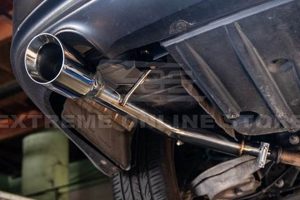
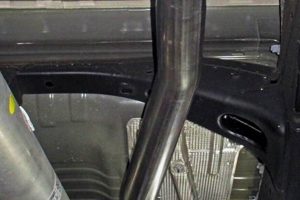
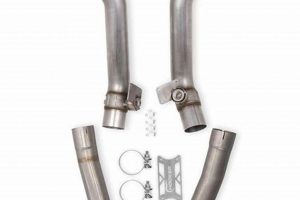
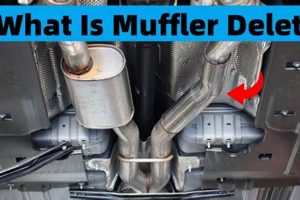
The potential increase in horsepower from removing a muffler is a common topic among automotive enthusiasts. The purpose of a muffler is to reduce exhaust noise. Removing it eliminates this restriction, theoretically allowing exhaust gases to exit the engine more freely.
The impact on engine performance is often debated. While a less restrictive exhaust system can, in some cases, improve horsepower, the actual gain from simply removing the muffler is typically minimal, often within a range of 2-5 horsepower on a naturally aspirated engine. More significant gains are possible on turbocharged vehicles, where reducing backpressure is more beneficial. The overall effect depends heavily on the vehicle’s engine, exhaust system design, and the presence of other modifications.
Therefore, the actual performance benefit must be weighed against potential drawbacks, such as increased noise levels, potential drone, and legality concerns. Other modifications, like high-flow catalytic converters or a complete exhaust system upgrade, may offer a more substantial and optimized improvement in engine performance.
Maximizing Potential Horsepower Gains After Muffler Removal
Muffler removal can contribute to a slight increase in horsepower. To optimize this effect and mitigate potential negative consequences, consider the following:
Tip 1: Consider Engine Type. The effectiveness of a muffler delete is highly dependent on the engine. Naturally aspirated engines typically experience minimal gains. Turbocharged engines, which benefit more from reduced backpressure, may see a more noticeable improvement.
Tip 2: Evaluate Existing Exhaust System. Assess the rest of the exhaust system. A stock exhaust with a restrictive catalytic converter will limit any potential gains from removing the muffler. Upgrading other components may be necessary to maximize the benefit.
Tip 3: Address Potential Backpressure Issues. Removing the muffler can reduce backpressure, which, while beneficial in some contexts, can negatively affect low-end torque in certain engines. Consider whether the vehicle’s intended use prioritizes high-end power over low-end responsiveness.
Tip 4: Consider Professional Tuning. After removing the muffler, consider a professional engine tune. A qualified tuner can optimize the engine’s air-fuel ratio and timing to take advantage of the improved exhaust flow, potentially yielding greater horsepower gains and preventing engine damage.
Tip 5: Be Aware of Noise Regulations. Removing a muffler can significantly increase exhaust noise. Before proceeding, research local noise regulations to ensure compliance. Non-compliance can result in fines or vehicle impoundment.
Tip 6: Evaluate Potential Drone. Muffler removal can introduce unwanted drone, a low-frequency resonant sound that can be irritating during highway driving. Research and consider the potential for drone, especially if the vehicle is used for long commutes.
Tip 7: Conduct Before-and-After Dyno Testing. To accurately assess the horsepower gain, conduct dyno testing before and after the muffler removal. This provides quantifiable data on the actual performance improvement and helps determine if further modifications are warranted.
Implementing these steps can help optimize performance gains and minimize potential drawbacks associated with muffler removal.
The following section will delve into the legal and environmental considerations.
1. Engine Type

The type of engine significantly influences the horsepower gain realized from a muffler delete. Naturally aspirated engines, which rely solely on atmospheric pressure to fill cylinders, generally experience minimal improvements, typically in the range of 2-5 horsepower, if any. This is because the muffler is often not the most restrictive component in the exhaust system. For example, a 2.0-liter inline-four naturally aspirated engine in a standard sedan might show negligible performance change after muffler removal. The primary restriction lies in the catalytic converter or exhaust manifold.
Conversely, turbocharged engines often benefit more noticeably from a muffler delete. Turbochargers create a significant amount of backpressure within the exhaust system. Removing the muffler can reduce this backpressure, allowing the turbocharger to spool more efficiently and deliver more power. A turbocharged 2.0-liter engine in a performance car, for instance, may gain 5-10 horsepower, or potentially more depending on the specific engine and turbocharger setup. However, even in turbocharged applications, the overall design of the exhaust system remains a critical factor. A larger diameter exhaust piping combined with a less restrictive downpipe yields a more substantial power increase.
In conclusion, the engine type plays a central role in determining the effectiveness of a muffler delete. While naturally aspirated engines typically see minimal gains, turbocharged engines can experience a more noticeable improvement due to reduced backpressure. It is important to consider other factors, such as the complete exhaust system design and engine tuning, to maximize the potential horsepower increase and avoid adverse effects such as decreased low-end torque. Careful consideration should also be given to legal requirements regarding noise levels.
2. Backpressure Impact

Backpressure, the resistance to exhaust flow within an exhaust system, plays a crucial role in determining the horsepower gains realized from a muffler delete. A muffler’s primary function is to reduce noise by creating backpressure, thereby impeding the free flow of exhaust gases. Removing the muffler reduces this backpressure, potentially allowing the engine to expel exhaust gases more efficiently. The direct consequence is a potential increase in engine power, although the magnitude of this increase varies considerably depending on the engine type and overall exhaust system design.
The effect of reduced backpressure is more pronounced in turbocharged engines than in naturally aspirated engines. Turbochargers inherently create significant backpressure. Eliminating the muffler in a turbocharged system can alleviate this backpressure, allowing the turbocharger to spool faster and more efficiently. This translates to increased horsepower and improved throttle response. In contrast, naturally aspirated engines rely on precise backpressure tuning to maintain optimal scavenging of exhaust gases and cylinder filling. Reducing backpressure too much in a naturally aspirated engine can actually decrease low-end torque, resulting in a less responsive engine at lower RPMs. An illustrative example is a high-performance turbocharged sports car, where a muffler delete might yield a noticeable increase in horsepower, while the same modification on a standard naturally aspirated sedan might result in minimal power gains and a potential reduction in low-end torque.
In conclusion, understanding the backpressure impact is essential when considering a muffler delete. While reducing backpressure can increase horsepower, particularly in turbocharged applications, it is crucial to evaluate the potential negative effects on low-end torque, especially in naturally aspirated engines. The decision to remove the muffler should be based on a comprehensive understanding of the engine’s characteristics and the desired performance outcome, in addition to considering legal and environmental regulations regarding noise emissions. Further modifications to the exhaust system, such as upgrading the catalytic converter or exhaust manifold, might be necessary to optimize the performance benefits of reduced backpressure.
3. Exhaust Diameter

Exhaust diameter significantly influences the effectiveness of a muffler delete. The diameter of the exhaust piping dictates the volume of exhaust gases that can flow through the system. A muffler delete on an exhaust system with an insufficient diameter may yield negligible horsepower gains because the existing piping is already a bottleneck. Conversely, an exhaust system with an appropriately sized diameter allows for a more substantial increase in exhaust flow when the muffler is removed, leading to a greater potential horsepower increase. For instance, a small-diameter exhaust system on a modified sports car might see minimal power gain from a muffler delete, whereas a larger diameter system could produce a more noticeable improvement.
The correlation between exhaust diameter and the impact of a muffler delete is not linear. An excessively large exhaust diameter can decrease exhaust gas velocity, reducing scavenging effects and potentially decreasing low-end torque, even with the muffler removed. The optimal exhaust diameter depends on the engine’s characteristics, including its displacement, power output, and operating RPM range. An appropriately sized exhaust diameter facilitates efficient exhaust gas removal without sacrificing exhaust velocity, thereby maximizing the potential horsepower gains from a muffler delete. Professional tuning and dyno testing are essential to determine the ideal exhaust diameter for a given engine configuration and to assess the real-world impact of a muffler delete.
In summary, exhaust diameter plays a crucial role in determining the success of a muffler delete in increasing horsepower. An exhaust system with an insufficient diameter will limit potential gains, while an excessively large diameter can negatively impact low-end torque. The optimal exhaust diameter, when coupled with a muffler delete, can result in a noticeable horsepower increase, particularly in turbocharged engines. Practical understanding of this interrelation enables informed decision-making, ensuring the desired performance improvements are achieved without compromising overall engine performance or drivability.
4. Vehicle Tuning
Vehicle tuning, referring to adjustments made to an engine’s control parameters, significantly influences the potential horsepower increase realized from a muffler delete. The extent to which an engine can benefit from a less restrictive exhaust system is directly tied to its ability to adapt its fuel delivery and ignition timing to the altered exhaust flow characteristics. Without proper tuning, a muffler delete may yield minimal or even negative performance changes.
- Fuel Mixture Optimization
After a muffler delete, the engine may experience changes in the air-fuel ratio. Tuning can adjust the fuel mixture to compensate for the altered exhaust flow, ensuring optimal combustion. For instance, a leaner mixture may be required to maximize power output, while a richer mixture may be necessary to prevent engine knocking. Without proper fuel mixture adjustments, the engine may not realize its full potential, or it may even suffer damage due to improper combustion.
- Ignition Timing Adjustment
A muffler delete can affect cylinder pressure and exhaust gas temperatures, necessitating adjustments to ignition timing. Advancing or retarding the ignition timing can optimize the combustion process for the new exhaust flow conditions. Proper ignition timing ensures the fuel is ignited at the precise moment for maximum power and efficiency. Failure to adjust ignition timing can lead to reduced power output or even engine damage, such as pre-ignition or detonation.
- Airflow Calibration
Modern engines rely on mass airflow (MAF) sensors to measure the amount of air entering the engine. A muffler delete can alter airflow patterns, requiring recalibration of the MAF sensor readings. This ensures the engine control unit (ECU) accurately measures the amount of air entering the engine and adjusts the fuel delivery accordingly. Incorrect airflow calibration can lead to improper fuel mixture and reduced performance, highlighting the importance of retuning after a muffler delete.
- Boost Control (Turbocharged Engines)
For turbocharged engines, tuning plays a vital role in managing boost levels after a muffler delete. The reduced backpressure can allow the turbocharger to spool more quickly, potentially leading to higher boost pressures. Tuning can optimize boost control to maintain safe and consistent boost levels, maximizing power output without exceeding the engine’s limits. Proper boost control ensures the engine operates within safe parameters, preventing potential damage from overboosting.
In conclusion, vehicle tuning is an essential element in maximizing the horsepower gains from a muffler delete. Adjusting fuel mixture, ignition timing, airflow calibration, and boost control are critical to optimize engine performance and prevent potential damage. A muffler delete without proper tuning may not yield the desired results or may even negatively impact engine performance. Therefore, professional tuning is highly recommended to ensure the engine operates efficiently and reliably after a muffler delete.
5. Legal Compliance
A direct correlation exists between legal compliance and the purported horsepower increase resulting from a muffler delete. Local, state, and federal regulations govern vehicle noise emissions. Removing the muffler typically increases exhaust noise levels, potentially violating these regulations. The attainment of even a marginal horsepower gain can be negated by legal penalties, such as fines, mandatory vehicle modifications to restore compliance, or even impoundment. The potential for increased horsepower is therefore contingent on remaining within legally permissible noise limits. For instance, many municipalities enforce noise ordinances measured in decibels (dB). An illegal modification rendering a vehicle non-compliant may result in recurring fines, effectively nullifying any perceived benefit from the modification.
The implementation of stricter emissions standards necessitates a comprehensive understanding of legal compliance before undertaking modifications. In states with stringent visual inspections, the absence of a muffler may lead to automatic failure, irrespective of actual noise levels. Furthermore, aftermarket exhaust systems marketed as “muffler deletes” often carry a disclaimer indicating their use is restricted to off-road or track applications, underscoring the legal implications of their use on public roads. It is essential to consult local regulations and conduct sound level testing to ascertain compliance before and after any modifications are made.
In conclusion, legal compliance serves as a crucial constraint in evaluating the potential benefits of a muffler delete. While a horsepower increase may be theoretically possible, the actual realization of this benefit is contingent on adhering to noise emissions regulations. Non-compliance can lead to penalties that negate any performance gains, highlighting the importance of thorough research and adherence to legal requirements before modifying a vehicle’s exhaust system. Prioritizing legal compliance is essential to ensure that any potential horsepower gain does not come at the expense of legal repercussions.
6. Sound Resonance

Sound resonance, often overlooked, is an important consideration when evaluating the practical implications of a muffler delete. While the primary focus is often on potential horsepower gains, the altered sound characteristics resulting from muffler removal can significantly affect the driving experience and the perceived benefit of the modification. The introduction of unwanted resonances can detract from the perceived performance improvement, even if a measurable horsepower increase is achieved.
- Drone Frequency
Drone frequency refers to sustained, low-frequency sound waves that resonate within the vehicle’s cabin after a muffler delete. This phenomenon is particularly noticeable at cruising speeds and can induce driver fatigue and discomfort. For example, a vehicle operating at 2000-3000 RPM on the highway might exhibit a drone frequency between 100-200 Hz, which can be highly irritating over extended periods. While a muffler delete might theoretically add a few horsepower, the resulting drone can overshadow any perceived performance gain, leading to dissatisfaction with the modification.
- Harmonic Amplification
Harmonic amplification occurs when certain frequencies within the exhaust note are amplified by the vehicle’s chassis and interior components. This can result in an unbalanced and unpleasant sound profile. For instance, specific exhaust frequencies might resonate with the vehicle’s body panels, creating a rattling or buzzing sound. Even if the overall exhaust volume is within legal limits, these amplified harmonics can be disruptive and detract from the driving experience. The amplification may vary from vehicle to vehicle due to the chassis design and materials used.
- Sound Cancellation Interference
Sound cancellation interference happens when sound waves reflect off surfaces inside and outside the exhaust system, creating areas of constructive and destructive interference. This interference can result in an uneven and unpredictable exhaust note. For example, certain frequencies might be amplified in one area of the vehicle and canceled out in another, leading to a fluctuating sound level. This phenomenon can make it difficult to assess the true performance of the engine and can create an inconsistent and unrefined driving experience. It can also produce odd noises that have no relation to engine speed.
- Cabin Resonance Sensitivity
Cabin resonance sensitivity refers to the degree to which a vehicle’s interior amplifies and transmits exhaust noise. Vehicles with larger cabins or less sound dampening material are more susceptible to internal resonance. For instance, a truck with a large cabin and minimal sound insulation might experience a greater degree of internal resonance compared to a compact sports car with extensive sound insulation. This means that the same muffler delete modification can result in vastly different sound experiences depending on the vehicle model. Cabin resonance can amplify drone and other undesirable sounds.
In conclusion, sound resonance plays a critical role in the perceived success of a muffler delete. While a horsepower increase might be achieved, the introduction of drone frequency, harmonic amplification, sound cancellation interference, and cabin resonance sensitivity can significantly detract from the driving experience. These factors must be carefully considered when evaluating the overall benefit of a muffler delete, as the altered sound characteristics can often outweigh any marginal performance gains. Evaluating these parameters helps the user to understand what “how much hp does a muffler delete add” truly means.
Frequently Asked Questions
This section addresses common inquiries regarding the potential horsepower increase associated with removing a vehicle’s muffler. It clarifies misconceptions and provides factual answers based on established automotive principles.
Question 1: Does removing the muffler automatically increase horsepower?
Removing the muffler does not guarantee a horsepower increase. The effect is dependent on several factors, including engine type, exhaust system design, and the presence of other performance modifications. A minimal increase may occur, or in some cases, performance may decrease due to reduced backpressure.
Question 2: Is a muffler delete more effective on turbocharged engines compared to naturally aspirated engines?
Yes, turbocharged engines generally respond more favorably to muffler deletes than naturally aspirated engines. Turbochargers inherently create backpressure, and removing the muffler can alleviate this, allowing the turbocharger to spool more efficiently. Naturally aspirated engines are more sensitive to backpressure changes and may not see a significant benefit, or may lose low-end torque.
Question 3: What other factors besides the muffler affect exhaust flow and horsepower?
Several factors influence exhaust flow, including the diameter and design of the exhaust piping, the catalytic converter, and the exhaust manifold. A restrictive catalytic converter or undersized exhaust piping can limit the benefits of a muffler delete. Upgrading these components can further enhance exhaust flow and horsepower.
Question 4: Can a muffler delete cause damage to the engine?
While a muffler delete itself is unlikely to directly cause engine damage, improper tuning after the modification can lead to issues. A significant change in exhaust flow can alter the engine’s air-fuel ratio, potentially causing it to run too lean or too rich. Professional tuning is recommended to optimize the engine’s performance and prevent damage.
Question 5: Are there any legal considerations associated with muffler deletes?
Yes, many jurisdictions have noise regulations that a muffler delete can violate. Removing the muffler typically increases exhaust noise, potentially resulting in fines or requirements to restore the vehicle to its original configuration. It is important to consult local regulations before proceeding with a muffler delete.
Question 6: Besides horsepower, what other effects can a muffler delete have on a vehicle?
Beyond horsepower, a muffler delete can significantly increase exhaust noise, potentially leading to an undesirable “drone” at certain engine speeds. It can also alter the exhaust note, which may be perceived as either positive or negative depending on individual preferences. These factors should be considered in addition to the potential horsepower gains.
In summary, while a muffler delete may contribute to a modest horsepower increase, the actual result is highly dependent on specific vehicle characteristics and careful consideration of legal implications. Engine tuning is advisable.
The following section will discuss alternatives that provide greater horsepower and are not only more reliable, but are also legal to operate.
How Much HP Does a Muffler Delete Add
The exploration of the question “how much hp does a muffler delete add” reveals that the actual horsepower gain is often marginal and highly variable. While a theoretical increase may exist, several factors, including engine type, exhaust system design, and the legality of such modifications, significantly influence the outcome. The potential benefits are frequently outweighed by the increased noise levels and the risk of violating local regulations.
Therefore, any decision regarding muffler removal should involve a comprehensive evaluation of the vehicle’s specific characteristics and a thorough understanding of applicable laws. Alternative modifications, such as high-flow exhaust systems or professional engine tuning, may offer a more substantial and reliable performance improvement without the drawbacks associated with simply removing the muffler. Careful consideration and informed decision-making are paramount when contemplating modifications that affect both performance and regulatory compliance.