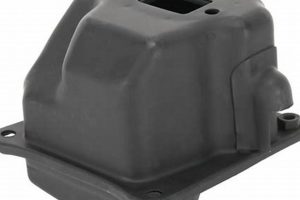
The expense associated with exhaust system repair, specifically addressing the component responsible for noise reduction, varies significantly based on several factors. These factors include the vehicle’s make and model, the extent of the damage, and the labor rates of the repair facility. A complete replacement generally costs more than a minor repair, such as welding a small hole.
A properly functioning exhaust system is crucial for vehicle emissions control, fuel efficiency, and noise reduction. Historically, failures in this system led to increased air and noise pollution. Timely repair maintains vehicle compliance with environmental regulations, optimizes engine performance, and contributes to a quieter driving experience for both the vehicle operator and the surrounding environment.
Understanding the cost determinants and available repair options is essential for informed decision-making. Subsequent sections will delve into specific cost ranges, repair methodologies, and preventative measures to mitigate future issues.
Tips Regarding Exhaust System Repair Costs
Prudent management of exhaust system maintenance can significantly affect the overall expense. A proactive approach and informed decision-making are crucial for minimizing repair expenditures.
Tip 1: Obtain Multiple Quotes: Contact several reputable repair shops to acquire estimates for the required service. Prices can vary considerably, so comparing quotes is essential.
Tip 2: Ascertain the Source of the Problem: A comprehensive diagnostic inspection will identify the precise location and extent of the exhaust system damage. This ensures that only necessary repairs are performed.
Tip 3: Consider Welding as an Option: For minor cracks or holes, welding may present a cost-effective alternative to complete component replacement. However, the feasibility of welding depends on the severity and location of the damage.
Tip 4: Inquire About Aftermarket Parts: Aftermarket components can sometimes offer a more affordable solution than original equipment manufacturer (OEM) parts. Ensure the aftermarket part meets or exceeds OEM specifications.
Tip 5: Address Issues Promptly: Delaying repairs can exacerbate the initial problem, potentially leading to more extensive and costly repairs in the future. Addressing issues early can prevent further degradation of the exhaust system.
Tip 6: Perform Regular Inspections: Routine visual inspections of the exhaust system can detect early signs of wear and tear, allowing for timely intervention and preventing larger problems.
Tip 7: Check for Warranty Coverage: Verify if the exhaust system or specific components are covered under any existing warranties, which could significantly reduce out-of-pocket expenses.
By implementing these strategies, vehicle owners can effectively manage exhaust system maintenance costs, ensuring both vehicle performance and budgetary prudence.
The following sections will provide additional insights into preventative maintenance and long-term cost considerations.
1. Material Costs

Material costs represent a significant component of the total expenditure for exhaust system repairs. The price of replacement parts, such as the muffler itself, pipes, catalytic converter, or related hardware (clamps, hangers, gaskets), directly impacts the final bill. A more expensive muffler, made from higher-grade materials like stainless steel, inevitably increases the overall cost compared to a standard aluminized steel version. Similarly, the need to replace multiple sections of corroded exhaust piping will add to the material costs.
For example, replacing a damaged catalytic converter, often requiring specific alloys and intricate manufacturing processes, represents a substantial expense within the overall exhaust repair. Choosing aftermarket parts instead of Original Equipment Manufacturer (OEM) parts can potentially reduce material costs. However, this approach requires careful consideration of the quality and compatibility of the aftermarket components to ensure proper fit and long-term durability. A malfunctioning oxygen sensor that damages the catalytic converter will have a cascade of material costs involved.
In summary, material costs are a primary driver of exhaust system repair expenses. Understanding the types of materials involved, their associated prices, and the potential trade-offs between OEM and aftermarket options allows for more informed decisions. Careful consideration of these factors can help to control costs while ensuring that the repairs maintain the vehicle’s performance and emissions compliance. Ignoring the correct material required can cause exponential failure of exhaust systems.
2. Labor Rates

Labor rates constitute a significant portion of the overall expense associated with exhaust system repair. These charges reflect the mechanic’s expertise, the complexity of the repair, and the geographical location of the service facility.
- Hourly Rate Variations
The prevailing hourly rate for automotive repair services fluctuates substantially depending on location. Urban areas, with higher operating costs, typically command higher labor rates than rural areas. Dealerships often have higher labor rates than independent repair shops due to specialized training and equipment. This variability directly impacts the total cost of exhaust system work.
- Complexity of Repair Procedures
The time required to diagnose and repair an exhaust system directly influences the labor charges. Simple repairs, such as patching a small hole, necessitate less time and, therefore, lower labor costs. Conversely, complex procedures, such as replacing a catalytic converter or fabricating custom exhaust sections, demand more time and specialized skills, leading to increased labor expenses.
- Diagnostic Time
Accurate diagnosis is crucial before initiating any repair. Diagnostic time, which involves identifying the precise cause of the exhaust system issue, is billed at the prevailing labor rate. Utilizing advanced diagnostic equipment, such as smoke testers or exhaust gas analyzers, may increase diagnostic time. A thorough diagnosis, however, prevents unnecessary repairs and ensures the correct problem is addressed, ultimately controlling costs.
- Accessibility and Vehicle Specifics
The accessibility of the exhaust system components affects the ease and speed of repair. Vehicles with complex exhaust systems or those that require extensive disassembly to access the damaged area will incur higher labor charges. The mechanic’s familiarity with a specific vehicle model also impacts the efficiency and, therefore, the labor costs.
In conclusion, labor rates are a crucial determinant in the overall cost of exhaust system repair. Factors such as location, repair complexity, diagnostic time, and vehicle specifics influence these rates. A comprehensive understanding of these factors enables informed decision-making and effective cost management when addressing exhaust system issues.
3. Damage Extent
The scope of impairment to the exhaust system is a primary factor dictating repair expenditure. Minor perforations caused by corrosion may necessitate only welding or patching, incurring minimal costs. Conversely, extensive structural failure, such as a collapsed internal baffle or complete separation of the muffler housing, invariably demands full replacement, significantly increasing the overall expense.
The relationship between the degree of harm and the price of remediation is direct and proportional. A severely corroded exhaust manifold can lead to exhaust leaks, affecting engine performance and requiring extensive component replacement. Similarly, damage to the catalytic converter due to internal contamination necessitates replacement, a costly procedure. The labor involved also scales with the damage; replacing a full exhaust system takes considerably longer than simply tightening a loose hanger.
In summation, the assessment of damage extent is crucial for accurate cost estimation. A comprehensive inspection is essential to determine whether minor repairs are sufficient or if a complete system overhaul is necessary. Understanding this connection empowers informed decisions regarding repair strategies and budget allocation.
4. Vehicle Type

The specific make and model of a vehicle significantly influences the costs associated with exhaust system repairs. Variations in design, component accessibility, and part availability contribute to the disparity in expenses.
- Component Accessibility
The ease with which a mechanic can access the exhaust system components greatly affects labor costs. Some vehicles feature exhaust systems that are easily accessible, allowing for quick and straightforward repairs. Conversely, other vehicles necessitate the removal of numerous components to reach the exhaust system, increasing labor time and, consequently, repair costs. For example, a sports car with a low chassis may require more time and specialized equipment to access the exhaust system compared to a truck with ample ground clearance.
- Part Availability and Cost
The availability and cost of replacement parts vary depending on the vehicle. Parts for common models are typically readily available and competitively priced. However, parts for older, rarer, or luxury vehicles may be harder to source and significantly more expensive. For instance, an exhaust component for a classic car or a high-performance import may require specialized ordering, increasing both the cost and the waiting period.
- Exhaust System Design Complexity
The complexity of the exhaust system design also plays a crucial role. Basic exhaust systems found in economy cars are relatively simple, consisting of a few components. More advanced systems, such as those found in high-performance vehicles or vehicles with complex emission control systems, often feature intricate designs with multiple components, including resonators, catalytic converters, and oxygen sensors. These complex systems require specialized knowledge and skills to repair, potentially leading to higher labor charges.
- Material Composition
The materials used in the exhaust system construction can also influence costs. Standard vehicles typically utilize aluminized steel, while high-performance or luxury vehicles often feature stainless steel or even titanium. The higher cost of these premium materials directly translates to increased repair expenses. The welding process for such materials also requires specialized skill and equipment, potentially increasing labor charges.
In summation, vehicle type is a primary determinant in the expense of exhaust system repairs. Accessibility, part availability, system complexity, and material composition all contribute to the wide range of potential costs. Understanding these factors enables vehicle owners to anticipate and manage repair expenses more effectively.
5. Repair Method
The approach employed to rectify issues within an exhaust system directly dictates the associated cost. Different techniques, ranging from minor interventions to complete component replacement, carry vastly different price points and levels of invasiveness.
- Welding or Patching
For localized damage, such as small holes or cracks, welding or patching provides a cost-effective solution. This method involves sealing the breach with specialized welding equipment or applying a patch, restoring the integrity of the affected area. This approach is significantly less expensive than replacing the entire component. However, the feasibility depends on the size, location, and overall condition of the metal. Extensive corrosion or damage near a critical joint may preclude this method.
- Component Replacement
When damage is extensive or located in a structurally critical area, replacing the affected component becomes necessary. This involves removing the damaged part and installing a new or refurbished unit. Component replacement incurs higher material costs and potentially greater labor expenses, especially if the affected part is difficult to access. The choice between Original Equipment Manufacturer (OEM) parts and aftermarket alternatives also influences the overall cost.
- Exhaust System Modification
In certain instances, modifications to the exhaust system may be considered, either for performance enhancement or to circumvent specific repair needs. This could involve replacing a section of the exhaust with a higher-flow component or rerouting the exhaust piping. Exhaust system modification typically involves welding, cutting, and custom fabrication, which may lead to high labor rates and material expenses. Furthermore, modifying an exhaust system may not be legally compliant.
- Catalytic Converter Repair or Replacement
Catalytic converter failure is a common and often costly exhaust system problem. Depending on the nature of the failure, repair might be possible, such as cleaning or replacing the internal substrate. However, in most cases, complete replacement is required. Catalytic converters are expensive due to the precious metals they contain. The cost is therefore tied to the current metal markets as well as the availability of compatible units. Repair is only viable if you are knowledgeable in the exhaust repair field or willing to pay the expertise in it.
In conclusion, the selected repair method is a crucial determinant of the final cost to address an exhaust system concern. Factors such as the extent of damage, component accessibility, and preferred parts directly influence the choice of method and, consequently, the overall financial investment. A thorough assessment of the damage is a must, weighing all the parts necessary to repair.
6. Regional Variance

Geographic location significantly impacts the expenses associated with exhaust system repairs, specifically regarding mufflers. The cost of labor, parts, and even applicable taxes varies substantially across different regions, contributing to fluctuations in overall repair charges. Economic factors, population density, and local competition among repair facilities directly influence these regional discrepancies.
For instance, areas with a higher cost of living, such as major metropolitan cities, generally exhibit elevated labor rates for automotive services. The expense of operating a repair shop, including rent, utilities, and employee compensation, contributes to this higher cost. Similarly, the availability of replacement parts, especially for older or less common vehicle models, may vary by region. Limited supply can drive up prices, particularly in remote areas or regions with fewer automotive parts suppliers. The type of vehicle that is being repaired will also have a huge impact. For example, exotic cars need to be repaired with expensive and rare parts.
Understanding regional pricing variations is crucial for vehicle owners seeking exhaust system repairs. Obtaining multiple quotes from local repair shops and considering the prevailing economic conditions in a given area helps to ensure a fair and competitive price. Ignoring this can make a car repair a huge burden. Recognition of regional cost differences can also inform decisions about where to seek repairs, particularly for individuals who travel or relocate frequently. In conclusion, regional variance introduces a significant element of unpredictability into exhaust system repair costs.
Frequently Asked Questions
The following addresses prevalent inquiries concerning the financial implications of exhaust system maintenance. These are intended to provide clear, factual information to assist in decision-making.
Question 1: What is the average price range for exhaust system repair?
The price range for exhaust system repair varies widely. Minor repairs, such as welding a small hole, can range from $50 to $150. Replacing an entire exhaust system, including the muffler, catalytic converter, and piping, can cost between $500 and $2000 or more, depending on the vehicle and parts used.
Question 2: Are there ways to reduce the expense of exhaust work?
Obtaining multiple quotes from different repair shops is a prudent strategy. Also, consider using aftermarket parts instead of original equipment manufacturer (OEM) components, provided they meet quality standards. Addressing problems promptly can prevent escalation and more costly repairs.
Question 3: How often should the exhaust system be inspected?
A visual inspection of the exhaust system should be performed at least once a year or during routine maintenance checks. Listen for unusual noises, such as rattling or hissing, which may indicate a problem. Prompt identification and addressing of potential issues can avert significant damage.
Question 4: Does insurance cover exhaust system repair?
Generally, standard auto insurance policies do not cover exhaust system repairs resulting from normal wear and tear or corrosion. Coverage may apply if the damage is caused by a collision or other covered event. Consult with an insurance provider for clarification of specific policy terms.
Question 5: Is it safe to drive with a damaged exhaust system?
Driving with a damaged exhaust system is generally not advisable. Exhaust leaks can release harmful gases into the cabin, posing a health risk. Furthermore, a damaged exhaust system can negatively impact fuel efficiency and vehicle performance. Repairing the exhaust is a good idea since a damaged catalytic converter or muffler will cause it to run loudly.
Question 6: What is the typical lifespan of an exhaust system?
The lifespan of an exhaust system depends on factors such as vehicle usage, environmental conditions, and the quality of materials. Typically, an exhaust system can last between 5 to 7 years or 50,000 to 80,000 miles. However, exposure to road salt, frequent short trips, and aggressive driving can shorten this lifespan. A better quality or stainless steel exhaust can help extend its lifespan.
Understanding these facets can improve the ability to navigate exhaust system maintenance. Diligent care enhances vehicle longevity and mitigates unforeseen expenses.
The concluding segment of this article will emphasize preventative strategies and methods for long-term exhaust system protection.
Expenditure Analysis and Mitigation
This discussion provided a comprehensive overview of the diverse factors influencing the cost of exhaust system remediation, emphasizing the significance of material expenses, labor rates, damage severity, vehicle specifications, selected repair methodologies, and geographic pricing discrepancies. Attentive consideration of these elements facilitates informed financial planning and efficient vehicle upkeep.
Maintenance and timely attention to emerging issues are vital for optimizing exhaust system longevity and minimizing unforeseen expenditures. Consulting proficient service technicians and pursuing preventative strategies ensure both sustained vehicular performance and responsible resource allocation.