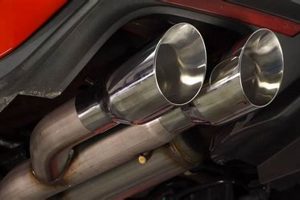
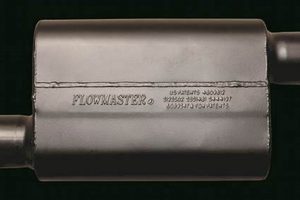
An unusual or undesirable noise emanating from a vehicle’s exhaust system typically indicates a compromise in the muffler’s integrity or functionality. This can manifest as a rattling, hissing, roaring, or popping sound, each potentially pointing to a specific underlying issue within the exhaust system. For example, a distinct rattle often suggests loose internal components within the muffler itself, while a hissing sound may indicate an exhaust leak before the muffler.
The condition significantly impacts vehicle performance, fuel efficiency, and overall driving experience. Beyond the auditory disturbance, compromised exhaust systems can lead to reduced engine power, increased emissions, and potential safety hazards due to carbon monoxide leakage. Historically, effective exhaust systems have been crucial for reducing noise pollution and mitigating harmful pollutants released into the atmosphere, contributing to improved air quality and public health. Early implementations focused primarily on noise reduction, while modern systems are engineered to balance noise control with catalytic conversion for emissions management.
Therefore, a detailed examination of exhaust system components is crucial. This includes an assessment of potential damage, corrosion, or deterioration. The following sections will delve into the common causes of such noise, diagnostic procedures, and appropriate repair or replacement strategies to restore optimal vehicle operation and environmental responsibility.
Addressing Suboptimal Exhaust System Acoustics
This section provides actionable guidance for identifying, assessing, and resolving issues related to atypical vehicle exhaust noises. Proactive maintenance and timely intervention are crucial for preserving vehicle performance and minimizing environmental impact.
Tip 1: Auditory Anomaly Recognition: Listen carefully to the specific type and location of any unusual noise. Distinguish between rattles, hisses, roars, and pops, as each suggests a different underlying problem. A recording of the sound can aid in later diagnosis by a qualified technician.
Tip 2: Visual Exhaust System Inspection: Conduct a thorough visual examination of the entire exhaust system, from the manifold to the tailpipe. Look for signs of rust, corrosion, holes, cracks, or loose connections. Pay particular attention to welds and joints, as these are common points of failure.
Tip 3: Structural Integrity Assessment: Gently tap the muffler and exhaust pipes with a rubber mallet. A hollow or rattling sound often indicates internal damage or rust-through. Avoid using excessive force, which could exacerbate existing problems.
Tip 4: Exhaust Leak Detection: With the engine running, carefully inspect the exhaust system for leaks. Exercise extreme caution due to high temperatures. A piece of cloth or a soap-and-water solution can be used to detect escaping exhaust gases. Bubbling indicates a leak.
Tip 5: Exhaust System Mounting Examination: Check the condition of all mounting hardware, including hangers and brackets. Ensure that they are securely attached and free from excessive rust or damage. Worn or broken mounts can cause the exhaust system to vibrate and create unwanted noise.
Tip 6: Professional Diagnostic Evaluation: If the cause of the noise remains unclear, consult with a qualified automotive technician. Specialized diagnostic equipment can identify internal engine problems or subtle exhaust leaks that are difficult to detect with visual inspection alone.
Tip 7: Prompt Remediation: Address any identified issues promptly to prevent further damage and potential safety hazards. Delaying repairs can lead to more extensive and costly problems down the line, including catalytic converter failure and engine damage.
Proper diagnosis and timely repair are paramount for restoring optimal vehicle performance, minimizing environmental impact, and ensuring driver safety. Ignoring the issue could lead to further deterioration of the exhaust system and potential damage to other vehicle components.
The following sections will provide in-depth insights on specific repair strategies.
1. Rust

Rust, a product of iron oxidation, is a primary catalyst in the degradation of exhaust system components, directly contributing to undesirable auditory emissions. Its formation weakens the structural integrity of the muffler and associated piping, leading to a cascade of detrimental effects.
- Structural Weakening
Rust progressively erodes the metal of the muffler, reducing its ability to withstand the pressures and vibrations inherent in exhaust gas flow. This thinning of the metal can lead to small perforations or complete structural collapse, resulting in altered sound profiles and potential exhaust leaks. For example, extensive rust around welded seams often results in separation, causing a distinct rattling or hissing sound.
- Perforation and Leakage
As rust penetrates deeper, it creates holes in the muffler’s housing and piping. These perforations allow exhaust gases to escape prematurely, generating abnormal exhaust noises. The severity of the sound is directly proportional to the size and number of rust-induced holes. A small hole may produce a whistling sound, while larger breaches can result in a loud, roaring sound akin to a missing muffler.
- Internal Component Degradation
Rust can also compromise the internal baffling and sound-dampening materials within the muffler. Corroded baffles may loosen and vibrate, producing a rattling sound. Furthermore, rust particles can clog the internal passages, altering the flow of exhaust gases and impacting sound characteristics. This internal degradation is often difficult to detect without a thorough physical inspection.
- Exacerbated Corrosion
The presence of rust accelerates the overall rate of corrosion on other exhaust system components. The porous nature of rust traps moisture and road salts, creating an environment conducive to further oxidation. This cycle of rust formation and accelerated corrosion weakens the entire exhaust system, increasing the likelihood of additional leaks and abnormal exhaust sounds. The problem is particularly acute in regions with high humidity or where road salts are used extensively during winter.
In essence, rust acts as a silent but relentless force in compromising the structural integrity and functionality of mufflers and other exhaust system parts. The direct consequence of this degradation is an alteration of the system’s sound characteristics, producing a variety of abnormal noises that signal a need for inspection and potential repair or replacement. Therefore, regular visual inspections for rust are critical for maintaining a properly functioning and safe vehicle.
2. Leakage

Exhaust system leakage directly and demonstrably contributes to the generation of abnormal sounds. Leakage, the unintended escape of exhaust gases from the designed flow path, alters both the volume and character of the sound emitted. The location, size, and nature of the leak dictate the specific auditory signature. For instance, a small leak near a gasket may produce a hissing sound due to the high-velocity escape of gases through a narrow orifice. Conversely, a significant breach in the muffler’s body will typically result in a louder, raspier tone, effectively bypassing the muffler’s sound-dampening capabilities. The presence of leakage negates the intended functionality of the exhaust system components, resulting in an undesirable noise profile.
The underlying cause of the leakage is multifaceted. Corrosion, physical impact, and material fatigue are common culprits. Corrosion, particularly prevalent in regions with road salting or high humidity, weakens the metal, eventually creating perforations. Physical damage, such as striking a road hazard, can directly rupture exhaust pipes or muffler casings. Furthermore, the cyclic heating and cooling of the exhaust system induce thermal stress, leading to fatigue and subsequent cracking at welds or along stress concentration points. Regular inspection for signs of corrosion, damage, and deterioration is critical for early detection of potential leaks.
Early identification and remediation of exhaust system leaks are crucial for maintaining vehicle performance, fuel efficiency, and environmental compliance. Untreated leaks not only contribute to noise pollution but can also lead to decreased engine power due to reduced backpressure and increased fuel consumption. Furthermore, exhaust leaks can pose a safety risk by allowing harmful gases, such as carbon monoxide, to enter the passenger compartment. Therefore, understanding the causal relationship between leakage and abnormal exhaust sounds, coupled with proactive maintenance, is essential for responsible vehicle ownership.
3. Damage
Physical damage to an exhaust system is a common precursor to atypical auditory output, directly influencing the sound profile and overall functionality of the muffler and related components. This damage can range from minor dents to catastrophic structural failures, each with distinct acoustic consequences.
- External Impact and Deformation
Striking road debris, such as rocks or ice, can cause dents and deformations in the muffler casing or exhaust pipes. Even seemingly minor dents can alter the internal geometry of the muffler, disrupting the flow of exhaust gases and leading to altered sound characteristics. Significant deformations can create stress points that eventually lead to cracks or ruptures. For example, a dent near a weld can weaken the joint, making it more susceptible to failure under thermal stress.
- Internal Baffle Disruption
The internal baffles within a muffler are designed to control the flow of exhaust gases and dampen sound waves. Physical impacts, corrosion, or even prolonged exposure to intense heat can cause these baffles to become dislodged, broken, or corroded. Disrupted baffles create a rattling sound within the muffler and reduce its ability to attenuate noise. The specific sound produced depends on the extent of the damage and the type of baffle affected. A broken baffle might produce a sharp, metallic rattling sound, while a corroded baffle could generate a dull thumping noise.
- Fractures and Cracks
Thermal stress, corrosion, and physical impacts can all contribute to the formation of cracks and fractures in the exhaust system. Cracks often originate at welds or areas of high stress concentration. These fractures allow exhaust gases to escape prematurely, creating hissing, popping, or roaring sounds, depending on the size and location of the crack. Small cracks may only be audible at specific engine speeds or under load, while larger fractures result in constant and pronounced noise.
- Compromised Mounting Hardware
Damage to the exhaust system’s mounting hardware, including hangers and brackets, can indirectly contribute to undesirable sounds. Broken or weakened mounts allow the exhaust system to vibrate excessively, creating rattling or knocking noises as the components come into contact with the vehicle’s undercarriage. Furthermore, compromised mounts can place undue stress on other parts of the exhaust system, increasing the likelihood of cracks or leaks. A broken hanger, for example, can cause the exhaust pipe to sag, increasing its vulnerability to further damage from road hazards.
In conclusion, physical damage significantly alters the acoustic profile of a vehicle’s exhaust system. From subtle changes in tone caused by minor dents to pronounced roaring sounds resulting from significant ruptures, damage directly affects the muffler’s ability to effectively attenuate noise. Addressing physical damage promptly is crucial for maintaining optimal vehicle performance and mitigating unwanted auditory emissions.
4. Corrosion

Corrosion is a ubiquitous process in exhaust systems, representing a gradual degradation of metallic components due to chemical reactions with their environment. The resultant weakening and eventual failure of these components are primary contributors to atypical and undesirable exhaust noises.
- Electrochemical Deterioration of Muffler Housing
The muffler housing, typically constructed from steel or aluminized steel, is susceptible to electrochemical corrosion when exposed to moisture, road salts, and acidic exhaust gases. This process weakens the metal, creating perforations and thinning the housing walls. The consequence is an altered sound profile, often manifesting as a hollow or raspy tone. In severe cases, extensive corrosion leads to complete structural failure, resulting in a significantly louder and more distorted exhaust sound.
- Internal Baffle Degradation and Altered Sound Dampening
Internal baffles within the muffler are designed to attenuate sound waves and control exhaust gas flow. Corrosion of these baffles disrupts their intended function, leading to changes in the muffler’s sound-dampening characteristics. Corroded baffles may loosen and vibrate, creating rattling noises. Furthermore, corrosion can alter the baffle’s geometry, affecting the frequency and intensity of the sound waves that pass through the muffler. The outcome is a shift in the overall exhaust note, often characterized by increased harshness and resonance.
- Corrosion at Welds and Joints Leading to Exhaust Leaks
Welds and joints are particularly vulnerable to corrosion due to the dissimilar metals and heat-affected zones present in these areas. Corrosion at these points weakens the connections between exhaust pipes and the muffler, ultimately leading to exhaust leaks. Exhaust leaks, especially those occurring before the muffler, generate hissing or roaring sounds as high-pressure exhaust gases escape prematurely. The severity of the noise is directly related to the size and location of the leak.
- Degradation of Exhaust Hangers and Mounting Points
Corrosion affects not only the exhaust pipes and muffler but also the hangers and mounting points that support the system. Corroded hangers become weakened and may eventually fail, causing the exhaust system to sag or vibrate excessively. This can result in rattling or knocking sounds as the exhaust components come into contact with the vehicle’s undercarriage. Furthermore, compromised mounting points place undue stress on other parts of the exhaust system, accelerating corrosion and increasing the likelihood of leaks and structural failures.
In summary, corrosion impacts nearly every aspect of the exhaust system, from the muffler housing to the mounting hardware. The resulting degradation disrupts the system’s ability to effectively attenuate noise, leading to a variety of undesirable sounds. Regular inspection and preventative measures, such as rustproofing and prompt repair of minor corrosion damage, are essential for preserving the integrity of the exhaust system and minimizing unwanted auditory emissions.
5. Rattling

Rattling, as it pertains to exhaust systems, is an auditory indicator of loose or detached components within the muffler or surrounding exhaust structure, directly contributing to a compromised and undesirable sound profile. The presence of rattling invariably signifies a mechanical fault necessitating inspection and potential repair. This specific sound arises when parts that are intended to be securely fixed become displaced, allowing them to vibrate freely against other components, the muffler casing, or even the vehicle’s undercarriage. The frequency and intensity of the rattling are often dependent on engine RPM and vehicle speed, as these factors influence the amplitude of the vibrations. For example, a loose heat shield on the muffler may generate a distinct rattling noise that increases in frequency with engine speed, while a detached internal baffle will produce a lower-frequency rattle, particularly noticeable during acceleration.
The cause of rattling can be attributed to several factors, including corrosion, weld failure, and physical impact. Corrosion weakens the metal surrounding mounting points and welds, eventually leading to detachment. The constant thermal cycling of the exhaust system also induces stress on welds, causing them to crack and fail over time. Physical impacts from road debris can directly damage internal baffles or external heat shields, dislodging them from their intended positions. Distinguishing the source of the rattle is crucial for effective repair. A mechanic may employ a stethoscope or carefully tap on different parts of the exhaust system to isolate the location of the loose component. Ignoring a rattling exhaust system can lead to further damage, including the complete failure of the muffler or the development of exhaust leaks. Moreover, prolonged rattling can be a nuisance to the driver and passengers and may indicate a safety hazard if the loose components pose a risk to other vehicle systems.
In summation, rattling is an informative symptom of a broader issue within the exhaust system, significantly contributing to what is commonly perceived as an undesirable sound. Its identification requires careful attention to the nature and location of the noise, and its prompt remediation is essential for maintaining vehicle performance, ensuring passenger comfort, and preventing more costly repairs in the future. The presence of rattling should be considered a clear signal for a professional inspection to diagnose and address the underlying mechanical fault.
6. Hissing

Hissing, when audible from a vehicle’s exhaust system, invariably signifies the escape of pressurized gases through a small orifice or crack, typically located upstream of the muffler. This occurrence is directly linked to an abnormal and undesirable auditory experience originating from the exhaust system. The presence of hissing demonstrates a compromise in the system’s integrity, indicating that exhaust gases are not being properly channeled through the muffler’s sound-dampening chambers. A common scenario involves a cracked exhaust manifold gasket; high-pressure exhaust gases escape at the point of failure, generating a distinct hissing sound that is often more pronounced during engine acceleration. Another example involves a pinhole leak in an exhaust pipe caused by corrosion, especially near welds; this leak produces a high-pitched hissing sound that can be easily identified when the engine is running at idle. Identifying the source of this sound is critical for diagnosing the specific cause of the overall problem.
The significance of hissing as a component is that it helps pinpoint the location and type of defect within the exhaust system. Unlike a roaring sound, which suggests a major breach, a hissing sound often indicates a smaller, more localized issue. The sound’s frequency and intensity can provide clues about the size and pressure of the leak. For instance, a high-frequency hissing sound may indicate a small leak under high pressure, whereas a lower-frequency hissing sound could suggest a larger leak with less pressure behind it. Understanding the nuances of hissing allows for targeted repairs, avoiding unnecessary replacement of entire exhaust components. It can also indicate a problem that, if left unaddressed, could lead to more significant damage, such as increased fuel consumption or catalytic converter failure.
In conclusion, hissing serves as a critical diagnostic indicator of potential exhaust system problems. It provides essential information about the location, size, and nature of leaks, enabling more effective and efficient repairs. While hissing contributes to an overall perception of compromised exhaust system acoustics, its presence offers actionable insights into the system’s condition. Identifying and addressing the cause of hissing not only mitigates undesirable sounds but also helps maintain optimal vehicle performance and minimizes potential environmental impact.
7. Resonance

Resonance, within the context of automotive exhaust systems, refers to the amplification of specific sound frequencies due to the physical characteristics of the system’s components. It is a prominent factor contributing to what is perceived as an undesirable auditory experience. The phenomenon arises when the frequency of sound waves generated by the engine matches the natural frequency of the exhaust pipes or muffler chambers. This matching of frequencies causes the sound waves to constructively interfere, resulting in an amplified sound level at specific frequencies, often perceived as droning or booming. For example, certain vehicle models may exhibit a pronounced resonance around 2000-2500 RPM due to the dimensions of the exhaust piping, creating an annoying cabin noise during highway cruising. The precise frequencies at which resonance occurs depend on factors such as pipe length, diameter, and the internal design of the muffler. Alterations to any of these parameters can shift the resonant frequencies, either exacerbating or mitigating the undesirable sound.
Mufflers are specifically designed to minimize resonance by disrupting sound waves through a combination of reflection, absorption, and interference. Internal chambers and baffling systems are engineered to cancel out specific frequencies, preventing their amplification. When a muffler degrades due to corrosion or internal damage, its ability to control resonance is compromised. Corroded baffles may loosen and vibrate, creating additional resonant frequencies. Similarly, a damaged muffler housing may allow sound waves to escape and reflect in unintended ways, leading to increased resonance. The consequence is a shift in the exhaust note, often characterized by increased volume and the emergence of distinct, unwanted frequencies. Aftermarket exhaust systems that deviate significantly from the original design can also introduce or amplify resonant frequencies, resulting in a problematic auditory experience, even if the overall noise level is reduced.
Understanding the role of resonance in exhaust system acoustics is crucial for effective noise control and mitigation. Accurate diagnosis of undesirable sounds requires identifying the specific frequencies at which resonance occurs. This can be achieved through spectral analysis of the exhaust noise using specialized equipment. Remediation strategies may involve modifying the exhaust system to alter its resonant frequencies, such as adding resonators or changing pipe diameters. In other cases, replacing a damaged muffler with a high-quality unit designed to minimize resonance is the most effective solution. Careful attention to resonance control is essential for creating an exhaust system that meets both performance and acoustic requirements, ensuring a comfortable and enjoyable driving experience.
Frequently Asked Questions
This section addresses common inquiries regarding the diagnosis, causes, and remediation of atypical vehicle exhaust noises, providing clarity on this often-misunderstood aspect of vehicle maintenance.
Question 1: What specific auditory cues indicate a compromised muffler?
Atypical exhaust sounds, including rattling, hissing, roaring, or popping, are primary indicators. The specific sound often correlates with the underlying issue. Rattling suggests loose internal components; hissing points to exhaust leaks; roaring typically implies significant muffler damage or a complete breach; popping may indicate combustion irregularities impacting the exhaust flow.
Question 2: How does corrosion contribute to undesirable exhaust system noises?
Corrosion weakens the structural integrity of exhaust components, creating perforations and compromising welds. These breaches allow exhaust gases to escape prematurely, generating hissing or roaring sounds. Corrosion also deteriorates internal muffler baffles, causing rattling and altering the designed sound-dampening characteristics.
Question 3: What role does physical damage play in the generation of abnormal exhaust sounds?
Physical impacts can dent or rupture exhaust pipes and muffler casings, disrupting exhaust gas flow and altering the sound profile. Damaged internal baffles may loosen or break, resulting in rattling sounds and reduced noise attenuation. Compromised mounting hardware allows the exhaust system to vibrate excessively, creating rattling or knocking noises.
Question 4: What are the potential consequences of ignoring anomalous exhaust sounds?
Neglecting to address atypical exhaust sounds can lead to decreased engine performance, reduced fuel efficiency, increased emissions, and potential safety hazards due to carbon monoxide leakage. Furthermore, delaying repairs can result in more extensive and costly damage to other vehicle components, including the catalytic converter.
Question 5: Can a visual inspection reliably identify the source of atypical exhaust sounds?
While a visual inspection can reveal obvious damage, corrosion, or leaks, it may not always identify the root cause of the noise. Internal muffler damage or subtle exhaust leaks may require specialized diagnostic equipment for accurate assessment.
Question 6: What remedial actions are typically employed to address compromised exhaust system acoustics?
Remedial actions range from simple repairs, such as welding exhaust leaks or replacing damaged mounting hardware, to complete muffler or exhaust system replacement. The specific approach depends on the extent and nature of the damage identified during the diagnostic process.
Prompt identification and remediation of anomalous exhaust sounds are crucial for maintaining optimal vehicle performance, minimizing environmental impact, and ensuring driver safety.
The following section will explore advanced diagnostic techniques for identifying subtle exhaust system defects.
Conclusion
The foregoing analysis has detailed the multifaceted nature of the “bad muffler sound” phenomenon, encompassing its origins in corrosion, physical damage, internal component failure, and exhaust leakage. Identifying and understanding these factors is paramount to mitigating both the auditory nuisance and the potential downstream effects on vehicle performance and environmental impact.
The presence of abnormal exhaust acoustics serves as a critical indicator of underlying system compromise. Therefore, proactive monitoring and timely intervention are essential to ensure continued vehicle operation and regulatory compliance. A failure to address these issues precipitates escalating system degradation and increases the likelihood of substantial repair costs. Vigilance and responsible vehicle maintenance practices remain the cornerstone of mitigating the consequences associated with compromised exhaust systems.